Sisilia Frederika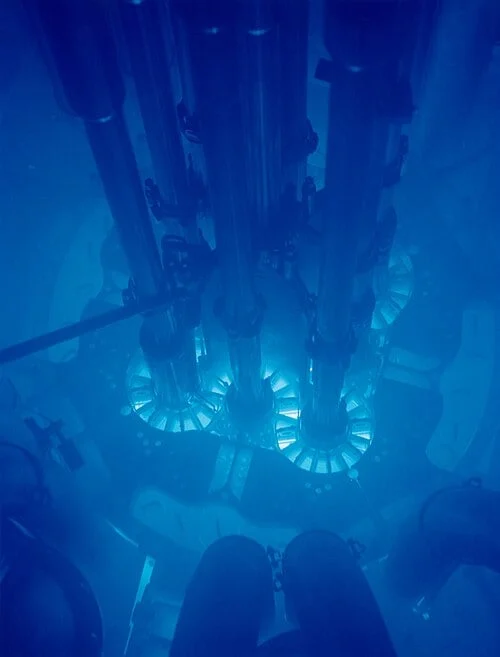
The phenomenon known as Cherenkov radiation, characterized by its distinct and haunting blue luminescence, represents one of the most significant observations in the history of experimental physics. Frequently observed in the cooling pools of nuclear reactors, this radiation is the electromagnetic equivalent of a sonic boom. It occurs when a charged particle, such as an electron, travels through a dielectric (insulating) medium at a speed greater than the phase velocity of light in that specific medium. While the speed of light in a vacuum is a universal constant (approximately 299,792,458 meters per second), light slows down significantly when passing through substances like water or glass. This physical loophole allows high-energy particles to "outrun" light, resulting in a shockwave of photons that has become an indispensable tool for modern scientific inquiry.
The 1934 Moscow Experiments: A Paradigm Shift in Observation
The formal discovery of this radiation is attributed to the Soviet physicist Pavel Alekseyevich Cherenkov. In 1934, while working at the Lebedev Institute of Physics in Moscow under the supervision of Sergei Vavilov, Cherenkov conducted a series of deceptively simple experiments. He was tasked with observing the effects of gamma rays on various liquids, primarily water.
During these sessions, Cherenkov noticed a very faint blue glow emanating from the liquid. While this observation was not entirely unprecedented—Marie Curie and others had noted similar luminescence in highly radioactive solutions decades earlier—the scientific consensus of the time dismissed the glow as a trivial side effect. Most researchers assumed the light was a form of fluorescence, a well-understood process where a substance absorbs electromagnetic radiation and re-emits it at a lower energy level.
Cherenkov, however, remained skeptical of the fluorescence explanation. His skepticism was driven by a series of rigorous experimental adjustments. He noted that even after exhaustive purification of the water to remove any potential impurities that might cause fluorescence, the blue glow persisted with undiminished intensity. This observation suggested that the light was an intrinsic property of the interaction between the radiation and the medium itself, rather than a chemical reaction involving solutes.
The Three-Year Empirical Investigation
Between 1934 and 1937, Cherenkov embarked on an obsessive characterization of the phenomenon. He lacked a theoretical framework to explain why the glow occurred, but he meticulously documented how it behaved. His findings revealed several critical characteristics that separated this new radiation from all known forms of luminescence:
- Directionality: Unlike fluorescence, which emits light isotropically (in all directions equally), Cherenkov’s blue glow was highly directional. It formed a cone-shaped emission pattern in the direction of the moving particles.
- Polarization: The light was found to be polarized, with the electric field vector oscillating in a specific orientation relative to the path of the particle.
- Refractive Index Dependency: The intensity and angle of the light changed based on the refractive index of the liquid used.
- Universality: The effect was not limited to water; it appeared in a wide range of transparent liquids and solids, provided they were subjected to high-energy radiation.
Cherenkov’s commitment to empirical data provided the foundation for what would eventually be recognized as a new state of matter-energy interaction. His work proved that the glow was a macroscopic effect produced by the motion of electrons displaced by gamma rays.
The Theoretical Framework: The Frank-Tamm Explanation
While Cherenkov provided the data, the theoretical explanation remained elusive until 1937, when two of his colleagues, Ilya Frank and Igor Tamm, developed a mathematical model for the effect. They realized that the radiation was caused by the electromagnetic disturbance created by a charged particle moving through a medium.
As a charged particle moves through a dielectric material, it locally polarizes the molecules along its path. In normal circumstances, when a particle moves slowly, the molecules return to their original state symmetrically, and no radiation is emitted. However, if the particle moves faster than the speed of light in that medium, the polarization becomes asymmetric. The medium cannot respond fast enough to the particle’s presence, leading to a coherent shockwave of light.
The Frank-Tamm formula describes the energy emitted by Cherenkov radiation per unit length of the particle’s path. It confirmed that the light is predominantly emitted in the ultraviolet and blue spectrum, which explains why the human eye perceives it as a brilliant, ghostly blue. This theoretical breakthrough was so significant that in 1958, Cherenkov, Frank, and Tamm were jointly awarded the Nobel Prize in Physics.
Chronology of Cherenkov Radiation Development
The timeline of Cherenkov radiation spans over a century of observation and application:
- 1900–1910: Early researchers, including Marie and Pierre Curie, observe a "blue glow" in concentrated radium solutions but do not investigate its physical origin.
- 1926: Lucien Mallet conducts experiments on the blue light but fails to provide a conclusive physical explanation.
- 1934: Pavel Cherenkov publishes his first findings on the blue glow in water, proving it is not fluorescence.
- 1937: Ilya Frank and Igor Tamm provide the mathematical and theoretical framework for the phenomenon.
- 1958: The Nobel Prize in Physics is awarded to Cherenkov, Frank, and Tamm.
- 1960s–Present: The development of Cherenkov detectors for particle physics, astrophysics, and nuclear monitoring.
- 2010s: Integration of Cherenkov imaging in medical radiotherapy to ensure precise dose delivery to cancer patients.
Supporting Technical Data and Physical Properties
The physics of Cherenkov radiation is governed by the refractive index ($n$) of the medium and the velocity of the particle ($beta$, expressed as a fraction of the speed of light in a vacuum, $c$).
The emission occurs only when the velocity of the particle exceeds the threshold:
$v > c/n$
The angle ($theta$) at which the light is emitted relative to the particle’s path is determined by the formula:
$cos(theta) = 1 / (beta n)$
This relationship is vital for experimental physics. By measuring the angle of the light cone, scientists can calculate the exact velocity of the particle. This property makes Cherenkov detectors highly effective for identifying different types of particles in high-energy physics experiments, such as those conducted at the European Organization for Nuclear Research (CERN).
In terms of spectral distribution, the number of photons emitted per unit wavelength is inversely proportional to the square of the wavelength. This means that shorter wavelengths (blue and ultraviolet) are much more prevalent than longer wavelengths (red and infrared), which accounts for the characteristic blue color.
Global Impact and Modern Applications
The implications of Cherenkov’s "light boom" extend far beyond the walls of a 1930s Moscow laboratory. Today, the phenomenon is utilized in several critical sectors:
Nuclear Safeguards and Reactor Monitoring
Cherenkov radiation is the primary visual indicator of nuclear activity. In spent fuel pools at nuclear power plants, the intensity of the blue glow is directly proportional to the radioactivity of the fuel rods. International inspectors use Cherenkov viewing devices to verify that nuclear material has not been diverted or tampered with, as the light cannot be easily faked or masked.
Astrophysics and Neutrino Detection
The Earth’s atmosphere and its oceans act as massive Cherenkov mediums. When high-energy cosmic rays or neutrinos strike the atmosphere or deep-sea water, they produce secondary particles moving at extreme speeds. Large-scale observatories, such as the IceCube Neutrino Observatory in Antarctica, use thousands of optical sensors buried in the ice to detect the Cherenkov light produced by neutrino interactions. This allows astronomers to trace neutrinos back to their cosmic sources, such as black holes or supernovae.
Medical Imaging and Therapy
In the field of oncology, Cherenkov luminescence imaging (CLI) is an emerging technology. During radiation therapy, the high-energy beams used to treat tumors produce Cherenkov radiation within the patient’s tissue. By capturing this light with sensitive cameras, clinicians can verify in real-time that the radiation is being delivered to the correct location and at the intended dose, significantly improving patient safety.
Conclusion and Scientific Analysis
The discovery of Cherenkov radiation serves as a testament to the importance of meticulous experimental observation. Pavel Cherenkov’s refusal to accept a convenient but incorrect explanation (fluorescence) opened a new window into the subatomic world. While the phenomenon was initially viewed as a mere curiosity—a faint glow in a bottle of water—it has evolved into a cornerstone of modern diagnostic and observational science.
From a broader perspective, Cherenkov radiation challenges the popular misconception that nothing can ever travel faster than the speed of light. While the universal constant $c$ remains an absolute limit in a vacuum, the behavior of light in matter provides a unique laboratory for studying the limits of physics. As technology continues to advance, the "light boom" will remain an essential tool for exploring the furthest reaches of the universe and the most intricate details of human biology.