Sisilia Frederika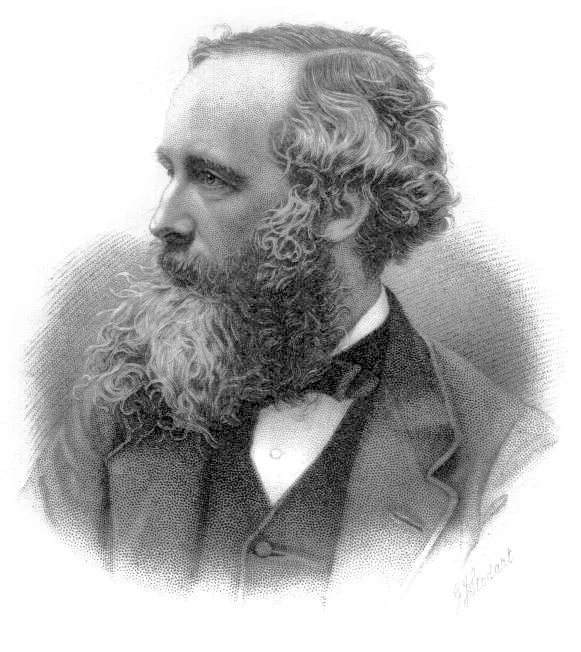
The fundamental limit of the universe is defined by the speed of light in a vacuum, a constant denoted as $c$, which measures exactly 299,792,458 meters per second. This velocity serves as the cornerstone of modern physics, anchoring Albert Einstein’s theory of special relativity and defining the causal structure of spacetime. However, a fascinating nuance of electrodynamics arises when light exits the vacuum and enters a physical medium, such as water, glass, or diamond. In these environments, light is forced to interact with the electromagnetic fields of atoms and molecules, resulting in a significant reduction in its propagation speed. This reduction creates a unique physical loophole: while nothing can exceed the speed of light in a vacuum, high-energy particles can—and do—travel faster than light when moving through a dense medium. This phenomenon is the prerequisite for the optical equivalent of a sonic boom, known as Cherenkov radiation.
The Maxwellian Revolution and the Definition of $c$
To understand why light slows down in matter, one must first look to the theoretical framework established in the mid-19th century. In 1865, Scottish physicist James Clerk Maxwell published "A Dynamical Theory of the Electromagnetic Field," a work that unified electricity, magnetism, and light into a single set of four partial differential equations. Maxwell’s equations demonstrated that electric and magnetic fields travel through space as waves moving at a constant speed.
This speed was not an arbitrary figure but was derived from two fundamental constants of nature: the vacuum permittivity ($epsilon_0$), which measures how much resistance is encountered when forming an electric field in a vacuum, and the vacuum permeability ($mu_0$), which measures the ability of a vacuum to support the formation of a magnetic field. The relationship is expressed as $c = 1/sqrtepsilon_0 mu_0$. This calculation yielded a value that matched the then-known experimental measurements of the speed of light, leading Maxwell to the groundbreaking conclusion that light itself is an electromagnetic wave.
Because $epsilon_0$ and $mu_0$ are properties of empty space, $c$ is a universal constant. In the vacuum of the interstellar medium, light encounters no obstacles, allowing it to maintain its maximum velocity. However, the moment light enters a region of space occupied by matter, the "effective" permittivity and permeability of the environment change, fundamentally altering the math of Maxwell’s equations.
The Mechanism of Refraction: Why Light Slows Down
The slowing of light in a medium is often misunderstood as a series of literal collisions between photons and atoms. In reality, the process is a complex collective interaction between the incoming electromagnetic wave and the electrons within the material. When a light wave passes through a substance, its oscillating electric field exerts a force on the electrons of the atoms, causing them to oscillate at the same frequency.
These oscillating electrons act as tiny antennae, emitting their own secondary electromagnetic waves. These secondary waves are slightly delayed—a phenomenon known as a phase shift. Through the principle of superposition, the original wave and the secondary waves interfere with one another. The resulting "total" wave has the same frequency as the original but a shorter wavelength, which corresponds to a slower phase velocity.
Physicists quantify this reduction in speed using the index of refraction ($n$), defined by the ratio $n = c/v$, where $v$ is the phase velocity of light in the medium. The higher the index of refraction, the slower light travels through that material.
Comparative Data: The Speed of Light in Various Media
| Material | Index of Refraction ($n$) | Speed of Light (Approx. m/s) | Percentage of $c$ |
|---|---|---|---|
| Vacuum | 1.0000 | 299,792,458 | 100% |
| Air (STP) | 1.0003 | 299,702,547 | 99.97% |
| Ice | 1.31 | 228,849,205 | 76.3% |
| Water (20°C) | 1.333 | 224,900,569 | 75.0% |
| Glass (Typical) | 1.50 | 199,861,639 | 66.7% |
| Sapphire | 1.77 | 169,374,270 | 56.5% |
| Diamond | 2.417 | 124,034,943 | 41.4% |
| Silicon | 3.42 | 87,658,613 | 29.2% |
In extreme laboratory conditions, such as within a Bose-Einstein Condensate (BEC), researchers have achieved even more dramatic results. In 1999, a team led by Lene Hau at Harvard University successfully slowed light to a mere 17 meters per second—roughly 38 miles per hour—by passing it through an ultracold cloud of sodium atoms. These experiments highlight that while the vacuum speed of light is a hard limit, the local speed of light is highly variable and subject to the physical properties of the surrounding environment.
Breaking the Local Barrier: The "Brad Bradington" Effect
The core of the Cherenkov effect lies in the disparity between how light and charged particles interact with a medium. While light is significantly hindered by the electromagnetic interference of the material’s atoms, certain high-energy particles, such as electrons or muons, can pass through the same material with much less resistance.
According to Einstein’s Special Relativity, no particle with mass can ever reach or exceed $c$, the vacuum speed of light. To do so would require infinite energy. However, relativity does not forbid a particle from exceeding the local speed of light ($c/n$) within a specific medium.
Consider a nuclear reactor pool filled with water. Light in this water travels at approximately 0.75$c$. If a radioactive decay process ejects an electron (a beta particle) with enough energy that its velocity is 0.90$c$, that electron is now traveling faster than the local speed of light in water.
In this scenario, the electron is not violating any laws of physics. It is still moving slower than the absolute universal limit of 299,792,458 m/s. However, because it has surpassed the local "speed limit" of the water, it triggers a unique electromagnetic reaction. As the electron plows through the water, it polarizes the surrounding water molecules. As these molecules return to their ground state, they emit pulses of light. Usually, these pulses interfere destructively and cancel out. But when the particle is moving faster than the light itself, the pulses interfere constructively, forming a coherent wavefront of blue light—the "light boom."
Historical Context and Scientific Discovery
The understanding of these luminal thresholds evolved over nearly a century of theoretical and experimental breakthroughs. Following Maxwell’s 1865 equations, the scientific community struggled to reconcile the constant speed of light with classical mechanics, eventually leading to Einstein’s 1905 paper on Special Relativity.
The specific observation of "superluminal" light emission in media was first documented in the early 20th century. In 1934, Soviet physicist Pavel Cherenkov noticed a faint blue glow emanating from a bottle of water subjected to radioactive bombardment. While others had seen the glow before, they dismissed it as fluorescence. Cherenkov, through rigorous experimentation, proved that the light was not a result of chemical fluorescence but was a new physical phenomenon related to the speed of the particles.
In 1937, Ilya Frank and Igor Tamm provided the mathematical foundation for Cherenkov’s observations, using Maxwell’s equations to show exactly how a charged particle exceeding the phase velocity of light in a medium would create a conical wavefront of radiation. The trio was awarded the Nobel Prize in Physics in 1958 for this discovery.
Official Responses and Modern Applications
Today, the ability of particles to outrun light in a medium is not just a theoretical curiosity but a vital tool in high-energy physics and nuclear engineering. The "Cherenkov glow" is the characteristic blue light seen in the cooling pools of nuclear reactors, serving as a visual indicator of high-intensity radioactivity.
International scientific bodies, including CERN (the European Organization for Nuclear Research), utilize Cherenkov detectors to identify particles. In the Large Hadron Collider (LHC), Ring Imaging Cherenkov (RICH) detectors allow scientists to determine the mass and identity of particles by measuring the angle of the light cone they produce as they pass through a medium.
"The Cherenkov effect is essentially our eyes into the subatomic world," says one particle physicist at the IceCube Neutrino Observatory in Antarctica. At IceCube, scientists use a cubic kilometer of Antarctic ice as a medium. When elusive neutrinos interact with the ice, they produce muons that travel faster than light in ice. The resulting Cherenkov radiation is picked up by thousands of optical sensors, allowing researchers to trace the neutrino’s origin in deep space.
Broader Impact and Implications
The fact that light can be "outrun" within a material medium has profound implications for our understanding of the universe. It reinforces the distinction between the fundamental geometry of spacetime (represented by $c$) and the behavior of waves within matter.
Furthermore, the study of the refractive index has led to the development of metamaterials—engineered substances with negative indices of refraction. These materials can bend light in "unnatural" ways, leading to theoretical possibilities like "invisibility cloaks" or "super-lenses" that can see objects smaller than the wavelength of light.
In conclusion, the "light boom" is a testament to the complexity of the electromagnetic spectrum. While James Clerk Maxwell gave us the equations to understand the speed of light, and Albert Einstein gave us the ultimate speed limit, it is the interaction between particles and the "crowd" of atoms in a medium that allows us to witness the spectacular blue glow of Cherenkov radiation. By slogging through the "molasses" of matter, light provides a window through which we can observe the fastest-moving particles in the cosmos, proving that even the most absolute laws of physics have room for extraordinary phenomena.