admin
admin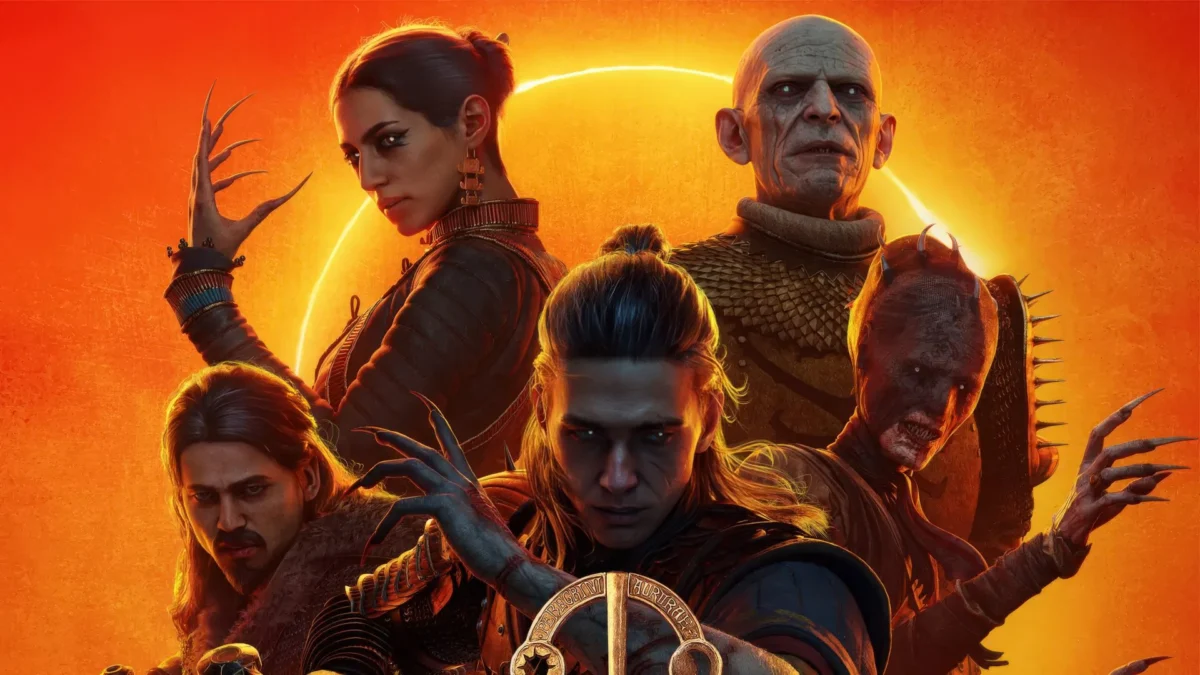
The upcoming dark fantasy role-playing game from Rebel Wolves, The Blood of Dawnwalker, has expanded significantly beyond its original conceptual scope, according to recent statements from the studio’s leadership. While the project was initially envisioned as a more contained experience compared to the sprawling monolith of The Witcher III: Wild Hunt, internal testing and content integration have revealed a title that is substantially meatier than first anticipated. Creative Director Mateusz Tomaszkiewicz recently confirmed that while the studio’s initial target for a standard playthrough was approximately 40 hours, the current average playtime has climbed to between 50 and 70 hours. This shift marks a pivotal moment for the independent studio, which is composed largely of veterans from CD Projekt RED, as they seek to establish a new franchise in the highly competitive action-RPG landscape.
Evolution of Project Scope and Development Milestones
When Rebel Wolves was first announced in early 2022, the industry viewed the studio as a "spiritual successor" to the creative philosophy that drove the peak of the Witcher series. Founded by Konrad Tomaszkiewicz, the game director behind The Witcher III: Wild Hunt, the studio aimed to create a focused, narrative-driven experience without the perceived "bloat" of modern open-world titles. The Blood of Dawnwalker was positioned as the first entry in a planned saga, utilizing Unreal Engine 5 to streamline development.
However, as the game moved from the pre-production phase into full content implementation, the narrative and exploration elements naturally expanded. Mateusz Tomaszkiewicz noted that the discrepancy in playtime often stems from the player’s personal approach to the game’s systems. During internal playtests, team members reported a wide variance in completion times. Those focusing primarily on the critical path reached the end around the 50-hour mark, while those who engaged deeply with side content, gear upgrades, and exploration in the region of Vale Sangora found themselves closer to the 70-hour threshold.
This expansion suggests that Rebel Wolves has leaned into the "quality over quantity" mantra while still providing enough volume to satisfy fans of the genre. The 50-to-70-hour window places The Blood of Dawnwalker in a unique market position—longer than a standard linear action game, but more digestible than the 100-plus-hour commitments required by modern "live service" RPGs or massive titles like Elden Ring.
Comparative Analysis: The Blood of Dawnwalker vs. Industry Peers
To understand the significance of these playtime figures, one must look at the benchmarks set by both the developers’ previous work and their current competitors. According to data from HowLongToBeat.com, a standard playthrough of The Witcher III: Wild Hunt’s main story averages roughly 51.5 hours. While The Witcher III can extend to over 170 hours for completionists, the fact that The Blood of Dawnwalker’s baseline is matching the main-story length of one of the greatest RPGs of all time is a testament to the project’s scale.
The comparison becomes even more striking when measured against recent and upcoming releases from other prominent RPG developers. Obsidian Entertainment, another titan of the genre, has recently released or announced titles with more modest lengths. Avowed, for instance, is expected to offer a more condensed experience, focusing on high replayability rather than raw hours of content. Similarly, The Outer Worlds 2 is projected to follow the "AA+" model of being a 30-to-40-hour experience. By pushing into the 70-hour range, Rebel Wolves is effectively moving The Blood of Dawnwalker out of the "AA" category and closer to full "AAA" expectations.
The following table illustrates where The Blood of Dawnwalker sits in the current RPG landscape regarding estimated main-path playtime:
| Game Title | Estimated Main Story Playtime | Developer |
|---|---|---|
| The Blood of Dawnwalker | 50–70 Hours | Rebel Wolves |
| The Witcher III: Wild Hunt | 51.5 Hours | CD Projekt RED |
| Avowed | 25–35 Hours (Est.) | Obsidian Entertainment |
| Cyberpunk 2077 | 25–30 Hours | CD Projekt RED |
| Baldur’s Gate 3 | 75–100 Hours | Larian Studios |
Narrative Depth and the "Evil Playthrough" Philosophy
Beyond raw length, the quality of the hours spent in Vale Sangora is a primary focus for the development team. Mateusz Tomaszkiewicz has been vocal about the game’s commitment to player agency, particularly regarding moral alignment. In a recent developer update, he confirmed that a "full evil playthrough" is a viable and supported path within the game’s narrative structure.

In many modern RPGs, moral choices are often binary or carry superficial consequences. Rebel Wolves aims to subvert this by allowing players to make truly "bad" choices that fundamentally alter the world state and character relationships. This design philosophy is a direct carry-over from the "shades of grey" storytelling found in the Witcher series. The inclusion of deep, branching narratives for different moral alignments likely contributes to the increased playtime, as developers must account for multiple permutations of the same quests.
The studio has emphasized that "evil" in The Blood of Dawnwalker is not merely about being antagonistic to NPCs but involves making difficult, often selfish decisions that serve the player’s progression at the expense of the game world’s stability. This level of reactivity is a key driver for replayability, potentially doubling or tripling the total time a player might spend with the game over multiple save files.
Technical Foundation and the Unreal Engine 5 Advantage
The Blood of Dawnwalker is being developed on Unreal Engine 5, a choice that has allowed the relatively small team at Rebel Wolves—currently estimated at around 100 employees—to punch above its weight class. By utilizing technologies like Nanite and Lumen, the team has been able to create high-fidelity environments in Vale Sangora without the massive art departments required during the previous console generation.
The use of UE5 also facilitates faster iteration on quest design and world-building. This efficiency is likely why the game was able to grow from a 40-hour project to a 70-hour one without a corresponding decade-long development cycle. Industry analysts suggest that Rebel Wolves is setting a blueprint for the "mid-sized blockbuster"—games that deliver AAA quality and length through smart technology choices and veteran expertise rather than sheer workforce size.
Chronology of Development and Path to Launch
The journey of Rebel Wolves and The Blood of Dawnwalker has been marked by several key milestones:
- February 2022: Rebel Wolves officially launches, led by Konrad Tomaszkiewicz. The studio announces its mission to create a "dark fantasy saga."
- November 2022: The studio receives a strategic investment from NetEase Games, securing the financial runway needed for a high-budget production while maintaining creative independence.
- January 2024: The title The Blood of Dawnwalker is officially trademarked and revealed to the public.
- Late 2024: The game enters the "content complete" phase, where all major systems and narrative paths are implemented, shifting the focus to polishing and playtesting.
- February 2025: Creative Director Mateusz Tomaszkiewicz reveals the expanded playtime estimates of 50-70 hours, citing internal testing results.
- September 3, 2026: The scheduled worldwide release date for PC, PlayStation 5, and Xbox Series S|X.
Broader Implications for the RPG Market
The revelation that The Blood of Dawnwalker has grown in scope is a significant indicator of the current state of the RPG market. Following the massive success of Baldur’s Gate 3 in 2023, there has been a renewed appetite for deep, complex, and lengthy role-playing experiences. Players are increasingly looking for value in their purchases, and a 50-to-70-hour runtime for a single playthrough is often viewed as the "sweet spot" for a premium $70 title.
Furthermore, the success or failure of Rebel Wolves will serve as a bellwether for other veteran-led independent studios. With several former CD Projekt RED, BioWare, and Bethesda developers forming their own outfits, the industry is watching to see if these smaller teams can truly replicate the magic of their former homes without the massive overhead.
For Rebel Wolves, the goal is not just to release a single successful game but to establish a franchise. The Blood of Dawnwalker is intended to be the opening chapter of a much larger story. If the studio can deliver a polished, 70-hour experience that resonates with fans of dark fantasy, they will have successfully carved out a permanent space in the landscape, proving that the spirit of the "old school" RPG is alive and well in the modern era.
As the development team moves into the final eighteen months of production, the focus will remain on refining the player’s journey through Vale Sangora. With a firm release date of September 3, 2026, and clear targets for scope and scale, The Blood of Dawnwalker is positioning itself as one of the most anticipated RPGs of the mid-decade. For players, the promise of a 70-hour descent into a new dark fantasy world—crafted by the architects of the genre’s most beloved modern classics—is a compelling proposition that justifies the long wait.