admin
admin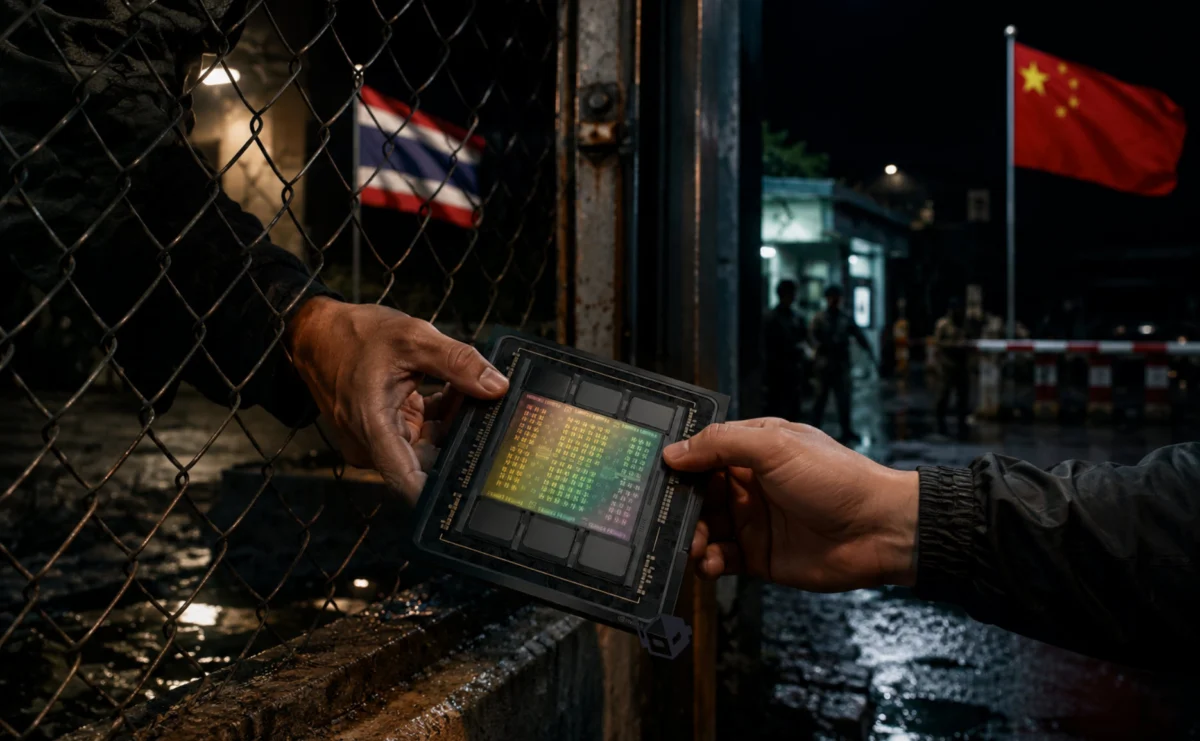
Law enforcement officials in Taiwan have executed a series of coordinated raids on several corporate offices, including those of the high-profile server manufacturer Super Micro Computer, Inc. (SMCI), as part of a widening probe into the illicit diversion of restricted high-end artificial intelligence hardware to China. The Keelung District Prosecutors’ Office confirmed the operation in a statement that detailed searches at multiple locations across the island. The investigation centers on the alleged smuggling of sophisticated NVIDIA graphics processing units (GPUs), which are currently subject to stringent export controls by the United States government. While the prosecutors’ statement listed a Super Micro office as a site of the raid, it did not explicitly name the company as the primary target of the criminal inquiry, suggesting a complex web of distributors and intermediaries may be under scrutiny.
The raids represent a significant escalation in the global effort to enforce trade restrictions on advanced semiconductor technology. Super Micro, a key partner of NVIDIA and a dominant force in the global AI server market, has found itself at the center of multiple investigations concerning the final destination of its hardware. The involvement of Taiwanese authorities was further confirmed through a regulatory filing by Albatron Technology Co., a prominent Taiwanese distributor of Super Micro products, which acknowledged that its premises were also searched as part of the same investigation.
Chronology of the Investigation and Prior Allegations
The current legal actions in Taiwan are the latest in a series of setbacks for Super Micro. Earlier this year, the company’s reputation was shaken by an indictment filed in a New York court. In that case, federal prosecutors in the United States charged a co-founder of the company along with a third-party contractor for their alleged roles in a massive smuggling operation. The U.S. Department of Justice alleges that the individuals were involved in a scheme to move approximately $2.5 billion worth of AI chips into China, bypassing the export bans designed to limit China’s capabilities in high-performance computing and artificial intelligence.
The scheme reportedly involved the use of "fake servers"—units that were purportedly destined for legitimate markets but were instead used as shells to transport high-value NVIDIA chips into mainland China. Both the co-founder and the contractor have pleaded not guilty to the charges. Following the disclosure of these allegations, Super Micro’s stock price experienced a volatile contraction, at one point plummeting by 33% as investors weighed the risks of federal sanctions and the potential loss of access to NVIDIA’s supply chain.
In response to the initial U.S. charges, Super Micro took internal disciplinary actions, placing two employees on administrative leave and severing ties with the contractor identified in the indictment. The company maintained that any illegal activity was a direct violation of its internal compliance controls and corporate policies.
The Role of NVIDIA Chips in the Global AI Race
The intensity of the investigation underscores the immense value of NVIDIA’s H100 and A100 GPUs in the current technological landscape. These chips are the foundational components for training large language models (LLMs) and powering the infrastructure for generative AI. Due to their strategic importance, the U.S. Department of Commerce’s Bureau of Industry and Security (BIS) has implemented a series of escalating export controls since October 2022.

These regulations are designed to prevent the Chinese military and state-affiliated research institutions from acquiring the computing power necessary for advanced weapons systems and surveillance technology. However, the high demand and limited supply have created a lucrative "gray market." Smugglers often utilize a "daisy chain" of distributors across multiple jurisdictions, including Taiwan, Singapore, and the United Arab Emirates, to mask the ultimate destination of the hardware.
Taiwan occupies a unique and precarious position in this regulatory environment. As the world’s leading hub for semiconductor manufacturing and server assembly, it is the primary gateway for high-end technology. While the U.S. has pressured its allies to adopt similar export restrictions, re-exporting chips from Taiwan to China is not currently a criminal offense under Taiwanese law, provided the paperwork does not involve fraud or the violation of specific local trade statutes. This legal discrepancy has made Taiwan a focal point for investigators looking to identify the leaks in the global supply chain.
Supporting Data: Market Impact and Supply Chain Dynamics
Super Micro’s role in the AI ecosystem is nearly unparalleled. Alongside Dell Technologies, Super Micro is responsible for the lion’s share of the assembly and deployment of NVIDIA-based data center racks. The company’s "building block" architecture allows it to bring products to market faster than many of its competitors, a factor that contributed to its meteoric rise in valuation throughout 2023 and early 2024.
Data from market analysts indicates that Super Micro’s revenue more than doubled in recent quarters, driven almost entirely by the demand for AI infrastructure. However, this rapid growth has come with increased regulatory scrutiny. The company’s reliance on a vast network of international distributors—like Albatron Technology—creates "blind spots" where hardware can be diverted without the manufacturer’s direct knowledge.
The financial implications of the ongoing raids and investigations are substantial. Super Micro’s market capitalization has been subject to extreme swings. Prior to the recent legal troubles, the company was added to the S&P 500, signaling its arrival as a major blue-chip technology firm. However, the shadow of smuggling allegations, combined with a recent report from a prominent short-seller alleging "accounting manipulation," has led to a climate of uncertainty. For the fiscal year 2024, the company projected revenues between $14.7 billion and $15.1 billion, but analysts warn that any formal "entity list" designation by the U.S. government could effectively end the company’s business overnight by cutting off its supply of NVIDIA chips.
Official Responses and Corporate Defense
Following the raids in Taiwan, Super Micro issued a formal statement to the Financial Times, emphasizing its commitment to legal compliance while characterizing itself as a victim of its own product’s popularity. The company stated: “Supermicro products continue to be targeted in these matters, and we continue to co-operate with law enforcement and government officials in Taiwan and other jurisdictions in which we operate to ensure our technology is distributed as lawfully intended.”
The company’s defense hinges on the argument that once a product leaves its direct control and enters the distribution channel, the responsibility for ensuring compliance falls on the distributors and end-users. Super Micro has reiterated that it is working closely with the Keelung District Prosecutors’ Office to provide the necessary documentation to prove that its export control protocols were followed.

Albatron Technology, for its part, has maintained a cautious stance. In its filing with the Taiwan Stock Exchange, the company confirmed the search but did not provide specific details regarding the volume of chips involved or the specific transactions being investigated. The distributor noted that it is fully cooperating with the authorities and that the investigation has not yet impacted its daily operations.
Broader Implications for the Technology Industry
The raid on Super Micro’s Taiwan offices is a watershed moment for the technology industry. It signals that the U.S. and its allies are no longer content with just monitoring trade; they are actively moving into the enforcement phase of the "chip war." This development has several long-term implications for the sector:
-
Heightened Due Diligence: Manufacturers will likely be forced to implement "know your customer" (KYC) protocols that are as rigorous as those in the banking industry. Simply selling to a distributor will no longer be sufficient; manufacturers may be held liable if they do not actively track the final installation site of their servers.
-
Supply Chain Reshuffling: To mitigate legal risks, major tech firms may begin to consolidate their distribution networks, cutting out smaller or less transparent intermediaries in favor of direct sales or highly vetted partners.
-
Geopolitical Friction: The discrepancy between U.S. export laws and Taiwanese trade law continues to be a point of tension. If Taiwan moves to criminalize the re-export of chips to China to align with U.S. interests, it could further strain cross-strait relations. Conversely, if Taiwan remains a "leak" in the system, it could face diplomatic pressure from Washington.
-
Technological Scarcity in China: As the "gray market" faces increasing pressure from law enforcement, the cost for Chinese firms to acquire AI hardware will skyrocket. This may slow the development of Chinese AI models in the short term, though it also incentivizes the domestic development of Chinese-made AI accelerators.
The investigation by the Keelung District Prosecutors’ Office remains ongoing. While no formal charges have been brought against Super Micro as a corporate entity in Taiwan, the proximity of its offices to the smuggling probe keeps the company in a precarious legal position. As law enforcement agencies across multiple continents share data and coordinate their efforts, the era of lax oversight in the high-tech supply chain appears to be coming to a definitive end. The outcome of this investigation will likely set the precedent for how international trade laws are applied to the most valuable commodity of the 21st century: the processing power that drives artificial intelligence.