George Chandra Eka
SpaceX recently disclosed to the Federal Communications Commission (FCC) that it deorbited 260 Starlink satellites over a six-month period, from December 2025 to May 2026, a routine yet significant maneuver that underscores the company’s commitment to managing its expansive low-Earth orbit (LEO) constellation. This latest report highlights the ongoing, proactive approach SpaceX takes to space sustainability, even as scientists raise increasingly complex questions about the long-term environmental impacts of satellite re-entries. The deorbited batch included 176 first-generation Starlink satellites and 84 of the larger second-generation models, reflecting a continuous cycle of deployment, operation, and retirement essential for maintaining a global broadband service.
The Evolving Landscape of Starlink Operations and Deorbiting
The scale of SpaceX’s Starlink constellation is unprecedented, currently comprising over 9,500 active satellites, according to satellite tracking platforms like Orbital Radar. This vast network provides internet connectivity to remote and underserved areas worldwide, a testament to rapid technological advancement. However, managing such a massive orbital infrastructure necessitates rigorous protocols for end-of-life or underperforming satellites. SpaceX’s strategy centers on "controlled, propulsive deorbit," a method designed to safely guide satellites out of orbit and into Earth’s atmosphere for incineration. This is a deliberate process, contrasting sharply with uncontrolled ballistic re-entries, which pose greater risks due to unpredictable trajectories.
The recent deorbiting of 260 satellites, while substantial in number, is consistent with SpaceX’s operational tempo. The company has a history of large-scale deorbiting events, often driven by technical upgrades or identified performance issues. For instance, in 2024, SpaceX proactively deorbited 406 first-generation Starlink satellites after identifying a common issue within a specific population that could increase the probability of failure. This was followed by another significant period from December 2024 to May 2025, during which nearly 500 satellites were retired. These actions demonstrate a preventative maintenance philosophy, replacing older or less reliable units to ensure the overall health and efficiency of the constellation. The continuous refreshing of the constellation, while ensuring service quality, also means a steady stream of satellites undergoing re-entry.
Regulatory Frameworks and SpaceX’s Commitment to Space Sustainability
The imperative for responsible satellite deorbiting is not solely an internal SpaceX policy; it is increasingly a regulatory requirement. In 2022, the FCC adopted a landmark rule mandating that all LEO satellite operators deorbit their satellites within five years of completing their mission. This regulation aims to mitigate the growing threat of orbital debris, which poses significant collision risks to operational spacecraft and future space missions.
SpaceX has articulated its own principles for responsible space operations in its "Commitment to Space Sustainability" document. The company emphasizes that its satellites operate at altitudes below 600 kilometers, where atmospheric drag is sufficient to naturally deorbit a satellite within five years even without propulsive intervention. However, SpaceX’s preference for controlled deorbits goes beyond passive compliance. The controlled approach offers several advantages: it is significantly shorter and safer than uncontrolled deorbits from equivalent altitudes, and crucially, it allows satellites to maintain maneuverability and collision avoidance capabilities throughout their descent. This precision is vital for minimizing risks, especially in an increasingly congested LEO environment.
The Engineering of Demisability: What Happens During Re-entry?
A cornerstone of SpaceX’s design philosophy for Starlink satellites is "demisability"—the inherent ability of the spacecraft to fully disintegrate and burn up upon re-entering Earth’s atmosphere. This design choice is critical for preventing large pieces of debris from reaching the ground. To ensure safety, SpaceX typically targets deorbit locations over vast, unpopulated oceanic regions, carefully avoiding areas with heavy air or maritime traffic, as well as densely populated islands. The company maintains precise attitude control of its satellites down to extremely low altitudes, around 125 kilometers, allowing for highly accurate re-entry targeting.
Despite these advanced design features, SpaceX acknowledges that certain components, primarily those with high melting temperatures, are likely to survive atmospheric re-entry without complete disintegration. For instance, silicon from the solar cells of Starlink V2 mini satellites is identified as a material that could potentially endure the intense heat of re-entry. However, the company predicts that only approximately 5 percent of a satellite’s total mass might survive, and that these surviving materials would break into very small fragments. The anticipated impact energy of these fragments, should they reach the surface, is deemed negligible, particularly given the targeted re-entry over oceans.
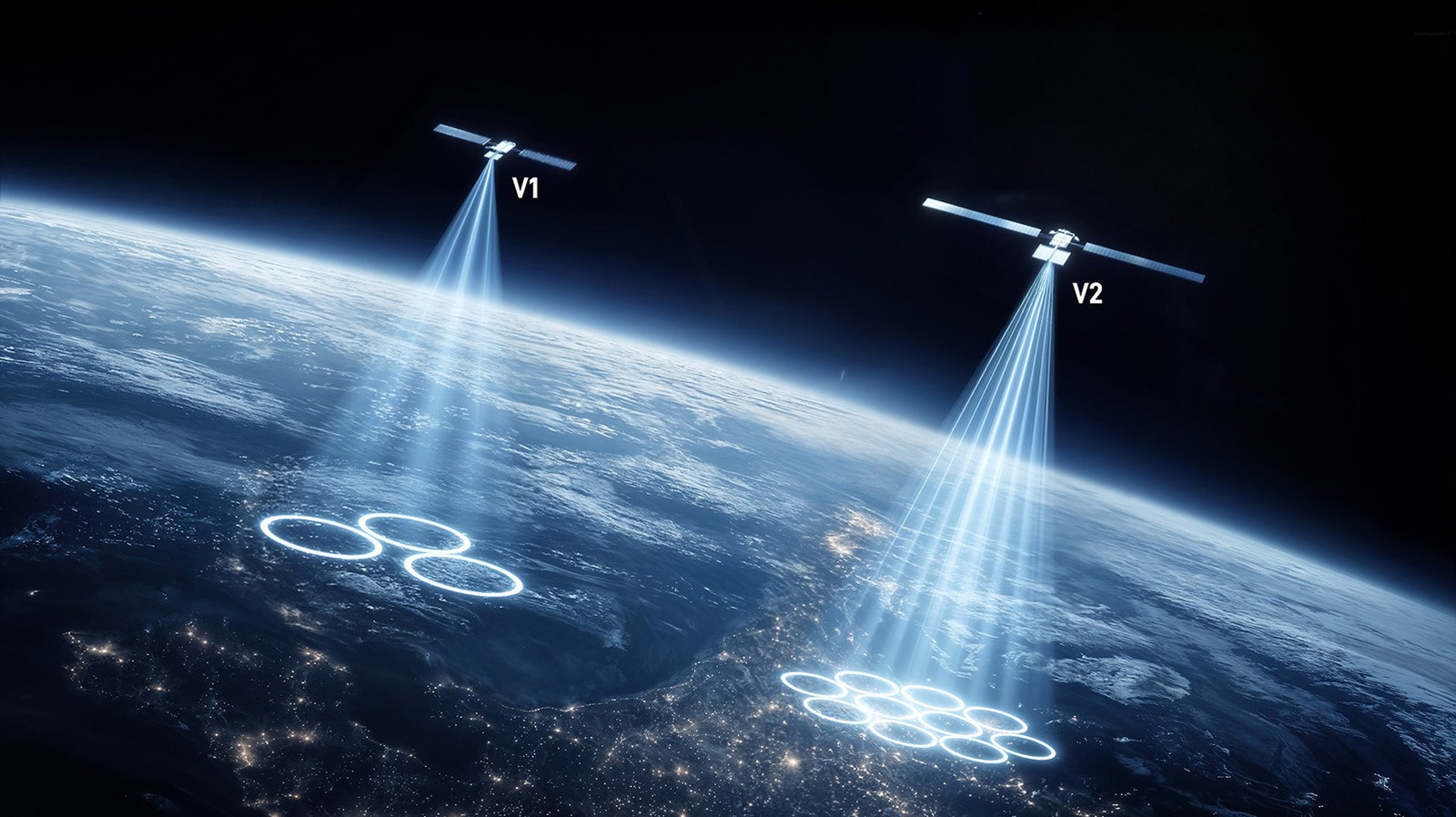
To validate its demisability analyses, Starlink actively conducts experimental testing, a practice it highlighted in a public statement. This rigorous approach seeks to ground theoretical predictions with empirical data, reinforcing confidence in the safety profile of its re-entering satellites. The goal is to ensure that even if fragments do survive, they pose minimal risk to life or property.
Strategic Orbital Adjustments and Future Expansion
Beyond routine deorbiting, SpaceX is also strategically adjusting its constellation’s architecture to enhance safety and performance. Michael Nicolls, VP for Starlink Engineering at SpaceX, announced in February 2025 (or potentially 2026, given other dates in the original context) that the company plans to lower the operational orbit of all Starlink satellites from approximately 550 kilometers to 480 kilometers throughout 2026. This significant orbital shift is motivated by multiple safety and operational benefits.
Nicolls explained that the number of space debris and planned satellite constellations is "significantly lower below 500 kilometers," thereby reducing the aggregate likelihood of collisions. This move aims to position Starlink within a less congested orbital band, proactively mitigating future collision risks in an increasingly crowded LEO environment. Furthermore, operating at a lower altitude means that satellites can be deorbited faster and more efficiently, improving response times for end-of-life procedures. SpaceX owner Elon Musk also weighed in, stating that the lower orbit would enable Starlink to serve a higher density of customers, suggesting an operational advantage in terms of network capacity and coverage. These adjustments reflect a dynamic approach to managing a mega-constellation, adapting to both environmental considerations and evolving service demands.
The future scale of Starlink operations is set to grow even further. SpaceX has filed an application with the FCC to launch an astounding one million additional satellites. These are not solely intended for broadband provision but are envisioned to create an "orbital data center" to support SpaceXAI, hinting at a new frontier for in-space data processing and artificial intelligence applications. This ambitious expansion underscores the long-term challenges and opportunities associated with LEO operations, particularly concerning space traffic management and environmental impact.
The Unanswered Questions: Environmental Impact of Satellite Re-entries
Despite SpaceX’s meticulous engineering and proactive measures, the environmental impact of thousands of satellite re-entries remains an area of active scientific inquiry and growing concern. As both American companies like SpaceX and Amazon (with its Project Kuiper constellation) and various Chinese entities launch their own mega-constellations, the sheer volume of material re-entering Earth’s atmosphere is unprecedented.
One primary concern highlighted by scientific bodies, including the Harvard Climate Brief, revolves around the combustion of organic materials within satellites, such as carbon-fiber composites. When these materials burn up during re-entry, they release black carbon particles, commonly known as soot, into the upper atmosphere. The precise impact of this influx of soot on atmospheric processes, including potential effects on cloud formation or radiative forcing, is currently unclear and requires further investigation.
More significantly, scientists have raised alarms about the fate of aluminum used in satellite construction. During re-entry, aluminum is expected to oxidize, forming particles of aluminum oxide. John Dykema, an applied physicist at the Harvard School of Engineering and Applied Sciences, explains that these aluminum oxide particles could act as new surfaces in the stratosphere, facilitating the conversion of ambient chlorine into its highly reactive, free radical forms. "Chlorine is one of the key actors in the ozone hole," Dykema noted, suggesting that an increase in reactive chlorine could "promote ozone loss."
While the immediate impact is not yet considered a cause for widespread alarm, Dykema and other researchers emphasize that a sustained accumulation of aluminum oxide in the atmosphere, resulting from ever-more frequent satellite deorbits, could potentially slow the recovery of Earth’s ozone layer. The ozone layer, critical for shielding the planet from harmful ultraviolet radiation, has been gradually recovering since the phasing out of chlorofluorocarbons (CFCs) in 1987 under the Montreal Protocol. Any factor that impedes this recovery represents a significant environmental concern that warrants careful monitoring and research.
The burgeoning LEO economy presents a dual challenge: harnessing the transformative potential of global connectivity while meticulously safeguarding Earth’s atmosphere and orbital environment. As SpaceX and other operators continue to expand their constellations, the scientific community’s scrutiny of re-entry impacts will intensify, pushing for a deeper understanding and potentially informing future design standards and regulatory frameworks to ensure long-term space sustainability. The dialogue between technological ambition and environmental stewardship is set to become a defining feature of the new space age.