Evan Lee Salim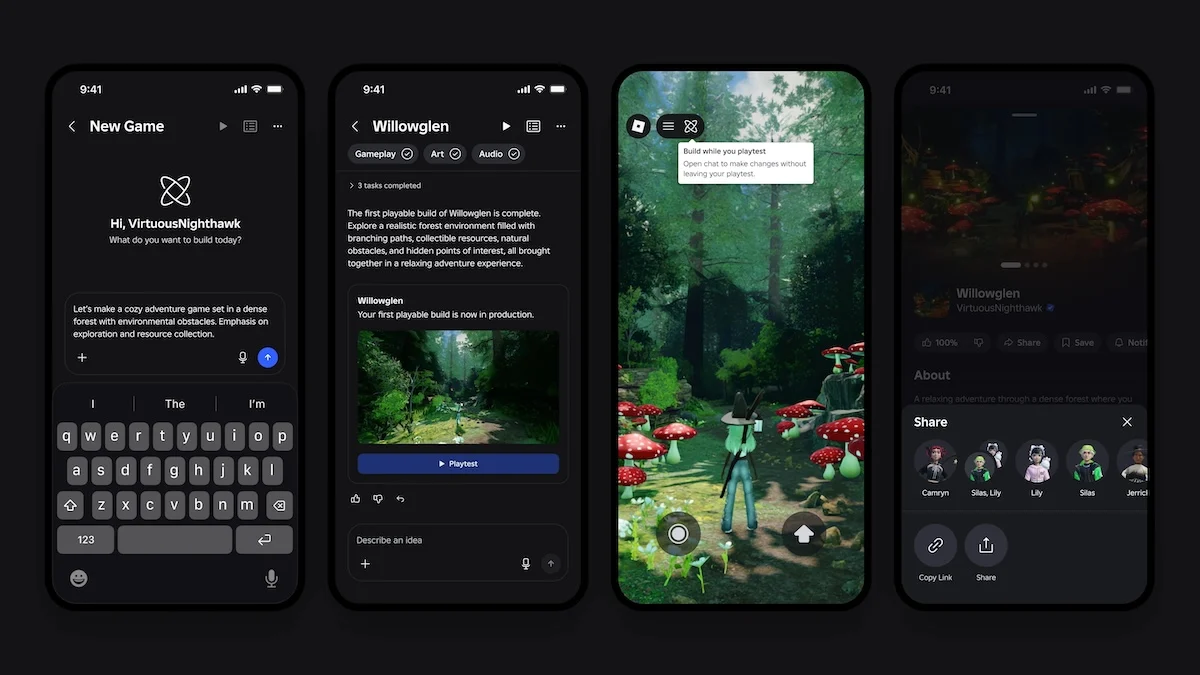
Roblox, the global immersive platform, on Thursday, July 25, 2026, announced the introduction of "Build," a groundbreaking new feature designed to empower users to create and design games directly from their mobile devices using sophisticated artificial intelligence. This initiative marks a significant leap in the democratization of game development, offering an unprecedented level of accessibility to aspiring creators worldwide. The announcement was made via an official blog post, outlining the transformative potential of this AI-powered tool.
The Genesis of Creation: Text to Game in Moments
The "Build" feature operates on an intuitive premise: transforming simple text prompts into fully functional, albeit basic, game environments. This eliminates the traditional barriers of programming knowledge and complex design software, opening the floodgates for a new wave of content creators. For instance, a user can input a prompt such as, "Let’s make a cozy adventure game set in a dense forest," and the "Build" feature will swiftly generate an initial version of the game. Users can then seamlessly modify, iterate, and share these creations with friends or the broader Roblox community. This capability is poised to drastically reduce the initial friction associated with game development, enabling creative ideas to materialize with remarkable speed and ease.
Underpinning this innovative capability is a robust technological infrastructure. According to Roblox’s blog post, "Build" is "Powered by a broad set of AI models, including both open-source and proprietary Roblox models." This hybrid approach allows the feature to intelligently handle a comprehensive array of game development elements, including intricate gameplay mechanics, immersive environmental design, diverse character creation, distinct visual styles, and evocative soundscapes. By automating these traditionally complex aspects, "Build" positions itself as a powerful accelerator for creative expression within the Roblox ecosystem, aligning with the platform’s long-standing mission to empower user-generated content (UGC).
A History of Innovation: Roblox’s Journey and the AI Horizon
Roblox Corporation, founded in 2004 by David Baszucki and Erik Cassel, has consistently been at the forefront of user-generated content and virtual world creation. Initially launched in 2006, the platform quickly distinguished itself by allowing users to create their own games and experiences using the proprietary Roblox Studio. This early emphasis on user empowerment laid the groundwork for its current metaverse ambitions, attracting hundreds of millions of monthly active users, a significant portion of whom are under the age of 16. The platform’s success is deeply intertwined with its vibrant creator economy, where developers can earn substantial revenue from their creations.
The integration of advanced AI tools like "Build" is not an isolated development but rather a logical progression in Roblox’s ongoing investment in artificial intelligence. Over the past few years, Roblox has steadily integrated AI into various aspects of its platform and development tools. This includes the deployment of an AI foundation model specifically for generating 3D game assets, which significantly streamlines the process of populating virtual worlds with detailed objects and environments. Furthermore, Roblox introduced an AI chatbot designed to assist developers throughout the game-building process, offering guidance, debugging support, and creative suggestions. The company is also actively developing a "new scene-generation model" capable of creating entire editable and playable 3D scenes from a single text prompt, signaling a comprehensive strategy to infuse AI into every layer of content creation. These prior investments demonstrate a clear, strategic commitment to leveraging AI to enhance the creator experience and accelerate the pace of innovation on the platform.
The Broader Landscape: AI in Game Development and Industry Parallels
Roblox’s "Build" feature emerges amidst a burgeoning trend of artificial intelligence integration within the broader technology and gaming industries. Major tech giants and gaming companies have been actively exploring and implementing similar AI-powered generation tools. Companies such as Google, with projects like "Project Genie" which allows users to build virtual worlds, Microsoft, and Tencent, a significant player in the global gaming market, have all invested heavily in developing AI capabilities that simplify and accelerate content creation. These initiatives range from AI-assisted art generation and procedural content creation to full-fledged game design tools, reflecting a collective industry push towards leveraging AI to lower development barriers and increase output.
The global generative AI market, estimated to be worth billions of dollars and projected to grow exponentially in the coming years, underscores the strategic importance of these developments. As AI models become more sophisticated, their capacity to understand, interpret, and execute complex creative tasks expands, making tools like "Build" increasingly viable and powerful. This competitive landscape highlights Roblox’s proactive stance in adopting cutting-edge technology to maintain its position as a leading platform for interactive entertainment and social experiences.
Navigating the Challenges: Concerns from the Developer Community
While the promise of democratized game development is immense, the rapid proliferation of AI-powered game generation tools has simultaneously ignited significant concerns within the developer community and among players. A primary apprehension, often articulated by critics, revolves around the potential for an influx of "low-quality" or "repetitive" games, sometimes colloquially referred to as "AI slop." The argument is that by drastically reducing the barriers to entry, the market could become saturated with content lacking originality, depth, or artistic merit, potentially diluting the overall quality of experiences available on platforms.
This concern is not merely speculative but is reflected in industry sentiment. The 2026 Game Developers Conference (GDC) State of the Game Industry survey, a prominent annual barometer of industry opinions, found that a striking 52% of game industry professionals believe that generative AI is having a "negative impact" on the industry. This statistic underscores a widespread unease about the transformative, and potentially disruptive, effects of AI on creative professions. Developers fear that increased competition, not just from other human creators but also from rapidly generated AI content, could make it harder for genuinely innovative and high-quality games to gain visibility and traction. The sheer speed at which AI-generated content can be produced poses a formidable challenge to traditional development cycles and creative processes. There are also concerns about intellectual property rights, fair compensation for human artists and developers, and the potential for AI to diminish the value of human creativity.
Roblox’s Strategic Response: Quality Control and Player Retention
Acknowledging these legitimate concerns, Roblox has outlined a clear strategy to mitigate the risks associated with AI-generated content and maintain the quality standards of its platform. Central to this strategy is the existing discovery system, which prioritizes games based on player engagement and long-term retention. Roblox plans to apply the same rigorous ranking methodology to games created using the "Build" feature.
"Our discovery systems are designed to highlight games with long-term retention, which doesn’t include AI slop," the company stated in its blog post. "The quality of games on the homepage isn’t changing: If no one plays it – no one can find it. The goal across these new tools is to continue to accelerate creation across all experience levels." This statement serves as a reassurance to the community that while creation will be accelerated, quality remains paramount. By emphasizing player retention, Roblox aims to ensure that only compelling and engaging experiences, regardless of their origin (human or AI-assisted), will achieve prominence on the platform. This mechanism is intended to naturally filter out low-quality or unengaging content, thereby safeguarding the user experience.
This approach aligns with Roblox’s business model, which thrives on sustained user engagement. Games that captivate players and encourage repeat visits are crucial for the platform’s overall health and the success of its creator economy. By integrating AI-generated games into this existing, performance-based discovery framework, Roblox seeks to harness the power of AI for creation while maintaining a meritocratic system for visibility.
Rollout and Accessibility: Phased Launch and Future Plans
The "Build" feature is set to enter public alpha testing on July 28, 2026, marking a critical phase for real-world user feedback and refinement. The initial rollout will be geographically limited to New Zealand, targeting users aged nine and older who have successfully verified their age. This phased approach allows Roblox to collect valuable data, identify potential issues, and iteratively improve the feature before a broader global launch.
Further expanding accessibility and opportunity, users aged 16 and up will be granted the ability to publish their "Build" creations to a global audience, enabling them to share their games with the entire Roblox community and potentially participate in the platform’s thriving creator economy. Roblox will offer a free, basic version of the "Build" feature, ensuring broad access, alongside paid options that are likely to provide advanced functionalities, additional resources, or premium features for more serious creators. This tiered approach is common in software-as-a-service models and allows users to choose the level of engagement that best suits their needs and ambitions.
Beyond the immediate launch of "Build," Roblox’s AI roadmap includes several other exciting developments slated for the coming months. The company is actively working on developing sophisticated AI agents designed to assist creators in critical aspects of game development, such as playtesting and analytics. These AI agents could simulate player behavior, identify bugs, optimize gameplay flows, and provide creators with actionable insights into their game’s performance and user engagement, further empowering developers to refine and improve their creations. These future tools underscore Roblox’s long-term vision of creating an AI-augmented development environment that supports creators at every stage of the game-building lifecycle.
A Shifting Landscape: The Broader Implications
The introduction of "Build" represents more than just a new feature; it signifies a pivotal moment in the evolution of content creation within virtual worlds. For Roblox, it reinforces its commitment to empowering its massive user base, particularly younger demographics, to transition from consumers to creators with unparalleled ease. This move could significantly expand the creator base, potentially leading to an explosion of diverse and novel experiences on the platform.
However, the implications extend beyond Roblox itself. This development contributes to the ongoing discourse about the future of work, creativity, and intellectual property in an age of advanced AI. It poses questions about the balance between human ingenuity and algorithmic generation, and how digital platforms will manage the deluge of AI-assisted content. The success of Roblox’s "Build" feature, particularly its ability to foster quality and retain player engagement amidst increased creation, will serve as an important case study for the entire industry.
Recent Context: Roblox Connect Discontinuation
In a related but distinct development, the announcement of the "Build" feature comes shortly after Roblox disclosed its plans to discontinue "Roblox Connect," an avatar-based video-calling feature introduced in 2023. This feature, which allowed users to engage in video calls with friends using their Roblox avatars, is slated to be sunset on July 15, 2026. While the company did not explicitly link the two decisions, the discontinuation of "Roblox Connect" highlights the dynamic nature of platform development and the continuous evaluation of features based on user adoption, strategic priorities, and resource allocation. It suggests a strategic pivot towards core strengths and potentially a reallocation of resources towards initiatives like AI-powered creation, which align more closely with Roblox’s long-term vision for its immersive platform.
Ultimately, Roblox’s "Build" feature stands as a bold step into the future of accessible game development. By lowering the entry barrier for millions, it promises to unleash a new wave of creativity, while simultaneously challenging the platform and the industry to grapple with the complexities of managing an unprecedented volume of AI-assisted content. The success of this endeavor will hinge not only on the technological prowess of the AI but also on Roblox’s ability to foster a vibrant ecosystem that celebrates both the ease of creation and the enduring value of quality and innovation.