admin
admin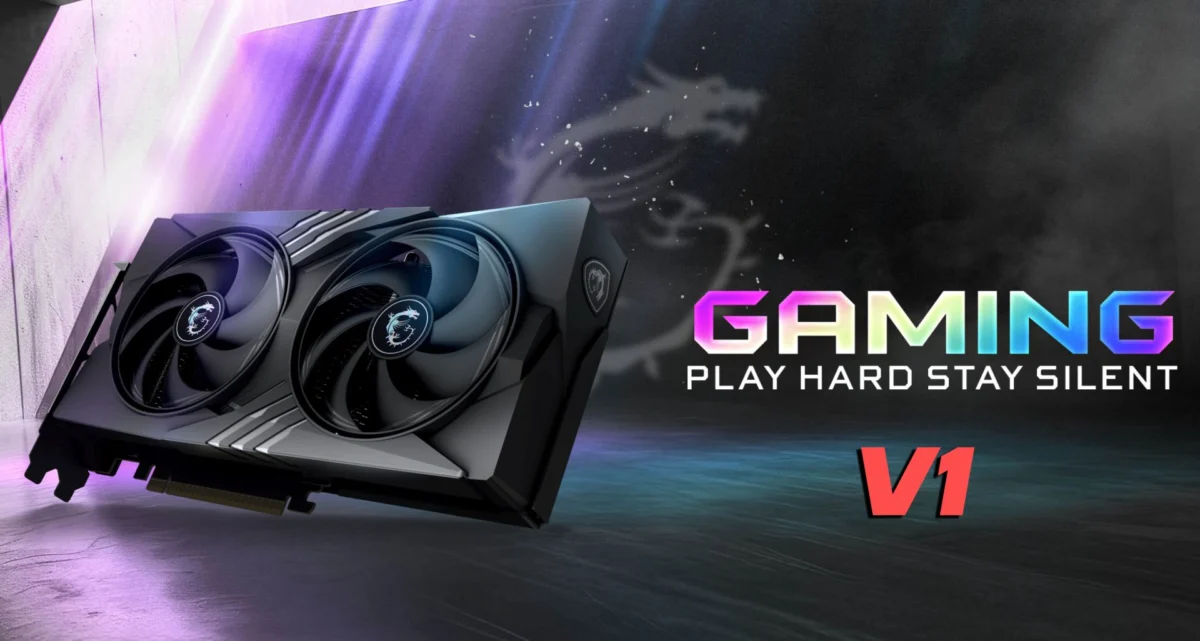
The discovery, first reported by hardware leaker @unikoshardware, identifies four distinct models under the new V1 designation: the MSI GeForce RTX 5060 VENTUS 2X V1, the RTX 5060 VENTUS 2X OC V1, the RTX 5060 GAMING V1, and the RTX 5060 GAMING OC V1. This development comes at a peculiar time for the industry. While enthusiasts have been eagerly awaiting the arrival of the "Super" or "Ti" refreshes for the Blackwell-based RTX 50 series, recent reports suggest that NVIDIA has temporarily paused the rollout of refreshed SKUs due to the volatile pricing of high-speed GDDR7 memory. In the interim, partners like MSI are refining their existing lineups through hardware revisions that optimize manufacturing yields.
Technical Analysis: The GB205 Die Swap and Its Implications
At the heart of this story is the transition from the GB206 die to the GB205 die. In the standard hierarchy of NVIDIA’s Blackwell architecture, the GB206 is the native silicon designed specifically for the RTX 5060 class of products. It features a specific count of CUDA cores, RT cores, and Tensor cores optimized for 1080p and entry-level 1440p gaming. Conversely, the GB205 is a larger, more complex piece of silicon designed for the RTX 5070.
The use of a "cut-down" GB205 in an RTX 5060 is a classic example of "die harvesting" or "binning." In semiconductor fabrication, not every chip that comes off the wafer is perfect. A GB205 die might have defects in a cluster of its CUDA cores that prevent it from meeting the stringent performance requirements of an RTX 5070. However, if the rest of the chip functions perfectly, it can be "cut down"—software-locked or laser-fused to disable the defective parts—until its specifications match those of a lower-tier product like the RTX 5060.
For the end-user, the most visible evidence of this change is the physical mounting of the GPU. The standard RTX 5060 (GB206) utilizes a square GPU mounting bracket. However, the V1 models featuring the GB205 die utilize a rectangular mounting system. This rectangular layout is a direct inheritance from the larger RTX 5070 PCB designs. While MSI has ensured that these V1 cards maintain the same clock speeds, power limits, and memory configurations as the original GB206-based models, the physical difference in the die size and mounting suggests that MSI may be using modified PCBs or cooling solutions originally designed for higher-TDP (Thermal Design Power) cards to accommodate the larger silicon footprint.

The Economics of GPU Manufacturing and Memory Pricing
The timing of MSI’s "V1" launch is inextricably linked to the broader economic climate of the PC hardware market. NVIDIA’s Blackwell architecture has been met with high demand, but the cost of production remains a hurdle for mid-range affordability. Recent industry data indicates that the cost of GDDR7 memory—a cornerstone of the RTX 50 series—has remained stubbornly high, leading to the reported delay of the RTX 50 "Super" series.
By utilizing harvested GB205 dies, MSI and NVIDIA can improve the "effective yield" of their production lines. Instead of discarding GB205 chips that fail to meet the 5070 standard, they can be repurposed into 5060 units. This allows MSI to maintain a steady supply of RTX 5060 cards even if the supply of native GB206 dies is constrained or if the cost of manufacturing new GB206 wafers is less efficient than utilizing existing GB205 inventory.
From a business perspective, this "V1" strategy serves three primary purposes:
- Waste Reduction: Maximizing the utility of every wafer produced by TSMC.
- Inventory Management: Addressing the gap in the market left by the delayed Super series.
- Margin Protection: Lowering the effective cost of the RTX 5060 lineup by using silicon that has already been accounted for in the production cycle of higher-margin products.
A Chronology of Die Harvesting in the GeForce Era
The practice of swapping dies for lower-tier cards is not unprecedented in NVIDIA’s history. During the RTX 30 series (Ampere) lifecycle, several manufacturers released versions of the RTX 3060 that used the GA104 die (originally for the RTX 3070/3080) instead of the standard GA106. Similarly, in the RTX 40 series (Ada Lovelace), we saw instances where the RTX 4070 was outfitted with a cut-down AD103 die (originally for the RTX 4080).
In almost all historical cases, these "franken-cards" perform identically to their standard counterparts in gaming benchmarks. However, they often become favorites among the enthusiast community for several reasons. First, a larger die often has a larger surface area, which can lead to better heat dissipation when paired with a high-quality cooler. Second, because these dies are essentially "de-tuned" versions of high-end silicon, they sometimes exhibit different power delivery characteristics that can affect extreme overclocking, though this is rarely a factor for the average consumer.

The MSI V1 Lineup: Ventus and Gaming Series
MSI’s decision to implement this change across both the Ventus and Gaming series indicates a broad transition in their manufacturing pipeline.
The Ventus 2X V1 Series
The Ventus 2X has long been MSI’s "workhorse" SKU, focusing on a no-frills, dual-fan design that fits into most standard PC builds. The V1 and V1 OC versions of the Ventus 2X RTX 5060 are expected to maintain the compact form factor and minimalist aesthetic of the original. However, the internal shift to the GB205 die may necessitate a slightly different heat-pipe arrangement to ensure contact with the larger rectangular silicon.
The Gaming V1 Series
The Gaming series (and its OC variant) sits a tier above the Ventus, offering better aesthetics, RGB lighting, and usually a more robust cooling solution like the Twin Frozr design. For the Gaming V1 models, the use of the GB205 die is particularly interesting. Enthusiasts will likely monitor these cards closely to see if the larger die offers any marginal thermal improvements during sustained heavy workloads, such as 4K video rendering or extended gaming sessions in poorly ventilated cases.
Market Impact and Consumer Transparency
One of the most critical aspects of this launch is MSI’s transparency. By labeling these cards clearly as "V1" on the official product pages and retail packaging, MSI is providing a level of clarity that has sometimes been lacking in previous die-swap scenarios. In the past, manufacturers have occasionally swapped dies without changing the model name, leading to confusion when consumers noticed physical differences in the PCB or GPU core.
For the general consumer, the performance delta between a standard RTX 5060 and a V1 model is expected to be zero. NVIDIA’s drivers are designed to recognize the harvested die and apply the correct BIOS limitations to ensure parity across the product line. However, for the secondary market—specifically used hardware buyers and collectors—the V1 designation will become a significant identifier.

Future Outlook: The Blackwell Roadmap
As the industry moves toward the end of the year, the focus remains on when NVIDIA will resolve the memory pricing issues and proceed with the RTX 50 Super series. Until then, the "V1" cards from MSI represent the current state of the market: a period of optimization and refinement rather than radical new releases.
The use of the GB205 die in the RTX 5060 may also signal that NVIDIA has achieved a high volume of production for its mid-to-high-end silicon, allowing for enough "leftover" chips to supplement the entry-level market. This bodes well for overall GPU availability, suggesting that the supply chain is robust enough to handle the repurposing of chips without impacting the availability of the flagship RTX 5070 and 5080 models.
In conclusion, while the MSI RTX 5060 V1 series may seem like a minor technical footnote, it is a revealing look at the logistical gymnastics required to maintain a global hardware brand. By successfully integrating the GB205 die into the 5060 family, MSI has ensured that it can continue to provide high-performance hardware to gamers while navigating the turbulent waters of semiconductor yields and fluctuating component costs. As these cards hit retail shelves, they will serve as a testament to the flexibility of the Blackwell architecture and the efficiency of modern hardware engineering.