Vera Intan Clara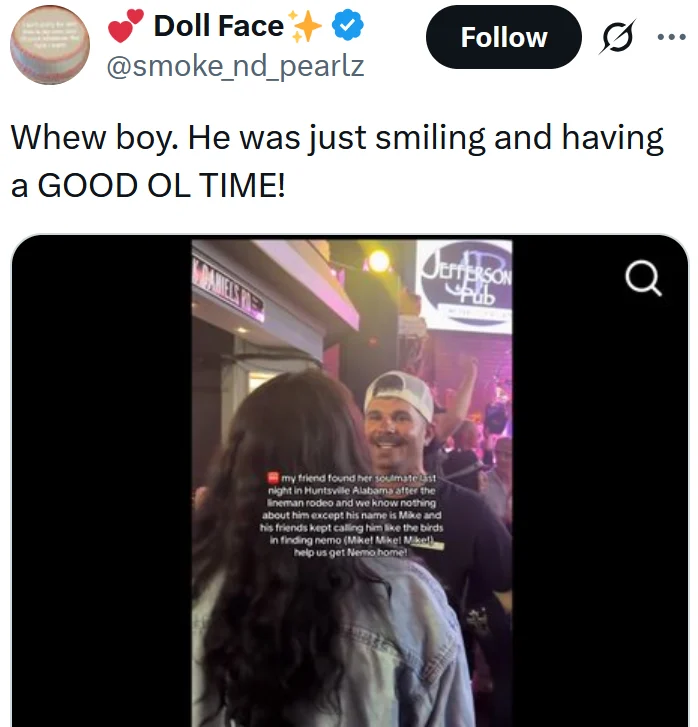
The digital landscape, often a stage for fleeting trends and shared moments, recently transformed into an unwitting courtroom as a seemingly innocuous TikTok video inadvertently exposed a married man’s infidelity to millions, including his unsuspecting wife. What began as a lighthearted attempt to find a "soulmate" for a friend quickly unraveled into a stark public spectacle of betrayal, underscoring the profound and often unforeseen consequences of social media’s pervasive reach in contemporary society. The incident, centered around a man identified as Michael from Alabama, has ignited a fierce debate across various platforms regarding privacy, accountability, and the destructive power of viral content.
The Genesis of a Viral Revelation: A Night Out in Huntsville
The chain of events that led to this high-profile exposure commenced on a Monday evening following a local power lineman rodeo in Huntsville, Alabama. The rodeo, an annual or semi-annual event that showcases the critical skills and competitive spirit of utility workers, draws participants and spectators from across the region. These gatherings, often characterized by a festive and communal atmosphere, can include social events and gatherings at local establishments where participants unwind after the day’s rigorous competitions. It was in such a setting that Mikala West, a TikTok user, recorded footage of her friend engaging in what appeared to be a romantic encounter with a man at a bar.
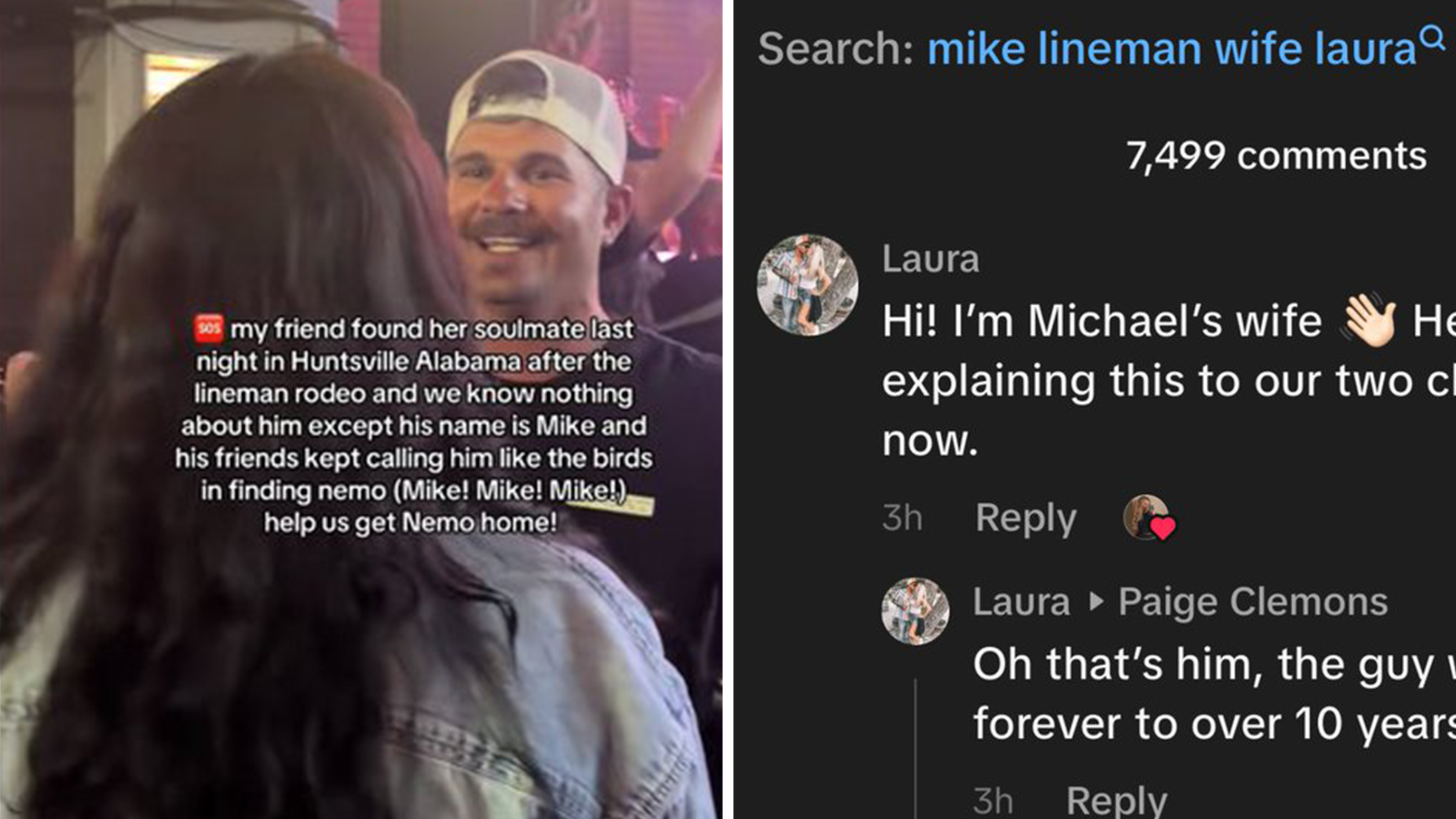
West’s intention, as articulated in her subsequent viral post, was entirely benign. She sought to leverage the immense power of TikTok’s community to assist her friend in reconnecting with the man, whom she believed to be a promising romantic interest. The video caption read: "SOS, my friend found her soulmate last night in Huntsville Alabama after the lineman rodeo and we know nothing about him except his name is Mike and his friends kept calling him like the birds in finding nemo (Mike! Mike! Mike!)," adding a playful plea, "help us get Nemo home!" This phrase, a nod to the popular animated film "Finding Nemo," suggested a whimsical quest to reunite two individuals who had seemingly connected. Unbeknownst to West, her digital "help me find" initiative would swiftly veer into an entirely different, and far more serious, domain.
The Huntsville Power Restoration Rodeo: A Backdrop to Betrayal
To fully appreciate the context of the incident, it is essential to understand the nature of the event preceding it. According to local news outlet WAFF48, the gathering was specifically identified as a power line workers’ rodeo. These specialized competitions are designed to test the skills, speed, and safety protocols of linemen in scenarios mimicking real-world power restoration challenges. Participants compete in various events such as pole climbing, transformer change-outs, and hurt-man rescues, all while adhering to strict safety standards. Such rodeos are crucial for training, skill development, and fostering camaraderie within the demanding utility industry. The atmosphere at these events is typically one of focused competition during the day, often followed by celebratory or social gatherings in the evening. This context highlights that the man, Michael, was likely in Huntsville for a professional event, making his subsequent activities at the bar all the more significant in the eyes of public scrutiny.
The Unforeseen Ripple Effect: From "Soulmate" Search to Marital Exposure
The video, featuring the unidentified man and West’s friend in close conversation and appearing affectionate, quickly garnered attention. Within hours of its upload, it began its rapid ascent into virality, accumulating over 10.5 million views. This exponential growth in viewership is characteristic of TikTok’s powerful algorithm, which can propel content into the feeds of millions globally in a remarkably short span. The platform, with its estimated 1.5 billion monthly active users worldwide, has become a formidable tool for information dissemination, often with unpredictable outcomes.
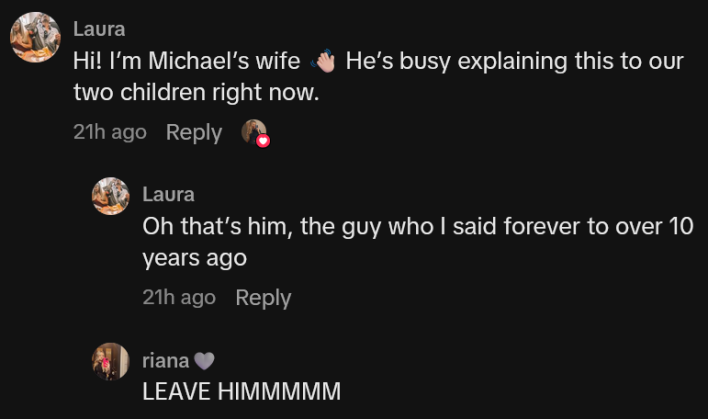
The true turning point in the narrative arrived when Laura, identifying herself as Michael’s wife, left a comment on West’s video. Her statement was succinct, direct, and devastating: "Hi! I’m Michael’s wife. He’s busy explaining this to our two children right now." This comment immediately transformed the video from a lighthearted "soulmate" quest into a public exposé of infidelity. Laura’s comment quickly became the top-voted remark, drawing hundreds of thousands of likes and replies, effectively confirming the man’s identity and his marital status.
The wife’s revelation underscored the profound personal ramifications of such digital exposures. Her mention of "our two children" added a layer of gravity, highlighting the collateral damage that infidelity, when publicly revealed, can inflict on an entire family unit. Attempts by some users to dispute Michael’s identity were swiftly shut down by Laura, who pointed to a distinctive tattoo sleeve visible in the video, stating, "Oh that’s him, the guy who I said forever to over 10 years ago." This detail served as irrefutable proof, leaving no room for doubt or denial.
The Internet’s Verdict: A Chorus of Reactions and Digital Karma
The public’s reaction to the unfolding drama was swift and overwhelmingly in support of Laura. The comment section of West’s TikTok video became a forum for collective outrage, sympathy, and a strong sense of digital justice. Users from various corners of the internet, including those who had migrated from platforms like Facebook and X (formerly Twitter) where the story had been reposted and gone viral, joined the conversation.
Comments poured in, expressing a range of sentiments:
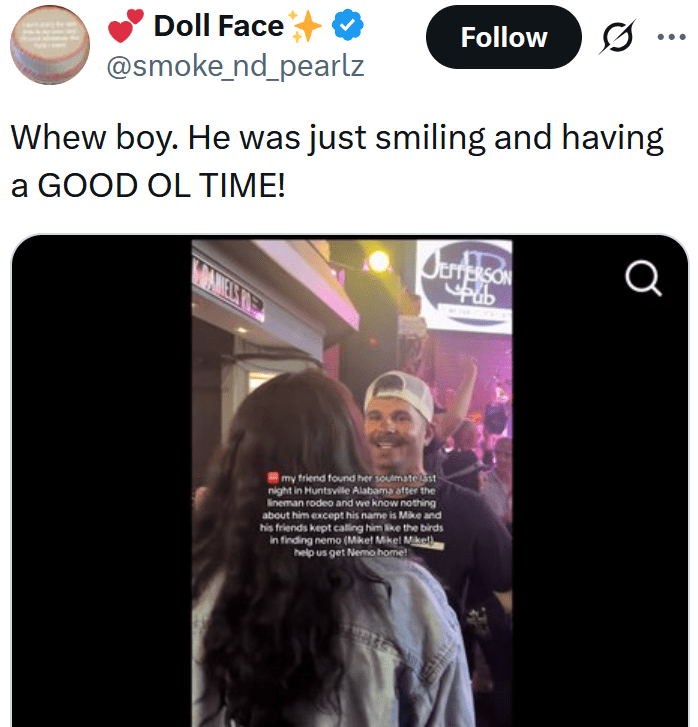
- "Whew boy. He was just smiling and having a GOOD OL TIME!" wrote @smoke_nd_pearlz on X, capturing the stark contrast between Michael’s carefree demeanor in the video and the impending fallout.
- "Sometimes I love the internet. Karma," tweeted @hell_line0, reflecting a prevalent sentiment that social media had delivered a form of deserved retribution.
- On TikTok, the "Finding Nemo" analogy was cleverly repurposed to mock Michael’s apparent amnesia regarding his marital commitments: "Looks like Nemo is actually Dory. Forget where he lived and his family," joked @stacizzls.
- The widespread nature of the condemnation was further illustrated by comments like, "I am Mike’s grandmother I am also mad at him," from @watty647, and "I am a Mike, and I’m also disappointed in Mike," from @newmatic_koala, demonstrating how the incident resonated across different demographics and even among those sharing the same name.
This collective outcry highlights the powerful role of social media as a platform for public shaming and accountability. In an era where personal lives are increasingly lived online, the line between private actions and public scrutiny has become irrevocably blurred. The rapid spread of such content demonstrates the internet’s capacity to act as a decentralized, self-regulating mechanism for enforcing certain societal norms, particularly those related to fidelity and honesty.
Digital Accountability in the Age of Pervasive Connectivity
The "Mike from Alabama" incident serves as a potent case study in the evolving dynamics of digital accountability. In an age where nearly every public interaction can be recorded and instantly disseminated, the traditional boundaries of privacy have been significantly eroded. This phenomenon has profound implications for individual behavior and societal expectations.
The concept of "digital karma" — where actions captured online lead to swift and often severe consequences — is increasingly prevalent. Social media platforms, with their massive user bases and powerful algorithms, act as amplifiers, transforming isolated incidents into global spectacles. While this can lead to uncomfortable public exposures, proponents argue that it also serves as a deterrent against unethical behavior, forcing individuals to consider the potential for widespread public scrutiny.
Data on marital infidelity suggests its persistent presence across societies. A study by the Institute for Family Studies in 2021 indicated that approximately 16% of married adults have admitted to engaging in extramarital affairs. While the prevalence remains significant, the discovery of infidelity has been radically transformed by digital tools. GPS tracking, hidden cameras, and now, viral social media posts, offer new avenues for uncovering deceit. The Mike incident exemplifies how a casual social media post, made without malicious intent, can become the catalyst for exposing deeply personal truths, fundamentally altering lives.
Ethical Considerations and the Future of Online Exposures
While the public largely celebrated the swift "justice" delivered to Michael, the incident also raises important ethical questions about privacy, consent, and the long-term implications of viral content. Mikala West, the original poster, likely had no intention of exposing a marital affair. Her video was a simple request for assistance. Yet, the outcome demonstrates the unpredictable nature of online interactions and the potential for unintended harm, even when intentions are pure.
The ethical dilemma lies in the tension between the public’s right to information (or at least, access to publicly posted content) and an individual’s right to privacy, even when their actions are morally questionable. In public spaces like bars, there is generally a reduced expectation of privacy. However, the mass dissemination of such footage and its subsequent impact on private lives, particularly involving children, prompts a broader discussion about the responsibilities of content creators and platform users.
For Michael, the consequences extend far beyond immediate public humiliation. His reputation, both personal and professional, is irrevocably damaged. The impact on his marriage with Laura and his relationship with their children will be profound and enduring. For Laura, while the public outpouring of support may offer some solace, she is left to navigate the very public aftermath of a deeply personal betrayal.
The "Mike from Alabama" story is more than just a sensational viral moment; it is a powerful contemporary parable about the intersection of personal choices, digital omnipresence, and societal accountability. As our lives become increasingly intertwined with the digital realm, such incidents will likely become more frequent, forcing individuals and society alike to grapple with the complex ethical landscape of an ever-connected world where secrets are harder to keep, and consequences can spread at the speed of light. The episode underscores a critical lesson: in the digital age, actions, whether intentional or accidental, can carry consequences far beyond their immediate context, resonating globally and leaving indelible marks on individual lives.