Vera Intan Clara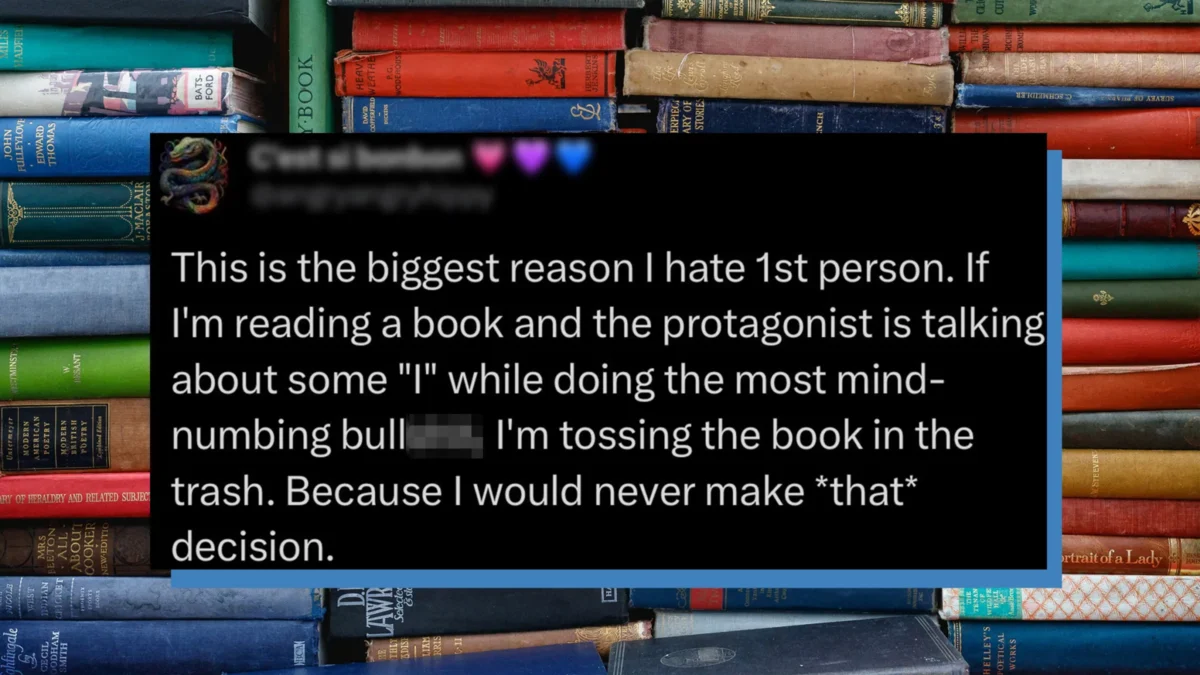
A significant discussion has emerged within literary and online communities, raising concerns about a potential decline in media literacy among younger generations, particularly Gen Z. At the heart of this discourse is a widespread misunderstanding of the first-person narrative perspective in fiction, with a growing number of readers apparently conflating the "I" of a fictional character with their own personal identity and choices. This trend, largely amplified through social media platforms, has prompted authors, educators, and seasoned readers to sound the alarm on what they perceive as a fundamental gap in literary comprehension.
The Catalyst: A Social Media Spark Ignites Broader Concerns
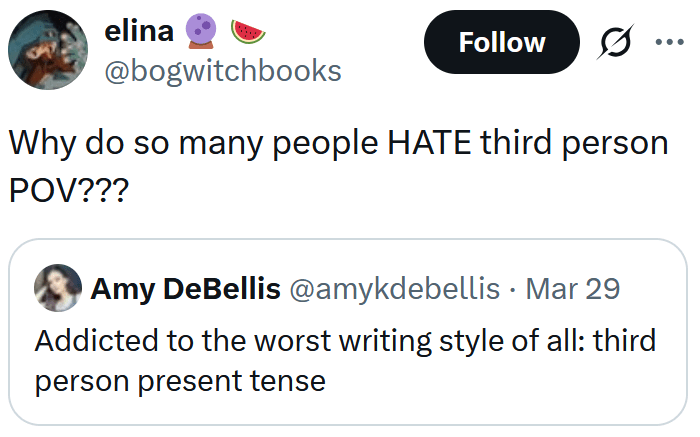
The debate ignited over a recent weekend on X (formerly Twitter), tracing back to a post by author Amy DeBellis. In a lighthearted, albeit pointed, critique of writing styles, DeBellis tweeted, "Addicted to the worst writing style of all: third person present tense." While seemingly a playful jab at a specific literary convention, her post inadvertently became a lightning rod for a much deeper conversation about narrative understanding.
The initial reactions to DeBellis’s tweet showcased a curious divergence. While many in the literary sphere understood her comment as an ironic take on a challenging stylistic choice, a considerable segment of respondents took it literally. This literal interpretation quickly spiraled into a broader discussion about narrative perspectives, particularly the perceived shortcomings of the third-person point of view.
One notable reply, from user @bogwitchbooks, questioned, "Why do so many people HATE third person POV???" This seemingly innocuous query opened the floodgates for opinions that revealed a startling disconnect from traditional literary interpretation. The ensuing dialogue suggested that for some, the preference for or aversion to certain narrative styles stemmed not from aesthetic appreciation or thematic resonance, but from a deeply personal and often literal interpretation of the text.
Unveiling the Misconception: "I" as "Me" in Fictional Worlds
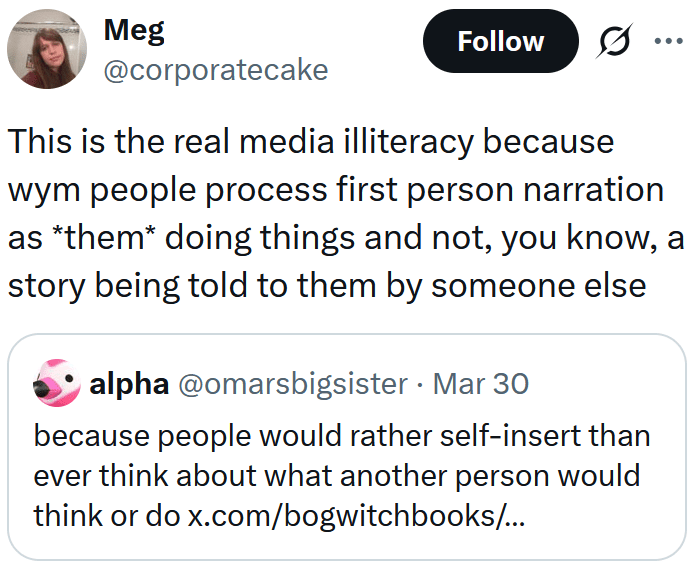
The true extent of the misunderstanding became acutely apparent when user @omarsbigsister offered an explanation for the perceived disdain for third-person narratives. On Monday, they suggested that the preference for first-person perspective is "because people would rather self-insert than ever think about what another person would think or do." This observation, intended perhaps as a critique of egocentric reading habits, inadvertently spotlighted a core issue: a significant segment of readers believes that "I" in a first-person narrative inherently means them as the reader, rather than the distinct voice of a fictional character.
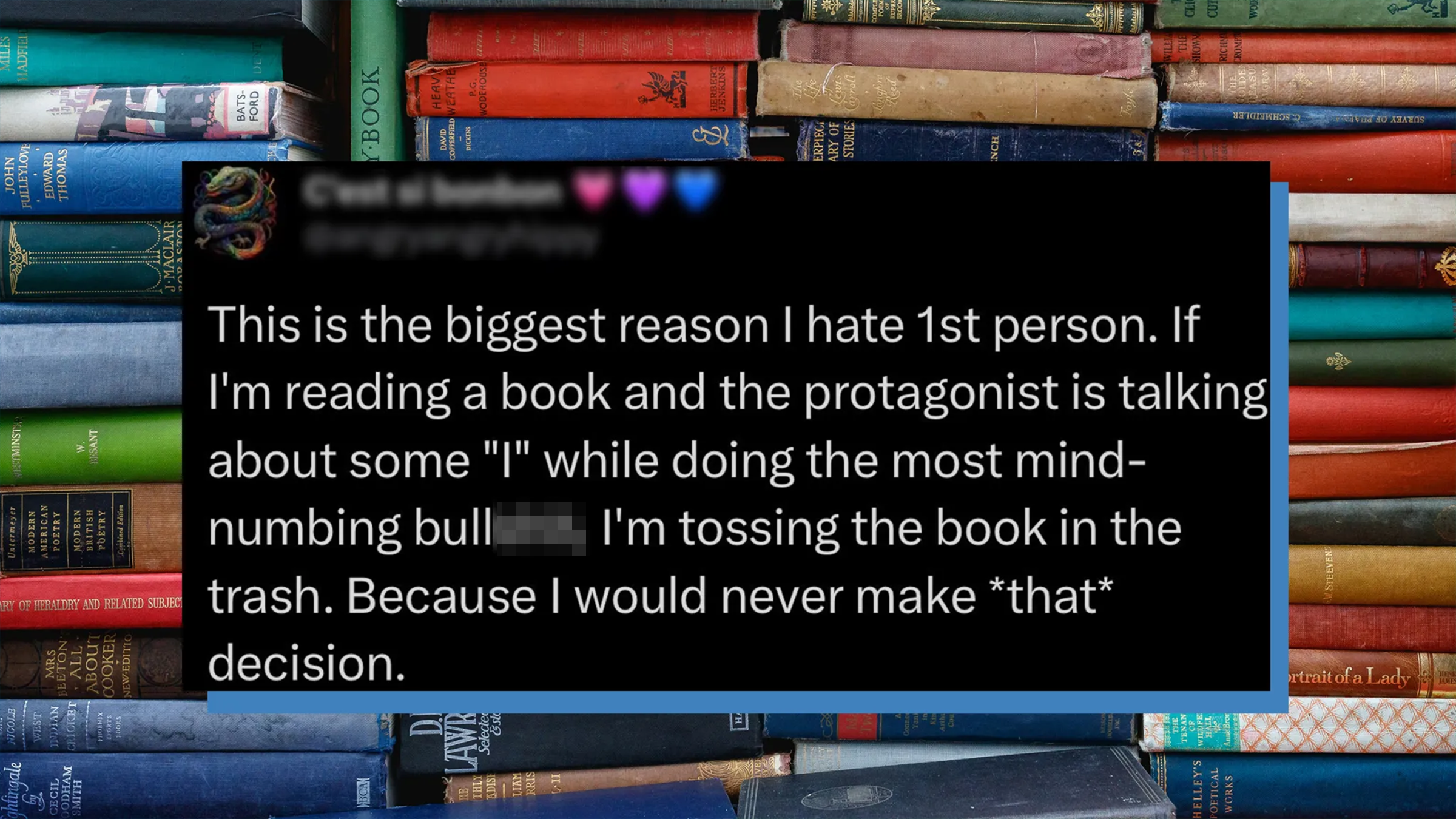
This notion was vividly illustrated through a series of screenshots shared by avid reader @illjoy_, which quickly gained traction. These tweets presented undeniable evidence of a fundamental knowledge gap regarding narrative perspective. User @angryangryhippy articulated this sentiment starkly, stating, "This is the biggest reason I hate 1st person. If I’m reading a book and the protagonist is talking about some ‘I’ while doing the most mind-numbing bullshit, I’m tossing the book in the trash. Because I would never make that decision."
Another user, @Bassanimation, echoed this frustration, adding, "Omg thank you, there’s nothing more annoying than first person and it’s a terrible character. ‘I’ did not arrive at the frat party wearing no panties, THAT barnyard animal did and she’s making a mess on all the furniture." This particular tweet, while controversial for its language and underlying misogynistic tone (as noted in the original commentary), underscored the core problem: the reader felt personally implicated by the character’s actions, unable to dissociate themselves from the fictional "I."
These reactions are emblematic of a broader issue where the boundary between reader and character becomes blurred, transforming a narrative into a direct, personal experience rather than an exploration of another’s perspective. The expectation that a first-person protagonist’s choices must align with the reader’s own hypothetical decisions reveals a fundamental misapprehension of the author’s craft and the reader’s role.
Defining Narrative Perspectives: A Primer on Literary Tools
To fully grasp the gravity of this misinterpretation, it is crucial to revisit the foundational concepts of narrative perspective in literature:
- First-Person Perspective: This is arguably the most intimate point of view, where the story is told by one of the characters, using "I" or "we." The reader experiences events directly through the character’s eyes, hearing their thoughts, feelings, and biases. The intention is to create a deep connection and allow the reader to understand the world as that character perceives it, not to embody the character themselves. Classic examples include J.D. Salinger’s The Catcher in the Rye or Charlotte Brontë’s Jane Eyre. The "I" is unequivocally the character, not the reader.
- Second-Person Perspective: This is far less common in traditional narrative fiction. It addresses the reader directly using "you," immersing them as the protagonist of the story. "You walk into the room. You see a light switch." This style is frequently employed in "choose-your-own-adventure" books, interactive fiction, or instructional manuals, precisely because it is designed for reader self-insertion. The fact that some Gen Z readers are treating first-person narratives as if they were written in the second person highlights the depth of the misunderstanding.
- Third-Person Perspective: This point of view uses pronouns like "he," "she," "they," or character names. The narrator is outside the story, observing the characters and events. It can range from omniscient (knowing everything about all characters) to limited (focusing on one character’s thoughts and feelings) to objective (reporting only what is seen and heard). This perspective offers a broader scope and a degree of distance, allowing for a more objective or panoramic view of the narrative. Jane Austen’s Pride and Prejudice and J.R.R. Tolkien’s The Lord of the Rings are prime examples.
The confusion between first-person and second-person perspectives is particularly telling. Authors choose first-person to allow readers to empathize with a character, to see the world through their unique lens, not to become them. The character’s flaws, triumphs, and questionable decisions are integral to their development and the story’s message, offering opportunities for reflection and critical analysis, not personal offense.
The Broader Context: Media Literacy Concerns and Educational Implications
The reactions from the literary community were largely a mix of bafflement and genuine concern. Many writers and experienced readers quickly identified this phenomenon as a symptom of a deeper crisis in media literacy. The inability to distinguish between a fictional character’s voice and one’s own identity suggests a potential deficiency in critical reading skills—the capacity to analyze, interpret, and evaluate various forms of media.
User @corporatecake succinctly captured this sentiment, tweeting, "This is the real media illiteracy because wym people process first person narration as them doing things and not, you know, a story being told to them by someone else." This statement resonates with a growing unease among educators and cultural commentators about how younger generations engage with information and narratives in an increasingly complex digital landscape.
The implications extend beyond mere literary appreciation. A lack of media literacy can impact how individuals interpret news, engage with political discourse, and discern fact from fiction in an era rife with misinformation. If the fundamental concept of a distinct narrative voice in fiction is challenging, it raises questions about the ability to critically evaluate more complex or nuanced forms of communication.
The frustration among some commentators was so profound that it led to ironic, albeit stark, suggestions. @jroberts332 (hopefully joking) wrote, "Never thought I’d say this, but I think fewer people should read books." Similarly, @kennixonette questioned, "I know it’s good for many reasons that literacy is so widespread these days but also doesn’t it feel cruel that people like this have been forced to learn to read?" These hyperbolic statements, while not serious proposals, underscore the deep concern over what appears to be a regression in fundamental interpretive skills. The observation by @neontaster, "I bet you can guess which generation these people belong to," further solidified the perception that this issue is predominantly associated with Gen Z.
Roots of Misinterpretation: A Digital Age Confluence?
Several factors might contribute to this peculiar misinterpretation, many of them rooted in the evolving landscape of digital media and contemporary entertainment:
- Rise of Interactive Media and Gaming: Gen Z has grown up immersed in video games, particularly role-playing games (RPGs), where players do control a character and make choices that directly impact the narrative. This interactive experience often blurs the lines between player and avatar, fostering a sense of self-insertion. Similarly, "choose-your-own-adventure" formats and interactive stories on platforms like TikTok or Wattpad directly encourage the reader to assume the protagonist’s role.
- Prevalence of Fan Fiction and "Reader-Insert" Narratives: The fan fiction community, hugely popular among younger demographics, frequently features "reader-insert" stories where the protagonist is explicitly left vague or referred to as "Y/N" (Your Name) to allow the reader to project themselves into the narrative. This practice, while creative, can inadvertently reinforce the idea that all first-person "I"s are meant for self-insertion.
- Changes in Educational Approaches to Literature: It is possible that modern educational curricula, particularly in an effort to make literature more "relatable" or "engaging," might inadvertently de-emphasize the analytical distinction between reader and character. While fostering empathy is crucial, it must be balanced with teaching critical distance and the understanding of authorial intent.
- Impact of Short-Form Content and Declining Attention Spans: The rapid consumption of short-form content on platforms like TikTok, Instagram Reels, and YouTube Shorts often prioritizes immediate gratification and personal connection over deep analytical engagement. This environment may cultivate reading habits that are less conducive to nuanced literary interpretation.
- Echo Chambers and Algorithmic Amplification: Social media platforms are notorious for creating echo chambers where niche ideas or misunderstandings can be amplified and gain perceived legitimacy within specific user groups. What might start as an isolated misinterpretation can quickly become a widely shared (and therefore seemingly validated) perspective.
Expert Perspectives and Educational Implications
Literary scholars and educators would likely emphasize that critical reading is not merely about decoding words but about understanding context, authorial voice, narrative structure, and the subtle interplay of language. The ability to differentiate between a character’s perspective and one’s own is fundamental to developing empathy, understanding diverse viewpoints, and engaging with complex ethical dilemmas presented in fiction.
This situation calls for a renewed focus on foundational literary education. Instead of solely emphasizing plot or character, curricula might need to explicitly address narrative techniques, the purpose of different points of view, and the distinction between author, narrator, and reader. Workshops on critical thinking and media literacy, particularly tailored to address digital consumption habits, could prove invaluable.
Implications for Authors and Publishing
For authors, this trend presents a unique challenge. While the goal of first-person narration is often to forge a strong, intimate bond between reader and character, authors do not typically intend for readers to become the character, especially not to the point of personal offense over fictional decisions. This misunderstanding could lead to:
- Self-Censorship: Authors might become more hesitant to write complex, flawed first-person protagonists for fear of alienating readers who demand relatability above all else.
- Shifting Narrative Choices: There might be a subtle push towards third-person narratives or more unambiguous character development to avoid such misinterpretations.
- Marketing Challenges: Publishers might need to re-evaluate how they present first-person narratives, perhaps adding contextual notes or engaging in educational campaigns about literary perspectives.
- Impact on Literary Freedom: The pressure for characters to always be "likable" or to make "good" decisions, driven by reader self-insertion, could stifle creative expression and the exploration of difficult themes.
Moving Forward: Fostering Deeper Engagement
The discourse surrounding Gen Z’s interpretation of first-person narrative serves as a vital reminder of the ongoing importance of media literacy in a rapidly evolving digital world. It highlights that the act of reading is not passive but an active engagement that requires specific skills and a foundational understanding of literary conventions.
Addressing this issue will require a multi-pronged approach involving educators, authors, publishers, and even social media platforms. Promoting critical reading skills, emphasizing the distinction between self and character, and fostering an appreciation for the nuances of narrative perspective are crucial steps. Ultimately, the goal is not to discourage reading but to cultivate a generation of readers who can engage with literature on its own terms, appreciating its power to transport, challenge, and enlighten without demanding that every "I" reflect their own personal reflection. The ability to step into another’s shoes, even a fictional character’s, without claiming them as one’s own, remains a cornerstone of empathy and intellectual growth.