admin
admin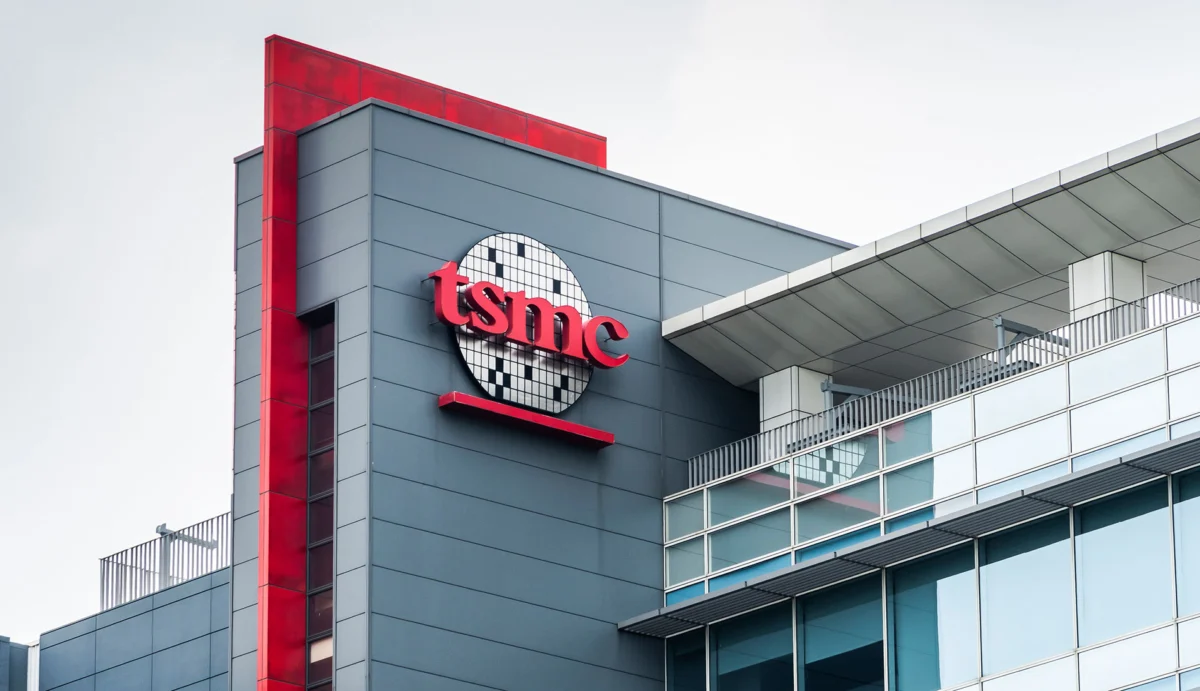
The Taiwan Ministry of Economic Affairs (MOEA) is currently spearheading a transformative amendment to the nation’s Energy Management Law, a move that signals a paradigm shift in how the island’s industrial giants manage their power needs. Under the proposed legislative changes, which are scheduled for review by the Legislative Yuan on July 22, all large-scale commercial electricity consumers will be legally required to install their own power generation and energy storage infrastructure. This policy represents a significant escalation from previous mandates and is poised to fundamentally alter the operational costs and infrastructure requirements for Taiwan’s most critical industries, most notably the semiconductor sector led by Taiwan Semiconductor Manufacturing Company (TSMC).
The amendment seeks to decentralize Taiwan’s power grid by shifting the burden of energy resilience from the state-owned utility, Taipower, to the private sector. By targeting entities with a contracted power capacity of 5 megawatts (MW) or higher, the Ministry aims to bring over 400 major industrial sites under the new regulatory umbrella. These include semiconductor fabrication plants (fabs), optoelectronics facilities, steel mills, petrochemical plants, and the rapidly expanding network of AI-focused data centers. While educational institutions and healthcare facilities are expected to be granted exemptions to preserve public service stability, the industrial sector faces a rigorous new era of energy self-sufficiency.
The Evolution of Taiwan’s Energy Mandates for Industrial Users
To understand the weight of the current amendment, it is necessary to examine the regulatory trajectory of the past several years. Taiwan’s "Renewable Energy Development Regulations" and their associated sub-laws already established a baseline for corporate environmental responsibility. Previously, the "Major Power User Clause" required companies with a contracted capacity exceeding 5MW to ensure that 10 percent of their electricity consumption was derived from renewable sources. Companies typically met this requirement through one of four avenues: installing self-use renewable energy equipment, purchasing renewable energy certificates (RECs), installing energy storage systems, or paying a "substitution fee" to the government.
The new amendment to the Energy Management Law marks a departure from these flexible options. Rather than simply offsetting consumption through financial instruments or credits, the proposed law emphasizes the physical installation of generation and storage hardware on-site or within controlled environments. The Ministry of Economic Affairs argues that this move is essential for national energy security, particularly as the island faces a delicate balancing act between phasing out nuclear power, increasing natural gas reliance, and meeting ambitious "Net Zero 2050" goals.
The TSMC Factor: Navigating a Herculean Energy Transition
As the world’s leading advanced logic chip manufacturer and Taiwan’s single largest electricity consumer, TSMC stands at the epicenter of this policy shift. In 2024, TSMC’s operations in Taiwan consumed approximately 25.55 billion kilowatt-hours (kWh) of electricity. This staggering figure represents roughly 9 percent of the entire nation’s total energy consumption. As TSMC moves toward more advanced process nodes, such as 3nm and the upcoming 2nm technology, its energy demands are projected to rise even further due to the high power requirements of Extreme Ultraviolet (EUV) lithography machines.
The transition to captive power—energy produced by a company for its own use—presents a dual challenge for TSMC. First, it threatens to dismantle the economies of scale that the company enjoys by drawing power from a centralized, state-subsidized grid. Managing a decentralized network of private power plants and massive battery storage arrays introduces significant capital expenditure (CAPEX) and operational expenditure (OPEX) overheads. Second, the logistical reality of installing such infrastructure at existing fab sites is daunting.
TSMC currently operates an extensive network of facilities across Taiwan’s science parks, including:
- GIGAFAB Facilities: Fabs 12, 14, 15, 18, and 20, which handle the bulk of high-volume manufacturing for global tech giants like Apple, Nvidia, and AMD.
- Advanced Packaging Plants: Facilities in Hsinchu, Tainan, Taichung, and the newly developing sites in Chiayi and Miaoli dedicated to CoWoS (Chip on Wafer on Substrate) technology.
- Research and Development Centers: The massive R&D center in Hsinchu that serves as the "Bell Labs" of the semiconductor industry.
Retrofitting these high-tech environments with independent power generation systems—likely a mix of gas-fired turbines, hydrogen fuel cells, or massive solar arrays coupled with lithium-ion storage—requires not only capital but also significant physical space, which is at a premium in Taiwan’s densely packed industrial zones.
Chronology of Legislative and Energy Policy Shifts
The path to the July 22 legislative session has been marked by increasing pressure on Taiwan’s energy grid. A timeline of recent events highlights the urgency felt by the MOEA:

- January 2021: The "Major Power User Clause" officially takes effect, targeting 300 to 400 companies and requiring 10% green energy usage within five years.
- May 2021 & March 2022: Large-scale blackouts across Taiwan expose vulnerabilities in the centralized grid, leading to calls for decentralized "micro-grids" at industrial sites.
- 2023: Taipower reports record losses due to rising global fuel costs and a freeze on residential electricity rates, prompting the government to look for ways to reduce the utility’s industrial burden.
- April 2024: The MOEA announces a significant hike in industrial electricity rates (averaging 15-25%) to reflect true market costs, signaling the end of the era of ultra-cheap industrial power.
- July 2024: The proposed amendment to the Energy Management Law is introduced, shifting the mandate from "green offsets" to "captive generation and storage."
Data-Driven Analysis of the 5MW Threshold
The 5MW threshold is a critical metric in this legislation. According to data from the Bureau of Energy, there are approximately 500 to 600 "major power users" in Taiwan, but the 400 targeted by this specific amendment represent the core of the island’s export economy.
A 5MW load is roughly equivalent to the power consumption of 3,000 to 4,000 average households. For a semiconductor fab, 5MW is a relatively small portion of its total load; a single modern fab can require anywhere from 100MW to 500MW of constant power. By requiring these entities to install their own storage, the government aims to create a "buffer" that can support the grid during peak demand or frequency fluctuations.
The Ministry of Economic Affairs has indicated that the "storage" component of the mandate is particularly vital. As Taiwan increases its share of intermittent renewable energy (wind and solar), the grid requires massive storage capacity to maintain a stable 60Hz frequency. By forcing the 400 largest consumers to build their own storage, the state effectively crowdsources the nation’s grid stabilization infrastructure.
Stakeholder Reactions and Economic Implications
The reaction from the industrial sector has been one of cautious concern. While TSMC has publicly committed to the RE100 initiative (aiming for 100% renewable energy by 2040), the company has historically relied on Power Purchase Agreements (PPAs) with offshore wind farms rather than on-site generation.
Industry associations, such as the Chinese National Federation of Industries (CNFI), have raised questions regarding the "grace period" for compliance. The MOEA has suggested that while the law will be passed soon, companies will have a multi-year window to design, permit, and build their energy systems. However, for industries like steel and petrochemicals, where margins are thinner than in the semiconductor sector, the cost of building a private power plant could impact global competitiveness.
Financial analysts suggest that these costs will likely be passed down the supply chain. If TSMC’s operational overhead increases due to energy infrastructure requirements, the price per wafer for 2nm and 3nm chips may see a corresponding rise. This "energy premium" could influence the global pricing of everything from high-end smartphones to AI servers.
Broader Implications for National Security and Grid Resilience
Beyond the balance sheets of corporations, the amendment has profound implications for Taiwan’s national security. The island is isolated from regional power grids, meaning it cannot import electricity from neighbors during a crisis. A decentralized power structure, where every major factory has its own "captive" power and storage, makes the industrial base more resilient to both natural disasters (like earthquakes) and potential geopolitical conflicts that could target centralized energy hubs.
The MOEA’s strategy appears to be a move toward a "distributed energy resource" (DER) model. In this scenario, the 400 largest plants do not just consume power; they act as stabilizers. During a grid emergency, these plants could switch to their internal generation and storage, instantly shedding thousands of megawatts of demand from the national grid and preventing a total blackout.
Conclusion: A New Era of Industrial Energy Management
The July 22 legislative session will be a watershed moment for Taiwan’s industrial policy. The shift from a state-provided energy model to a mandatory captive-generation model reflects the maturing challenges of a high-tech economy operating within the constraints of a limited land mass and a complex energy landscape.
For TSMC and its peers, the era of viewing electricity as a simple utility provided at the meter is ending. Energy is now a core infrastructure component that must be managed with the same precision as chemical supply chains or cleanroom air quality. While the financial and logistical "herculean task" of replacing grid reliance with captive infrastructure is immense, the resulting increase in resilience may be the only way for Taiwan to maintain its status as the world’s indispensable semiconductor hub in an increasingly volatile global environment. The amendment, if passed, will serve as a global case study in how advanced economies balance industrial growth with energy security and the transition to a decentralized, greener future.