admin
admin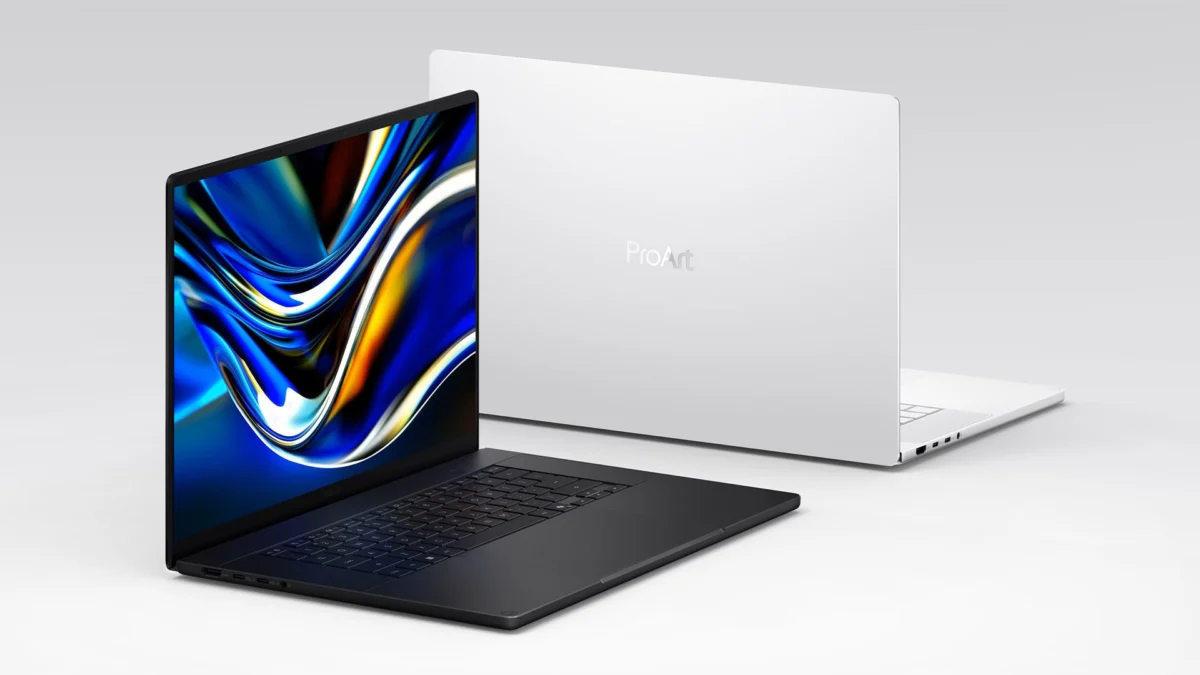
NVIDIA is poised to disrupt the high-performance computing market next month with the official release of the RTX Spark, a chipset designed to bring workstation-level artificial intelligence and creative capabilities to the portable PC segment. As the launch window approaches, technical specifications regarding the first wave of hardware powered by this silicon have begun to surface, focusing specifically on the ASUS ProArt P14 and ProArt P16 laptops. These machines, designed for professional creators and AI researchers, represent a significant shift in internal architecture for the Taiwanese manufacturer. Recent disclosures from industry analysts and hardware teardown previews indicate that ASUS is employing a sophisticated but controversial thermal management strategy to keep the RTX Spark’s high-density die within optimal operating temperatures.
The RTX Spark represents NVIDIA’s latest effort to bridge the gap between traditional discrete graphics processing and the emerging demand for unified, AI-centric system architectures. While NVIDIA has long dominated the GPU market, the RTX Spark is expected to function as a more integrated solution, capable of handling high-density AI models and complex creative workloads that typically require massive amounts of video memory and low-latency data throughput. To support these capabilities, the ASUS ProArt P14 and P16 will utilize ultra-premium, thin-and-light chassis designs, which presents a significant engineering challenge: how to dissipate the intense heat generated by a high-performance chipset in a constrained physical space.
Technical Specifications and the Shift to Unified Memory
The ASUS ProArt P14 is expected to serve as the entry point for the RTX Spark ecosystem. Preliminary data suggests the base model will ship with 24GB of LPDDR5X unified RAM. This shift to unified memory is a critical evolution for NVIDIA-powered Windows machines, mirroring the architecture popularized by Apple’s Silicon M-series. By allowing the CPU and the RTX Spark chipset to share a single pool of high-speed memory, ASUS aims to eliminate the bottlenecks associated with data transfers between system RAM and dedicated VRAM.
However, the compact nature of the 14-inch form factor necessitates some compromises. Internal schematics reveal that the ProArt P14 will house only a single PCIe NVMe Gen 4 SSD slot. While this limits internal storage expansion, it allows for a more robust battery and cooling assembly. The ProArt P16, by contrast, is expected to offer more expansive storage options and potentially higher memory configurations, catering to users who require mobile workstations capable of 8K video editing and large-scale 3D rendering.

The Cooling Dilemma: Liquid Metal vs. Vapor Chambers
The most significant technical revelation regarding the new ProArt lineup concerns the cooling solution. ASUS has opted to use liquid metal thermal interface material (TIM) for the RTX Spark chipset, a decision that highlights the high thermal density of the new NVIDIA silicon. Liquid metal offers significantly higher thermal conductivity than traditional silicone-based thermal pastes, allowing for more efficient heat transfer from the silicon die to the heatsink.
In a surprising departure from industry trends for premium laptops, ASUS is reportedly eschewing vapor chamber technology in favor of a traditional copper heatpipe assembly. Vapor chambers are generally considered the gold standard for high-end, thin-and-light laptops because they distribute heat across a larger surface area more evenly than heatpipes. However, the decision to stick with heatpipes for the RTX Spark-powered ProArt machines appears to be driven by the physical dimensions of the NVIDIA chipset itself.
According to technical analysis provided by Notebookcheck, the RTX Spark features a larger-than-average die area. When using a vapor chamber on such a large surface, maintaining perfectly even mounting pressure becomes a mechanical challenge. If the pressure is not uniform across the entire surface of the vapor chamber, the liquid metal TIM can migrate, creating "dry spots" that lead to rapid overheating and potential hardware failure. By utilizing a traditional heatpipe system, ASUS engineers can more precisely control the mounting pressure points, ensuring that the liquid metal remains in a thin, even layer across the entire chipset die.
Risks and Mitigation Strategies for Liquid Metal Application
While liquid metal is highly effective at reducing core temperatures—often by as much as 10 to 15 degrees Celsius compared to standard paste—it is not without significant risks. Liquid metal is electrically conductive and has a low viscosity. If the material leaks out from under the heatsink, it can cause immediate short circuits on the motherboard, leading to catastrophic hardware failure.
To mitigate these risks, ASUS has implemented a specialized sponge barrier surrounding the RTX Spark chipset. This barrier is designed to act as a physical dam, containing the liquid metal even if the laptop is subjected to vibration or movement. This is particularly crucial for the ProArt series, which is marketed to professionals who frequently travel with their equipment.

The industry remains cautious, however, citing previous instances where liquid metal applications have caused long-term reliability issues. For example, some early PlayStation 5 units, which utilize liquid metal, were reported to suffer from "leakage" issues when kept in a vertical orientation for extended periods. Furthermore, ASUS’s own Zephyrus M16 gaming laptop faced scrutiny when it was discovered that abrasive chemical reactions between certain liquid metal formulations and the copper heatsinks led to rapid corrosion. ASUS has likely refined its application process and material selection for the ProArt P14 and P16 to avoid these pitfalls, but the use of liquid metal remains a point of concern for consumers prioritizing longevity.
A Missed Opportunity for PTM7950?
Industry experts have questioned why ASUS did not opt for Honeywell’s PTM7950 phase-change material instead of liquid metal. PTM7950 has gained popularity in the enthusiast community and among some OEMs because it offers thermal performance nearing that of liquid metal but without the electrical conductivity or the risk of leakage. As a phase-change material, PTM7950 is solid at room temperature and turns into a highly efficient semi-liquid state only when the chipset reaches operational temperatures.
The decision to stick with liquid metal suggests that the RTX Spark’s thermal requirements may be so extreme that even high-end phase-change materials were deemed insufficient for the thin chassis of the ProArt series. This points toward the RTX Spark being a highly powerful, yet thermally demanding, piece of silicon that pushes the boundaries of what is possible in a 14-inch and 16-inch form factor.
Chronology of Development and Market Context
The development of the RTX Spark and its integration into the ASUS ProArt lineup follows a clear timeline of NVIDIA’s expansion into the broader PC ecosystem:
- Late 2023: Initial rumors surface regarding NVIDIA’s "N1X" project, an effort to create a high-performance integrated chipset for the Windows-on-ARM and high-end x86 creative markets.
- Q2 2024: ASUS announces a refresh of the ProArt brand, focusing on "AI-ready" hardware but keeping specific chipset details under wraps.
- August 2024: Leaked benchmarks and shipping manifests confirm the existence of the RTX Spark and its partnership with Taiwanese manufacturers like ASUS and MSI.
- September 2024: Detailed internal photos of the ProArt P14 cooling assembly emerge, confirming the liquid metal and heatpipe configuration.
- October 2024 (Expected): Official launch of the NVIDIA RTX Spark and the retail availability of the ASUS ProArt P14 and P16.
This launch occurs at a pivotal moment in the PC industry. With Qualcomm’s Snapdragon X Elite and Apple’s M3 and M4 chips setting new benchmarks for efficiency and AI performance, NVIDIA and its partners are under immense pressure to prove that they can offer superior performance for professional workloads while maintaining a portable form factor.

Broader Implications for the Creative Industry
The success of the ASUS ProArt P14 and P16 will be a litmus test for the NVIDIA RTX Spark. If these machines can successfully manage the heat of the Spark chipset without the reliability issues that have plagued liquid metal applications in the past, they could become the new standard for mobile creative workstations.
The inclusion of 24GB of unified memory in the base model P14 is a direct challenge to the traditional laptop market, where 8GB or 16GB is often the standard. For creators working with AI-generated content, high-resolution textures, and complex 3D scenes, this increase in accessible memory is more than a luxury—it is a necessity.
However, the premium price point expected for these devices means that consumers will have high expectations for build quality and thermal stability. ASUS is positioning the ProArt series as a direct competitor to the MacBook Pro, and any thermal throttling or hardware failures resulting from the liquid metal application could damage the brand’s reputation in the professional sector.
As the October release date approaches, the industry will be watching closely to see if NVIDIA’s "Spark" can ignite a new era of AI-powered portable computing, or if the thermal challenges of such high-performance silicon prove too difficult to tame in a thin-and-light chassis. For now, the ASUS ProArt P14 and P16 stand as the most ambitious examples of NVIDIA’s vision for the future of the PC.