Garick Elordi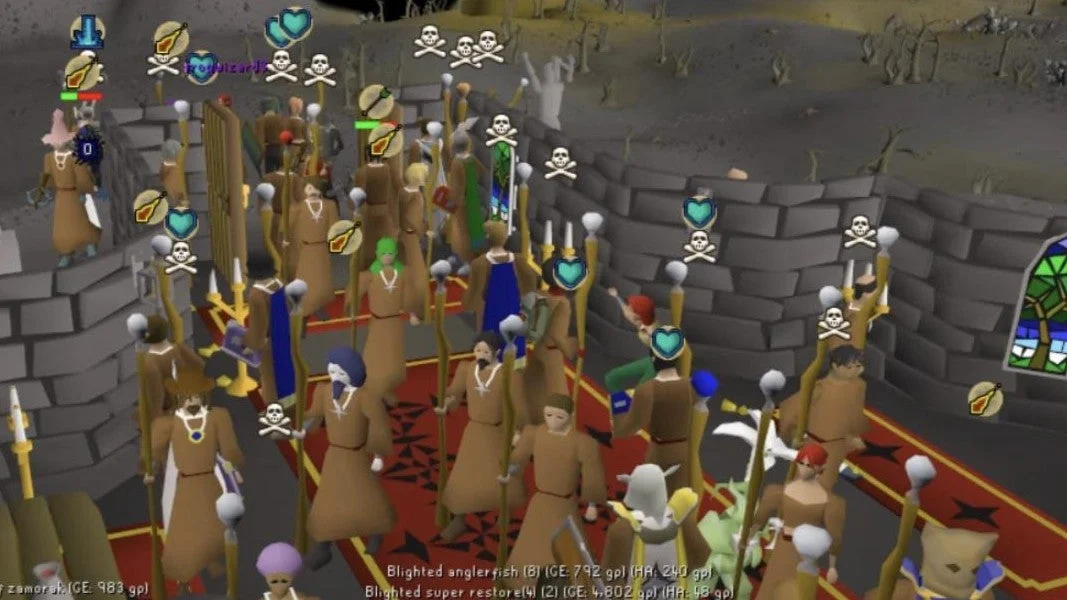
The landscape of Gielinor is currently witnessing a significant resurgence of organic, player-driven narrative events as hundreds of users participate in large-scale "religious wars" within Old School RuneScape (OSRS). These events, which operate outside of the game’s programmed questlines or official reward systems, represent a burgeoning trend of community-organized roleplay that leverages the game’s deep lore and high-risk environments. Driven by social media coordination and a desire for emergent gameplay, players are self-organizing into factions representing the game’s primary deities, most notably Saradomin and Zamorak, to engage in massive tactical skirmishes across the dangerous Wilderness region.
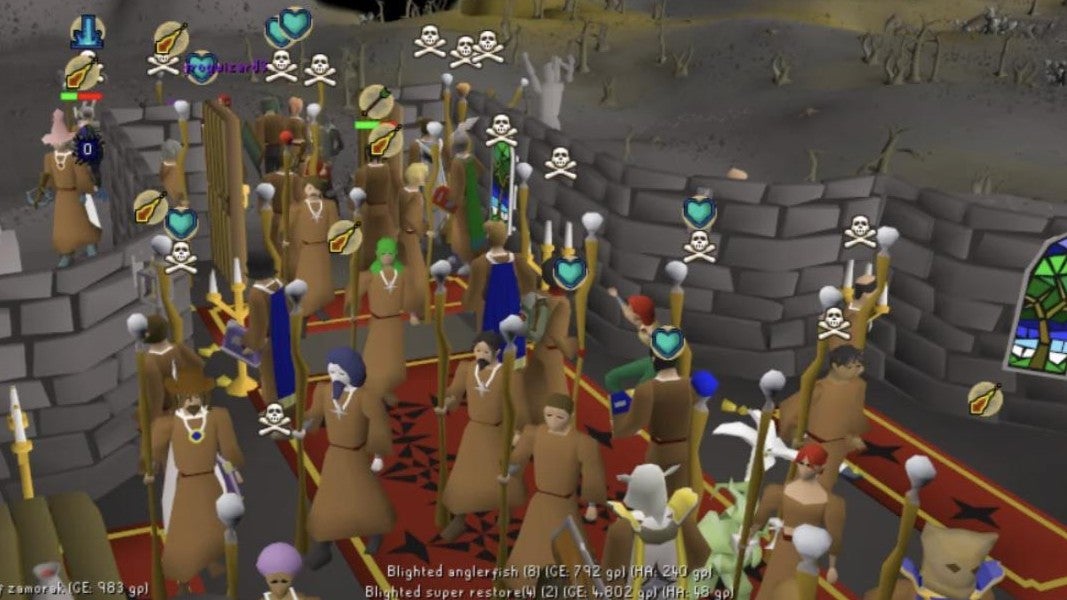
The most recent iteration of this phenomenon saw a coordinated mobilization of the followers of Saradomin, the deity representing order and wisdom in RuneScape lore. Participants, adhering to a strict aesthetic code, donned traditional monk robes and equipped basic air staves—gear that offers minimal defensive capabilities but serves as a uniform for the "pilgrimage." This movement began as a grassroots initiative on platforms like Reddit and Discord, where organizers called for a "cleansing" of the Wilderness. The objective was not the acquisition of wealth or experience points, but rather the collective experience of reclaiming territory through sheer numbers and thematic consistency.
A Chronology of the Saradominist Pilgrimage
The event commenced at the Edgeville Monastery, a symbolic location for followers of Saradomin situated just south of the Wilderness wall. According to eyewitness accounts and community recordings, hundreds of players gathered at the monastery to prepare for the trek. The inventory of a typical participant was notably simple, consisting primarily of cooked lobsters—a mid-level healing item—and prayer-restoration potions. This low-cost "loadout" ensured that even if players were killed in the high-risk Player-vs-Player (PvP) zone, their financial losses would be negligible, allowing them to focus on the roleplay aspect of the event.
From the monastery, the "monk mob" crossed the Wilderness ditch and moved northward toward the Revenant Caves. This location is historically one of the most volatile and dangerous areas in the game, frequently occupied by "player killers" (PKers) and organized clans hunting for valuable Revenant weapons, such as Craw’s Bow or Viggora’s Chainmace. The sudden influx of hundreds of players in monk robes disrupted the typical predatory dynamics of the caves. Rather than fleeing from high-level combatants, the Saradominist faction used overwhelming numbers to occupy the space, effectively "sieging" the area through a peaceful but physically imposing presence.
The pilgrimage culminated at the Chaos Temple, located in level 38 of the Wilderness. In a symbolic act of conquest, the followers of Saradomin occupied the temple grounds, claiming the site in the name of their deity. The success of this event has since catalyzed a response from opposing factions, setting the stage for more complex conflicts in the coming weeks.
The Rise of the Zamorakian Resistance
The vacuum created by the Saradominist occupation was quickly addressed by the game’s "villainous" faction: the followers of Zamorak. In the lore of RuneScape, Zamorak is the god of chaos and power, and his followers are often depicted in stark red robes. Following the Saradominist march, a call to arms was issued to the Zamorakian community to defend the Chaos Temple against future incursions.
Organizers have designated World 331 as the primary theater for the next major engagement. Unlike the first event, which was largely a demonstration of presence, the upcoming clash is expected to be a direct confrontation. Zamorakian players have vowed to intercept the Saradominist pilgrims before they can reach the temple, promising a large-scale battle that mimics the ancient "God Wars" described in the game’s history. This escalation transforms the event from a peaceful march into a tactical PvP war, where strategy, positioning, and group coordination will determine which faction controls the temple.
Historical Context: The Legacy of the God Wars
To understand the significance of these player-led events, one must look at the foundational lore of Old School RuneScape. The "God Wars" was a catastrophic conflict that occurred during the game’s Third Age, involving the various deities of Gielinor. This war is the narrative reason why the Wilderness exists as a charred, desolate wasteland; the sheer power of the gods’ struggle destroyed the once-lush northern kingdoms.
While Jagex, the developer of RuneScape, has integrated the God Wars into the game through the "God Wars Dungeon"—a high-level PvM (Player-vs-Monster) area—these current player events represent a literal manifestation of that lore in the open world. By choosing to fight as Saradominists or Zamorakians, players are effectively writing a new chapter of the God Wars, driven by human agency rather than pre-written scripts. This level of immersion is a hallmark of the "sandbox" nature of OSRS, where the game provides the tools and the setting, but the players provide the drama.
Economic and Mechanical Implications
From a technical standpoint, these religious wars are an anomaly in modern gaming. In an era where most MMORPGs are designed around "efficiency" and "gains," these events offer no tangible rewards. The "Monk’s Robe" set and "Air Staff" used by the participants have a combined value of less than 2,000 gold pieces (GP) on the Grand Exchange, the game’s central market. Furthermore, the experience points gained from such skirmishes are minimal compared to optimized training methods.
However, the economic impact is felt in different ways:
- Supply Demand: Large-scale gatherings lead to localized spikes in the consumption of food (lobsters, swordfish) and prayer potions, though the scale is not yet large enough to destabilize the global economy.
- Wilderness Accessibility: The presence of a "monk mob" temporarily alters the risk profile of the Wilderness. For solo players or "Ironmen" (players who cannot trade), these mass events can provide a window of safety to complete tasks or explore areas that are usually dominated by hostile PKers.
- Player Retention: Roleplay events are historically linked to higher player retention. By fostering a sense of community and shared history, these wars create "sticky" social bonds that keep players subscribed to the game.
Community and Developer Reactions
While Jagex has not officially endorsed the religious wars as part of the game’s seasonal roadmap, the developers have historically been supportive of emergent gameplay. The Old School RuneScape team frequently highlights community achievements and social events in their weekly newsletters and livestreams.
The player community’s reaction has been overwhelmingly positive, with many citing the events as a return to the "golden age" of RuneScape in the mid-2000s. In those early years, the game was less about "maxing" stats and more about social interactions and spontaneous adventures. One player, commenting on the recent Reddit thread, noted, "This is exactly what an MMO should be. We don’t need a quest marker to tell us to go to the Chaos Temple; we’re going because we want to see what happens when two hundred monks meet two hundred cultists."
Future Outlook and Sociological Impact
As the conflict moves to World 331 this weekend, the scale of the engagement is expected to grow. There are already reports of a third faction—the followers of Guthix, the god of balance—preparing to intervene to prevent either side from gaining total control. If this occurs, the conflict would evolve into a three-way tactical battle, further complicating the logistics for organizers.
The sociological significance of this trend cannot be understated. It demonstrates a pushback against the "gamification" of every second of playtime. In a digital environment often criticized for toxicity and elitism, these religious wars offer a space for inclusive, low-stakes fun. Anyone, from a level 3 novice to a level 126 veteran, can put on a pair of brown robes and join the march.
In conclusion, the religious wars of Old School RuneScape serve as a powerful reminder of the enduring appeal of the MMORPG genre. By reclaiming the Wilderness for the sake of roleplay rather than profit, players are demonstrating that the most compelling content in a virtual world is often that which they create themselves. Whether the followers of Saradomin can hold the Chaos Temple against the Zamorakian tide remains to be seen, but the real victor is the community-driven spirit that continues to define Gielinor.