Lina Irawan
The rapid integration of generative artificial intelligence into the software development lifecycle has sparked a fundamental debate regarding the balance between automated velocity and human oversight. On September 25, 2026, the Stack Overflow Podcast hosted David Burns, Head of Developer Advocacy and Open Source at BrowserStack, to discuss the critical role of professional skepticism in an increasingly AI-driven landscape. The conversation, led by host Ryan, delved into the methodologies required to maintain software integrity when utilizing autonomous agents and the persistent technical challenges of managing application state to eliminate flaky tests. As organizations transition from simple code-completion tools to complex agentic workflows, the necessity for rigorous verification frameworks like Test-Driven Development (TDD) has moved from a best practice to an architectural requirement.
The Intersection of AI and Professional Skepticism
As artificial intelligence models become more adept at generating functional code, a growing concern within the engineering community is the potential for "automation bias"—the tendency for humans to favor suggestions from automated systems even when they are incorrect. David Burns emphasized that the modern developer must cultivate a high degree of professional skepticism. This skepticism is not a rejection of AI capabilities but rather a disciplined approach to verification. In the context of BrowserStack’s mission to provide reliable testing infrastructure, Burns noted that the output of an AI is only as valuable as the developer’s ability to prove its correctness.
In 2026, the landscape of software development has shifted toward "Agentic Engineering," where AI agents are tasked with higher-level objectives rather than mere line-by-line completions. These agents can plan, execute, and refactor code autonomously. However, without a skeptical human-in-the-loop, these agents can introduce subtle regressions or architectural drifts that are difficult to detect through traditional manual review. The podcast highlighted that the primary value of a senior engineer is no longer just the ability to write code, but the ability to critique and validate the logic produced by non-human entities.
Applying Test-Driven Development to Agentic Engineering
One of the most significant technical insights shared by Burns involved the application of Test-Driven Development (TDD) to the management of AI agents. TDD, a methodology where tests are written before the functional code, provides a set of rigid constraints that an AI agent must satisfy. By defining the "definition of done" through a suite of failing tests, engineers can create a sandbox for AI agents to operate within.
Burns argued that agentic engineering without TDD is inherently risky. When an AI agent is given a prompt to "fix a bug" or "implement a feature," its primary goal is to satisfy the prompt’s linguistic requirements. By using TDD, the developer provides a mathematical and logical goal. If the agent’s generated code does not pass the pre-written tests, it is objectively incorrect, regardless of how "clean" the code looks. This creates a feedback loop where the AI can self-correct based on test failures, leading to a more robust autonomous development cycle. This approach essentially turns the testing suite into a prompt-engineering tool that ensures the agent remains aligned with the intended business logic.
The Persistent Challenge of Flaky Tests and Application State
A recurring theme in the discussion was the technical debt associated with "flaky tests"—automated tests that yield both passing and failing results without any changes to the underlying code. For a platform like BrowserStack, which manages massive-scale testing across thousands of browser and device combinations, flakiness is a multi-million dollar problem for the industry. Burns posited that the root cause of flakiness is rarely the testing tool itself (such as Selenium or Playwright) but is almost always an issue of poorly managed application state.
Application state refers to the condition of a program at a specific point in time, including variables, database entries, and environmental configurations. When tests are written without a clear understanding of how the application transitions between states, race conditions occur. For instance, a test might attempt to click a button before the asynchronous JavaScript responsible for rendering that button has completed. Burns explained that fixing these issues requires developers to move away from "sleep" timers and toward more sophisticated state-synchronization patterns. By ensuring that an application is in a deterministic state before a test assertion is made, organizations can significantly reduce the noise in their Continuous Integration (CI) pipelines.
Historical Context and the Evolution of Testing Standards
To understand the current state of the industry, it is essential to look at the chronology of automated testing. David Burns has been a central figure in this evolution, having served as a core contributor to the Selenium project and an editor for the W3C WebDriver standard.
- 2004–2010: The rise of Selenium and early web automation. Testing was primarily a post-development activity, often siloed in Quality Assurance (QA) departments.
- 2011–2018: The "Shift Left" movement. Developers began taking more responsibility for testing, leading to the rise of frameworks like Jest, Cypress, and the standardization of WebDriver by the W3C.
- 2019–2023: The emergence of cloud-based testing platforms like BrowserStack, allowing for parallel execution and cross-platform verification at scale.
- 2024–2026: The integration of Generative AI. The focus shifted from "writing tests" to "using tests to guide AI agents."
This timeline illustrates a shift from manual verification to automated execution, and finally to intelligent orchestration. Burns’ role at BrowserStack involves bridging the gap between these historical standards and the new requirements of AI-augmented development.
Supporting Data on AI Adoption and Reliability
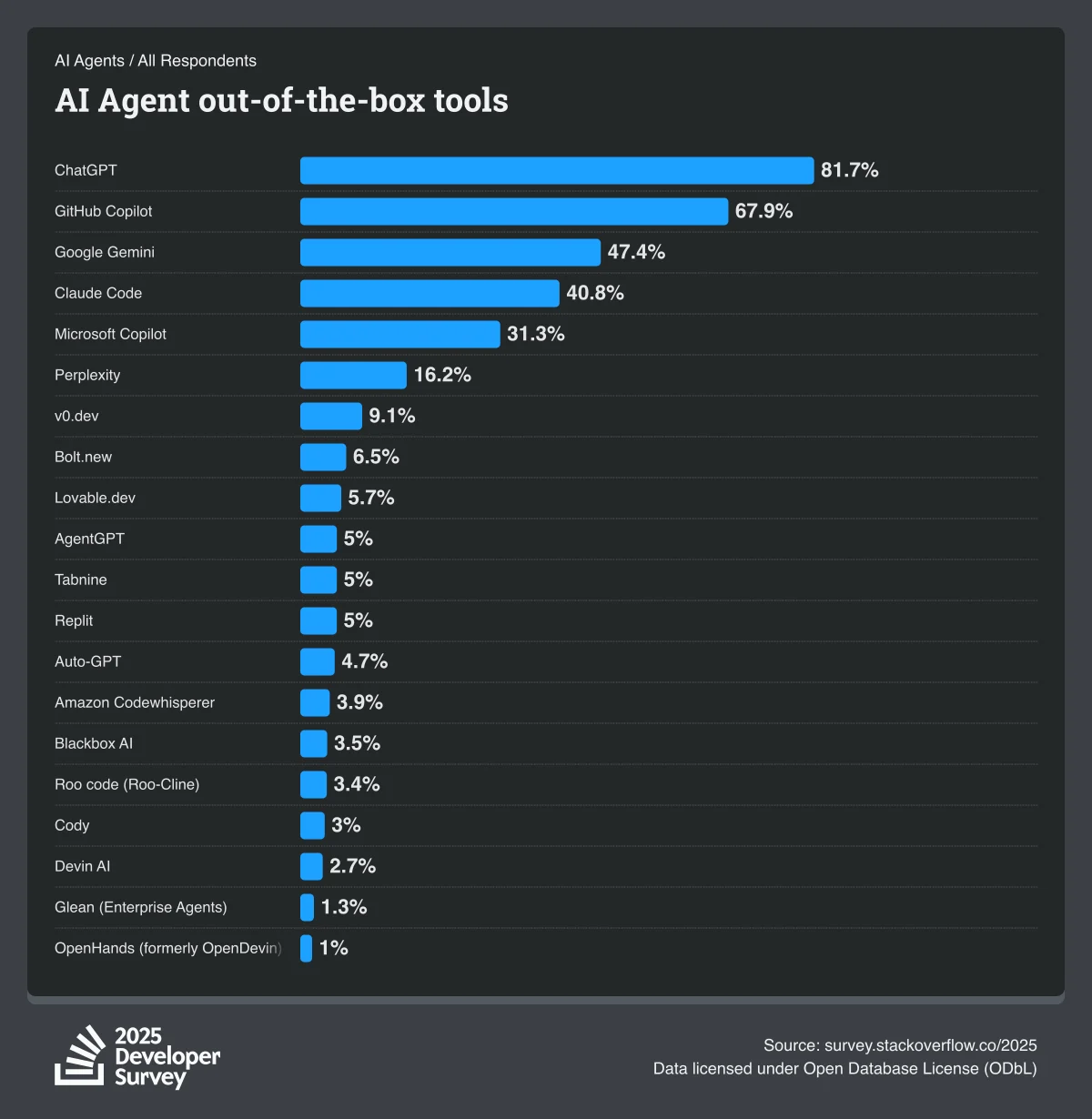
Recent industry data underscores the urgency of the topics discussed on the podcast. According to the 2025 Stack Overflow Developer Survey, over 82% of developers now use some form of AI tool in their workflow. However, only 38% of those developers reported a "high degree of trust" in the accuracy of the code produced by these tools. This "trust gap" is where professional skepticism becomes a critical skill set.
Furthermore, research into CI/CD efficiency suggests that flaky tests account for up to 16% of total developer time spent on maintenance. In large-scale enterprises, this translates to thousands of hours of lost productivity. By addressing application state management—as Burns suggested—companies can reclaim this time. BrowserStack’s own internal data indicates that organizations implementing strict state-synchronization protocols see a 40% reduction in false-positive test failures.
Official Responses and Industry Implications
While BrowserStack continues to lead the way in testing infrastructure, other major players in the ecosystem are also reacting to the rise of agentic engineering. GitHub, Microsoft, and GitLab have all introduced features that allow for "automated remediation," where AI identifies a bug and suggests a fix. However, the consensus among industry leaders, including Burns, is that these suggestions must be verified by a robust testing suite.
The implications for the workforce are profound. The role of the Software Development Engineer in Test (SDET) is evolving. Rather than just writing scripts to simulate user clicks, SDETs are becoming "Reliability Architects" who design the frameworks that keep AI agents in check. The podcast discussion suggests that the future of the profession lies in the ability to design systems that are "testable by design," ensuring that as AI agents become more autonomous, they remain tethered to verifiable requirements.
Community Recognition and Collaborative Knowledge
The Stack Overflow Podcast also took a moment to recognize the human element of the developer community. The "Populist" badge was awarded to user brentvatne for a highly-voted answer regarding the programmatic reading of app.json or exp.json files. This recognition highlights a fundamental truth of the industry: despite the rise of AI, the peer-to-peer exchange of specific, nuanced technical knowledge remains the backbone of the software ecosystem. Brent Vatne’s contribution to the React Native and Expo communities serves as a reminder that clear, human-verified documentation is the foundation upon which even the most advanced AI tools are built.
Conclusion: The Path Forward for Engineering Teams
The conversation between Ryan and David Burns serves as a roadmap for engineering teams navigating the complexities of 2026. As AI agents take on more of the "heavy lifting" in code generation, the human developer’s role must shift toward high-level architectural oversight and rigorous validation. The application of TDD to AI workflows ensures that autonomy does not lead to chaos, while a focus on application state addresses the long-standing plague of flakiness in automated testing.
Ultimately, the integration of AI into software engineering does not diminish the need for traditional engineering discipline; rather, it amplifies it. Professional skepticism, grounded in data and verified through robust testing frameworks, will remain the defining characteristic of successful development teams in the age of agentic engineering. As BrowserStack and other industry leaders continue to refine these tools, the focus remains clear: speed is a byproduct of reliability, and reliability is impossible without a skeptical, test-driven approach.