Lina Irawan
The landscape of software engineering is undergoing a fundamental shift as Slack, the Salesforce-owned communications platform, moves to integrate artificial intelligence directly into the collaborative workflow of development teams. Rob Seaman, General Manager of Slack, recently detailed the launch and philosophy behind "Code Channels," a new feature designed to transform how developers interact with both their peers and AI coding agents. By moving AI interactions out of private, siloed direct messages and into shared team environments, Slack aims to create a "multiplayer" coding experience that flattens the traditional boundaries between writing code, reviewing it, and learning from it.
The Shift Toward Multiplayer AI Environments
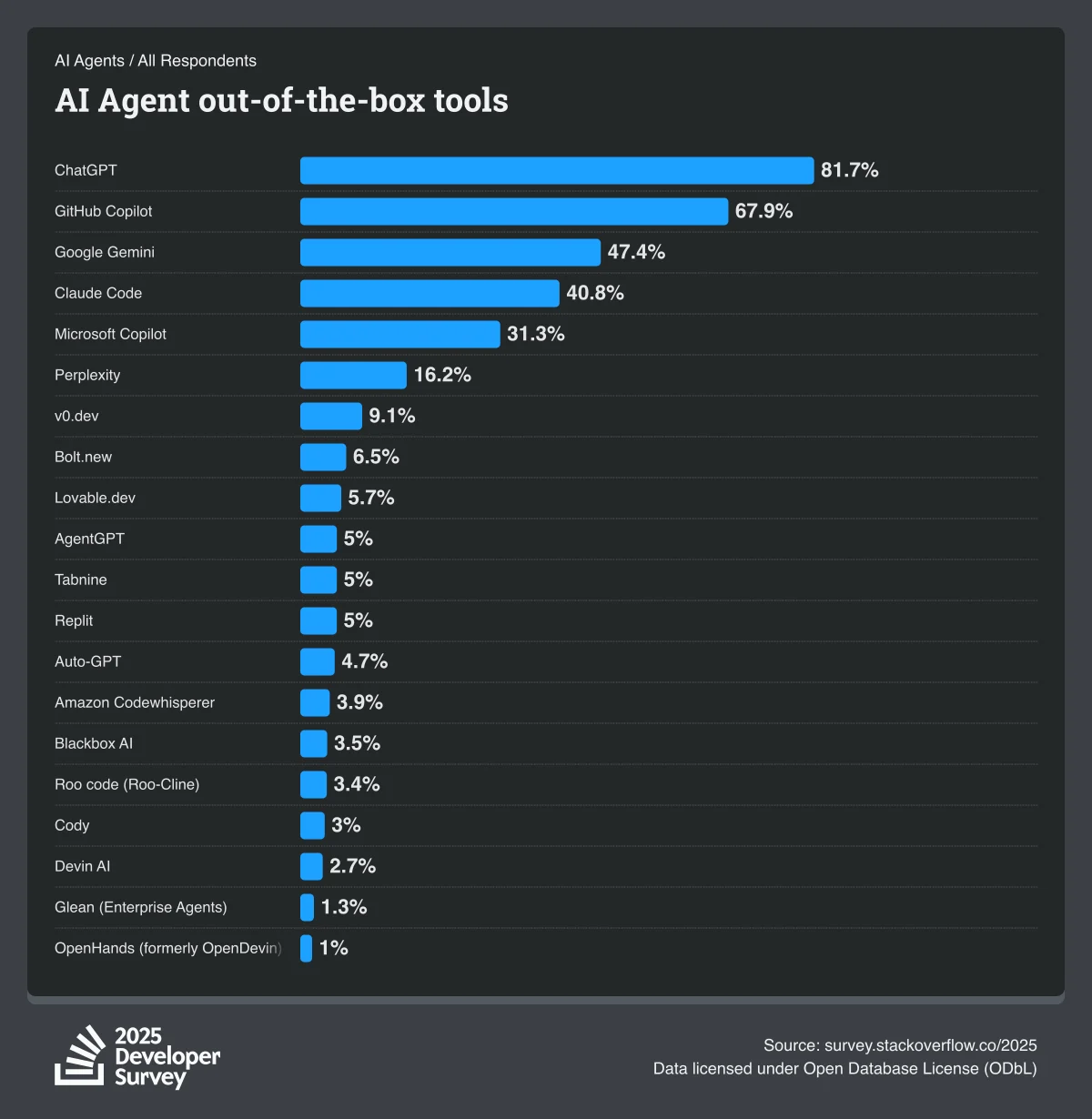
For the past several years, the adoption of AI in software development has largely been a solitary pursuit. Tools like GitHub Copilot and various large language model (LLM) interfaces have primarily functioned as "copilots" for individual developers, operating within the confines of an Integrated Development Environment (IDE) or a private chat window. While these tools have significantly boosted individual productivity, they have inadvertently created "context silos." When a developer solves a complex architectural problem using an AI agent in a private session, the logic, the prompts, and the iterative corrections remain hidden from the rest of the team.
Slack’s Code Channels feature seeks to dismantle these silos. By introducing AI agents as active participants in a standard Slack channel, the platform enables a "party chat" atmosphere where developers and agents collaborate in full view of the collective. This transparency ensures that the context of a decision is preserved and accessible to every member of the engineering organization, providing a searchable repository of how and why specific code was generated.
The Evolution of Developer Workflows: From Terminal to Channel
Historically, the developer’s primary workspace has been the terminal and the IDE. Communication about the work happened elsewhere—usually in Slack, Jira, or GitHub comments. This separation often led to "context switching," a productivity killer where developers lose focus while moving between writing code and discussing it.
Rob Seaman argues that for many tasks, a Slack channel may actually be a superior development environment compared to a traditional terminal. The rationale lies in the nature of modern software development, which is increasingly focused on integration, debugging, and rapid iteration rather than just writing raw lines of code. In a Code Channel, the AI can suggest a fix, a developer can critique it, and a senior engineer can approve it—all within a single thread. This "flattens" the workflow, merging the act of creation with the act of code review. Instead of a linear process (Write -> Push -> Pull Request -> Review -> Merge), the process becomes circular and instantaneous.
Chronology of Slack’s AI Integration Strategy
The introduction of Code Channels is not an isolated event but the latest step in a multi-year strategy by Slack and Salesforce to dominate the "AI-powered productivity" market.
- 2021: Salesforce Acquisition: Salesforce completed its $27.7 billion acquisition of Slack, signaling an intent to turn the messaging app into a "digital HQ" for the enterprise.
- Early 2023: Slack GPT Announcement: Following the explosion of generative AI, Slack announced Slack GPT, a suite of features including conversation summaries and writing assistance.
- Late 2023: The Rise of Autonomous Agents: As the industry moved from simple chatbots to autonomous agents (capable of executing tasks like file manipulation and code execution), Slack began experimenting with how these agents could live inside channels.
- 2024: Code Channels Launch: The formalization of Code Channels represents the maturation of this strategy, specifically targeting the high-value developer demographic.
Supporting Data: The Impact of AI on Software Engineering
The move toward integrated AI coding tools is supported by a growing body of industry data. According to a 2023 GitHub survey, 92% of U.S.-based developers are already using AI coding tools both at work and in their personal projects. Furthermore, research from Gartner predicts that by 2028, 75% of enterprise software engineers will use AI-augmented coding assistants, up from less than 10% in early 2023.
However, the "silo effect" remains a primary concern for CTOs. Internal data from various engineering organizations suggests that while individual speed increases with AI, "technical debt" can also accumulate faster if the AI-generated code is not properly vetted by the team. Slack’s approach addresses this by making the AI’s output public by default within the team, theoretically increasing the quality of the code through continuous, passive peer review.
Learning on the Shop Floor: A Philosophical Foundation
A key influence on the development of Code Channels is the concept of "Learning on the Shop Floor," a philosophy championed by Shopify CEO Tobi Lütke. In the traditional apprenticeship model, a novice learns by observing a master at work in a shared space—the shop floor. Everything is visible: the mistakes, the corrections, and the final product.
In the digital world of software engineering, the "shop floor" has largely disappeared as work moved into private IDEs and DMs. Rob Seaman emphasizes that Code Channels are an attempt to recreate this environment. When a junior developer sees a senior developer prompting an AI, correcting its hallucinations, and refining its output in a public channel, they are participating in a form of digital apprenticeship. This visibility accelerates the onboarding of new hires and the professional development of the entire team.
Official Responses and Industry Reactions
While Slack has received praise for its focus on collaboration, the move has also prompted discussions regarding security and "noise" in the workplace.
Corporate Perspective: "The goal is to make the AI a first-class citizen of the team," said Rob Seaman. "We want to move away from the idea that AI is a tool you use in a dark corner and then bring the results to the light. The process is the product."
Developer Feedback: Initial reactions from the developer community have been mixed but generally optimistic. Some engineers express concern that having AI agents constantly posting in channels could lead to notification fatigue. To counter this, Slack has implemented sophisticated threading and "huddle" features to keep the AI interactions organized and non-intrusive.
Security and Compliance: From a management perspective, the centralized nature of Code Channels offers better oversight. For companies in regulated industries (finance, healthcare), having a transparent log of all AI-generated code and the human approvals associated with it is a significant advantage for compliance and auditing.
Broader Implications for the Tech Industry
The launch of Code Channels is likely to trigger a ripple effect across the technology sector, influencing how other platforms approach AI integration.
1. The Decline of the "Solo Coder"
The "lone wolf" developer archetype is becoming increasingly obsolete. As AI takes over the boilerplate and repetitive aspects of coding, the human role shifts toward architecture, security, and collaborative problem-solving. Platforms that facilitate this collaboration will become the new standard.
2. Competition with Microsoft Teams and GitHub
This move puts Slack in more direct competition with Microsoft’s ecosystem. While Microsoft owns both GitHub (Copilot) and Teams, Slack is betting that its "channel-first" architecture is a more natural fit for the fluid, fast-paced nature of developer communication than the more structured environment of Teams.
3. The Democratization of Code
By making the coding process visible in Slack, non-technical stakeholders—such as Product Managers and Designers—can have more visibility into the development lifecycle. They can see the progress of a feature in real-time and even interact with the AI agent to ask questions about the implementation without needing to open a code repository.
Analysis: The Future of Autonomous Agents in the Enterprise
Looking ahead, the "multiplayer" model established by Code Channels is a precursor to a future where autonomous agents handle entire segments of the DevOps pipeline. We are moving toward a reality where an AI agent might detect a bug in production, open a Code Channel to propose a fix, run the tests, and wait for a human developer to give a "thumbs up" emoji to deploy the change.
Slack’s strategy hinges on the belief that the most valuable part of software development is not the code itself, but the conversation surrounding it. By capturing that conversation in a "multiplayer" environment, Slack is positioning itself not just as a messaging app, but as the essential operating system for the next generation of AI-augmented engineering teams.
As organizations continue to grapple with the integration of generative AI, the transition from "siloed" to "shared" AI context will likely become a defining metric of successful digital transformation. The success of Code Channels will depend on whether developers find the "party chat" environment genuinely productive or merely another source of digital noise. However, the move represents a clear and factual shift in the industry’s approach to human-AI collaboration.