Vera Intan Clara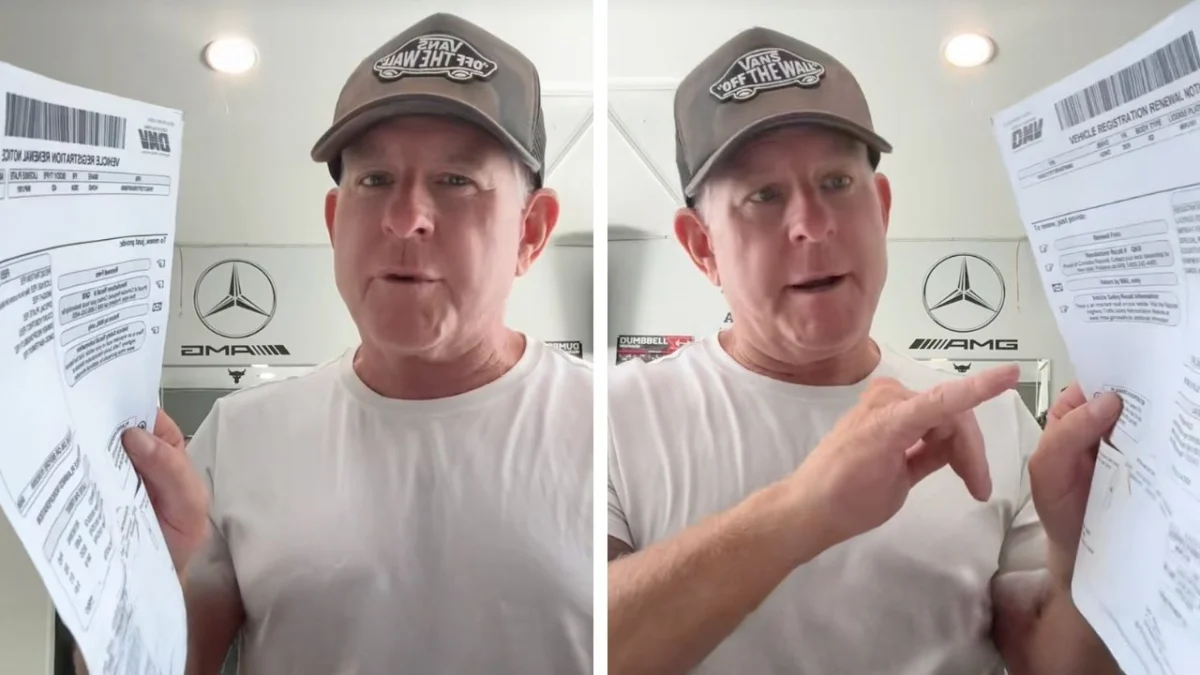
A California resident, whose experience has since garnered significant attention across social media platforms, recently expressed profound outrage after discovering that his vehicle’s registration renewal was contingent upon the mandatory resolution of four open manufacturer recalls. The incident, brought to light through a viral TikTok video, has illuminated the complexities and frustrations associated with California’s stringent vehicle recall enforcement policies, sparking a broader discussion about consumer convenience, public safety, and regulatory oversight.
The individual, identified by his TikTok handle @justpassingby925, received a standard registration renewal notice for his 2024 Honda. However, unlike routine renewals, this notice came with an unexpected prerequisite: the immediate addressing of four outstanding manufacturer recalls. This requirement effectively stalled his ability to proceed with online payment for his registration, necessitating a physical visit to a Honda dealership to initiate the recall repair process. The initial notification from the manufacturer, received prior to the registration notice, had reportedly instructed him to respond via mail only, adding an initial layer of bureaucratic delay and confusion to his ordeal.
Upon arriving at the Honda showroom, the TikToker was informed of the specific nature of the four recalls impacting his newly acquired vehicle. While the original video did not detail the precise nature of these recalls, subsequent independent analysis by the popular X (formerly Twitter) account @WallStreetApes suggested they predominantly revolved around critical emissions and safety-related components. This detail, though not independently verified by The Daily Dot, aligns with the typical categories of recalls prioritized by regulatory bodies for public safety and environmental protection. In addition to the mandated recall repairs, the dealership’s mechanics identified other non-recall-related maintenance issues, further complicating the driver’s immediate plans and extending the anticipated service time. The prospect of leaving his relatively new vehicle at the dealership for an entire day to address both the recalls and additional repairs visibly frustrated the TikToker, who subsequently voiced his discontent, sarcastically remarking, "Good job, State of California; Unbelievable." In the accompanying caption to his video, he went further, labeling the state’s policy a "scam" and questioning the perceived collaboration between California authorities and car dealerships in enforcing these recall mandates.
The Regulatory Framework: California’s Stance on Vehicle Recalls and Registration
California stands out among U.S. states for its proactive and often stringent approach to vehicle emissions and safety standards. The state’s Department of Motor Vehicles (DMV), in collaboration with the Bureau of Automotive Repair (BAR) and the California Air Resources Board (CARB), implements a comprehensive regulatory framework designed to ensure that vehicles operating on its roads meet specific safety and environmental criteria. This framework extends to manufacturer recalls, which are formal notifications from an automaker regarding a defect that poses a safety risk or fails to comply with federal or state regulations.
Under specific sections of the California Vehicle Code (CVC), the state has the authority to link a vehicle’s registration status to the completion of certain mandatory actions, including the resolution of open recalls. While the precise mechanism can vary, the underlying principle is rooted in public safety and environmental responsibility. For instance, CVC sections pertaining to vehicle registration often include provisions that allow the DMV to refuse registration renewal if a vehicle is deemed unsafe or not in compliance with emission control laws. The intent behind such policies is to compel vehicle owners to address potentially dangerous defects or environmentally harmful issues promptly, thereby reducing risks to drivers, passengers, and the general public, as well as mitigating environmental pollution.
The process typically begins when a manufacturer issues a recall. This information is then relayed to the National Highway Traffic Safety Administration (NHTSA) and, subsequently, shared with state DMVs. In California, if a vehicle has an outstanding recall, particularly one deemed critical for safety or emissions, the DMV can place a "recall hold" on its registration. This hold prevents the owner from renewing their registration until proof of recall repair is submitted. The logic is that an unregistered vehicle cannot legally operate on public roads, thus effectively grounding potentially unsafe or non-compliant vehicles until the necessary rectifications are made.
A Chronology of Frustration and Public Discourse
The sequence of events leading to the TikToker’s viral outburst can be outlined as follows:
- Initial Manufacturer Notification: Prior to his registration renewal, @justpassingby925 received a recall notice from Honda for his 2024 vehicle. The notice specified that responses should be made via mail, introducing an initial administrative hurdle.
- Registration Renewal Attempt: The driver subsequently received his annual registration renewal notice from the California DMV.
- Discovery of Registration Block: Upon attempting to pay for his registration online, he found that the process was blocked due to the outstanding recalls, preventing digital payment.
- Visit to Dealership: Compelled to address the issue in person, he visited a Honda dealership to inquire about and resolve the recalls.
- Unveiling of Multiple Recalls and Additional Repairs: At the dealership, he learned about the four specific recalls and was informed by mechanics about other recommended repairs beyond the recall scope, necessitating an extended service period.
- Viral Social Media Post: Frustrated by the inconvenience, the perceived bureaucratic red tape, and the unexpected delays, he recorded and posted a video on TikTok, expressing his anger and labeling the state’s policy a "scam."
- Widespread Public Reaction: The video quickly garnered nearly 40,000 views and sparked a torrent of comments, with many viewers resonating with his experience and sharing similar frustrations. The post also caught the attention of prominent social media accounts like @WallStreetApes on X, which further amplified the debate by attempting to fact-check the nature of the recalls.
The public reaction underscored a significant divergence in perspective: while state authorities prioritize public safety and environmental compliance, vehicle owners often perceive these stringent enforcement mechanisms as inconvenient, burdensome, and, in some cases, financially punitive.
The Rationale Behind Recall Enforcement: Safety, Emissions, and Economic Impact
The enforcement of vehicle recalls is a critical aspect of consumer protection and public safety. NHTSA, the federal agency responsible for vehicle safety, oversees recalls to ensure manufacturers address defects that could lead to accidents, injuries, or fatalities. Common recall categories include issues with airbags, braking systems, steering components, fuel systems, and engine defects. Emissions-related recalls, often overseen by agencies like the EPA and CARB, focus on ensuring vehicles meet air quality standards, preventing excessive pollution.
From a public policy standpoint, linking recall completion to registration renewal serves as a powerful incentive for vehicle owners to prioritize these repairs. Without such a mechanism, a significant percentage of recalled vehicles might never be fixed, leaving potentially dangerous cars on the road and undermining the entire recall system. NHTSA data consistently shows that while recall completion rates vary by vehicle type and severity, a substantial number of recalled vehicles remain unrepaired, sometimes for years. In California, where vehicle miles traveled are exceptionally high and population density contributes to air quality concerns, the stakes for both safety and emissions compliance are particularly elevated.
However, the implementation of such policies is not without its challenges and criticisms. The TikToker’s experience highlights several pain points:
- Inconvenience and Time Commitment: Taking a vehicle to a dealership for repairs, especially for multiple recalls, can consume a full day or more, leading to lost wages, childcare issues, or the need for alternative transportation.
- Bureaucratic Delays: The requirement to respond via mail, as initially instructed by the manufacturer, adds unnecessary delays in an era of digital communication. The inability to pay registration fees online until the recall is cleared further compounds this frustration.
- Availability of Parts: As some commenters pointed out, parts for recalls can sometimes be on back order, leaving drivers in a predicament where their tags are expiring, but they cannot complete the mandated repairs. This situation can lead to late fees or even penalties for driving an unregistered vehicle, despite the owner’s best efforts.
- Perceived Financial Burden: While recall repairs are typically free for the consumer, the ancillary costs of time off work, transportation, and potential additional repairs identified during the service visit can add up, creating a perceived financial burden. The "scam" accusation often stems from this feeling that the system is designed to create inconveniences that indirectly benefit dealerships through additional service revenue.
Beyond the TikToker: Broader Implications and Public Sentiment
The incident resonated deeply with many Californians who have faced similar bureaucratic hurdles. The comments section of @justpassingby925’s video and the subsequent discussions on X revealed a shared sentiment of frustration. One commenter speculated on potential motivations behind the policy: "They’re counting on you to be delayed getting the recall fixed, so they can charge you the late fees, etc." This highlights a common public perception that such policies, while ostensibly for safety, might also serve as revenue generators through late fees or as an indirect boon for dealerships. Another user articulated the practical dilemma of parts availability: "What are you supposed to do when your part is on back order, and your tags are expiring?"
The discussion also touched upon the geographical specificity of the issue, with a narrator in the video shared by @WallStreetApes mentioning similar issues in the past but highlighting that the California context would entail more severe consequences. This suggests that California’s enforcement mechanisms are indeed more rigorous than those in some other states, leading to unique challenges for its residents.
The outrage even prompted some commenters to tag California Governor Gavin Newsom, seeking clarification or intervention regarding the fairness and practicality of the law. As of the publication of this enriched article, neither Governor Newsom’s office nor his representatives have publicly responded to these inquiries, leaving the public debate unresolved and the policy’s future uncertain.
Official Perspectives and Potential Areas for Policy Refinement
From the perspective of regulatory bodies like the California DMV and BAR, the policy is a necessary evil, a robust mechanism to ensure the safety and environmental compliance of vehicles. Without it, the state argues, the number of unrepaired recalled vehicles would likely skyrocket, posing significant risks to the public. CARB, in particular, would emphasize the importance of emissions-related recalls in meeting the state’s ambitious air quality targets.
However, the widespread public discontent, as evidenced by the viral TikTok, suggests potential areas for policy refinement.
- Streamlining Communication: Modernizing the recall notification and response process to move away from mail-only instructions and integrate digital solutions could significantly reduce delays and inconvenience.
- Addressing Parts Shortages: Developing protocols or grace periods for drivers whose recall parts are on back order could prevent unfair penalties. This might involve temporary registration extensions or conditional renewals.
- Clarifying the Link to Registration: Enhanced public education campaigns explaining the "why" behind these policies, including specific CVC sections and their safety rationale, could help demystify the process and reduce public suspicion.
- Evaluating "Critical" Recalls: While all recalls are important, some are more immediately life-threatening than others. A tiered system that differentiates between critical safety recalls and less urgent issues for registration holds might be considered, though this could introduce complexity.
The incident involving the California TikToker serves as a microcosm of the ongoing tension between comprehensive regulatory oversight designed for public good and the practical realities and inconveniences faced by individual citizens. While the state’s intent is rooted in protecting its residents and environment, the implementation of such stringent policies necessitates continuous evaluation to ensure fairness, efficiency, and public understanding. The viral nature of this particular story underscores the power of social media in bringing these everyday frustrations to the forefront of public discourse, potentially paving the way for future legislative discussions and policy adjustments aimed at balancing safety mandates with consumer convenience.
The details presented in this article are a reflection of information shared by @justpassingby925 on TikTok and @WallStreetApes on X. While efforts have been made to provide contextual and factual background, specific claims regarding the nature of the recalls or official responses could not be independently verified beyond the provided social media content.