Sisilia Frederika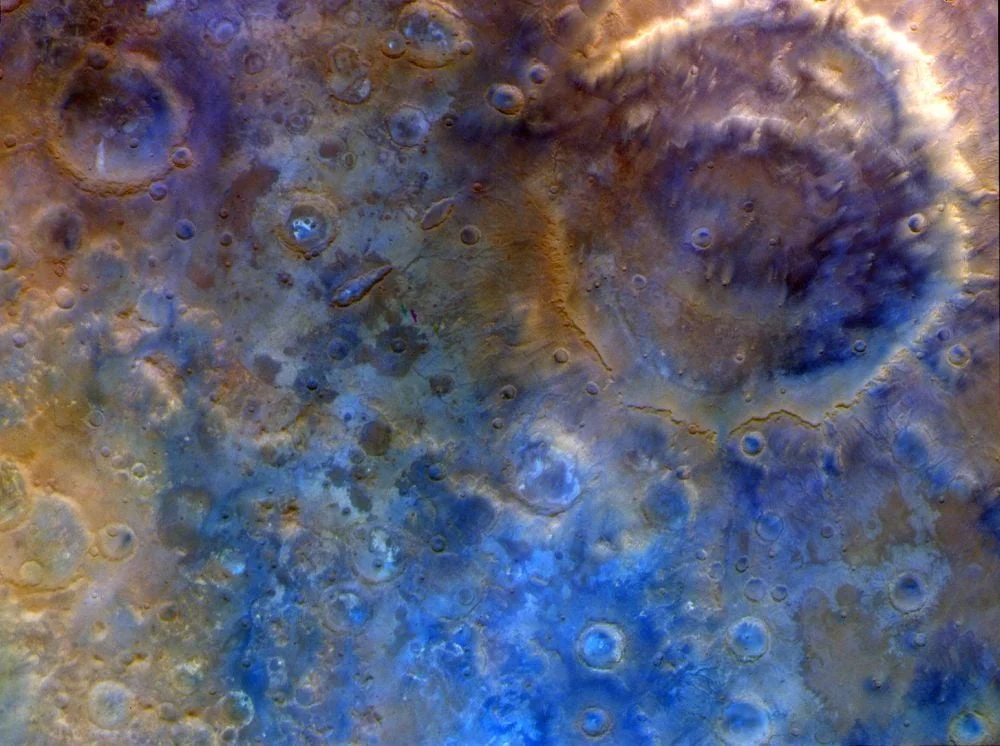
Following a complex deep-space maneuver executed earlier this year, NASA’s Psyche spacecraft has successfully transmitted and analyzed a wealth of data that confirms its suite of scientific instruments is in peak operating condition. The spacecraft, which is currently on a six-year journey to a unique metal-rich asteroid in the outer reaches of the main asteroid belt, utilized the gravitational pull of Mars in May 2024 to gain the necessary velocity for its long-term trajectory. While the primary objective of the Mars flyby was a gravity assist, mission controllers at NASA’s Jet Propulsion Laboratory (JPL) and various partner institutions seized the opportunity to put the probe’s sophisticated sensors to the test. After months of meticulous data processing, the mission team has confirmed that the spacecraft’s imager, magnetometer, and spectrometers performed exactly as designed, providing a vital "health check" before the mission’s arrival at its target in 2029.
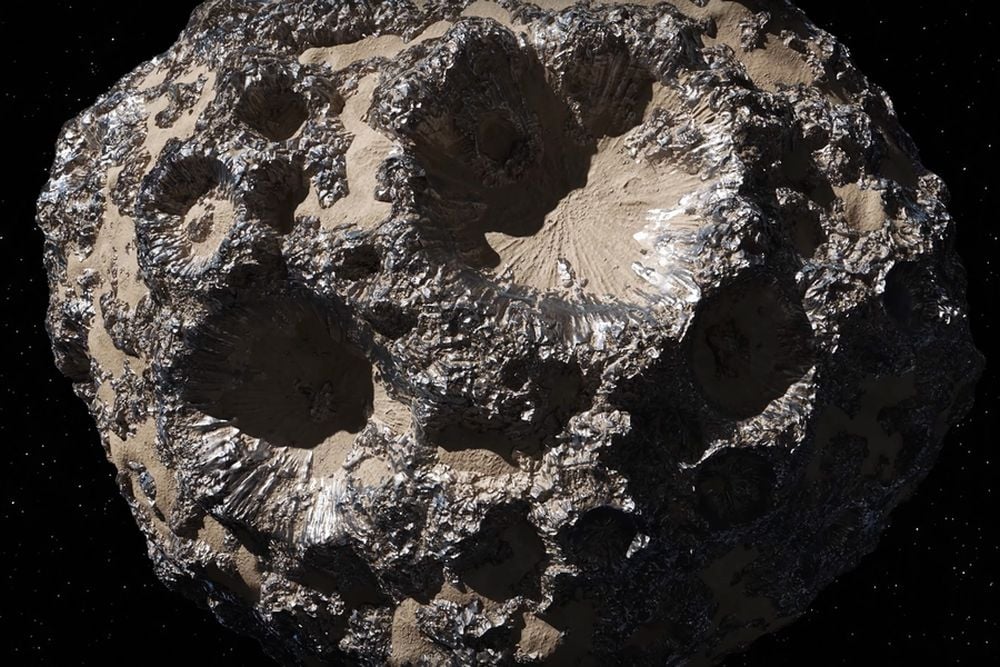
The Psyche mission represents a landmark in planetary science as it is the first endeavor to explore a world that appears to be composed not of rock or ice, but primarily of metal. The target, asteroid 16 Psyche, is one of the most intriguing objects in the solar system. Measuring approximately 280 kilometers (173 miles) at its widest point, it is believed to be the exposed nickel-iron core of an early protoplanet. If this hypothesis holds true, 16 Psyche offers a rare window into the violent history of collisions and accretion that created terrestrial planets like Earth, Mars, and Venus.
The Mechanics of the Mars Gravity Assist
The journey to the main asteroid belt requires immense energy, more than even the most powerful rockets can provide at launch. To bridge this gap, the Psyche spacecraft utilizes a combination of high-efficiency solar-electric propulsion and planetary gravity assists. Launched in October 2023 atop a SpaceX Falcon Heavy rocket, the spacecraft spent its first several months in a "cruise phase," testing its systems and gradually increasing its distance from Earth.
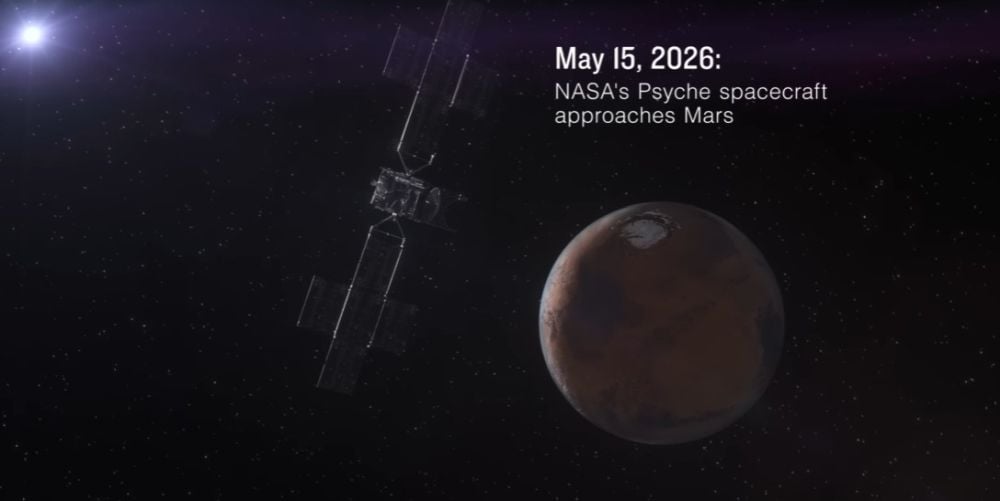
In May 2024, the spacecraft approached Mars, coming within approximately 3,500 kilometers (2,200 miles) of the Red Planet’s surface. This proximity allowed the spacecraft to "steal" a portion of Mars’ orbital momentum, effectively slingshotting it toward its final destination. By using Mars’ gravity to alter its trajectory and increase its speed, the mission saved a significant amount of fuel, which will be critical for the complex orbital maneuvers required once it reaches 16 Psyche.
While the navigation team worked to ensure the trajectory was precise, the science teams prepared to activate the spacecraft’s payload. Although Mars has been studied extensively by a fleet of orbiters and rovers, the Psyche flyby provided a unique perspective and a dynamic environment to calibrate the spacecraft’s sensitive equipment.
Validating the Magnetometer and the Gradiometer Configuration
One of the most critical instruments on board is the magnetometer. This tool is essential for determining the nature of 16 Psyche. If the asteroid is indeed the remnant core of a protoplanet, it may possess a "fossil" magnetic field—a remnant of the magnetic field it once generated when its core was molten.
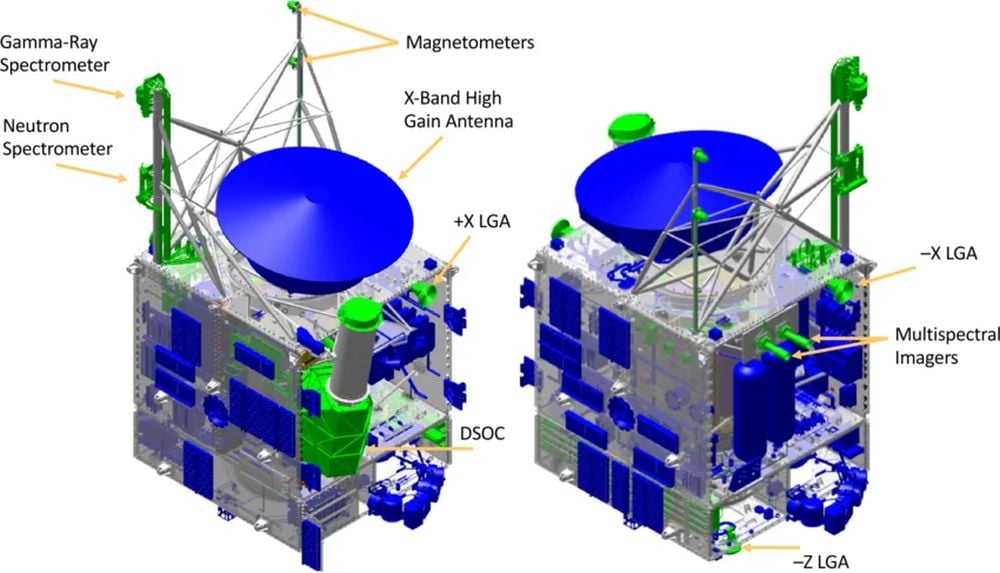
The magnetometer on Psyche is a sophisticated gradiometer, consisting of two identical high-sensitivity sensors mounted on a 2.15-meter (7-foot) boom. This dual-sensor setup is designed to solve a common problem in space exploration: spacecraft interference. All spacecraft generate their own small magnetic fields through their electronics and power systems. By placing one sensor closer to the spacecraft and the other further away on the boom, the team can subtract the spacecraft’s "noise" from the data, leaving only the pure magnetic signature of the target.
During the Mars flyby, the magnetometer was tasked with detecting the planet’s interaction with the solar wind. "As the spacecraft passed close to Mars, the magnetometer saw an intense uptick in magnetic field corresponding to the bow shock region, where the solar wind slams into the planet’s magnetic field," explained Ben Weiss, Psyche’s deputy principal investigator and magnetometry lead at the Massachusetts Institute of Technology (MIT).
The successful detection of the Martian bow shock—the boundary where the planet’s magnetosphere deflects the supersonic solar wind—proved that the instrument can handle dynamic, high-stakes environments. This validation gives researchers confidence that the magnetometer will be able to detect even faint magnetic signatures frozen into the metal of 16 Psyche.
Imaging Mars and the Search for Moonlets
In addition to magnetic data, the spacecraft’s multispectral imager was activated to capture high-resolution views of the Martian surface. The imager consists of two identical cameras equipped with filters that allow it to see in both visible and near-infrared light. These filters are specifically chosen to help distinguish between metallic and silicate (rocky) materials on the surface of an asteroid.
During the flyby, the imager captured striking photographs of the Huygens crater, a massive 450-kilometer-wide impact basin. The images revealed intricate details of the crater’s double-ringed structure and the varying rock compositions of the surrounding terrain. Beyond mere photography, these observations served as a crucial calibration exercise.
Jim Bell, the imager instrument lead at Arizona State University, noted that the flyby allowed the team to test the camera’s sensitivity to scattered light. "The imager performed brilliantly, delivering some rarely seen views of the Red Planet," Bell said. He highlighted a specific exercise where the cameras were used to identify the Martian moons, Phobos and Deimos, from a great distance. This was a "dress rehearsal" for the spacecraft’s arrival at 16 Psyche, where the team will use the same techniques to search for any small moonlets that might be orbiting the asteroid. Finding such moonlets is not just a matter of curiosity; their orbital characteristics would provide a precise measurement of the asteroid’s mass and density.
The Gamma-Ray and Neutron Spectrometer (GRNS)
While the imager looks at the surface, the Gamma-Ray and Neutron Spectrometer (GRNS) is designed to look "under the hood." This instrument detects the elemental composition of the asteroid by measuring the energy of gamma rays and neutrons emitted from the surface when it is struck by cosmic rays.
During the Mars encounter, the GRNS team worked to ensure the sensors could accurately distinguish between different chemical elements. While Mars’ atmosphere is primarily carbon dioxide, its crust contains a variety of elements that the GRNS was able to detect. This test confirmed that the spectrometer is sensitive enough to map the distribution of iron, nickel, silicon, and other elements across the surface of 16 Psyche. Understanding the elemental makeup will be the final piece of the puzzle in determining whether the asteroid is a pure metal core or a mixture of metal and rock.
Official Responses and Mission Outlook
The successful data analysis has been met with enthusiasm across the mission’s leadership. Lindy Elkins-Tanton, the principal investigator for the mission based at Arizona State University, emphasized the collaborative effort required to maximize the flyby. "The mission’s imager, magnetometer, and gamma-ray and neutron spectrometer teams worked overtime to make full use of this planetary encounter," she said. "We didn’t anticipate big discoveries, given how extensively the planet has been studied, but we did complement Mars science with the data we collected through Psyche’s unique perspective."
Bob Mase, the Psyche project manager at JPL, confirmed that the spacecraft’s health remains excellent. "This gravity assist was years in the making, and the navigation team nailed it," Mase stated. "Psyche flew by Mars on exactly the trajectory we needed to set us on a path to rendezvous with the asteroid in the summer of 2029."
As of late 2024, the spacecraft is entering a phase of "sustained thrusting." Using its solar-electric propulsion system—which ionizes xenon gas and accelerates it using electricity from the massive solar arrays—the spacecraft will continue to accelerate gradually over the next three years. This propulsion system is incredibly efficient, providing a gentle but constant push that will eventually bring the spacecraft’s speed to the levels required to enter orbit around 16 Psyche.
Broader Implications for Planetary Science
The success of the Psyche mission’s instrument tests has implications that reach beyond this single mission. The validation of the dual-magnetometer gradiometer system provides a blueprint for future missions to metallic or highly magnetic bodies. Furthermore, the data gathered at Mars adds to the global repository of Martian atmospheric and magnetic research, providing a snapshot from a trajectory that standard Mars orbiters do not typically take.
The overarching goal remains the arrival at 16 Psyche in August 2029. Scientists currently have two primary theories about the asteroid. The first is that it is the "stripped core" of a differentiated planetesimal—an early solar system object that had a molten interior where heavy metals sank to the center. Subsequent collisions with other objects might have peeled away the rocky crust and mantle, leaving only the metal core behind. The second theory suggests that 16 Psyche might be a more primitive type of object that formed from metal-rich material that never fully melted.
By the time the mission concludes its 26-month primary science phase in the early 2030s, humanity will have its first clear picture of a metal world. The data confirmed this week during the Mars flyby ensures that when the spacecraft finally reaches its destination, its "eyes" and "ears" will be ready to record every detail of this mysterious metallic frontier.