Sisilia Frederika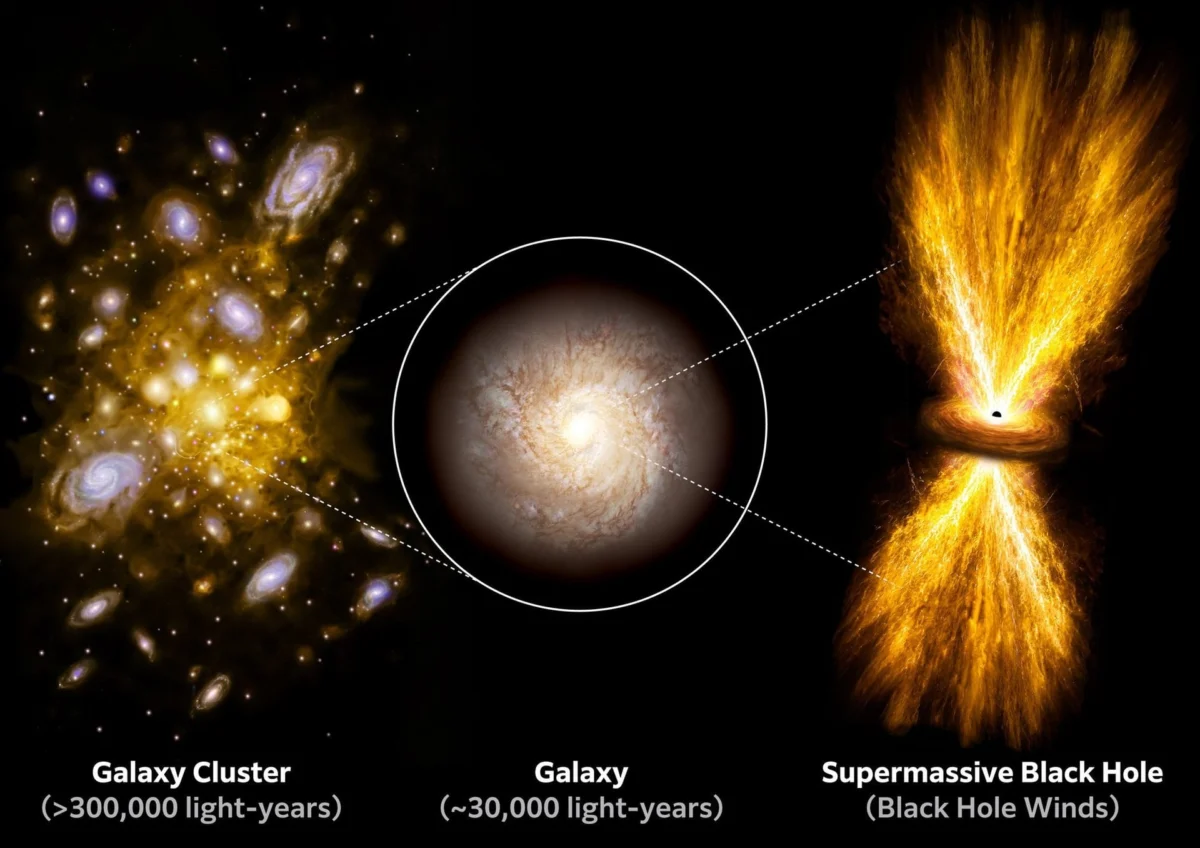
The cosmos is home to a variety of cataclysmic phenomena capable of altering the trajectory of galactic evolution, but few are as formidable as the "blasts" emanating from supermassive black holes. A landmark study conducted by an international team of astronomers from Tohoku University, Tokyo Metropolitan University, and Kanazawa University has revealed that these energetic ejections are far more powerful and far-reaching than previously theorized. Utilizing the advanced capabilities of the X-ray Imaging and Spectroscopy Mission (XRISM) satellite, researchers observed the quasar H1821+643, discovering that its explosive winds carry energy well beyond the borders of its host galaxy, penetrating deep into the surrounding intergalactic environment.
This discovery challenges the long-standing astronomical assumption that black hole-driven winds are largely contained within their immediate galactic vicinities. Instead, the study demonstrates that the influence of a supermassive black hole can extend across hundreds of thousands of light-years, effectively acting as a cosmic regulator for entire galaxy clusters. According to Satoshi Yamada, Assistant Professor at Tohoku University’s Frontier Institute for Interdisciplinary Sciences (FRIS), the sheer scale of this force is "immensely more powerful than previously understood," marking a significant shift in our understanding of how black holes shape the universe.
The Mechanics of a Cosmic Blast: Insights from H1821+643
Located approximately 3.4 billion light-years away in the constellation Draco, H1821+643 is a quasar—an extremely luminous active galactic nucleus (AGN) powered by a supermassive black hole. While black holes are famously characterized by their gravitational pull, which prevents even light from escaping, the dynamics of an active black hole are more complex. As vast quantities of gas and dust spiral toward the event horizon, they form an accretion disk. The intense friction and gravitational forces within this disk generate extreme temperatures, causing the material to emit brilliant radiation and eject powerful streams of gas.
The Japanese research team focused on the "winds" generated by this process. Their observations revealed that H1821+643 is driving a turbulent flow of hot gas that extends roughly 300,000 light-years from the black hole. To put this in perspective, the Milky Way galaxy is estimated to be about 100,000 light-years in diameter. The blast from H1821+643, therefore, spans a distance equivalent to three Milky Ways placed end-to-end. This energy transport is equivalent to the power of several billion supernova explosions, creating a shock wave that dictates the physical state of the gas in the surrounding galaxy cluster.
Technical Breakthrough: The Role of the XRISM Satellite
The ability to map these massive gas flows was made possible by the XRISM satellite, a collaborative project between the Japan Aerospace Exploration Agency (JAXA) and NASA. Launched in September 2023, XRISM is equipped with high-resolution X-ray spectrometers designed to observe the "hot and energetic" universe. The satellite’s "Resolve" instrument allows astronomers to measure the motion of gas with unprecedented precision by tracking the Doppler shift of X-ray emissions from ionized iron.
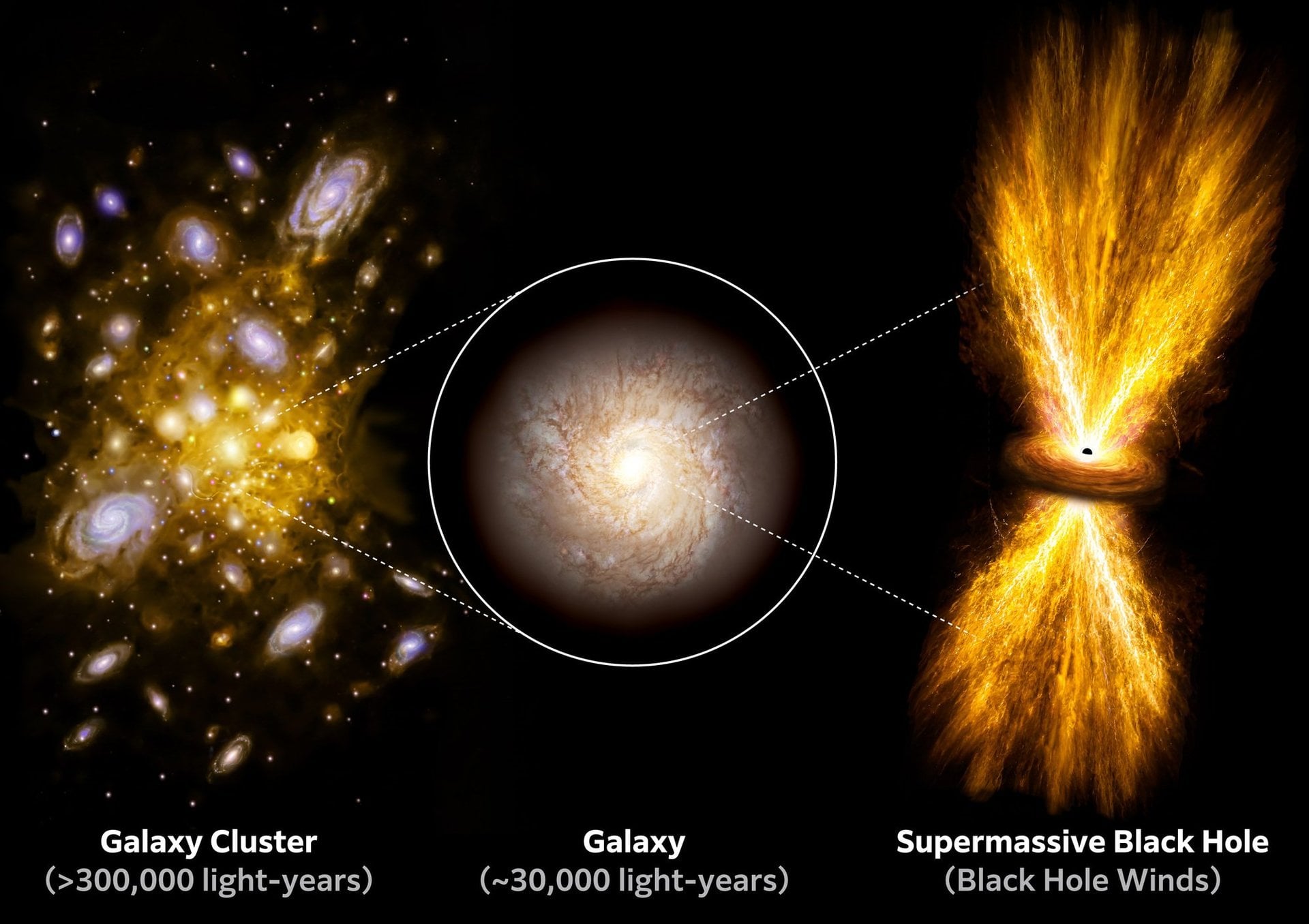
In the case of H1821+643, the quasar is embedded within a massive galaxy cluster filled with a "hot fog" of plasma known as the intracluster medium (ICM). By analyzing the spectra of this gas, the team was able to detect the signature of turbulence and outflow. They found that the high-temperature gas cloud is in a state of constant, violent motion, whipped up by the quasar’s energy. This turbulence prevents the gas from cooling and settling, which has profound implications for the birth of new stars in the region.
AGN Feedback and the Evolution of Galaxies
The phenomenon observed at H1821+643 is a prime example of "AGN feedback," a critical process in the lifecycle of a galaxy. Astronomers have long puzzled over why many large galaxies do not produce as many stars as theoretical models suggest they should. The answer lies in the heating provided by supermassive black holes.
Under normal circumstances, the hot gas within a galaxy cluster would eventually cool down, condense, and collapse to form new stars. However, the energetic blasts from a quasar like H1821+643 act as a cosmic thermostat. By injecting massive amounts of kinetic energy into the surrounding environment, the black hole keeps the gas too hot and turbulent to coalesce. This "quenching" of star formation effectively halts the growth of the host galaxy and influences the development of neighboring galaxies within the cluster.
Conversely, the study also notes that in some specific regions, the compression of gas caused by these winds can trigger star formation. This dual role—both inhibiting and occasionally stimulating stellar growth—makes supermassive black holes the primary architects of galactic structure.
A Chronology of Cosmic Activity
While H1821+643 provides a current snapshot of an active quasar, its behavior offers a window into the history of our own galaxy. Most, if not all, large galaxies are believed to have hosted a quasar at some point during their infancy.
- The Early Universe (10-12 Billion Years Ago): This was the "peak quasar era," where supermassive black holes were most active, consuming vast amounts of matter and regulating the growth of the first massive galaxies.
- The Milky Way’s Active Phase (Estimated Billions of Years Ago): Our own galaxy likely went through a quasar phase as it grew, clearing out excess gas and shaping the disk we see today.
- Recent Activity (6 Million Years Ago): Evidence suggests the Milky Way’s central black hole, Sagittarius A*, experienced a surge of activity relatively recently in cosmic terms. While not a full-scale quasar blast, this event left behind the "Fermi Bubbles"—two massive structures of high-energy radiation extending above and below the galactic plane.
- The Present Day: Sagittarius A* is currently in a "quiet" state, consuming very little material. However, as the study of H1821+643 suggests, if a significant amount of matter were to fall into our central black hole, it could "wake up," potentially generating winds that would strip gas from the Milky Way.
Scientific Analysis: Implications for the Cosmic Web
The discovery that black hole winds reach 300,000 light-years into space has significant implications for our understanding of the "Cosmic Web"—the large-scale structure of the universe composed of filaments of dark matter and gas. If quasars can influence the intracluster medium at such great distances, they are likely responsible for distributing heavy elements (forged in stars) throughout the intergalactic void.
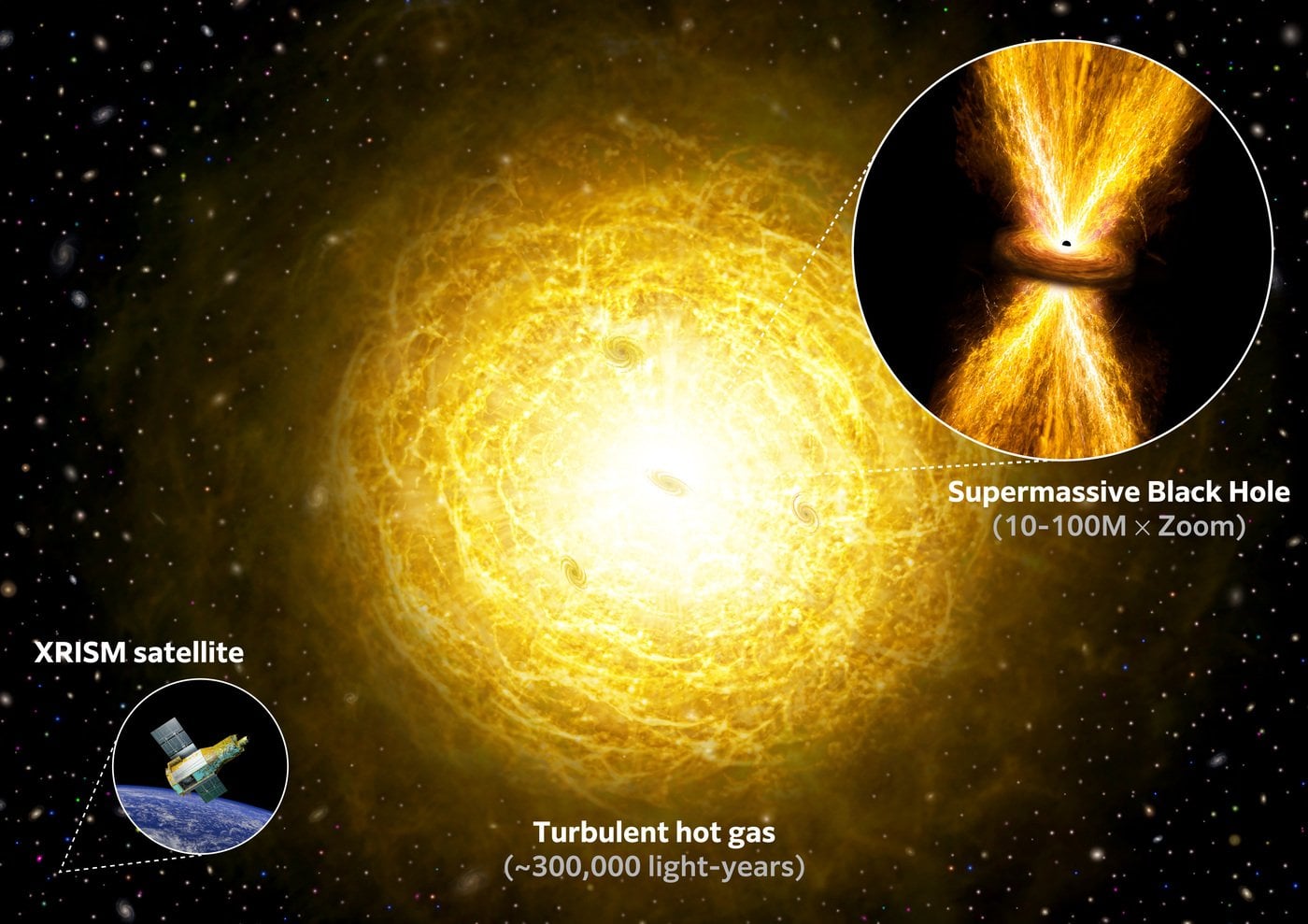
"For the first time, we have shown that black holes influence the broader cosmic environment through a shock wave of astonishing power," Yamada explained. This suggests that the "reach" of a black hole is not limited to its gravitational "sphere of influence" but is extended by the radiation and kinetic energy it exports. This energy helps maintain the high temperatures of the intergalactic medium, preventing the universe from becoming a graveyard of cold, dead gas.
Future Research and Multi-Messenger Astronomy
The findings from Tohoku University and its partners represent only the beginning of a new era in X-ray astronomy. The success of the XRISM mission has set the stage for future investigations into the "feedback" loop between black holes and their environments. Astronomers hope to combine X-ray data with observations from the James Webb Space Telescope (JWST), which can see the cooler gas and dust that the X-rays miss.
Furthermore, the emerging field of "multi-messenger" astronomy—which uses light, gravitational waves, and neutrinos to study the same object—will be crucial. By observing quasars across the entire electromagnetic spectrum, from radio waves to gamma rays, scientists can build a comprehensive model of how energy is transferred from the event horizon of a black hole to the far reaches of intergalactic space.
As researchers continue to probe the depths of the Draco constellation and beyond, the story of H1821+643 serves as a reminder of the interconnectedness of the universe. The most compact and mysterious objects in existence, black holes, are not merely "sinks" for matter, but are the engines that drive the evolution of the largest structures in the cosmos. While Earth remains safe from such blasts for now, the ongoing study of these behemoths is essential to understanding our place in a dynamic and often violent universe.