Galang Taruna
The Samsung Galaxy Z Fold 8, the latest iteration in Samsung’s pioneering foldable smartphone series, has quickly garnered attention for its innovative "passport" form factor and advanced features. However, as initial reviews and comprehensive testing commence, a peculiar ergonomic detail regarding its camera functionality in the unfolded state has emerged, potentially leading to user confusion when attempting to capture photos or videos. This observation, highlighted by tech journalists, delves into the subtle yet significant interplay between hardware design, software logic, and intuitive user experience in the evolving landscape of foldable technology.
Unpacking the Orientation Paradox: When Horizontal Feels Vertical
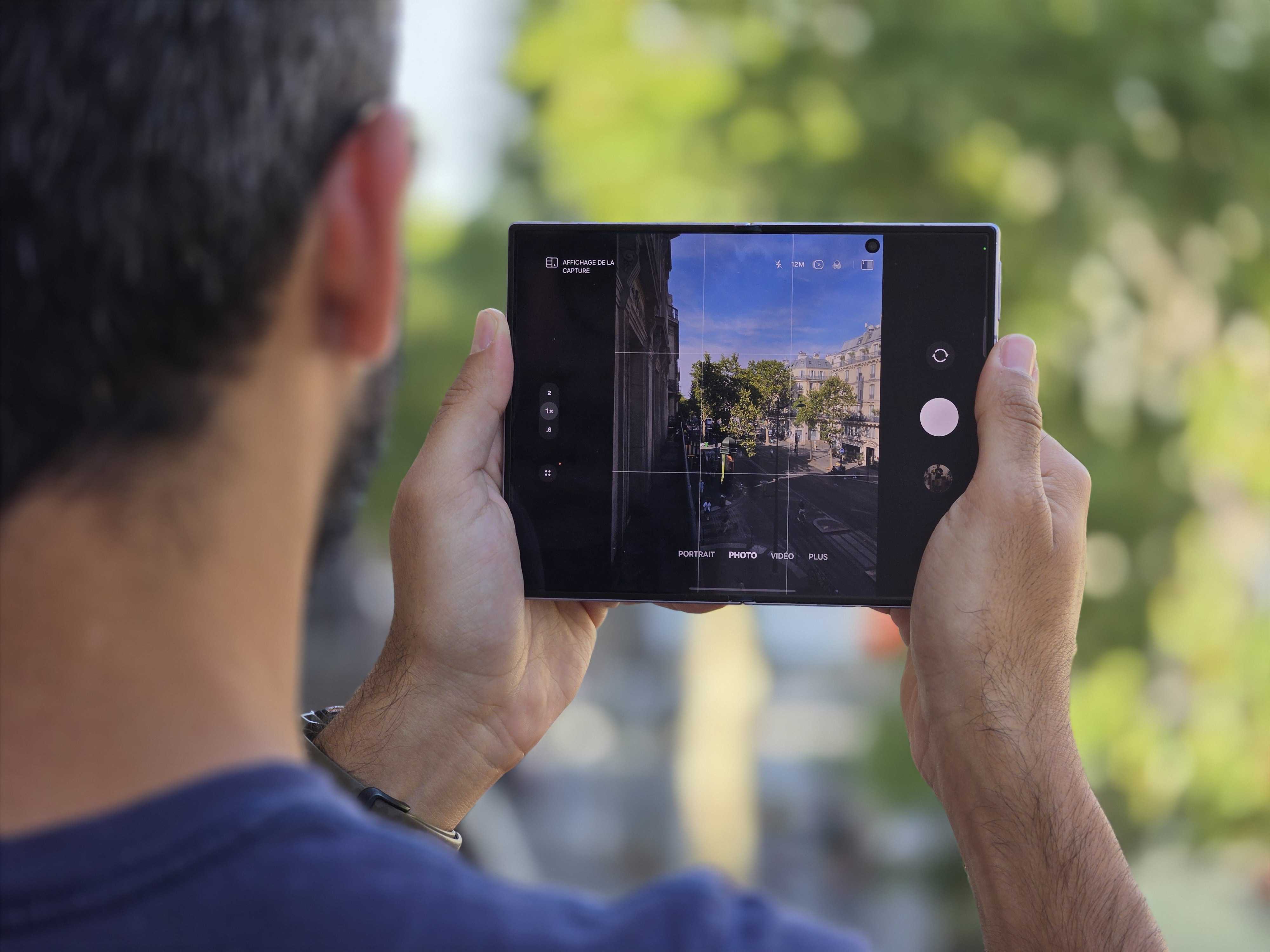
Upon unfolding the Samsung Galaxy Z Fold 8, users are presented with a generous 4:3 aspect ratio internal display, designed to be held horizontally for an immersive tablet-like experience. This orientation, which naturally feels like a landscape mode for media consumption or productivity, paradoxically results in the device’s camera interface defaulting to a vertical (portrait) shooting mode. To achieve a true landscape video or photo, users must physically rotate the device 90 degrees, an action that runs counter to the initial perceived orientation of the unfolded screen. This phenomenon contrasts sharply with the intuitive operation of standard smartphones and even other foldable devices, where a horizontal grip universally corresponds to a landscape shooting mode.
The core of this perceived "bizarrerie" lies in the Galaxy Z Fold 8’s fundamental design philosophy. Unlike traditional smartphones that maintain a consistent aspect ratio whether held vertically or horizontally, foldable devices like the Z Fold 8 operate in two distinct form factors: a compact, "passport-style" closed mode and an expansive, tablet-like open mode. Samsung has engineered the camera system primarily for the closed, more frequently used "passport" mode, where the device is held vertically. When the device is unfolded, the physical alignment of the rear cameras remains optimized for this initial vertical orientation relative to the device’s internal chassis. Consequently, when the large inner screen is viewed horizontally, the camera’s default capture orientation is still aligned with its physical placement, which translates to a vertical output from the user’s perspective.
This design choice, while technically logical from an engineering standpoint, introduces an unexpected cognitive dissonance for users accustomed to the conventional smartphone camera experience. The muscle memory developed over years of smartphone use dictates that holding a device horizontally prepares it for a landscape shot. The Z Fold 8 challenges this ingrained habit, requiring a conscious adjustment that can disrupt the flow of capturing spontaneous moments. Initial hands-on impressions and subsequent full testing phases have confirmed that this detail, while not a critical flaw, is sufficiently noticeable to warrant discussion among tech enthusiasts and early adopters.
Samsung’s Foldable Vision: A Tale of Two Folds
To fully appreciate the Z Fold 8’s design, it’s crucial to understand Samsung’s broader strategy for its foldable lineup, unveiled during the highly anticipated Galaxy Unpacked event. This year, Samsung introduced three distinct foldable models: the Galaxy Z Fold 8, the Galaxy Z Flip 8, and the Galaxy Z Fold 8 Ultra. Each caters to a slightly different user profile and design philosophy.
The Galaxy Z Fold 8, with its "passport" format, emphasizes a more compact and pocketable design when closed, making it an attractive option for users seeking a powerful device that transforms into a larger screen without being overly cumbersome. This choice of a narrower, taller external screen dictates much of its internal component arrangement, including the camera module.
In contrast, the Galaxy Z Fold 8 Ultra features a significantly squarer internal display when unfolded. This design, which evolved from previous Fold generations, means that even when unfolded, the Ultra tends to maintain a portrait-first orientation, requiring users to actively rotate it for a landscape view. This consistency, despite its large size, might feel more familiar to some users than the Z Fold 8’s horizontal-to-vertical shift. The existence of these two distinct Fold models underscores Samsung’s ongoing experimentation with foldable form factors, attempting to balance ergonomic considerations with the desire for expansive screen real estate.
The Galaxy Unpacked event itself served as a testament to Samsung’s unwavering commitment to the foldable market. Beyond the new form factors, the company highlighted significant advancements across its entire ecosystem. This included integrating cutting-edge silicon-carbon battery technology, promising enhanced longevity and faster charging capabilities – a critical innovation for power-hungry foldable devices. Furthermore, Samsung showcased continued prowess in display technology, pushing the boundaries of what’s possible in terms of brightness, durability, and visual fidelity for flexible screens. These broader innovations, while not directly related to the camera orientation issue, paint a picture of a company investing heavily in overcoming the inherent challenges of foldable design.
Implications for Content Creators and Everyday Users
For professional content creators or even casual users heavily reliant on their smartphone cameras, this orientation peculiarity of the Z Fold 8 could necessitate a period of adaptation. Capturing video for platforms like YouTube or TikTok, which increasingly favor vertical content, might feel intuitive in the Z Fold 8’s default unfolded state. However, shooting cinematic landscape footage or wide-angle photography would require the aforementioned 90-degree rotation, potentially disrupting the user’s grip or composition flow. This could be particularly noticeable when using accessories like gimbals or external lenses, which are often designed with traditional smartphone orientations in mind.
The article mentions a new AI-powered dynamic video reframing function on the Z Fold 8. This feature, designed to intelligently crop and stabilize video, could potentially mitigate some of the orientation confusion by allowing users to adjust the frame post-capture. However, it does not fundamentally alter the initial shooting experience. The ideal scenario for users remains an intuitive, what-you-see-is-what-you-get experience at the point of capture.

The Competitive Landscape: Lessons for the "iPhone Ultra"
The challenges faced by Samsung in optimizing the Z Fold 8’s camera experience also provide valuable insights for competitors, particularly Apple, which is widely rumored to be developing its own foldable device, tentatively dubbed the "iPhone Ultra." Given that the "iPhone Ultra" is anticipated to adopt a form factor "very similar" to the Galaxy Z Fold 8, it is highly probable that Apple will encounter similar ergonomic and design hurdles.
Apple’s approach to camera technology and user experience is notoriously meticulous. One potential solution, as suggested in the original article, could be the integration of Apple’s "Center Stage" feature. Currently available on iPads and some Macs, Center Stage uses a wider-angle front camera and machine learning to keep subjects automatically centered in the frame during video calls, even as they move. Adapting this technology for a foldable phone’s rear camera system could offer a dynamic solution to the orientation problem, allowing the software to intelligently crop and stabilize the desired frame regardless of how the device is physically held.
However, implementing Center Stage for primary photography and videography on a foldable device presents significant engineering challenges. Center Stage typically relies on a larger, often square, camera sensor to provide the necessary field of view for intelligent reframing. Integrating such a sensor into the already space-constrained and complex internal architecture of a foldable smartphone, where every millimeter is critical for hinge mechanisms, battery, and other components, is a formidable task. This underscores the intricate trade-offs manufacturers must make when pushing the boundaries of mobile technology.
A Broader Look at Samsung’s Unpacked Innovations
Beyond the intriguing camera behavior of the Z Fold 8, the Galaxy Unpacked event was a showcase of Samsung’s ambition and technological leadership. The introduction of three distinct foldable models – the Z Fold 8, Z Flip 8, and Z Fold 8 Ultra – cemented Samsung’s position as the most diverse player in the nascent foldable market. Each device was positioned to cater to different segments, from the fashion-forward Z Flip 8 to the power-user oriented Z Fold 8 Ultra.
Key technical advancements were also highlighted:

- Silicon-Carbon Batteries: A significant leap from traditional lithium-ion, promising enhanced energy density, faster charging cycles, and potentially longer battery life. This is crucial for foldables, which often struggle with battery capacity due to their slim designs and large, power-hungry displays.
- Improved Charging Architecture: Samsung has also refined the charging mechanisms for its new foldables, aiming for more efficient and potentially faster power delivery. This is a subtle but impactful improvement for daily usability.
- Display Prowess: Samsung’s continued innovation in flexible display technology ensures brighter, more durable, and visually stunning screens for its foldables. The company has consistently led in this area, setting benchmarks for the entire industry.
- Wearable Ecosystem Expansion: The Unpacked event wasn’t solely about phones. Samsung also unveiled the Galaxy Watch 9 and the Galaxy Watch Ultra 2, expanding its smartwatch lineup. The Galaxy Watch Ultra 2, in particular, aims to compete with high-end rugged smartwatches, featuring boosted battery life and an extra-bright screen. These devices further integrate into Samsung’s connected ecosystem, offering a holistic user experience.
The immediate availability of pre-orders for all three new foldable smartphones signifies Samsung’s confidence in its latest offerings and its aggressive push to capture market share in the premium smartphone segment. The comprehensive range of devices and the underlying technological improvements demonstrate a mature approach to product development within the foldable category.
The Path Forward: Balancing Innovation and Intuition
The Samsung Galaxy Z Fold 8’s camera orientation challenge serves as a microcosm of the larger developmental hurdles faced by the foldable smartphone industry. While manufacturers are pushing the boundaries of hardware design and display technology, the ultimate success of these innovative devices hinges on their ability to deliver an intuitive and seamless user experience. As the market matures, the focus will likely shift from merely showcasing technological possibility to refining the interaction paradigms.
For Samsung, this could involve software updates that dynamically adjust camera orientation based on accelerometer data and user grip, or perhaps offering more prominent on-screen indicators. For future iterations, a redesign of the camera module’s physical orientation relative to the unfolded screen might be considered, although this would likely come with its own set of engineering compromises.
Ultimately, the Galaxy Z Fold 8 represents a significant step forward in foldable technology, offering a unique blend of portability and expansive screen real estate. The camera orientation quirk, while noteworthy, is a symptom of the ongoing evolution in a brand-new product category. It highlights the intricate balance between pioneering design, technical feasibility, and the ever-present demand for user-friendly interfaces in the rapidly advancing world of mobile technology. As foldable phones become more mainstream, these subtle nuances will play an increasingly critical role in defining user satisfaction and driving adoption.