Sisilia Frederika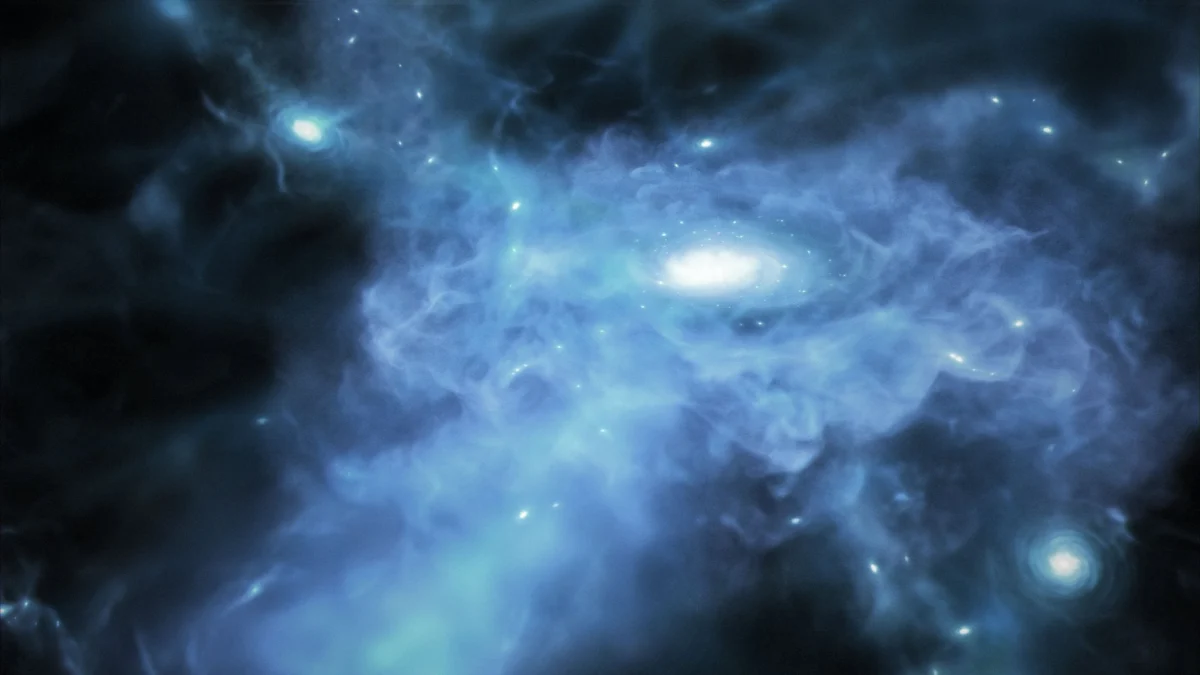
Astronomers have long viewed the early universe as a chaotic nursery, a period defined by the rapid accumulation of matter and the frenetic birth of the first stars. According to the standard cosmological model, galaxies in this era—roughly one to two billion years after the Big Bang—began as small "shreds" of primordial material. Over eons, these fragments were expected to coalesce through gravitational attraction, gradually forming the massive, structured galaxies we observe in the local universe today. However, recent observations from the James Webb Space Telescope (JWST) have challenged this linear narrative, revealing the existence of massive, "quiescent" galaxies that had already ceased star formation while the universe was still in its infancy. The discovery of these "dead" galaxies has sparked a significant quest within the astrophysical community to identify the mechanism capable of halting such immense cosmic productivity. New research into a galaxy designated CRISTAL-02, conducted by an international team of astronomers led by Swinburne University, now points to a violent, self-regulating process: galaxy-killing winds triggered by the very starbursts they eventually extinguish.
The Paradox of the Early Universe
The primary tool for investigating these distant phenomena is the JWST, an observatory specifically tuned to detect infrared light. Because the universe is expanding, light from the earliest galaxies is "redshifted" into the infrared part of the spectrum by the time it reaches Earth. Before the deployment of JWST, our understanding of the first billion years of cosmic history was limited to the brightest and most active objects. The sensitivity of the JWST has allowed scientists to peer deeper into the "Cosmic Dawn," uncovering a population of galaxies that appear far more mature than they should be for their age.
Among these findings are massive, quiescent galaxies—objects that contain billions of stars but show no signs of new star formation. In the context of a universe only 10% to 15% of its current age, these galaxies are an anomaly. To reach such a massive state so quickly, they must have experienced intense periods of star formation, known as starbursts. The central mystery, however, is not just how they grew so fast, but why they stopped. If the early universe was rich in the cold hydrogen gas necessary to fuel star formation, what force was powerful enough to strip a massive galaxy of its lifeblood in such a short window of time?
The Case of CRISTAL-02: A Cosmic Forensic Study
To solve this mystery, a team of researchers led by Dr. Rebecca Davies of Swinburne University focused their attention on CRISTAL-02. This galaxy is part of the Cosmic Evolution Early Release Science (CEERS) survey, a program designed to provide the first high-resolution look at the distant universe. By combining the infrared capabilities of JWST with the submillimeter precision of the Atacama Large Millimeter/submillimeter Array (ALMA) in Chile, the team was able to construct a multi-wavelength profile of the galaxy as it existed just one billion years after the Big Bang.
CRISTAL-02 was found to be in the midst of a significant growth spurt, forming stars at a rate nearly twice as fast as other similar galaxies from the same epoch. The observations revealed that CRISTAL-02 is not an isolated system but is part of a complex interaction involving multiple galaxies. In the early universe, such collisions were common, as the higher density of the cosmos forced galaxies into frequent gravitational encounters. Typically, these interactions drive gas toward the center of the merging galaxies, creating the high-pressure environments necessary to ignite a starburst.
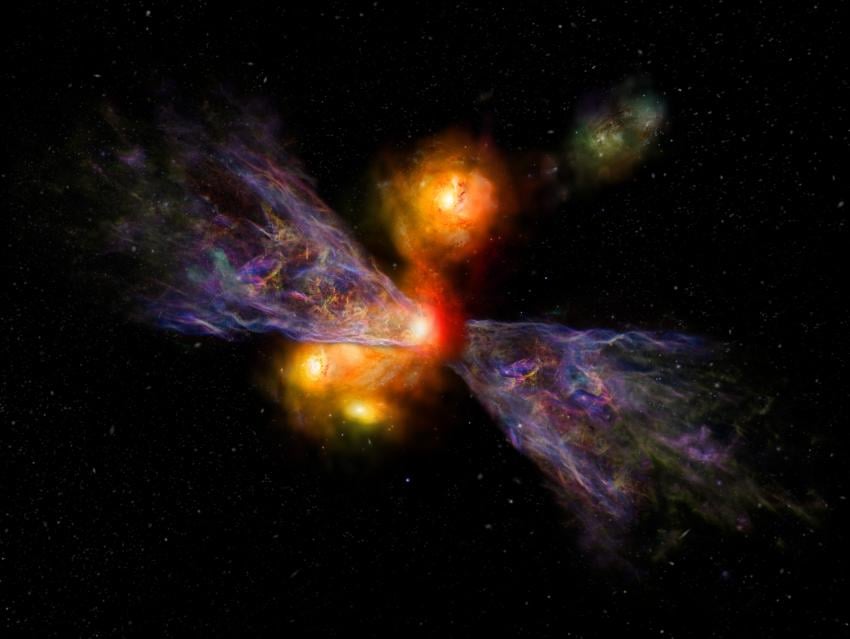
However, the data from ALMA provided a crucial, unexpected detail: a massive plume of cold gas flowing away from CRISTAL-02. This gas is the essential "seed material" for future stars. The fact that it was being ejected from the galaxy, rather than falling into it, suggested a powerful internal engine was driving a "galactic wind" capable of clearing out the galaxy’s reservoir of star-forming fuel.
The Mechanics of Galactic Quenching
The process described by Dr. Davies and her colleagues is a form of cosmic feedback. In the dense, "city-like" regions of the early universe, the proximity of galaxies leads to frequent mergers. These mergers trigger the rapid formation of massive stars. While these stars are the engines of a galaxy’s growth, they also contain the seeds of its demise. Massive stars live fast and die young, ending their short lives in violent supernova explosions.
When thousands of supernovae occur in a relatively small spatial and temporal window—as happens during a starburst—the cumulative energy is immense. These explosions create high-pressure bubbles of hot gas that expand and eventually merge, forming a collective "super-wind." This wind is powerful enough to overcome the gravitational pull of the galaxy, blasting the remaining cold, neutral gas into intergalactic space.
In the case of CRISTAL-02, the team found that the galaxy is ejecting material at a rate twice as fast as it is forming stars. "The galaxy has a powerful wind that is ejecting material twice as fast as the galaxy forms stars," Dr. Davies noted. This creates a "starvation" scenario. Without the cold gas to condense into new stars, the starburst is choked off. The researchers estimate that if this blowout continues at its current rate, CRISTAL-02 could exhaust its gas supply and become a "dead" galaxy in less than 50 million years—a mere blink of an eye in cosmic terms.
Supporting Data and Statistical Context
The study of CRISTAL-02 provides a physical model that explains the "massive dead galaxies" observed elsewhere by JWST. The prevalence of this phenomenon is supported by statistical data from the CEERS survey. Dr. Davies highlighted that almost half of early massive galaxies show signs of interacting with nearby neighbors. This suggests that the merger-driven starburst and subsequent quenching via supernova winds is not a rare occurrence but a widespread cosmic phenomenon.
Data from the study indicates that:
- Star Formation Rate: CRISTAL-02’s star formation is approximately 200% higher than the average for galaxies at a redshift of $z approx 6$.
- Outflow Velocity: The winds detected by ALMA and JWST are moving at hundreds of kilometers per second, sufficient to escape the galactic halo.
- Quenching Timeline: The transition from a vibrant starburst to a quiescent state can occur in under 50 to 100 million years, explaining how galaxies appear "dead" by the time the universe is 1.5 billion years old.
This feedback loop serves as a natural "thermostat" for galaxy growth. Without such winds, galaxies might grow to sizes far exceeding what we see in the modern universe. However, the intensity of this feedback in the early universe appears to be much higher than previously predicted by many cosmological simulations.
Technological Synergy: JWST and ALMA
The discovery would not have been possible without the combined power of the world’s most advanced observatories. JWST’s Near-Infrared Camera (NIRCam) allowed the team to see the stars within CRISTAL-02 and identify the structural signatures of a galaxy merger. Meanwhile, the JWST’s spectroscopy provided the first hints of the outflowing gas.
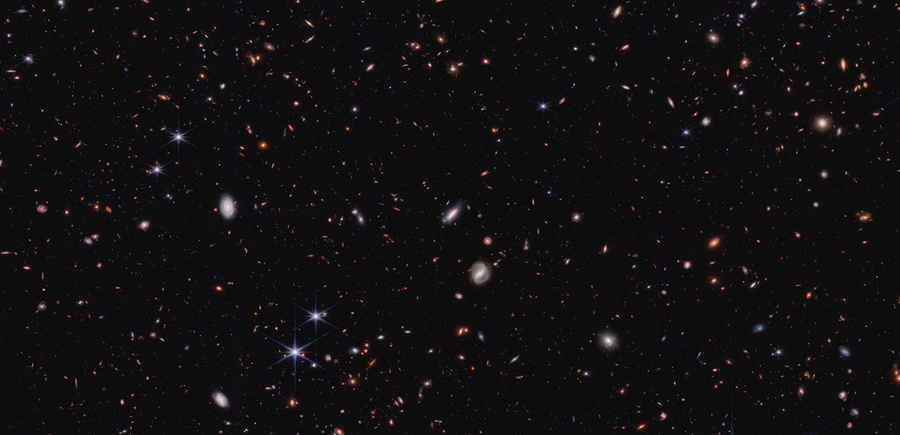
However, infrared light alone cannot tell the whole story. ALMA’s ability to detect the "cool" side of the universe—radio waves emitted by cold gas and dust—was essential for tracking the plume of material being ejected. While JWST sees the "fire" of the starburst, ALMA sees the "smoke" and the moving gas clouds. This synergy allows astronomers to account for the total mass of the galaxy and the velocity of its internal components with unprecedented accuracy.
Broader Implications for Cosmology
The findings from the CRISTAL-02 study have significant implications for our understanding of dark matter and the evolution of the large-scale structure of the universe. Current models, such as the Lambda Cold Dark Matter ($Lambda$CDM) model, rely on simulations to predict how many galaxies of a certain mass should exist at various points in time. The presence of massive, dead galaxies so early in the timeline suggests that either galaxies grow much faster than simulations predict, or that our understanding of "dark energy" and its role in the early universe requires refinement.
Some theorists have proposed that "early dark energy" might have accelerated the growth of the first structures. However, the CRISTAL-02 data suggests a more baryonic (normal matter) explanation: that the chaotic, high-density environment of the early universe simply made the starburst-quench cycle much more efficient. By integrating these "galaxy-killing winds" into future simulations, astronomers can create more accurate models that reflect the dynamic and often self-destructive reality of the early cosmos.
Future Research and Next Steps
The Swinburne team and the broader astronomical community are now looking toward follow-up observations. While the gas plume of CRISTAL-02 has been identified, there are still questions regarding the dusty regions within the galaxy. Dust can obscure star formation, meaning the true rate of growth (and the true power of the resulting winds) might be even higher than currently estimated.
Future studies will aim to:
- Analyze Neutral Gas Content: Using deeper JWST spectra to see if the "starbirth winds" are a universal feature of all high-redshift mergers.
- Examine Optical Emissions: Studying the ionized gas to compare its behavior with the cold gas detected by ALMA.
- Refine Simulations: Using the data from CRISTAL-02 to update the feedback parameters in cosmological models like IllustrisTNG or EAGLE.
As Dr. Davies concluded, CRISTAL-02 is likely just the first step in identifying a vast population of galaxies being "killed" by their own success. The discovery underscores that the early universe was not just a place of creation, but a theater of violent transitions where the birth of stars could simultaneously signal the end of a galaxy’s evolution. By studying these ancient winds, scientists are finally beginning to understand the life cycles of the first massive structures to inhabit our universe.