Sisilia Frederika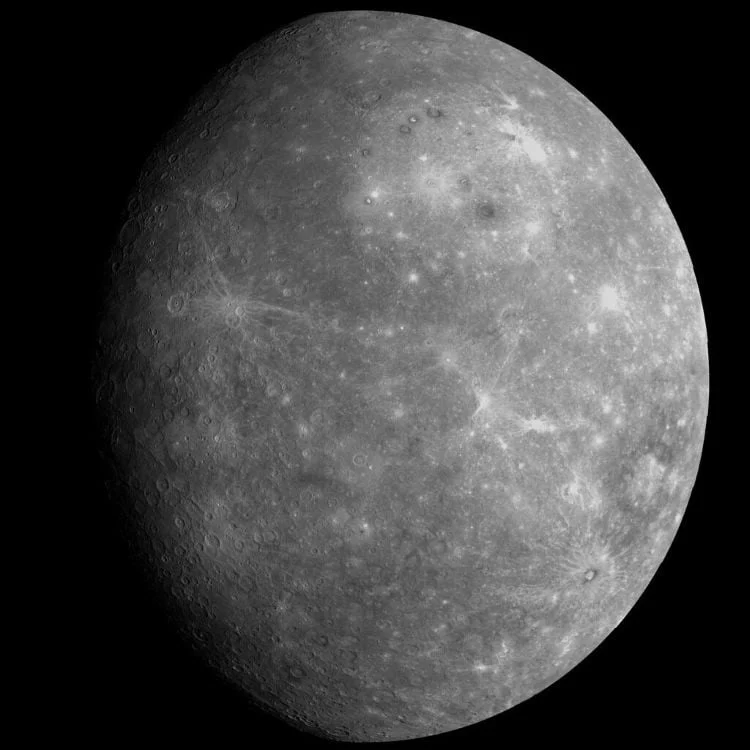
Mercury, the scorched and cratered world closest to our Sun, has long occupied a unique position in planetary science as a world of contradictions. Despite being the smallest planet in the solar system—measuring approximately 3,030 miles in diameter, or roughly the distance from New York City to San Francisco—it possesses an internal magnetic field, a feature typically reserved for much larger, more geologically active bodies like Earth or Jupiter. For decades, the nature of this magnetic field and its ability to interact with the solar wind has been a subject of intense academic scrutiny. A groundbreaking study recently published in the journal Nature Astronomy has now settled a fifty-year debate, confirming that Mercury possesses "part-time" radiation belts, a phenomenon previously thought impossible due to the planet’s diminutive size and relatively weak magnetospheric strength.
The research, conducted by an international collaboration of scientists from institutions in the United States and France, utilizes a sophisticated re-analysis of archival data to reveal that Mercury’s magnetic field is capable of trapping charged particles from the Sun, creating transient radiation belts. These findings not only reshape our understanding of the innermost planet but also provide a critical template for studying thousands of exoplanets orbiting close to their host stars across the galaxy.
The Historical Context of Mercury’s Magnetism
The quest to understand Mercury’s magnetic environment began in earnest on March 29, 1974, when NASA’s Mariner 10 spacecraft performed the first of three historic flybys. To the astonishment of the scientific community, the probe’s magnetometer detected a bow shock and a magnetosphere, indicating that Mercury possessed an intrinsic magnetic field. At the time, planetary models suggested that a planet as small as Mercury should have cooled and solidified long ago, losing the liquid outer core necessary to drive a magnetic dynamo.
The discovery of a magnetic field, while only approximately 1.1 percent as strong as Earth’s, raised immediate questions about the existence of radiation belts. On Earth, the Van Allen radiation belts are two donut-shaped zones of high-energy particles trapped by the planet’s magnetic field. These belts protect the atmosphere from erosion by the solar wind but pose a significant hazard to satellite electronics and human spaceflight. Early data from Mariner 10 suggested the presence of energetic electrons, leading some researchers to hypothesize that Mercury might harbor its own version of these belts. However, when NASA’s MESSENGER (MErcury Surface, Space ENvironment, GEochemistry, and Ranging) spacecraft arrived in orbit in 2011, it initially failed to find evidence of stable, long-term radiation belts, leading many to conclude that Mercury’s magnetosphere was simply too small and weak to sustain them.
Re-evaluating the MESSENGER Mission Data
The recent breakthrough was made possible by applying modern computational models and new data analysis techniques to the observations recorded by MESSENGER during its four-year orbital mission (2011–2015). The research team, including lead authors from the University of Michigan and the Space Sciences Laboratory at UC Berkeley, sought to understand why the data appeared contradictory.
By simulating the interaction between the solar wind—a stream of charged particles emanating from the Sun—and Mercury’s magnetosphere, the researchers discovered that the planet does indeed form radiation belts, but they are highly dependent on the planet’s position in its orbit and the prevailing "space weather." Unlike Earth’s belts, which are relatively permanent fixtures, Mercury’s belts are ephemeral.
The study confirms that Mercury’s magnetic field captures solar wind particles and accelerates them to high energies, creating a temporary reservoir of radiation. These belts are most prominent when the planet is at its furthest point from the Sun, known as aphelion. During these periods, the solar wind pressure is lower, allowing Mercury’s small magnetosphere to expand and trap particles more effectively. Conversely, at perihelion—the point of closest approach—the intense pressure of the solar wind compresses the magnetosphere so severely that the trapping regions are often disrupted.
The Role of Orbital Eccentricity
A defining factor in Mercury’s unique magnetospheric behavior is its highly eccentric orbit. In celestial mechanics, eccentricity measures how much an orbit deviates from a perfect circle, on a scale from 0 to 1. Earth maintains a nearly circular orbit with an eccentricity of 0.0167. In contrast, Mercury possesses the most eccentric orbit of any planet in the solar system, at 0.2056.
This eccentricity means that Mercury’s distance from the Sun varies wildly, from approximately 29 million miles at perihelion to 43 million miles at aphelion. This 14-million-mile difference causes the solar radiation and solar wind intensity hitting the planet to fluctuate by a factor of more than two throughout its 88-day year.
The research team found that radiation belts exist roughly 50 percent of the time when Mercury is at aphelion. During these windows, the belts can persist for 8 to 12 hours before dissipating. At perihelion, however, the belts are much rarer, appearing only about 20 percent of the time. This "part-time" nature explains why previous observations were inconsistent; a spacecraft’s ability to detect the belts depended entirely on the timing of its passage and the specific orbital phase of the planet.
Scientific Analysis of Particle Trapping
The physics behind Mercury’s radiation belts involves the complex interplay of the Lorentz force and the geometry of the planet’s magnetic field lines. For a radiation belt to form, the magnetic field must be strong enough to force charged particles into "adiabatic invariants," where they bounce between the northern and southern magnetic poles while drifting around the planet.
Because Mercury is so small, its surface occupies a large portion of its magnetosphere. In many cases, particles that would otherwise be trapped in a belt simply collide with the planet’s surface and are lost. Furthermore, the proximity to the Sun means the magnetosphere is constantly "leaky." The new study demonstrates that despite these challenges, the acceleration of electrons via magnetic reconnection—a process where magnetic field lines snap and realign, releasing immense energy—is efficient enough to populate the belts temporarily.
"Extreme space weather events at Earth are actually normal on Mercury," noted Dr. Weijie Sun, an assistant research physicist at UC Berkeley’s Space Sciences Laboratory and a co-author of the study. Dr. Sun emphasized that because Mercury lacks a substantial atmosphere to buffer these interactions, the planet serves as a "natural laboratory" for observing high-energy plasma physics in a vacuum-like environment.
Timeline of Mercury Exploration and Magnetospheric Discovery
To understand the significance of this discovery, one must look at the timeline of Mercury exploration, which has been sparse compared to Mars or Venus:
- 1974–1975: Mariner 10 conducts three flybys, discovering the magnetic field and detecting bursts of energetic particles.
- 2004: NASA launches the MESSENGER mission to become the first spacecraft to orbit Mercury.
- 2011: MESSENGER enters orbit. Initial data suggests the magnetosphere is too dynamic for stable radiation belts.
- 2015: MESSENGER concludes its mission by intentionally crashing into the Hermean surface, providing a final wealth of data on the planet’s crust and environment.
- 2018: The European Space Agency (ESA) and the Japan Aerospace Exploration Agency (JAXA) launch BepiColombo, a dual-spacecraft mission currently en route to Mercury.
- 2024: Publication of the Nature Astronomy study, re-interpreting MESSENGER data to confirm the existence of transient radiation belts.
This timeline highlights the slow but steady accumulation of knowledge required to understand a world as difficult to reach as Mercury. The intense gravity of the Sun requires spacecraft to perform numerous planetary gravity assists to slow down enough to enter orbit, making every data point from Mercury exceptionally valuable.
Implications for Exoplanetary Science
The confirmation of radiation belts around Mercury has profound implications for the study of exoplanets—planets orbiting stars outside our solar system. To date, astronomers have confirmed the existence of over 6,300 exoplanets. Current estimates suggest that between 4,500 and 5,000 of these worlds orbit their host stars at distances closer than Mercury orbits our Sun.
Many of these "hot Earths" or "hot Jupiters" are subjected to stellar winds and radiation levels far exceeding what Mercury experiences. If a planet as small and magnetically weak as Mercury can maintain radiation belts, it is highly probable that many close-in exoplanets also possess complex magnetospheric structures.
Understanding these environments is crucial for determining the habitability of exoplanets. While Mercury is an airless rock, many exoplanets in similar orbits may have atmospheres. A strong, active magnetosphere with radiation belts can influence whether a planet retains its atmosphere or has it stripped away by stellar winds. Mercury thus provides a vital "local" proxy for the extreme conditions found in distant solar systems.
Future Prospects and BepiColombo
The scientific community is now looking toward the BepiColombo mission to build upon these findings. BepiColombo consists of two separate orbiters: the Mercury Planetary Orbiter (MPO) and the Mercury Magnetospheric Orbiter (Mio). The Mio spacecraft, specifically designed by JAXA, is equipped with a suite of advanced instruments tailored to study the plasma environment and magnetic field of Mercury in unprecedented detail.
BepiColombo is scheduled to enter orbit around Mercury in late 2025. With the knowledge that radiation belts are transient and linked to orbital position, mission controllers can now optimize observations during aphelion to capture high-resolution data on particle trapping and acceleration.
The discovery of Mercury’s part-time radiation belts serves as a reminder that in planetary science, "absence of evidence is not evidence of absence." By revisiting old data with new perspectives, scientists continue to peel back the layers of mystery surrounding the solar system’s smallest planet. The study proves that even a small, seemingly dead world can host complex, energetic phenomena that challenge our fundamental understanding of planetary physics. As exploration continues, Mercury remains a primary destination for understanding the delicate balance between a planet’s internal dynamo and the overwhelming power of its parent star.