Sisilia Frederika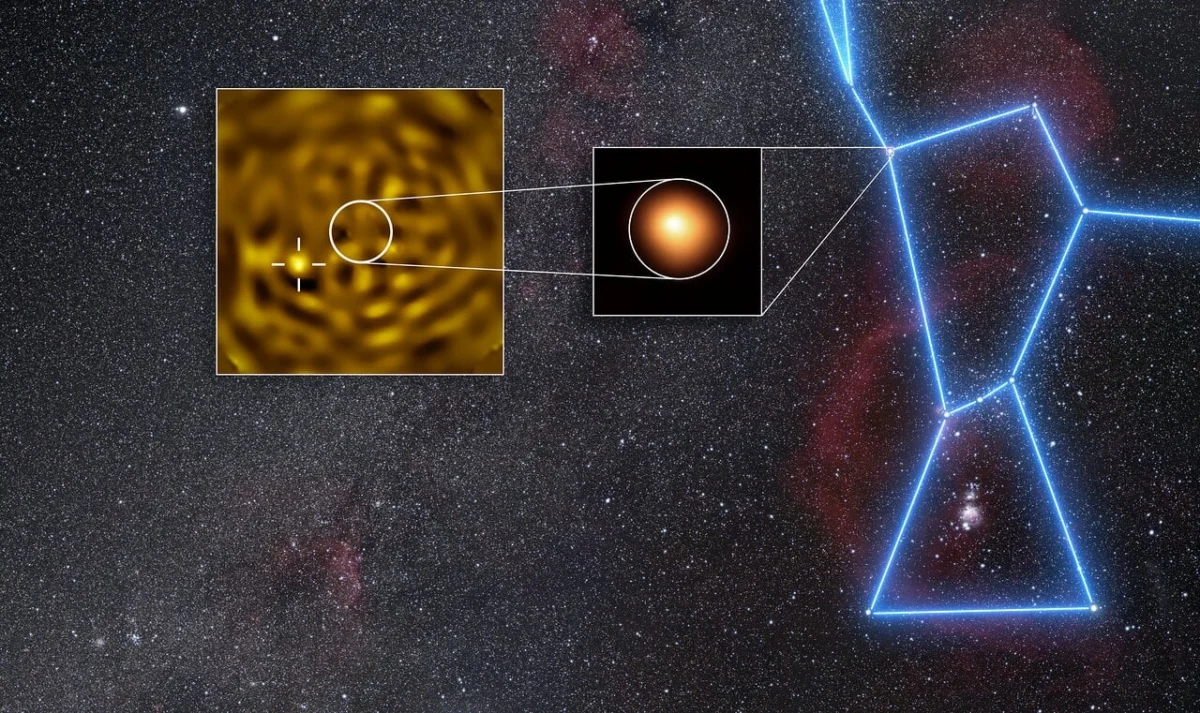
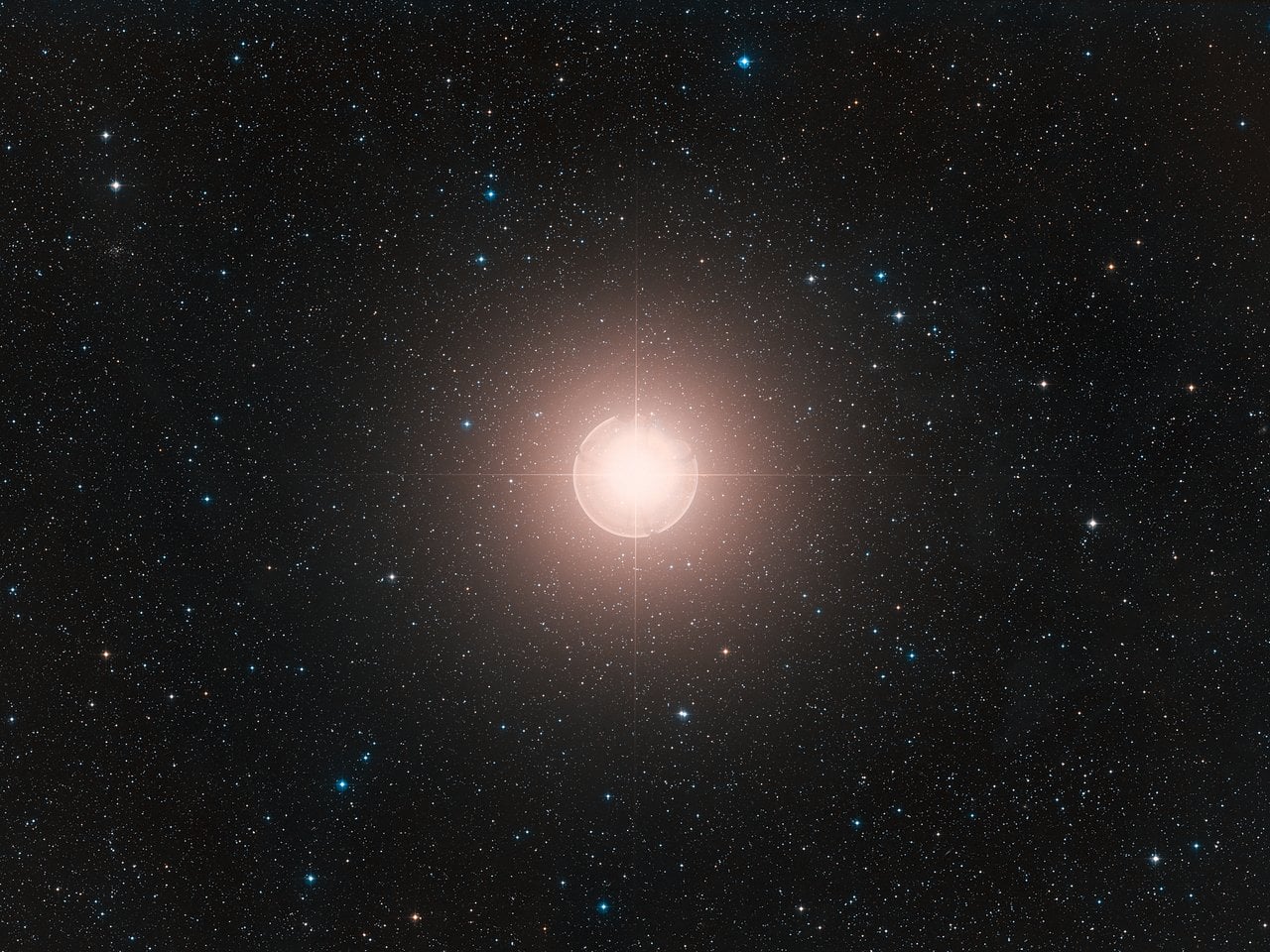
International research teams utilizing the European Southern Observatory’s Very Large Telescope (VLT) in Chile have successfully captured the most definitive images to date of a companion star orbiting Betelgeuse, the prominent red supergiant located in the constellation Orion. Known formally as Alpha Orionis, Betelgeuse has long been a subject of intense astronomical scrutiny due to its immense size, variable brightness, and its projected status as a future supernova candidate. The discovery of the companion, designated Betelgeuse B and nicknamed "Siwarha," concludes a century-long quest to identify the secondary body whose presence had been theorized to explain the primary star’s complex orbital and luminous variations.
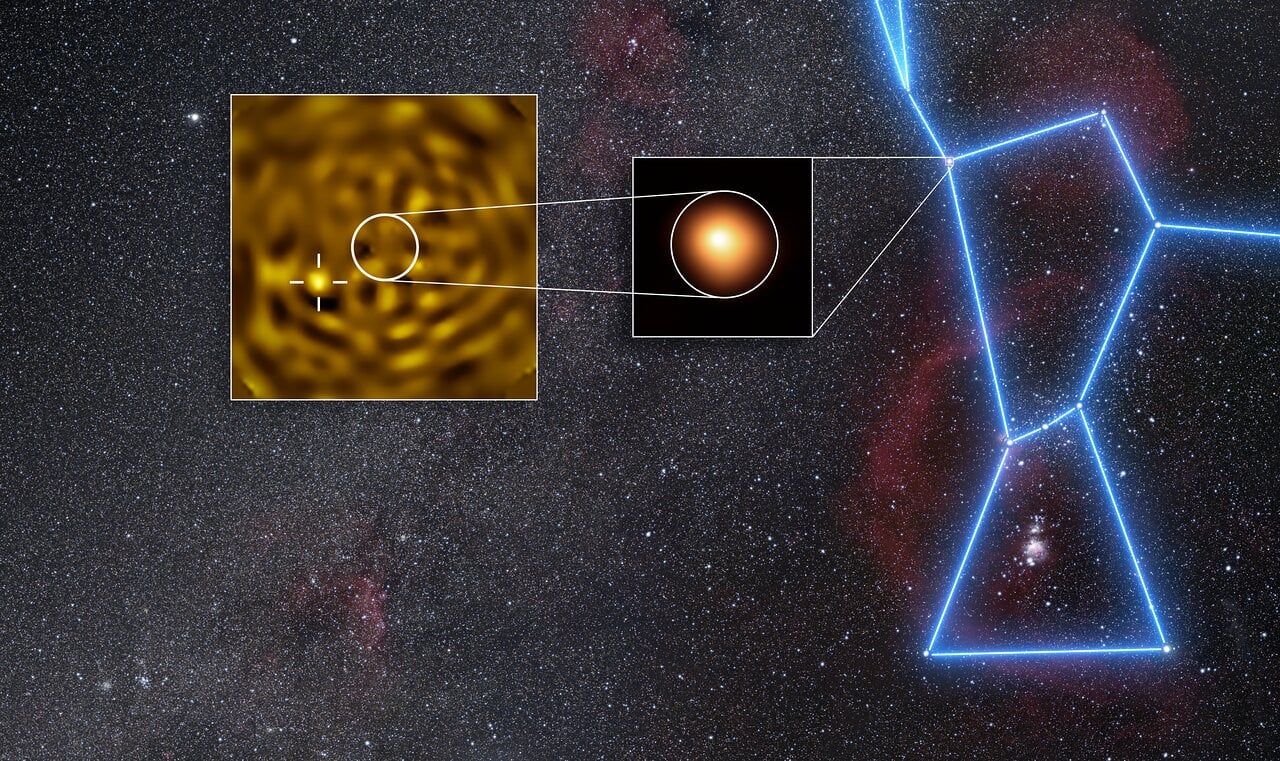
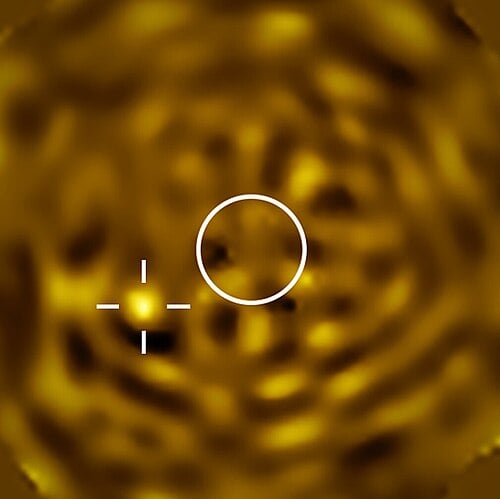
Led by Miguel Montargès of the Observatoire de Paris, the observation team utilized the Spectro-Polarimetric High-contrast Exoplanet REsearch (SPHERE) instrument to pierce through the overwhelming glare of Betelgeuse. The findings, based on data collected in late 2024, indicate that Siwarha is significantly more massive than previous theoretical models suggested. Initial predictions estimated the companion to be roughly equivalent to the mass of our Sun; however, the new VLT data reveals a star possessing between 2.6 and 3.1 solar masses. This increased mass made the star sufficiently bright to be detected by modern high-contrast imaging techniques, marking a milestone in stellar astrophysics.
The Physical Profile of a Galactic Giant
To understand the significance of the discovery, one must consider the extreme nature of the primary star. Betelgeuse is a red supergiant with approximately 14 times the mass of the Sun. Despite its massive scale, it is a relatively young star, estimated to be no more than 10 million years old. In comparison, the Sun is roughly 4.6 billion years old. The rapid evolution of Betelgeuse is a consequence of its high mass; stars of this magnitude consume their nuclear fuel at an accelerated rate, transitioning from protostars to red supergiants in a fraction of the time required by smaller stars.
Located between 400 and 550 light-years from Earth, Betelgeuse is one of the largest stars visible to the naked eye. If it were placed at the center of our solar system, its outer atmosphere would extend beyond the orbit of Mars and potentially reach the orbit of Jupiter. This enormous physical extent, combined with the star’s inherent pulsations, has historically made it difficult for astronomers to determine its exact diameter and to distinguish companion objects from the star’s own turbulent atmosphere and ejected material.
A History of Suspicion and the "Great Dimming"
The search for Betelgeuse B has spanned decades, driven by irregularities in the primary star’s radial velocity and brightness. While astronomers suspected a binary companion was influencing Betelgeuse’s behavior, the sheer luminosity of the red supergiant—which can be up to 100,000 times brighter than the Sun—acted as a celestial veil, masking any nearby objects.
Interest in the system intensified in 2019 during an event known as the "Great Dimming." For several months, Betelgeuse’s visible brightness plummeted to its lowest level in over a century, leading to widespread speculation that a supernova was imminent. Subsequent analysis by the Hubble Space Telescope and other observatories suggested a more complex cause. Hubble data revealed a massive Surface Mass Ejection (SME), during which a colossal plume of hot plasma was thrown into space. As this material moved away from the star, it cooled and condensed into a dense dust cloud, temporarily obscuring the star’s light from Earth’s perspective.
More recent Hubble observations provided a critical clue: a trail of dense gas appearing to swirl through Betelgeuse’s extended atmosphere. Researchers identified this as a "wake" created by a secondary object moving through the primary star’s circumstellar envelope. This gravitational interaction provided the roadmap necessary for the VLT team to time their observations for when the companion would be at its furthest point from Betelgeuse, as seen from Earth.
Technological Breakthrough: The VLT and SPHERE
The successful imaging of Betelgeuse B was made possible by the SPHERE instrument on the VLT. SPHERE is designed primarily for the detection of exoplanets, which requires the ability to see faint objects located very close to bright stars. To achieve this, the instrument employs extreme adaptive optics (XAO) to correct for the blurring effects of Earth’s atmosphere in real-time.
The team processed the 2024 data using advanced post-processing algorithms to subtract the light of the primary star. The resulting image shows a distinct, bright source to the left of Betelgeuse, which has been masked out in the final imagery to highlight the companion. Anthony Boccaletti, a study co-author, noted that the techniques originally refined for hunting planets proved perfectly suited for this stellar investigation. "It is remarkable to see how SPHERE and advanced post-processing techniques… also excel at detecting a companion around a massive, evolved star like Betelgeuse," Boccaletti stated.
Characteristics of Siwarha (Betelgeuse B)
The data suggests that Betelgeuse B is a B-type young main-sequence star. These stars are typically hot, blue-white, and more luminous than the Sun. The discovery that Siwarha is roughly three times the mass of the Sun is a pivotal detail. This mass range places it firmly in a category of stars that are substantial enough to exert a noticeable gravitational influence on the primary supergiant but small enough to have remained hidden until the advent of extreme-contrast imaging.
While the imaging provides the clearest evidence to date, astronomers are currently working to determine if the two stars are definitively gravitationally bound in a stable orbit. The current consensus, based on the observed "wake" in the gas and the position of the imaged source, is that they form a binary system. However, the exact orbital period and distance remain subjects of ongoing calculation.
Implications for the Impending Supernova
The presence of a companion star introduces new variables into the predicted lifecycle of Betelgeuse. It is a scientific certainty that Betelgeuse will eventually end its life in a Type II supernova explosion. This event is expected to occur within the next 100,000 years—a blink of an eye in cosmic timescales. When it happens, the star will collapse under its own gravity, triggering a blast that will be visible from Earth even during daylight hours for several weeks.
The discovery of Siwarha raises questions about how the companion might influence this process. "The question is truly open whether this companion is going to have an impact on the evolution of the red supergiant," said Montargès. Binary companions can influence the mass-loss rates of supergiants through gravitational stripping or by affecting the rotation of the primary star. If Betelgeuse B is close enough, it could potentially receive mass from Betelgeuse’s outer layers, or conversely, be consumed or ejected during the final stages of the primary star’s life.
When the supernova finally occurs, the core of Betelgeuse will collapse into a compact remnant, likely a neutron star or a black hole. The fate of Siwarha during this cataclysm is unknown; it could be obliterated by the shockwave, or it could be kicked out of its current position, becoming a high-velocity "runaway" star.
Chronology of Modern Observations
The path to the 2024 discovery was paved by several key milestones:
- Early 20th Century: Astronomers first note irregularities in Betelgeuse’s pulsations, leading to early theories of a binary companion.
- 2019-2020: The "Great Dimming" occurs. Multiwavelength observations suggest mass-loss events rather than internal cooling alone.
- 2021-2023: Hubble Space Telescope data identifies a gas wake in the stellar atmosphere, providing a predicted orbital path for a companion.
- December 2024: The VLT/SPHERE instrument captures the first direct high-contrast image of Betelgeuse B at its predicted maximum elongation.
- Early 2025: Data analysis confirms the companion’s mass is between 2.6 and 3.1 solar masses, identifying it as a B-type main-sequence star.
Future Research and Verification
Despite the clarity of the VLT images, the scientific community maintains a rigorous standard for confirmation. The next phase of research involves observing the system over the next 12 to 24 months. By tracking the movement of Betelgeuse B, astronomers hope to map its orbit with precision. "To be certain that the companion is really there, we still need to observe it in one year on the other side of the star, but there is very little space left for doubt," Montargès explained.
Complementary observations are also expected from the Gemini North Telescope in Hawaii and potentially the James Webb Space Telescope (JWST), which could provide infrared data on the dust and gas interactions between the two stars. These studies will help refine the mass estimates and chemical composition of both bodies.
The discovery of Siwarha represents more than just the end of a search; it provides a new laboratory for studying stellar evolution. As Betelgeuse continues its volatile trek toward a supernova, the presence of its smaller companion offers a unique opportunity to observe how binary dynamics influence the final stages of the universe’s most massive stars. For now, Betelgeuse remains a centerpiece of the winter sky, its red glow now carrying the secret of a hidden partner that has finally been brought into the light.