Sisilia Frederika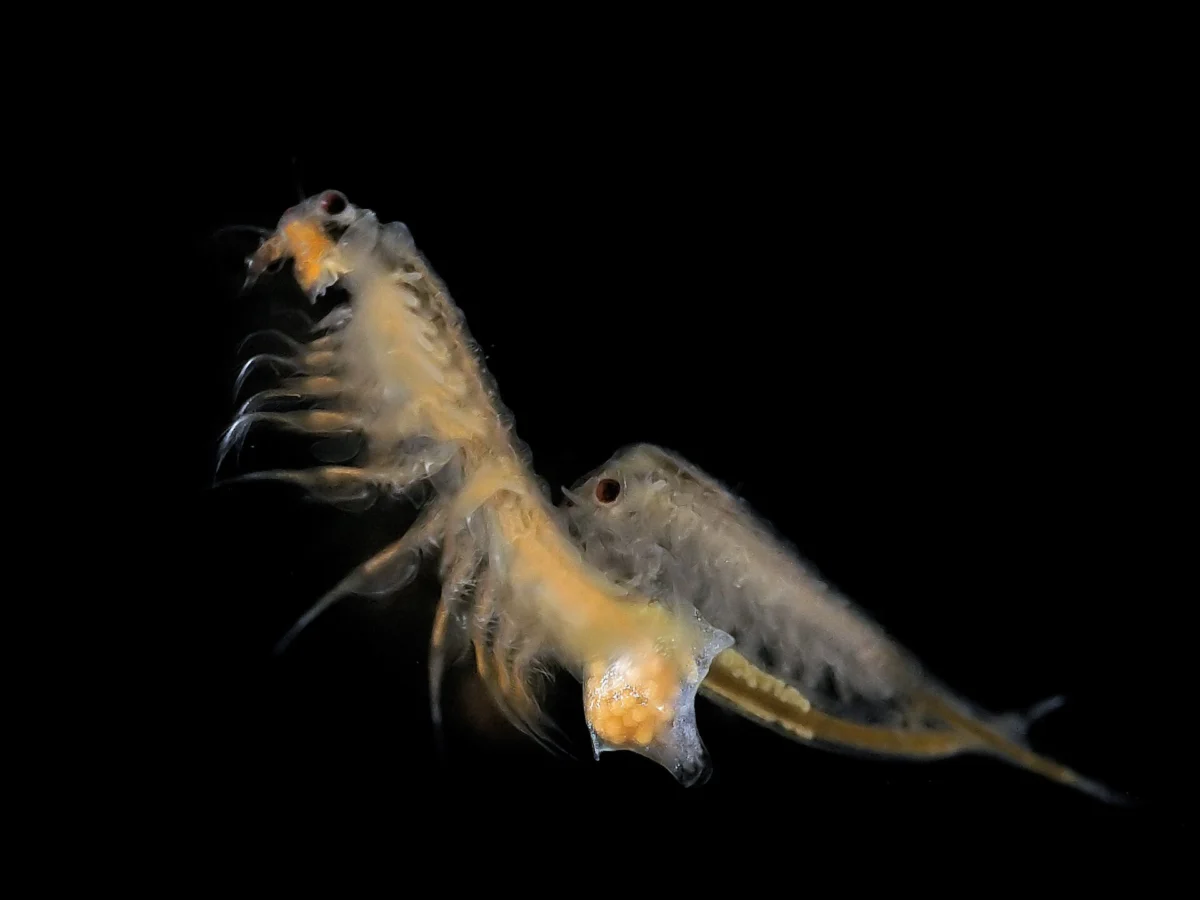
The exploration of deep space, including the establishment of permanent bases on the Moon and eventual crewed missions to Mars, necessitates the development of sustainable, self-sufficient food production systems. While significant progress has been made in space-based botany, the role of aquatic animals in these future ecosystems remains a critical area of investigation. A pioneering study conducted by researchers at Japan’s Okayama University of Science, recently published in the journal Microgravity Science and Technology, has provided new insights into how crustaceans respond to simulated weightlessness. By utilizing a custom-engineered, high-speed clinostat, the team demonstrated that shrimp could potentially serve as a viable protein source for long-duration space missions, marking a significant milestone in the field of space aquaculture.
The Challenge of Simulating Microgravity on Earth
Testing the biological responses of complex organisms to microgravity presents a formidable logistical challenge. True microgravity environments are difficult to access and sustain. Traditional methods, such as drop towers or parabolic flights (often referred to as "vomit comets"), provide only fleeting moments of weightlessness—typically ranging from 20 to 30 seconds. While these windows are sufficient for physical chemistry experiments or basic cellular observations, they are inadequate for studying the behavioral and physiological adaptations of multi-cellular animals like fish or crustaceans.
The International Space Station (ISS) offers a permanent microgravity laboratory, yet the costs associated with transporting biological payloads are astronomical, and laboratory space is strictly rationed among international agencies. To circumvent these hurdles, the Okayama University researchers turned to a ground-based alternative: the clinostat. A clinostat is a mechanical device that rotates a biological sample to nullify the effects of Earth’s gravity over time. By constantly changing the orientation of the sample, the gravitational vector is distributed evenly across all directions, creating a state of "pseudo-weightlessness."
However, conventional clinostats typically operate at low speeds, generally between 10 and 25 revolutions per minute (rpm). While effective for plants and single-celled organisms, these slow speeds are insufficient for agile, complex animals. Highly mobile species can sense the slow rotation and physically reorient themselves to align with Earth’s 1G pull, thereby negating the simulated microgravity effect. To solve this, the Japanese research team designed a "super-charged" clinostat capable of rotating at 130 rpm—more than two rotations per second. This rapid cycling outpaces the neurological and physical reaction times of the animals, preventing them from compensating for the shifting gravitational field.
Experimental Methodology and Observations of Kuruma Shrimp
The researchers focused their primary investigation on juvenile kuruma shrimp (Marsupenaeus japonicus), a species valued for its nutritional density and commercial importance in aquaculture. The experimental setup involved a specialized sample chamber equipped with high-resolution digital cameras and internal lighting. The shrimp were subjected to 15-minute intervals of simulated microgravity within the 130-rpm clinostat.
One of the immediate physical consequences of the high-speed rotation was the dynamic movement of water within the chamber. The researchers calculated an internal fluid flow of approximately 0.15 meters per second (m/s). This "sloshing" effect created a turbulent environment that required the shrimp to adapt their physical behavior. To maintain stability, the shrimp utilized a plastic mesh provided within the container, clinging to the netting to resist the water’s current.
Observation of their feeding habits revealed a shift in strategy. In a standard 1G environment, kuruma shrimp are active hunters, pursuing food particles through the water column. Under simulated microgravity, however, the shrimp became more opportunistic. They primarily consumed food pellets that drifted directly in front of their oral appendages. The study noted that when the internal water flow was momentarily stabilized, the feeding efficiency increased significantly. This suggests that while the physical turbulence of the water was a limiting factor, the state of weightlessness itself did not inhibit the shrimp’s biological drive or ability to consume nutrients.
Genetic Adaptations and the Chitin Metabolic Process
Beyond behavioral observations, the researchers conducted a sophisticated molecular analysis to determine if microgravity triggered changes at the genetic level. A group of shrimp was subjected to a continuous 24-hour period of simulated microgravity, after which their RNA was extracted and compared to a control group maintained in standard 1G conditions.
Using Gene Ontology (GO) analysis, the team identified stark differences in gene expression between the two groups. The most significant changes occurred in genes responsible for the chitin metabolic process and the development of the cuticle (the shrimp’s exoskeleton). Chitin is a primary structural component of the crustacean shell, providing both protection and a framework for muscle attachment.
The downregulation or alteration of these genes suggests that microgravity impacts the biological mechanics of locomotion and structural integrity. In a weightless environment, the physical stress on the exoskeleton is reduced, which may trigger a biological "remodeling" of the shell. This finding is consistent with bone density loss observed in human astronauts and suggests that all complex organisms with structural skeletons—whether internal or external—undergo significant physiological shifts when removed from Earth’s gravitational constant.
Brine Shrimp as a Model for Long-Term Survivability
To complement the findings from the kuruma shrimp, the researchers conducted a secondary, longer-duration experiment using Artemia, commonly known as brine shrimp or "sea monkeys." Due to their small size and hardy nature, brine shrimp allow for more statistically significant data collection over extended periods.
The brine shrimp were placed in the high-speed clinostat for a continuous four-day trial. The results were highly encouraging for the prospects of space aquaculture. The Artemia not only survived the rotation but continued to thrive. They successfully preyed on algae, exhibited normal metabolic functions including waste generation, and showed significant physical growth. The fact that these organisms could complete a portion of their life cycle under simulated microgravity with no major ill effects reinforces the hypothesis that crustaceans are exceptionally resilient candidates for space-based farming.
Comparative Research and the Global Space Aquaculture Landscape
The Okayama University study does not exist in a vacuum; it is part of a growing international effort to solve the problem of fresh protein in space. Currently, most astronaut food is freeze-dried or thermostabilized, which can lead to "menu fatigue" and a gradual loss of nutritional potency over years-long missions.
Several other programs are currently exploring aquatic life in space:
- The Lunar Hatch Program: Led by French researchers, this project aims to transport fertilized fish eggs (specifically European sea bass) to the Moon. The goal is to determine if eggs can survive the vibrations of a rocket launch and then hatch in a lunar gravity environment (1/6th of Earth’s gravity).
- SpaceGenFish: This initiative is focused on developing a fully automated, closed-loop aquaculture system for the ISS. It emphasizes the use of zebrafish as a model organism to study vertebrate development in orbit.
- NASA’s Veggie and APH: While NASA has focused heavily on salad crops like "Outredgeous" red romaine lettuce and radishes, the agency has expressed interest in integrating small animal proteins to create a more robust Bio-regenerative Life Support System (BRLSS).
The Okayama team originally intended to include vertebrate fish in their clinostat study, but technical limitations—specifically the inability of the cameras to track the faster-moving fish within the turbulent 130-rpm environment—prevented the inclusion of that data in the final paper. This remains a target for future research phases.
Broader Implications for Future Space Missions
The successful simulation of microgravity for crustaceans has profound implications for the design of future space habitats. Aquaculture offers several advantages over traditional livestock (such as poultry or goats) for space travel. Shrimp and fish have a high edible-to-total-mass ratio, they reproduce quickly, and they can be raised in compact, vertical water tanks that provide radiation shielding for the crew.
Furthermore, crustaceans like shrimp play a vital role in nutrient cycling. In a closed-loop system, they could potentially consume waste products from algae or plant cultivation, converting low-value biomass into high-quality protein and Omega-3 fatty acids. The genetic changes observed in the Okayama study regarding chitin metabolism also open a new door for "space-biotechnology." If researchers can understand how microgravity affects shell formation, they might be able to bio-engineer species that are specifically optimized for low-gravity environments.
Conclusion and Future Directions
The research led by C. Yokota and the team at Okayama University of Science provides a critical methodological breakthrough. By proving that high-speed clinostats can effectively simulate microgravity for complex, mobile organisms, they have lowered the barrier to entry for space biology research.
While additional studies are required to observe the full life cycle of shrimp—including reproduction and larval development—in microgravity, the preliminary evidence suggests that sea monkeys and their larger cousins are ready for the final frontier. As space agencies look toward the Lunar Gateway and the Artemis missions, the integration of "space ponds" alongside "space gardens" appears increasingly likely. The path to Mars may very well be paved with the resilient and adaptable shrimp, proving that Earth’s oldest food sources are also the keys to our future among the stars.