Evan Lee Salim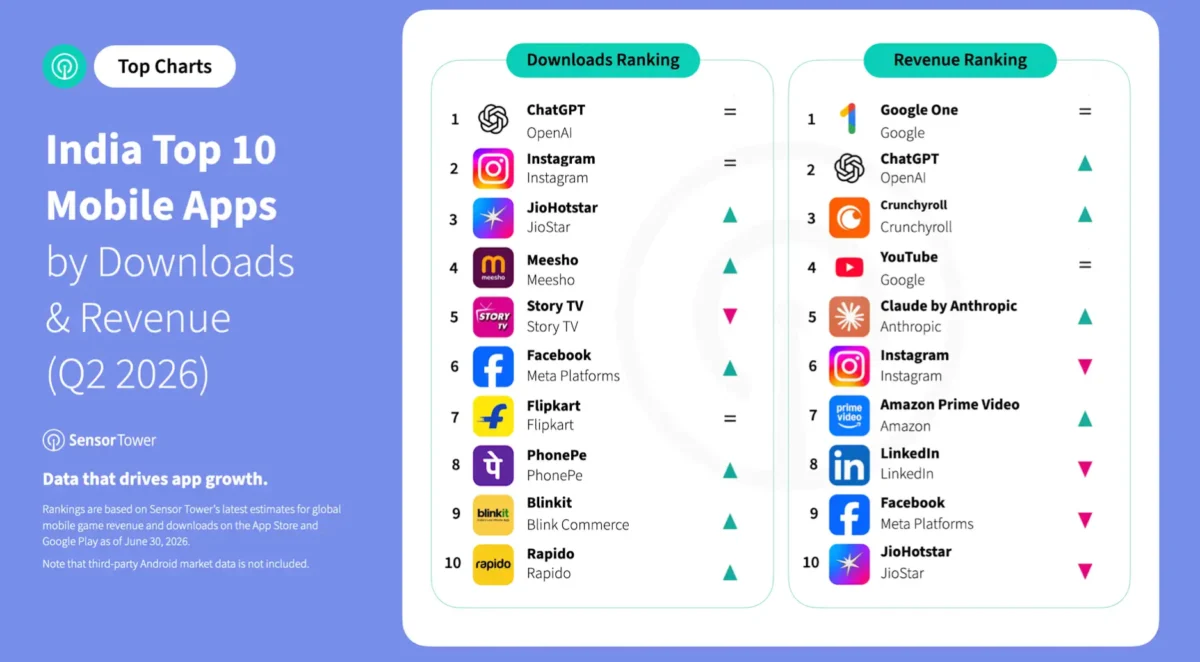
India, long recognized as the world’s preeminent market for mobile app downloads, is undergoing a profound transformation, evolving from a volume-driven landscape into a rapidly maturing monetization powerhouse. This significant shift is evidenced by a record-breaking second quarter in 2026, where consumer spending on mobile applications reached an unprecedented $345 million. This figure represents a robust 35% increase year-over-year, signaling a pivotal moment for the nation’s burgeoning digital economy. The surge in revenue is increasingly propelled by a growing consumer willingness to invest in premium digital services, particularly across generative AI, streaming, and productivity categories, according to a recent comprehensive report by Sensor Tower, a leading app-market intelligence firm. This trend underscores a fundamental change in Indian consumer behavior, moving beyond free content consumption towards embracing paid digital subscriptions and enhanced app experiences.
A Historic Shift from Downloads to Dollars
For years, India presented a paradoxical scenario to global app developers: an unparalleled user base driving billions of downloads, yet a notoriously challenging environment for generating substantial revenue. The market was characterized by extreme price sensitivity, low average revenue per user (ARPU), and a pervasive expectation of free digital content. However, the latest data unequivocally demonstrates a significant pivot. The record-breaking quarter for consumer spending is not an isolated event but rather the culmination of a broader, sustained trend of rising app monetization. Over the past three and a half years, India’s revenue per download has more than doubled, even as quarterly app downloads have stabilized at an impressive 6.3 billion since 2023. This indicates that while the user base remains vast and engaged, a growing segment is now actively contributing to the app economy through direct payments.
Eve Chen, an insights analyst at Sensor Tower, articulated this evolution to TechCrunch, stating, "We would describe India today as a rapidly evolving mobile market with a large user base and growing willingness to pay for digital services." This assessment captures the essence of India’s current digital trajectory, highlighting both its immense scale and its newfound financial viability. The shift is not merely statistical; it reflects a deeper integration of digital services into the daily lives of millions of Indians, who are increasingly valuing convenience, premium features, and exclusive content enough to pay for them.
The Bedrock of Growth: Digital Payments and Subscription Acceptance
The dramatic change in India’s app monetization landscape can be largely attributed to the widespread adoption and seamless integration of advanced digital payment systems, coupled with a growing cultural acceptance of app-based subscriptions. At the forefront of this revolution is India’s Unified Payments Interface (UPI). Launched in 2016 by the National Payments Corporation of India (NPCI), UPI is an instant real-time payment system that facilitates inter-bank peer-to-peer and person-to-merchant transactions through a single mobile application. Its simplicity, speed, and ubiquity have fundamentally transformed the digital payment ecosystem, drastically reducing the friction associated with in-app purchases and digital subscriptions.
UPI’s success is staggering; by 2023, it was processing over 10 billion transactions monthly, a testament to its penetration and user trust. This robust infrastructure, combined with the proliferation of digital wallets and other payment gateways, has created an environment where paying for digital services is no longer a cumbersome process but a quick, secure, and intuitive experience. Chen emphasized this point, noting that the wider adoption of digital payments, including UPI and digital wallets, has "reduced friction for in-app purchases, alongside growing acceptance of app-based subscriptions and premium digital services." This ease of transaction is a critical enabler, converting user intent into actual revenue. Furthermore, the increasing affordability of smartphones and data plans, catalyzed by disruptive players like Jio, has expanded the digital footprint across socio-economic strata, bringing more users into the fold who are now accustomed to transacting digitally for various services, from utilities to entertainment.
India’s Ascendant Global Position in App Revenue Growth
The dynamism of India’s app market stands out sharply on the global stage. Sensor Tower’s data, shared with TechCrunch, reveals that India’s app revenue growth in Q2 2026 was the fastest among major app markets worldwide, generating over $200 million in quarterly consumer spending growth. To put this in perspective, Mexico, another emerging market with significant digital adoption, saw its app revenue grow by 30% during the same period, while Turkey experienced a 25% increase. In stark contrast, the mature U.S. app market actually registered a 3% decline in revenue over Q2. This divergent performance underscores India’s unique position as a rapidly expanding frontier for app monetization, even as more established markets show signs of saturation or deceleration.
Eve Chen further elaborated on this, asserting, "These figures suggest that India is no longer just the world’s largest market by downloads, but is also emerging as one of the fastest-growing markets for app monetization." While India still lags behind more mature app markets in terms of absolute revenue per download – with the U.S. at approximately $4.60, South Korea at $3.90, and Japan at $6.10, compared to a mere fraction of these figures in India – the trajectory of growth is far more significant than the current absolute level. Chen highlighted that India’s steadily improving monetization indicates substantial room for long-term growth, signaling immense untapped potential for developers and investors alike. The current lower ARPU signifies a vast runway for expansion as the market matures and consumer purchasing power continues to rise.
Key Drivers: Generative AI and Non-Gaming Applications

The engine behind India’s app revenue surge is multifaceted, with generative AI and non-gaming categories emerging as particularly strong performers. Generative AI has rapidly established itself as one of the fastest-growing segments within the Indian app ecosystem. In Q2 2026, industry giants OpenAI’s ChatGPT and Anthropic’s Claude collectively commanded nearly 83% of India’s AI app revenue, according to Sensor Tower’s data. This dominance highlights the strong demand for advanced AI tools that enhance productivity, creativity, and information access.
Beyond AI, the broader non-gaming app sector is significantly contributing to the market’s expansion. Sensor Tower reported that non-gaming categories accounted for a remarkable 68% of India’s mobile app revenue in the first half of 2026, a substantial increase from 58% just three years prior. This shift underscores a diversification of consumer spending beyond traditional gaming, reflecting a broader embrace of digital services across various aspects of life. Global subscription apps have been major beneficiaries of this trend, with Google One, Google’s cloud storage and VPN service, notably becoming India’s highest-grossing mobile app during the quarter. This indicates a growing consumer appetite for essential utility services delivered through subscription models.
Streaming platforms have also witnessed burgeoning consumer spending, with popular services such as Amazon Prime Video, Crunchyroll, Sony LIV, and JioHotstar seeing increased subscriber engagement and revenue. These platforms cater to India’s vast and diverse entertainment needs, offering localized content alongside international offerings. Interestingly, the gaming sector, despite a worldwide decline, bucked the global trend in India, with revenue rising a respectable 3.7% from the previous quarter. This resilience indicates that while non-gaming categories are driving the overall growth, gaming remains a significant and growing component of the Indian app market.
App intelligence firm Appfigures corroborates the continued growth of India’s app subscription market, though its founder and CEO, Ariel Michaeli, notes that the pace has moderated slightly after an initial AI-fueled surge over the past two years. "The numbers are still staggering," Michaeli stated, pointing to ChatGPT’s estimated daily revenue of about $60,000 in India and approximately 1.8 million downloads over the past month, despite a slight dip from its peak of around $80,000 per day last October. This indicates that while the initial novelty might have settled, the underlying demand for AI and other subscription services remains robust.
The Historical Arc: India’s Digital Evolution
To fully appreciate the current monetization boom, it’s crucial to understand India’s historical digital journey. The true inflection point arrived in the mid-2010s with the widespread proliferation of affordable smartphones and, critically, the entry of Reliance Jio into the telecom market in 2016. Jio’s disruptive pricing strategy, offering incredibly cheap or even free data for initial periods, unleashed an internet revolution, transforming India into one of the world’s largest and most data-hungry markets. This explosion of connectivity laid the groundwork for massive app adoption.
Simultaneously, the Indian government’s "Digital India" initiative provided a strategic framework, promoting digital literacy, online services, and cashless transactions. Programs like Aadhaar, the unique identification system, and the aforementioned UPI, facilitated secure and accessible digital identities and payment mechanisms. This confluence of affordable hardware, ubiquitous data, and robust digital infrastructure cultivated a massive, digitally-aware population. Initially, the focus was on free content and basic communication, but as users became more sophisticated and digital services became integral to their lives, the willingness to pay for quality, convenience, and premium features gradually emerged. This evolution from a free-first mentality to a value-driven payment model has been a gradual but decisive process, culminating in the monetization surge witnessed today.
Broader Implications and Future Outlook
The transformation of India’s app market carries profound implications for various stakeholders. For global and domestic app developers, India now represents not just a massive user acquisition opportunity but also a viable, high-growth market for revenue generation. This necessitates a strategic shift from merely attracting downloads to focusing on localized content, pricing strategies tailored to Indian purchasing power, and innovative monetization models. The rise of non-gaming and AI apps also points to diverse opportunities beyond traditional entertainment, extending to education, health, finance, and productivity.
For investors, India’s app ecosystem is increasingly attractive, offering significant returns on investment in a market with immense untapped potential. The consistent growth trajectory and the expanding willingness of consumers to pay for digital services provide a compelling narrative for venture capital and private equity firms looking to capitalize on the next wave of digital growth. This influx of investment can further fuel innovation and foster a vibrant developer community within India.
Indian consumers stand to benefit from an enriched digital landscape, with access to a broader array of high-quality, premium applications and services. As developers increasingly view India as a revenue-generating market, they are likely to invest more in tailoring their offerings, leading to better user experiences and more relevant content. This contributes to the overall digital literacy and empowerment of the population.
Economically, the booming app market contributes significantly to India’s digital economy, fostering job creation in software development, marketing, customer support, and related sectors. It positions India as a crucial player in the global digital landscape, attracting talent and fostering technological advancements. While challenges remain, such as continued price sensitivity in certain segments and intense competition, the overall outlook for India’s app monetization journey is overwhelmingly positive. The robust growth in Q2 2026 is not merely a statistical anomaly but a clear indicator of a mature and financially vibrant digital ecosystem taking root, poised for sustained expansion and innovation in the years to come.