Chandra Wibowo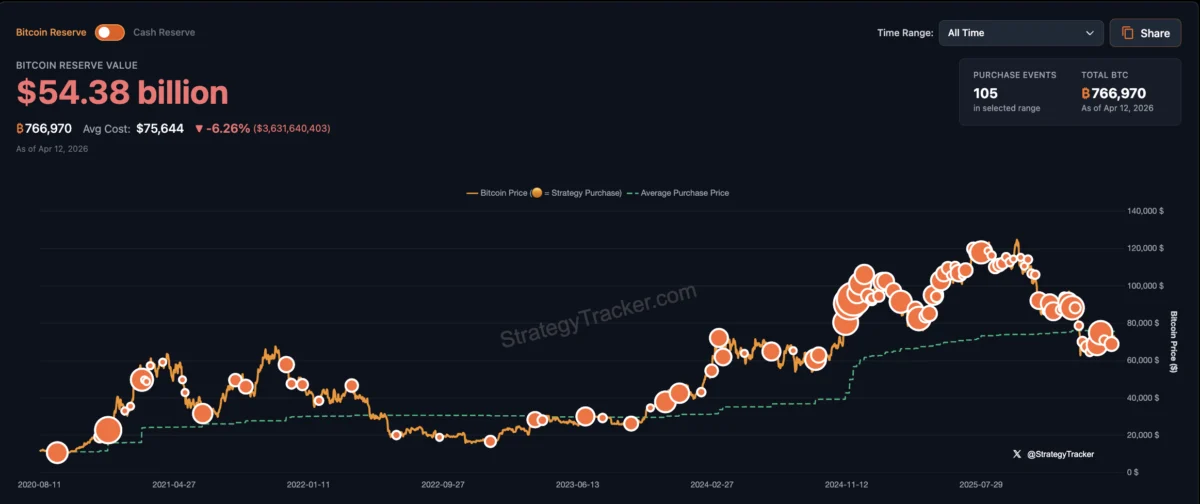
Michael Saylor, the prominent co-founder and executive chairman of MicroStrategy, a company synonymous with its substantial Bitcoin treasury, has signaled a continued commitment to acquiring more of the flagship cryptocurrency. This strategic maneuver comes as Bitcoin (BTC) experiences a pullback from its recent local highs, exceeding $73,000 earlier this week. Saylor’s persistent "HODLing" strategy, even in the face of market fluctuations, underscores his unwavering belief in Bitcoin’s long-term value proposition.
The influential figure took to social media on Sunday, posting the now-iconic chart of MicroStrategy’s Bitcoin purchase history, a visual that has become a reliable indicator of imminent BTC acquisitions by the company. His accompanying message, "Think bigger," serves as a rallying cry and a clear indication of his forward-looking perspective on digital assets. This sentiment is particularly noteworthy given the current market conditions, which have seen Bitcoin’s price retreat from its zenith.
A Timeline of Aggressive Accumulation
MicroStrategy’s latest significant Bitcoin purchase was recorded on April 6th, when the company acquired an additional 4,871 BTC. This transaction, valued at over $329.8 million, propelled its total holdings to an impressive 766,970 BTC. As of the time of publication, this vast reserve is estimated to be worth approximately $54.5 billion, based on prevailing market prices. This consistent accumulation strategy has been a hallmark of MicroStrategy’s financial policy over the past several years, positioning it as the largest corporate holder of Bitcoin by a significant margin.
The Tysons Corners, Virginia-based company has demonstrated a relentless pursuit of Bitcoin, even during periods of significant market downturns. This includes a prolonged bear market that previously pushed Bitcoin’s price to two-year lows, a scenario that resulted in MicroStrategy’s Bitcoin treasury being "underwater," meaning its holdings were valued at less than the acquisition cost. However, rather than divesting, Saylor and his team have consistently leveraged market dips as opportunities to expand their BTC reserves.
Navigating Significant Unrealized Losses
Despite the company’s aggressive acquisition strategy, MicroStrategy is currently sitting on substantial unrealized losses. The company’s average cost of acquisition per Bitcoin stands at $75,644. At the time of this report, this figure is nearly $5,000 higher than the current market price of Bitcoin. This disparity translates into a significant paper loss for the company.

In its first-quarter 2026 financial reporting, MicroStrategy disclosed a loss of nearly $14.5 billion on its Bitcoin holdings. This figure was detailed in a filing with the U.S. Securities and Exchange Commission (SEC), providing a transparent look into the financial implications of its digital asset strategy. While these unrealized losses are substantial, they have not deterred the company from its core objective.
Impact on Bitcoin Supply Dynamics
The persistent accumulation of Bitcoin by MicroStrategy, even amidst market volatility and unrealized losses, is having a notable impact on the cryptocurrency’s supply dynamics. The company is acquiring Bitcoin at a pace that significantly outstrips the rate at which new coins are being mined. This has led some market analysts to forecast a potential supply squeeze, which could exert upward pressure on Bitcoin’s price in the long term.
In March alone, Bitcoin miners produced approximately 16,200 BTC. During the same period, MicroStrategy acquired a staggering 46,233 BTC. This means the company absorbed nearly three times the amount of newly mined Bitcoin available during that month. This aggressive buying pressure from a single, major entity can create significant demand, potentially limiting the available supply for other market participants.
Saylor’s Vision: Bitcoin as Digital Capital
Michael Saylor has consistently articulated a vision of Bitcoin as "digital capital," a fundamental shift in how the asset should be perceived and valued. In April, he stated, "The global consensus is that BTC is digital capital. The four-year cycle is dead. Price is now driven by capital flows. Bank and digital credit will determine Bitcoin’s growth trajectory." This perspective suggests a belief that Bitcoin’s price appreciation will be increasingly influenced by institutional adoption and the integration of digital assets into traditional financial systems, rather than solely by cyclical halving events.
This philosophical underpinning of MicroStrategy’s Bitcoin strategy is crucial. It frames the company’s holdings not as a speculative investment subject to short-term market whims, but as a strategic allocation of capital for long-term growth and wealth preservation. The company views Bitcoin as a superior store of value and a hedge against inflation, drawing parallels to gold as a digital equivalent.
MicroStrategy’s Dominance in the Corporate Bitcoin Landscape

MicroStrategy’s substantial Bitcoin reserve of 766,970 BTC solidifies its position as the undisputed leader among corporate Bitcoin treasuries. According to data compiled by BitcoinTreasuries, the next largest corporate holder, Twenty One Capital, possesses a significantly smaller amount of 43,514 BTC. This vast disparity highlights MicroStrategy’s pioneering role and its unwavering commitment to Bitcoin as a core component of its corporate strategy.
Diverging Strategies in a Challenging Market
While MicroStrategy continues its aggressive accumulation, other Bitcoin treasury companies are exhibiting different behaviors in the current market environment. Many are showing signs of capitulation, a phenomenon where investors are forced to sell their holdings due to financial pressure or a loss of conviction. This challenging business environment has led some to re-evaluate their digital asset strategies.
For instance, MARA Holdings, another publicly traded company with significant Bitcoin holdings, recently sold 15,133 Bitcoin in March for approximately $1.1 billion. The proceeds from this sale were primarily used to repurchase $1 billion of zero-coupon convertible notes at a discount. Fred Thiel, Chairman and CEO of MARA Holdings, commented that this transaction enhanced the company’s "financial flexibility" and increased its "strategic optionality" as MARA expands "beyond pure-play Bitcoin mining into digital energy and AI/HPC infrastructure." This indicates a strategic pivot for MARA, moving away from a singular focus on Bitcoin accumulation towards diversification and new growth areas.
MicroStrategy’s decision to continue accumulating BTC, while other companies are reducing their exposure or diversifying, underscores a significant divergence in corporate strategies within the cryptocurrency space. This contrast highlights the differing risk appetites and long-term outlooks of these entities regarding Bitcoin.
Broader Implications and Future Outlook
MicroStrategy’s persistent Bitcoin acquisition strategy has several implications for the broader cryptocurrency market and traditional finance.
- Institutional Adoption Catalyst: The company’s bold stance and substantial holdings serve as a powerful endorsement of Bitcoin as a legitimate corporate asset. This can encourage other institutions to consider similar allocations, further driving mainstream adoption.
- Price Discovery and Volatility: The sheer volume of Bitcoin purchased by MicroStrategy can influence market dynamics. Its buying pressure, particularly during price dips, can help to mitigate sharp downturns and potentially contribute to price appreciation over time. Conversely, any potential future selling by MicroStrategy, though unlikely given Saylor’s conviction, could also have a significant impact.
- Regulatory Scrutiny and Innovation: MicroStrategy’s prominent position in the Bitcoin market may also attract increased regulatory attention. As more companies engage with digital assets, the landscape for regulation will continue to evolve, shaping the future of crypto investments.
- Strategic Diversification vs. Conviction Play: The differing strategies between MicroStrategy and companies like MARA highlight a key debate in corporate finance: the merits of concentrated conviction in a single asset versus diversified investment in multiple growth areas. MicroStrategy’s approach is a clear bet on Bitcoin’s long-term dominance, while others are opting for a more balanced portfolio.
The unwavering commitment of Michael Saylor and MicroStrategy to Bitcoin accumulation, even in the face of significant unrealized losses and market headwinds, represents a compelling narrative in the evolving landscape of corporate finance and digital asset investment. Their actions not only shape the company’s financial future but also contribute significantly to the ongoing discourse and development of Bitcoin as a global digital asset. The coming quarters will undoubtedly reveal the long-term efficacy of this bold, conviction-driven strategy.