Sisilia Frederika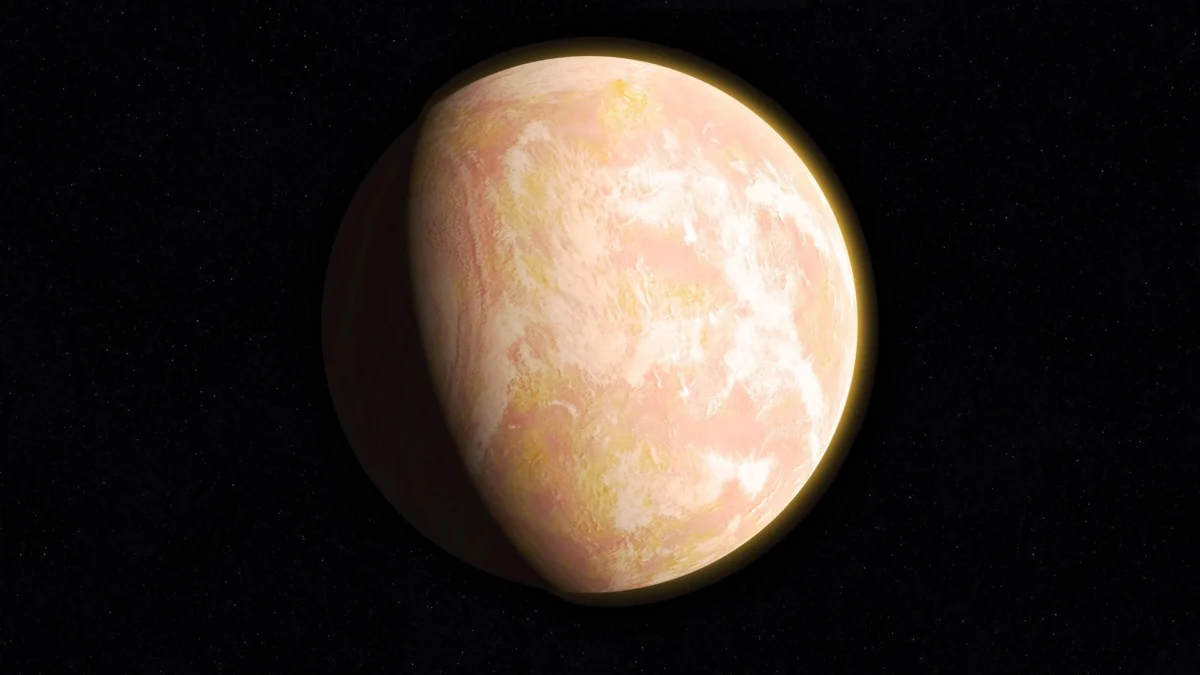
The geological history of the early Earth is a narrative largely written in disappearing ink, as the planet’s relentless tectonic activity, volcanic resurfacing, and atmospheric weathering have erased the vast majority of physical evidence from its first billion years. However, groundbreaking research presented by Jared Landry, an astrobiology doctoral researcher at the Earth Life Science Institute (ELSI) in Tokyo, suggests that the key to unlocking Earth’s primordial past may not lie on our own planet, but on the surface of the Moon. By analyzing lunar soil samples collected during the Apollo missions, Landry has developed a model that uses the Moon as a celestial mirror, reflecting the atmospheric composition of the Archean Earth—a period spanning from 4.0 to 2.5 billion years ago—and providing new insights into the environmental conditions that facilitated the emergence of life.
The Lunar Mirror: Deciphering Earth’s Atmospheric Outflow
The premise of Landry’s research, presented at the Origins 2026 conference in Paris, rests on a sophisticated understanding of planetary atmospheric escape and magnetospheric physics. For eons, chemical species from Earth’s upper atmosphere have been escaping into space. Once these molecules reach high altitudes, they are ionized by solar radiation, becoming electrically charged. In this state, they are susceptible to being picked up by the Sun’s magnetized solar wind or channeled through Earth’s magnetotail—the elongated portion of the planet’s magnetic field that points away from the Sun.
The Moon, in its monthly orbit around the Earth, passes through this magnetotail for approximately three to five days during each cycle. During this window, the Moon acts as a passive collector, capturing the ionized terrestrial outflow. These ions are driven into the lunar regolith—the layer of loose, fragmented rock and dust covering the lunar surface—where they become embedded and preserved for billions of years. Because the Moon lacks an atmosphere and significant geological activity, it serves as a pristine "time capsule" for the chemical signatures of the early Earth.
Landry’s work specifically targets the Archean Eon, roughly 3.5 billion years ago. This era is of paramount importance to astrobiologists because it represents the window in which the first microbial life forms established a foothold on Earth. By quantifying the terrestrial material found in nearside Apollo samples, Landry has been able to reconstruct the ratios of carbon dioxide, methane, and sulfur that characterized the ancient sky.
Resolving the Faint Young Sun Paradox
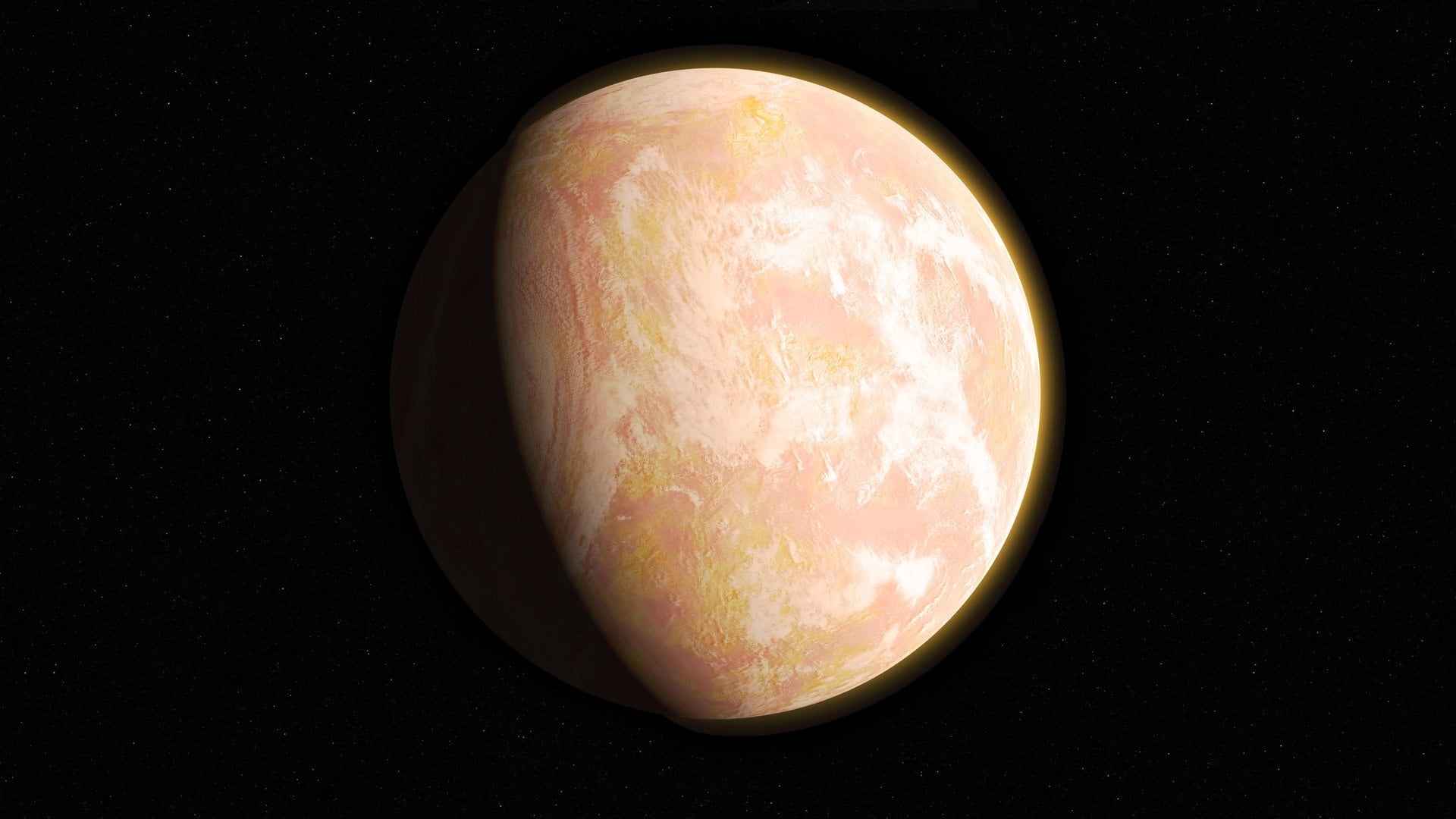
One of the most significant contributions of Landry’s research is its potential to resolve the "Faint Young Sun Paradox." This long-standing astrophysical problem notes that during the Archean Eon, the Sun’s luminosity was approximately 20% to 30% lower than it is today. Based on standard climate models, such a decrease in solar energy should have resulted in a completely frozen Earth, yet geological evidence from the period—such as water-worn pebbles and sedimentary rock—proves that liquid oceans were present.
To maintain liquid water under a dim Sun, the early Earth required a robust greenhouse effect. Previous theoretical estimates suggested that a carbon dioxide concentration of at least 10% (0.1 bar) of the total atmosphere would be necessary to keep temperatures above freezing. Landry’s analysis of the lunar samples provides empirical support for these theories. His model indicates that the Archean atmosphere contained roughly 100 times the amount of carbon dioxide found in the modern atmosphere, alongside significant concentrations of methane, another potent greenhouse gas.
This high-density greenhouse blanket would have provided the thermal insulation necessary to sustain a global ocean, creating a stable environment where complex organic chemistry could occur. The presence of these gases in the lunar regolith confirms that the early Earth was not a frozen wasteland, but a humid, temperate world capable of supporting a nascent biosphere.
The Role of Sulfur in Prebiotic Chemistry
Beyond carbon and methane, Landry’s research highlights the unexpected prevalence of sulfur in the Archean atmosphere. The analysis suggests that the ancient atmosphere was significantly more sulfur-rich than previously hypothesized. This finding has profound implications for the "Iron-Sulfur World" theory, which posits that life began not in a "primordial soup" of the open ocean, but near hydrothermal vents where sulfur-rich minerals provided the energy and catalytic surfaces needed for early metabolism.
Landry noted that the high levels of sulfur detected in the terrestrial outflow would have rained back down into the Archean oceans, providing a steady supply of the element necessary for the synthesis of complex organic molecules. Sulfur is a critical component of many essential biological molecules today, including amino acids like cysteine and methionine, as well as various enzymes.
However, sustaining high levels of atmospheric sulfur presents a geochemical challenge. In the modern oxygen-rich atmosphere, sulfur is rapidly oxidized and removed. Landry suggests that for sulfur to remain abundant in the Archean, the planet may have experienced different hydrological cycles or cooler localized environments that prevented the sulfur from being immediately dissolved or sequestered. This suggests a chemical landscape vastly different from the one we inhabit today, characterized by an anoxic (oxygen-free) atmosphere where sulfur played a starring role in the theater of early life.
Chronology of Discovery: From Apollo to Origins 2026
The data utilized in this study has a lineage that stretches back over half a century. The primary samples were gathered during the Apollo 17 mission in December 1972, specifically by Harrison H. Schmitt, the only trained geologist to walk on the lunar surface. Schmitt’s meticulous collection of rake samples at Station 1 provided the high-quality regolith necessary for modern isotopic and chemical analysis.
While the samples were collected in the 1970s, the technology required to distinguish terrestrial ions from solar wind particles and meteoritic contamination has only recently matured. The timeline of this research reflects the evolving nature of planetary science:
- 1969–1972: Apollo missions return 382 kilograms of lunar material to Earth.
- 2000s: Advancements in mass spectrometry allow for more precise measurement of trace elements and isotopes in lunar soil.
- 2010s: Theoretical models propose the "lunar mirror" concept, suggesting Earth’s atmosphere could be found on the Moon.
- 2020–2024: Jared Landry and colleagues at ELSI develop computational models to account for the ancient solar wind’s strength and the Moon’s orbital position relative to Earth’s magnetotail.
- 2026: Landry presents the findings at the Origins conference in Paris, linking lunar sulfur and carbon levels to the Archean environment.
Methodology and Constraints
Landry’s research involved more than just measuring chemical concentrations; it required a complex accounting of various external factors that could skew the data. One of the primary challenges was the "noise" created by the solar wind—a stream of charged particles from the Sun that constantly bombards the Moon. Additionally, the lunar surface is frequently hit by micrometeorites, which introduce their own chemical signatures.
To isolate the terrestrial "signal," Landry’s model calculated the expected flux from the Sun and meteoritic material and subtracted it from the total chemical composition of the Apollo samples. Furthermore, the model had to factor in the Earth’s ancient magnetosphere. 3.5 billion years ago, the Earth’s magnetic field was likely weaker, and the Moon was physically closer to the Earth than it is today. These variables influenced how much of Earth’s atmosphere could successfully reach the lunar surface.
The research focused exclusively on nearside samples because the "far side" of the Moon is shielded from Earth’s atmospheric outflow. As Landry explained, the specific location on the nearside is less critical than the age of the sample. As long as the geological age of the regolith can be determined, it serves as a reliable record of the Earth’s atmospheric state at that specific point in time.
Implications for Astrobiology and Future Missions
The success of using the Moon as a proxy for early Earth opens new avenues for exploring other planetary systems. Landry suggests that this methodology is not limited to the Earth-Moon system. Similar dynamics could be at play elsewhere in the solar system. For instance, the Martian moons, Phobos and Deimos, may contain "fossilized" records of Mars’ ancient atmosphere, which was once much thicker and potentially capable of supporting life.
Closer to home, the findings provide a new roadmap for the search for life’s origins. By confirming a sulfur-rich, high-CO2 environment, the research narrows the field of "prebiotic chemistry" experiments. Scientists can now focus on chemical pathways that are specifically favored in these high-sulfur, aqueous conditions.
The scientific community has reacted with cautious optimism to Landry’s findings. While the "lunar mirror" hypothesis has been discussed in academic circles for years, the integration of sulfur data and its direct application to the Faint Young Sun Paradox represents a significant leap forward. Critics and peers alike note that the upcoming Artemis missions, which aim to return humans to the Moon, could provide fresh samples from diverse locations, potentially allowing for a "stratigraphic" history of Earth’s atmosphere to be constructed.
Conclusion: A New Window into the Deep Past
As the scientific community looks toward the future of space exploration, Jared Landry’s research serves as a reminder that the answers to our most profound questions about Earth’s history may be found by looking upward. The Archean Eon remains the most enigmatic chapter of our planet’s biography, yet through the analysis of lunar dust, the fog surrounding this ancient era is beginning to lift.
The revelation that the early Earth possessed a sulfur-heavy, carbon-dense atmosphere not only explains how the planet stayed warm under a faint sun but also provides a specific chemical context for the transition from non-living matter to the first biological organisms. The Moon, long thought to be a dead and desolate world, has proven to be an indispensable archive, holding the secrets of our own world’s turbulent and fertile youth. In the coming years, as more lunar data is analyzed, the "mirror" of the Moon may finally provide a clear reflection of the moment life began.