George Chandra Eka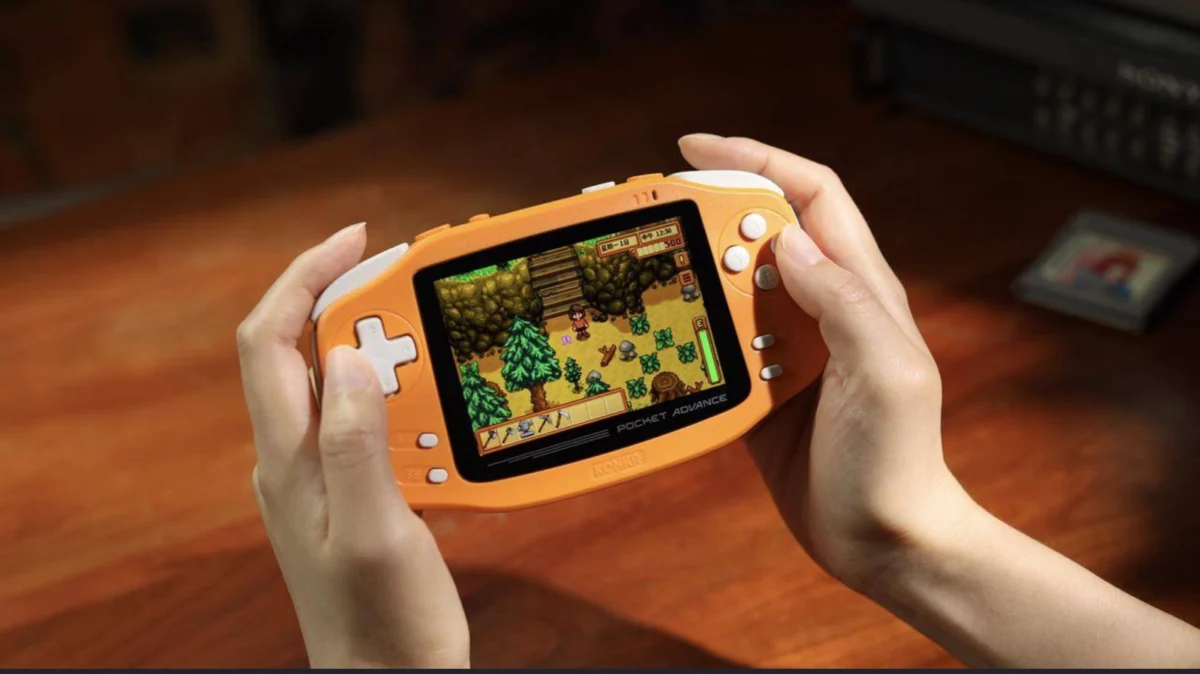
Weeks after the 25th anniversary of the Game Boy Advance’s seminal debut in the United States, Ayaneo, a prominent innovator in the handheld gaming sector, has officially revealed the Konkr Pocket Advance. This new device represents a meticulously crafted modern interpretation of Nintendo’s iconic horizontal handheld, promising a blend of nostalgic design and contemporary technological enhancements. Unveiled during the company’s latest product sharing stream, the Konkr Pocket Advance distinguishes itself with a superior display, an expanded array of control inputs, and two color schemes designed to evoke a strong sense of retro familiarity. Initially slated for release in classic navy blue and vibrant coral orange, the device aims to capture the essence of its predecessor while delivering a significantly upgraded user experience.
The Enduring Legacy of the Game Boy Advance: A Quarter-Century of Influence
The original Game Boy Advance, launched on June 11, 2001, in North America, marked a pivotal moment in the history of portable gaming. Following the monochromatic dominance of the original Game Boy and the Game Boy Color, the GBA introduced a vibrant, full-color LCD screen, a horizontally oriented form factor, and significantly more processing power. This technological leap allowed for graphically richer and more complex games, effectively bridging the gap between console and handheld experiences of its era. With its ARM7TDMI CPU clocked at 16.7 MHz, 32KB of internal WRAM, and 256KB of external WRAM, the GBA was capable of rendering pseudo-3D effects and supporting a vast library of titles that pushed the boundaries of portable gaming. Its 2.9-inch reflective TFT color LCD, though unlit in its initial iteration, displayed a resolution of 240×160 pixels with a 3:2 aspect ratio, becoming a hallmark of the device’s visual identity.
The GBA’s design was revolutionary for its time, shifting from the vertical orientation of its predecessors to a horizontal layout that accommodated a wider screen and a more ergonomic grip for players accustomed to home console controllers. This design philosophy was embraced by millions, contributing to over 81.5 million units sold worldwide across its various iterations (GBA, GBA SP, Game Boy Micro). Its extensive game library included critically acclaimed titles such as Metroid Fusion, The Legend of Zelda: A Link to the Past, Pokémon Ruby and Sapphire, and numerous ports of classic Super Nintendo Entertainment System (SNES) games, solidifying its place as a cherished platform. The 25th anniversary of its US release serves as a powerful reminder of its cultural impact and the persistent demand for devices that can rekindle that particular era of gaming. This enduring affection for the GBA has created a fertile ground for companies like Ayaneo to introduce modern homages, tapping into a deep well of nostalgia and a desire for enhanced retro experiences.
Ayaneo’s Modern Reimagining: Bridging Past and Present
The Konkr Pocket Advance is Ayaneo’s direct answer to this demand, meticulously engineered to pay tribute to the GBA’s iconic design while integrating contemporary hardware. At the core of its appeal is the commitment to replicating the original’s distinctive horizontal form factor and its beloved 3:2 aspect ratio. However, the similarities largely end with the foundational design principles. Ayaneo has equipped the Konkr Pocket Advance with a significantly upgraded 3.5-inch LCD screen, boasting a resolution of 960 x 640 pixels. This constitutes a substantial quadrupling of the original GBA’s pixel count, promising sharper images, more vibrant colors, and an overall superior visual fidelity that benefits both original GBA titles (upscaled) and a wider range of emulated content. The decision to retain the 3:2 aspect ratio is particularly significant for retro enthusiasts, as it ensures that games designed for that specific display geometry are rendered authentically, without stretching or cropping, a common complaint with modern handhelds that default to 16:9.
Beyond the display, Ayaneo has thoughtfully addressed the limitations of the original GBA’s control scheme. While the GBA was praised for its D-pad and A/B buttons, modern gaming, and indeed, more complex retro emulation, often demands a fuller suite of inputs. The Konkr Pocket Advance incorporates a complete set of ABXY face buttons, mirroring the standard layout found on contemporary controllers. This addition significantly enhances its versatility, making it suitable for emulating a broader spectrum of systems, including the Super Nintendo, PlayStation, and Nintendo 64, which heavily relied on four face buttons. Furthermore, Ayaneo has included additional menu buttons, likely for system-level functions and quick access to emulator settings, alongside extra shoulder buttons. While the exact configuration (e.g., L2/R2 equivalents) remains to be fully detailed, these additions unlock possibilities for more complex control schemes often required by later generation consoles.
The modernization extends to critical connectivity and quality-of-life features. The Konkr Pocket Advance features a USB-C port, replacing proprietary charging solutions and offering universal compatibility with modern chargers and data transfer cables. A microSD card slot ensures ample storage expansion for vast libraries of retro games and other media, a crucial feature for any serious emulation device. Wi-Fi and Bluetooth compatibility are standard, enabling online features, game updates, file transfers, and the use of wireless peripherals such as headphones or external controllers. In a charming nod to retro sensibilities, Ayaneo has also retained a 3.5mm headphone jack and a physical volume adjustment wheel, features that evoke the tactile satisfaction of older devices and are often favored by audiophiles and those who prefer a dedicated, immediate control over audio levels. These inclusions demonstrate a keen understanding of the retro gaming community’s preferences, balancing cutting-edge components with beloved traditional elements.
Ayaneo’s Strategic Position in the Handheld Market
Ayaneo has rapidly established itself as a significant player in the burgeoning handheld gaming market. Initially recognized for its high-performance Windows-based handheld PCs, such as the Ayaneo 2, Kun, and Slide, which rival the likes of Valve’s Steam Deck and ASUS ROG Ally in raw computing power, the company has recently diversified its portfolio. This expansion includes a series of Android-based retro-inspired handhelds, like the Ayaneo Pocket Air and the Ayaneo Pocket Micro 2. The Konkr Pocket Advance fits squarely into this latter category, signaling Ayaneo’s strategic intent to capture a broader segment of the market, particularly those seeking dedicated emulation devices that prioritize form factor and nostalgic appeal over raw performance for demanding modern PC games.
The company’s track record, however, also presents certain points of concern for potential consumers. The Ayaneo Pocket Micro 2, another device designed as a homage to the Game Boy Micro, was met with immense enthusiasm but suffered from extremely limited production runs. This scarcity led to units selling out within minutes, leaving many eager customers disappointed. This precedent casts a shadow of anticipation and apprehension over the Konkr Pocket Advance. While the design and feature set are compelling, the ultimate success and accessibility of the device will heavily depend on Ayaneo’s ability to scale production to meet the anticipated demand. Statements from Ayaneo regarding potential production volumes for the Konkr Pocket Advance have yet to be released, but the community is undoubtedly hoping for a much larger availability than its predecessor.
The retro handheld market is increasingly competitive, with established players like Anbernic and Retroid Pocket offering a wide range of devices at various price points, alongside smaller innovators like Miyoo Mini. Ayaneo distinguishes itself through premium design, often incorporating high-quality materials and meticulous attention to detail, which typically positions its products at the higher end of the retro handheld spectrum. The Konkr Pocket Advance, with its bespoke screen and refined controls, is expected to continue this trend, appealing to enthusiasts willing to invest in a premium retro experience.
Inferred Technical Specifications and Performance Expectations
While Ayaneo has not yet disclosed the specific System-on-Chip (SoC) powering the Konkr Pocket Advance, informed speculation suggests it will likely utilize a modern ARM-based processor commonly found in mid-to-high-tier Android smartphones or dedicated emulation devices. Chips from MediaTek’s Dimensity series or Qualcomm’s Snapdragon line are strong candidates, given their proven performance in handling emulation tasks efficiently. For a device focused on GBA emulation and beyond, a chipset capable of fluently running games up to the PlayStation Portable (PSP) and Nintendo DS (NDS) era, and potentially some lighter Dreamcast titles, would be a reasonable expectation.
This level of processing power, combined with the 960×640 resolution screen, would allow for flawless native GBA emulation, often with resolution scaling and shader enhancements for a visually superior experience. Older systems like NES, SNES, Sega Genesis, and even PlayStation 1 would run without any performance hitches. The Android operating system, which is highly probable for an Ayaneo retro handheld, offers unparalleled flexibility through a vast ecosystem of emulation applications (e.g., RetroArch, PPSSPP, DraStic) and customization options. This open platform ensures that users are not locked into a proprietary system and can tailor their gaming experience extensively, from controller mapping to visual filters. The inclusion of Wi-Fi and Bluetooth also opens doors for online multiplayer in supported emulators and connecting a wide array of wireless accessories, further enhancing its versatility.
Market Implications and Consumer Anticipation
The announcement of the Konkr Pocket Advance has generated considerable buzz within the retro gaming community, a demographic known for its passionate engagement and discerning tastes. The target audience for this device is primarily comprised of nostalgic gamers who grew up with the Game Boy Advance, collectors seeking unique and premium retro-inspired hardware, and general emulation enthusiasts looking for a dedicated portable device with excellent ergonomics and a high-quality display.
The market implications are multifaceted. Ayaneo’s entry with a direct GBA homage could stimulate further innovation in the retro handheld space, potentially encouraging other manufacturers to explore similar form factors and dedicated retro experiences. The emphasis on a high-resolution 3:2 screen, for instance, might set a new standard for authentic retro display experiences. From a consumer perspective, the device addresses a long-standing desire for a modern GBA that goes beyond simple re-releases or software emulation on generic devices. The integrated hardware controls, premium build quality (inferred from Ayaneo’s brand image), and optimized display promise an immersive and authentic retro gaming journey.
However, the enthusiasm is tempered by practical considerations. As mentioned, Ayaneo’s history with limited production runs for devices like the Pocket Micro 2 raises concerns about accessibility. Furthermore, Ayaneo products typically occupy a premium price segment, which could be a barrier for some potential buyers, especially when compared to more budget-friendly retro handhelds from competitors. The community’s reaction, therefore, is a mix of excitement for the product’s concept and features, alongside a cautious optimism regarding its eventual price and availability. Inferred statements from the community often highlight the hope that Ayaneo has learned from past experiences and will ensure a more robust supply chain for the Konkr Pocket Advance.
Awaiting Official Pricing and Release Details
As of the current announcement, Ayaneo has maintained its characteristic silence regarding the official price and concrete release window for the Konkr Pocket Advance. This strategy, common for the company, often precedes a crowdfunding campaign or a direct pre-order phase, allowing them to gauge interest and finalize production plans. Given Ayaneo’s positioning in the market, it is reasonable to anticipate a price point that reflects its premium build quality, advanced display, and enhanced feature set, likely placing it above many budget-oriented retro handhelds. For context, their Android-based Pocket Air retailed for several hundred dollars depending on configuration, and while the Konkr Pocket Advance might be more specialized, its premium components suggest a similar pricing strategy.
The lack of a firm release date means enthusiasts will need to closely monitor Ayaneo’s official channels for updates. The hope for a larger production run, unlike the quickly sold-out Pocket Micro 2, remains a significant point of discussion among potential buyers. A wider availability would not only satisfy a larger segment of the retro gaming community but also solidify Ayaneo’s reputation as a more accessible premium handheld manufacturer. The company’s decision on production volume will be a critical factor in determining the device’s overall market impact and its ability to capitalize on the widespread anticipation it has generated.
The Broader Resurgence of Retro Gaming
The Konkr Pocket Advance’s announcement is not an isolated event but rather a symptom of a larger, global phenomenon: the sustained and growing resurgence of retro gaming. This trend is fueled by several factors, including deep nostalgia for past eras of gaming, a desire for simpler, more focused gameplay experiences, and the cultural appreciation for classic game design. Companies like Ayaneo, Analogue (known for its FPGA-based console recreations), and numerous independent developers creating new retro-style games are all benefiting from this wave.
Emulation, while sometimes existing in a legal grey area concerning intellectual property, plays a crucial role in game preservation and accessibility. Modern handhelds like the Konkr Pocket Advance offer a legitimate avenue for enthusiasts to play legally owned ROMs or to experience the vast libraries of older systems in a convenient and enhanced format. The innovation in this space goes beyond mere replication; it involves re-imagining classic experiences with modern comforts, such as backlit screens, improved battery life, versatile connectivity, and enhanced control schemes. This fusion of old and new ensures that the legacy of iconic devices like the Game Boy Advance continues to thrive, reaching new generations of gamers while providing a polished, contemporary experience for veterans. The Konkr Pocket Advance stands as a testament to this enduring appeal, promising to be a significant entry in the pantheon of modern retro handhelds.