Sisilia Frederika
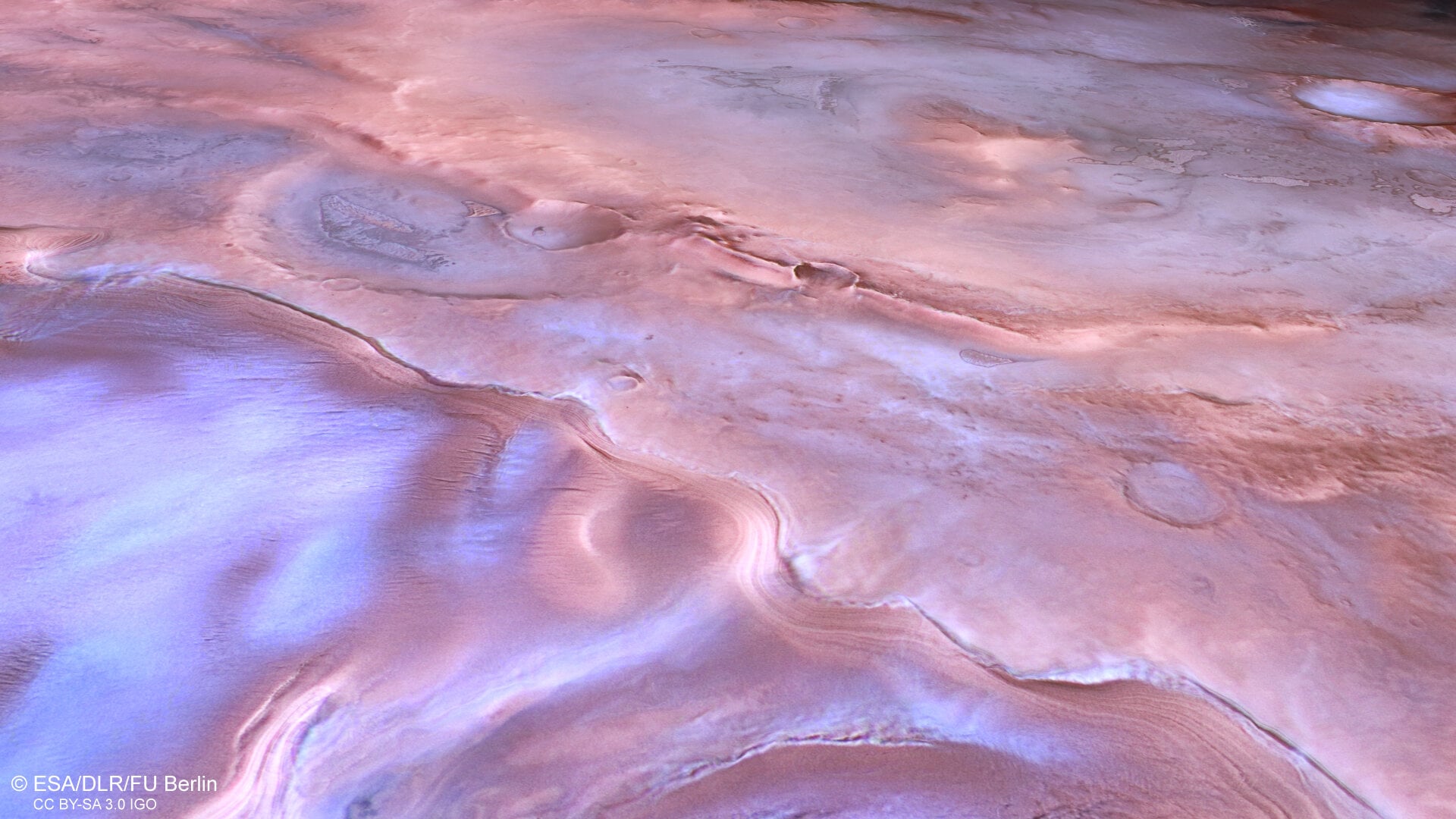
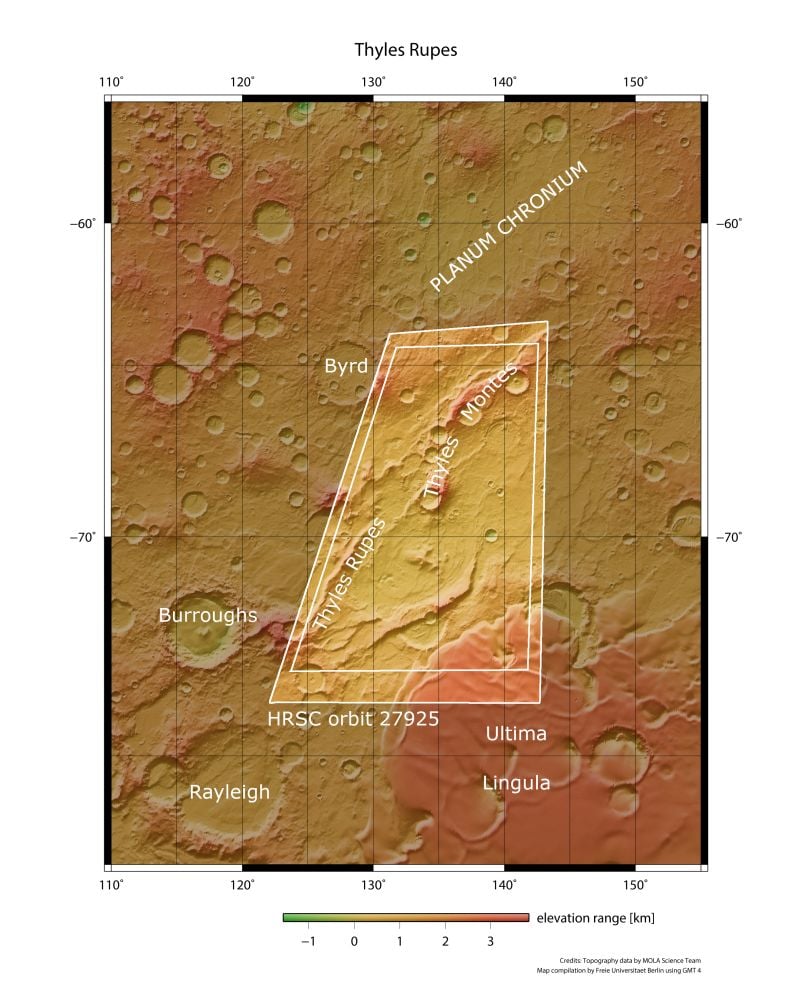
The traditional perception of Mars as a monolithic desert of oxidized iron and rust-colored dust is being challenged by new high-resolution data captured by the European Space Agency’s (ESA) Mars Express orbiter. Recent imagery of the Martian south pole region, specifically focusing on a dramatic geological feature known as Thyles Rupes, has revealed a startling palette of pinks, purples, and deep reds. This chromatic diversity offers more than just aesthetic appeal; it provides a detailed map of the planet’s mineralogical history, atmospheric conditions, and the unique seasonal cycles that define the Martian poles. Located in the southern high latitudes, Thyles Rupes stands as a massive icy crag with cliffs exceeding one kilometer in height, serving as a testament to the planet’s ancient tectonic activity and its ongoing interaction with a volatile-rich atmosphere.
The name Thyles Rupes reflects a blend of classical mythology and descriptive geography. In Latin, "Rupes" translates to cliff or escarpment, while "Thyles" refers to Thule, a mythical land considered by ancient geographers to be the northernmost point of the inhabited world. On Mars, however, this feature is a sentinel of the south, stretching for hundreds of kilometers across the rugged terrain. The recent data release from the Mars Express High Resolution Stereo Camera (HRSC) provides a window into a world that, while geologically "dead" in terms of plate tectonics, remains dynamic through its shifting frost cycles and complex wind patterns.
The Mineralogical Mosaic: Volcanic Origins and Earthly Parallels
The striking colors observed in the Thyles Rupes region are the result of a complex interplay between indigenous minerals and the Martian atmosphere. While the pervasive "Red Planet" hue is caused by the oxidation of iron-rich dust, the darker, more somber tones visible in the new imagery have a more violent origin. These darker materials are the product of ancient volcanic activity, which not only created the basaltic crust of Mars but also distributed ash and lava flows across its surface over billions of years.
Analysis of the spectral signatures in this region reveals a high concentration of olivine and pyroxene. These minerals are of particular interest to geologists because they are primary constituents of Earth’s mantle. Olivine, a magnesium iron silicate, is typically associated with high-temperature volcanic processes. On Earth, it is often found in basalt and peridotite; on Mars, its presence indicates a history of significant volcanic eruptions that brought material from the deep interior to the surface. Pyroxenes, a group of essential rock-forming inosilicates, are similarly abundant in Earth’s upper mantle and are common in the Martian highlands.
The presence of these minerals in the south pole region suggests that the darker swirls and patches are relatively "fresh" in geological terms, or at least have been recently uncovered by the wind, as these minerals tend to weather into clay minerals and oxides when exposed to liquid water over long periods. Their pristine state at Thyles Rupes highlights the arid, cold environment that has preserved the Martian surface for eons.
The Atmospheric Canvas: Why Mars Appears Purple and Pink
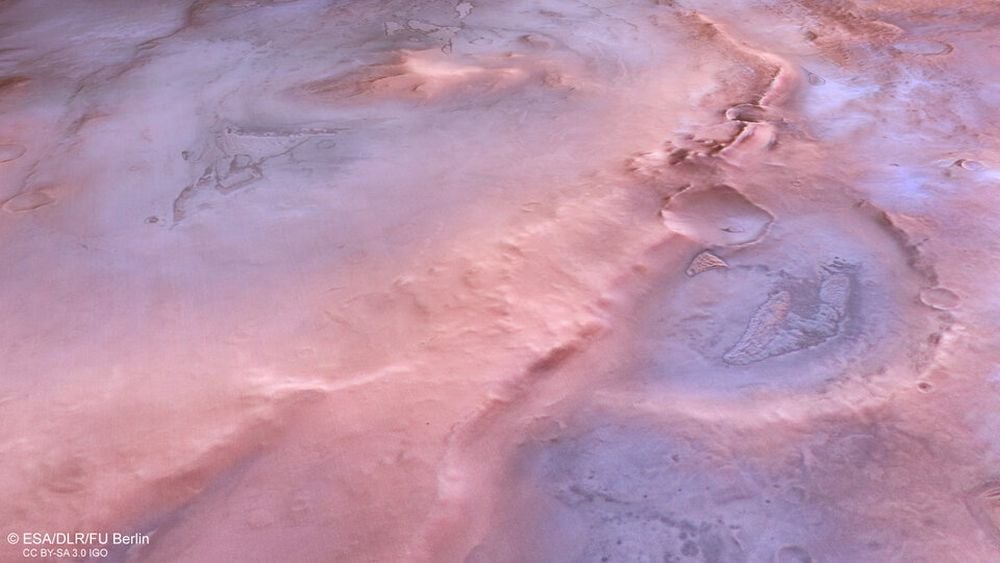
One of the most captivating aspects of the new imagery is the dominant blueberry and purple hue that blankets the landscape. According to planetary scientists, this coloration is not a permanent feature of the rocks themselves but is rather a transient atmospheric and surface phenomenon. The "purpling" of the Martian south pole is a result of the specific lighting conditions during the Martian springtime, combined with the suspension of fine dust and the presence of surface frost.
During the early morning hours on Mars, the sun sits low on the horizon. The light must pass through a thicker layer of the atmosphere, which is laden with fine particles of dust. This dust scatters the light in a manner similar to Rayleigh scattering on Earth, but with different results due to the size and composition of the particles. When this soft morning light hits a surface covered in a thin veneer of frost, the resulting reflection and refraction create the lavender and magenta tones seen in the Mars Express photographs.
This visual effect is highly time-dependent. As the sun rises higher and the surface warms, the frost begins to sublime—turning directly from a solid to a gas—and the dust in the air may settle or be redistributed by thermal winds. Consequently, a region that appears vibrant purple at dawn may return to a more standard ochre or tan by midday. This variability underscores the importance of the Mars Express mission’s ability to capture images at various local times, providing a four-dimensional understanding of the Martian environment.
The Carbon Dioxide Cycle and the South Polar Cap
While water ice exists on Mars, the south pole is dominated by frozen carbon dioxide, commonly known as dry ice. The pale bluish patches visible within craters and low-lying areas in the Thyles Rupes region are dense deposits of this CO2 frost. Unlike Earth’s polar caps, which are composed entirely of water ice, the Martian south pole features a "permanent" cap of CO2 ice that persists year-round.
The images were captured during the Martian southern spring, a period of dramatic transition. During the winter, a "seasonal" cap of carbon dioxide frost expands outward from the pole, covering vast swaths of the southern hemisphere. As spring progresses, this seasonal frost begins to sublime, retreating toward the pole. The patches seen in the Thyles Rupes imagery represent the remnants of this seasonal retreat.
The interaction between the CO2 frost and the underlying darker volcanic soil creates a high-contrast landscape. In areas like the Burroughs Crater—named after the legendary science fiction author Edgar Rice Burroughs—the frost clings to the shadowed interior walls and the floor, creating a stark white-and-blue contrast against the dark, mineral-rich crater floor. This seasonal cycling of CO2 is a major driver of the Martian climate, as it causes significant fluctuations in atmospheric pressure as the gas moves between the solid surface and the thin atmosphere.
Tectonic History: A Planet of Stagnant Lid Geology
The formation of Thyles Rupes itself offers a masterclass in planetary evolution. On Earth, mountains and cliffs of this magnitude are typically the result of plate tectonics—the movement of massive crustal plates that collide, subduct, and uplift. Mars, however, is categorized as a "stagnant lid" planet. It consists of a single, continuous outer shell that does not shift in the way Earth’s crust does.
Despite the lack of plate tectonics, Mars is far from a featureless sphere. Thyles Rupes, which extends for several hundred kilometers, was likely formed through a process of crustal contraction. As the Martian interior cooled billions of years ago, the planet slightly shrank. This contraction put immense pressure on the stagnant lid of the crust, causing it to buckle and crack. In a process known as "thrust faulting," sections of the crust were pushed upward over adjacent sections.
The result of this ancient cooling is the massive escarpment seen today. Thyles Rupes is not just a cliff; it is a geological record of the thermal history of the planet. The fact that the cliff face cuts through some craters while being pockmarked by others allows geologists to establish a relative timeline. For instance, the large crater on the right side of the primary Thyles Rupes image is older than the cliff itself, as the fault line has clearly bisected the crater. Conversely, smaller, crisp craters visible on the face of the cliff represent more recent impacts that occurred after the crustal uplift was complete.
Aeolian Processes: The Barchanoid Ridges of the South
The wind is the primary sculptor of the modern Martian surface. In the Thyles Rupes region, the interaction between the topography and the atmosphere creates unique wind patterns that are reflected in the local dune fields. Unlike the perfectly symmetrical dunes found in the vast sand seas of the Martian north, the dunes near Thyles Rupes are irregular and "mixed up."
Among the most interesting features identified in the imagery are barchanoid ridges. These are arc-shaped dunes that form when wind blows consistently from one direction but is interrupted by local terrain or varying sand supplies. On Earth, barchan dunes are common in deserts like the Sahara or the Namib, characterized by two "horns" that point downwind. On Mars, these ridges indicate a complex wind environment where the massive cliffs of Thyles Rupes likely create turbulence and redirect airflow, preventing the formation of more uniform dune structures.
The presence of these dunes, often coated in a fine layer of seasonal frost, provides scientists with a "weather vane" to study the prevailing winds of the south pole. By observing the orientation and movement of these dunes over multiple Martian years, researchers can model the planet’s atmospheric circulation with increasing precision.
Scientific Implications and the Legacy of Mars Express
The continued operation of the Mars Express orbiter, which has been in place since late 2003, remains a cornerstone of planetary science. The mission, alongside NASA’s Mars Reconnaissance Orbiter, has provided a continuous record of the planet for over two decades. This longevity is crucial for understanding seasonal cycles and rare geological events.
Planetary scientists and representatives from the ESA have noted that these images do more than satisfy human curiosity; they are vital for future exploration. "The Thyles Rupes region is a microcosm of Martian history," noted one inferred commentary from the mission’s science team. "It combines the ancient volcanic past, the tectonic cooling of the planet, and the modern-day atmospheric cycles that continue to reshape the surface. Understanding the distribution of CO2 frost and the mineralogy of these cliffs is essential if we are ever to send robotic or human explorers to the polar regions."
Furthermore, the study of Mars as a "single-plate" planet provides an essential counterpoint to Earth’s geological history. By studying how mountains form on a planet without tectonics, scientists can better understand the early history of Earth before its plates became mobile, as well as the evolution of other rocky bodies in the solar system, such as Mercury and the Moon.
Conclusion: A Living Record of a Dead World
While Mars is often described as a geologically "dead" world—lacking a magnetic field, active plate tectonics, or liquid water on its surface—the imagery of Thyles Rupes proves that it is a world of constant change. The interplay of light, dust, and frost creates a landscape that is far more vibrant and varied than the "Red Planet" moniker suggests.
The 1,000-meter cliffs of Thyles Rupes stand as silent witnesses to the planet’s cooling and contraction, while the shifting purple hues of the morning frost remind us of the dynamic atmosphere that still clings to the Martian surface. As Mars Express continues its orbit, each new image adds a layer of complexity to our understanding of our neighbor, revealing a planet that, while inhospitable to life as we know it, remains a place of profound and haunting beauty. The lessons learned from the pink and purple swirls of the Martian south pole will continue to inform our theories of planetary formation and the delicate balance of forces that govern the rocky worlds of our solar system.