Vera Intan Clara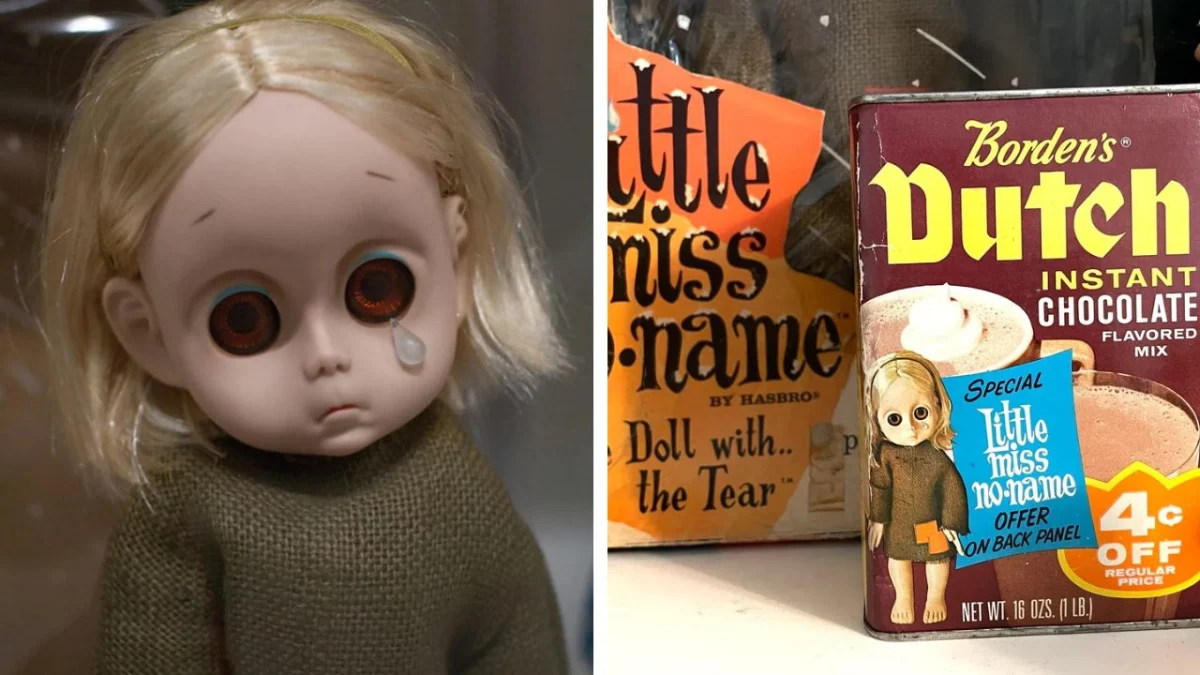
A recent resurgence on social media platforms, particularly a Reddit post within the r/Damnthatsinteresting community, has cast a renewed spotlight on one of Hasbro’s most peculiar and commercially unsuccessful ventures: the 1965 doll, Little Miss No-Name. Originally conceived as an alternative to the glamorous and aspirational dolls dominating the mid-century toy market, this fifteen-inch figure presented a starkly different, almost Dickensian aesthetic. Described by the original Reddit poster as a "crying, impoverished-looking alternative to Barbie, dressed in a burlap sack," the doll’s design choices—from its melancholic expression to its plea for love—have continued to spark debate and fascination decades after its swift discontinuation.
The doll’s initial reception was lukewarm at best, leading to its rapid withdrawal from shelves, a fact underscored by its inclusion in the Museum of Failure’s curated collection of discontinued products. However, its unusual characteristics have garnered a cult following, with modern audiences re-evaluating its place in toy history, often through a lens of contemporary appreciation for the unconventional and even the macabre. The journey of Little Miss No-Name from a commercial flop to a subject of historical and cultural intrigue offers a compelling case study in toy design, market miscalculation, and the shifting tides of consumer taste.
The Doll’s Controversial Debut: A Mid-1960s Anomaly
When Little Miss No-Name debuted in 1965, the American toy market was largely dominated by figures that promoted ideals of glamour, domesticity, or adventure. Mattel’s Barbie, launched just six years prior in 1959, epitomized the aspirational fashion doll, offering children a miniature world of style, careers, and social life. Hasbro itself had found immense success with the launch of G.I. Joe in 1964, pioneering the "action figure" category for boys. Against this backdrop of aspirational and adventurous play, Little Miss No-Name stood out as an outlier, a doll seemingly designed to evoke pity rather than aspiration.
The physical attributes of Little Miss No-Name were meticulously crafted to convey a sense of profound sadness and destitution. The fifteen-inch doll came barefoot, emphasizing her lack of means. Her primary attire was a simple burlap sack, crudely held together with a safety pin, further cementing her "impoverished" look. Perhaps the most striking feature was her molded hand, perpetually positioned as if in a gesture of begging or pleading, a design choice that immediately communicated vulnerability and need. Adding to her sorrowful countenance, the doll featured a single plastic teardrop that could be affixed under one eye, earning her the moniker among collectors as "the doll with the tear," as detailed by Toy Tales. Her packaging reinforced this narrative, depicting her standing alone in a snowstorm, accompanied by a printed plea card that read, "I need someone to love me." This overt appeal to empathy was central to the doll’s intended emotional impact.
Artistic Inspiration and Design Philosophy
The creative force behind Little Miss No-Name was designer Deet D’Andrade, who drew significant inspiration from the "big-eyed waif" paintings of artist Margaret Keane. Keane’s distinctive style, characterized by portraits of children with unusually large, expressive eyes, often imbued with a sense of melancholy or wonder, had achieved considerable popularity throughout the 1950s and 1960s. Her works, initially sold directly to the public and later mass-produced as prints, resonated deeply with a segment of the population that appreciated their emotional depth and poignant innocence. Keane’s art, often depicting solitary, vulnerable children, tapped into a cultural fascination with innocence and emotional fragility, sometimes bordering on sentimentality.
D’Andrade’s translation of Keane’s two-dimensional aesthetic into a three-dimensional toy was a bold move. The doll’s oversized eyes, though not as exaggerated as some of Keane’s paintings, clearly echoed the artist’s signature style, designed to draw the viewer into an emotional connection. The intention behind this design was seemingly to foster a nurturing instinct in children, encouraging them to care for and protect the doll. It was an experiment in empathy-driven play, a departure from the more common narratives of glamour, adventure, or domesticity. Hasbro, a company known for innovation, was perhaps seeking to tap into a different emotional register within the toy market, one that prioritized compassion and care.
However, the interpretation of this emotional appeal proved to be a critical miscalculation. While Keane’s paintings were often admired for their pathos, translating that pathos into a toy for children yielded unforeseen and largely negative results. The very elements designed to elicit sympathy instead frequently provoked discomfort or even fear, a sentiment that would ultimately define the doll’s brief commercial life.
A Brief and Unsuccessful Market Presence (1965-1968)
Little Miss No-Name’s tenure on toy store shelves was remarkably short-lived. Launched in 1965, the doll struggled to find an audience, selling poorly despite Hasbro’s efforts to promote it. The company even attempted a cross-promotion in 1968, tying the doll to Borden’s Dutch Instant Chocolate Flavored Mix, an initiative likely aimed at boosting visibility and appeal. However, these marketing strategies proved insufficient to overcome the fundamental disconnect between the doll’s design and what children and their parents desired in a toy.
The Museum of Failure, which houses Little Miss No-Name in its collection, explicitly states that Hasbro discontinued the doll "quickly after many children feared the doll rather than play with it." This assessment highlights the core issue: what was intended as a catalyst for nurturing instincts instead became an object of apprehension. Children, accustomed to dolls that were either aspirational figures or comforting babies, found the doll’s perpetual sadness, begging posture, and distressed appearance unsettling. Parents, too, may have been hesitant to introduce a toy that seemed to embody destitution and sorrow into their children’s play, preferring toys that promoted joy, imagination, or aspirational role-playing.
The failure of Little Miss No-Name underscores the complexities of toy design and market reception. In an era where childhood was increasingly idealized as a time of innocence and happiness, a doll that overtly represented poverty and distress was perhaps too jarring for the mainstream market. It was a product ahead of its time, or perhaps simply misaligned with the prevailing cultural sensibilities regarding children’s play.
The Cultural Landscape of 1960s Toy Industry
To fully appreciate the commercial fate of Little Miss No-Name, it’s crucial to understand the broader context of the 1960s toy industry. This decade was a dynamic period marked by significant innovation and shifting consumer demands. Barbie’s continued dominance, with her ever-expanding wardrobe and diverse careers, solidified the fashion doll as a cornerstone of girls’ play. Other popular dolls included traditional baby dolls, which reinforced nurturing roles, and a growing array of character dolls tied to popular culture, like those from television shows or movies.
The market trend leaned heavily towards toys that offered fantasy, glamour, adventure, or domestic realism. Hasbro itself was a major player, not only with G.I. Joe but also with popular board games and other toy lines. Their portfolio generally reflected the prevailing desire for toys that provided escapism, promoted traditional gender roles, or encouraged active, imaginative play.
In this environment, Little Miss No-Name represented a radical departure. While there had been dolls designed to evoke empathy (like baby dolls requiring care), none had ever so explicitly portrayed suffering or destitution. The underlying assumption that children would be drawn to a doll out of pity, rather than a desire for companionship or imaginative play, proved to be a significant misjudgment. The 1960s, while experiencing social upheaval, still largely maintained a cultural ideal of childhood as a protected, joyous phase, making a doll designed to elicit sadness a challenging proposition for mass market appeal.
Modern Reassessment: From Failure to Cult Classic
Decades after its commercial failure, Little Miss No-Name has experienced a fascinating re-evaluation, particularly in the digital age. The recent Reddit post that brought the doll back into the public consciousness generated a wave of reactions, many of which highlight a stark contrast between its original reception and how it might be perceived today.
Several commenters on the Reddit thread focused on the doll’s unsettling appearance by modern standards. One user articulated this sentiment bluntly, writing, "Probably because it looks like a haunted Victorian era dead child inhabits it." This reaction speaks to a contemporary aesthetic where the "creepy" or "unsettling" can be appreciated for its artistic merit or its ability to provoke a strong emotional response, a far cry from the unadulterated comfort typically sought in children’s toys of the 1960s. The doll’s inherent melancholia and slightly forlorn expression, combined with its historical context, lend it an aura that some find genuinely eerie.
However, a significant portion of the modern commentary suggests that Little Miss No-Name might find a far more receptive audience today than it did in 1965. One person succinctly put it: "Is it wrong to say that it would probably sell better now than it would in 1965…" This sentiment was echoed by another commenter who argued for its potential appeal to niche markets, stating, "What’s funny is this would have sold was early as the 90s. The Hot Topic goths would have loved this in the mid 90s. I was there, I should know." This observation is particularly insightful, pointing to a cultural shift towards embracing alternative aesthetics, where "gothic" or "dark" themes are celebrated rather than shunned. The rise of subcultures that appreciate the macabre, the unconventional, and the emotionally complex has created a market for toys and collectibles that might have been deemed too morbid or strange for mainstream consumption in previous decades.
This re-evaluation also touches upon the broader phenomenon of "weird" or "creepy-cute" toys. While one commenter mistakenly suggested a "Reddit joke that became a toy" origin for toys like Little Miss No-Name, implying a modern, internet-driven genesis for unsettling toys, it’s crucial to clarify that Little Miss No-Name is a genuine historical artifact from the 1960s. However, the comment does reflect a modern cultural trend where deliberately unsettling or unconventional toys (like some art toys or independent creations) are embraced by collectors and enthusiasts. Little Miss No-Name, therefore, predates this trend but now fits neatly into this contemporary appreciation for the strange and unique. The doll’s original failure was arguably a matter of being out of sync with its own time, rather than an inherently flawed design in all contexts.
Legacy and Implications
Little Miss No-Name stands as a compelling case study in the annals of toy manufacturing and cultural history. Its story is one of a bold, perhaps misguided, experiment by Hasbro to tap into a different emotional dimension of play. It serves as a stark reminder that even well-intentioned design, inspired by popular art, can fail if it clashes with prevailing consumer expectations and cultural sensibilities. The doll’s inability to thrive in a market saturated with aspirational and joyous toys underscores the powerful influence of cultural norms on product success.
Beyond its commercial failure, Little Miss No-Name has carved out a unique legacy. For collectors, it represents a rare and intriguing piece of toy history, a tangible artifact of a company’s daring venture into the unconventional. Its inclusion in the Museum of Failure ensures its continued presence as an object lesson in market dynamics and the psychology of play.
Furthermore, the doll’s modern resurgence on platforms like Reddit highlights a fascinating evolution in aesthetic appreciation. What was once deemed too sad, too unsettling, or too "poor" for children’s play has now been recontextualized as a fascinating, even desirable, piece of pop culture. It reflects a growing comfort with, and even admiration for, the melancholic, the quirky, and the historically peculiar. In an era where niche markets thrive and individuality is celebrated, Little Miss No-Name has found an unexpected second life, not as a plaything, but as a symbol of cultural shifts and the enduring power of design to provoke thought and emotion, even decades later. Its journey from a quickly forgotten flop to a subject of modern fascination makes it more than just a failed toy; it’s a testament to the complex interplay between innovation, consumer psychology, and the ever-evolving landscape of cultural taste.