Garick Elordi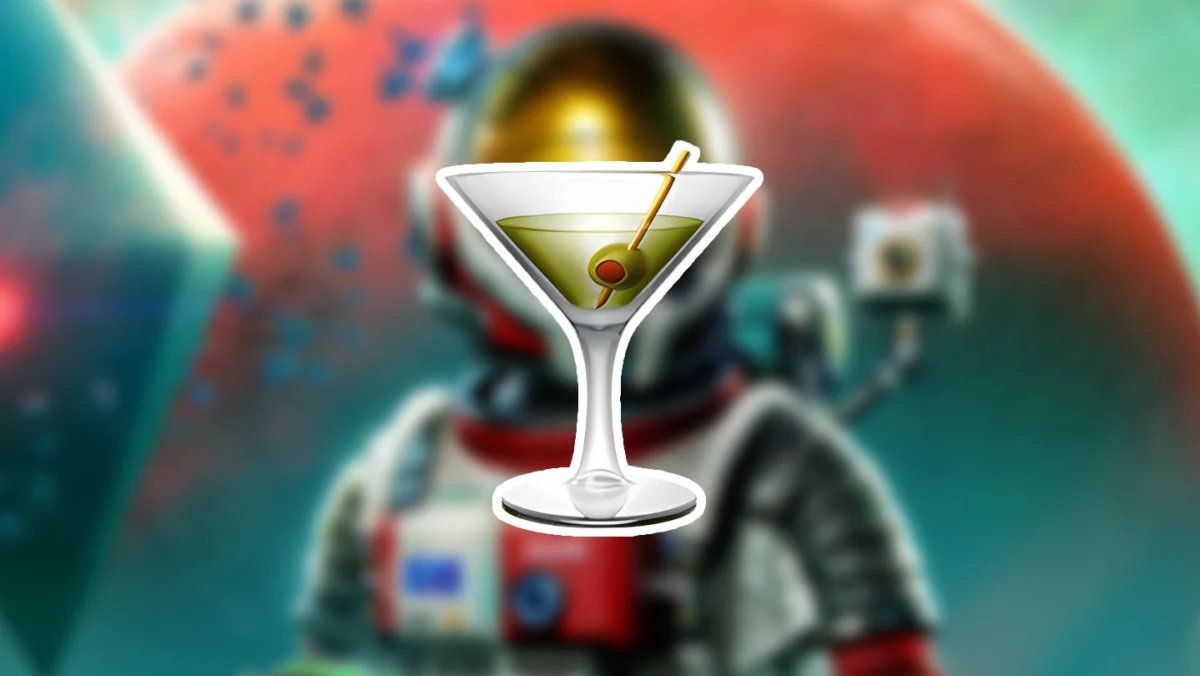
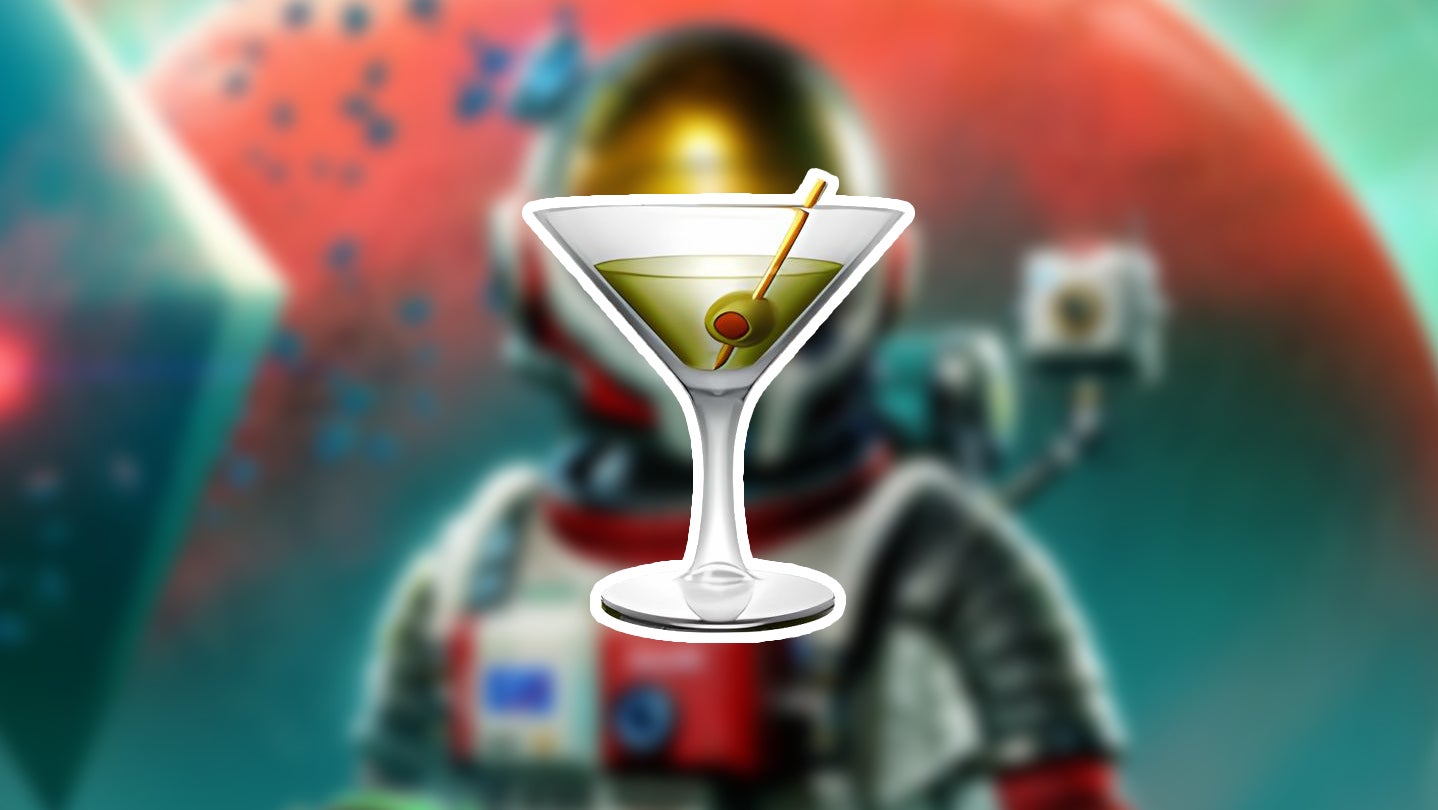
The landscape of modern video game marketing has been uniquely shaped by Hello Games and its founder, Sean Murray, whose cryptic social media presence has once again ignited the No Man’s Sky community. In a move that has become a traditional precursor to significant content drops, Murray recently posted a single emoji of a cocktail glass on his social media accounts. This signal, followed shortly by a subsequent post featuring three cocktail glasses from the official Hello Games account, indicates that the highly anticipated "Cosmos" update is imminent. As the studio prepares to celebrate a decade of development and post-launch support for its ambitious space exploration simulator, the "Cosmos" update is expected to be one of the most substantial additions to the game’s ever-expanding universe.
The use of emojis as a communication tool began in 2020, during the lead-up to the "Living Ship" update. At the time, Murray used a single egg emoji to hint at the biological spacecraft that would soon be introduced. In various industry interviews, Murray has reflected on the origins of this strategy, noting that it arose from a desire to minimize direct social media engagement following the game’s tumultuous 2016 launch. By utilizing a single character, the studio managed to generate significant organic hype without over-promising or engaging in lengthy promotional cycles. This "minimalist communication" has since become a hallmark of the studio’s relationship with its player base, with past emojis including a bicep for the "Endurance" update, a rasher of bacon for "Prism," and a hi-vis vest for "Remnant."
A Decade of Evolution: From Controversy to Industry Standard
To understand the significance of the upcoming "Cosmos" update, one must look at the historical trajectory of No Man’s Sky. When the game launched in August 2016, it was met with a polarized reception. While praised for its scale, it was criticized for a perceived lack of depth and the absence of features hinted at during its early reveal. However, the subsequent eight years of free updates have transformed the title into a case study for long-term software support and community redemption.
The "Cosmos" update arrives at a symbolic juncture, marking ten years since the project moved into the global spotlight. Over this decade, Hello Games has released over 30 major named updates, each significantly altering the game’s core mechanics. Key milestones include:
- Foundation (2016): Introduced base building and freighter ownership, providing players with a reason to remain in specific star systems.
- NEXT (2018): Brought full multiplayer functionality and a comprehensive visual overhaul, representing a "re-launch" for the title.
- Beyond (2019): Integrated full Virtual Reality (VR) support and expanded social hubs through the Space Anomaly.
- Origins (2020): Doubled the variety of planetary flora and fauna, adding multi-star systems and colossal planetary structures.
- Echoes (2023): Introduced a new robotic race, the Autophage, and overhauled space combat with freighter-to-freighter battles.
The "Cosmos" update is positioned as the next evolution in this lineage. The name itself was first teased in the closing moments of the 10th Anniversary trailer released earlier this year. The choice of a cocktail glass emoji for this specific update is widely viewed as a playful nod to the community. Following the reveal of the "Cosmos" title, fans began jokingly suggesting that the update was actually named "Cosmo," referring to the Cosmopolitan cocktail. Murray’s adoption of the emoji suggests an active engagement with community memes, further strengthening the bond between the developer and the players.
Technical Speculation and Community Expectations
While Hello Games remains tight-lipped regarding the specific features of "Cosmos," the community has engaged in rigorous data-driven speculation. A primary focus of this speculation involves the integration of technologies developed for the studio’s next major project, Light No Fire. Announced at The Game Awards in late 2023, Light No Fire is a fantasy-themed "single-planet" survival game that promises Earth-sized scale with multiple biomes on a single world.
Current No Man’s Sky planets are typically restricted to a single biome type (e.g., frozen, scorched, or lush). Analysts and veteran players suggest that "Cosmos" could serve as a bridge, bringing the multi-biome technology from Light No Fire into the No Man’s Sky engine. This would represent the most significant change to planetary generation since the "Origins" update in 2020.
Furthermore, technical improvements are a recurring theme in community requests. As the game continues to support a wide array of hardware—including the PlayStation 5, Xbox Series X/S, PC, Nintendo Switch, and various VR headsets—optimizing the "synchronization" of the universe is a high priority. Players have expressed a desire for a more "persistent" universe where player-made changes are more visible to others in real-time, potentially paving the way for larger-scale player-run civilizations and colonies.
The Impact of "Cosmos" on the Gaming Ecosystem
The impending release of "Cosmos" also carries broader implications for the gaming industry’s "Games as a Service" (GaaS) model. Unlike many contemporary titles that rely on battle passes, microtransactions, or paid expansions, Hello Games has maintained a strictly "no-additional-cost" model for its updates. This strategy has resulted in sustained sales and high player retention over nearly a decade.
Data from SteamDB indicates that No Man’s Sky consistently maintains a healthy concurrent player count, often spiking into the tens of thousands during update weeks. The "Cosmos" update is expected to drive another significant surge in activity. Furthermore, the game’s "Very Positive" recent review rating on Steam serves as a testament to the effectiveness of this development philosophy.
From a market perspective, the "Cosmos" update serves to keep No Man’s Sky relevant in a competitive landscape that now includes titles like Bethesda’s Starfield and the ongoing development of Star Citizen. By focusing on procedural variety and player agency, Hello Games has carved out a unique niche that remains unchallenged in its specific execution of infinite exploration.

Official Responses and the Release Window
While no formal press release has been issued detailing the contents of "Cosmos," the timing of Murray’s tweets provides a reliable window for the update’s arrival. Historically, the "emoji-to-launch" pipeline follows a predictable pattern. Emojis typically appear 48 to 72 hours before the update goes live. Given that Hello Games traditionally releases major patches on Wednesdays to allow for hot-fixes before the weekend, industry insiders and fans are bracing for a launch in the immediate future.
The official Hello Games social media channels have amplified Murray’s posts, suggesting a unified marketing push. The triple-cocktail post from the studio account is interpreted by some as a hint toward "three times the content" or perhaps a three-day countdown. Regardless of the literal interpretation, the message is clear: the development cycle for "Cosmos" is complete, and the deployment phase has begun.
Conclusion: A Legacy Defined by Persistence
As No Man’s Sky approaches its 10th anniversary, the "Cosmos" update represents more than just a content patch; it is a celebration of a decade of persistence. The transition from a widely panned launch to a gold standard of the industry is a narrative rarely seen in software development.
Whether "Cosmos" delivers the long-awaited multi-biome planets, a complete overhaul of galactic traversal, or simply a refined set of tools for community building, the excitement surrounding a few cocktail emojis demonstrates the power of the brand Hello Games has built. In an era of bloated marketing budgets and cinematic trailers that often fail to reflect the final product, the quiet, cryptic, and consistent delivery of No Man’s Sky continues to stand as a unique anomaly in the cosmos of the gaming industry.
As the countdown to Wednesday begins, the global player base remains focused on the stars, waiting to see what the next chapter of their infinite journey will hold. If the "Cosmos" update lives up to its name, the universe of No Man’s Sky is about to become significantly more complex, vibrant, and populated than ever before.