
 Sonny Valindra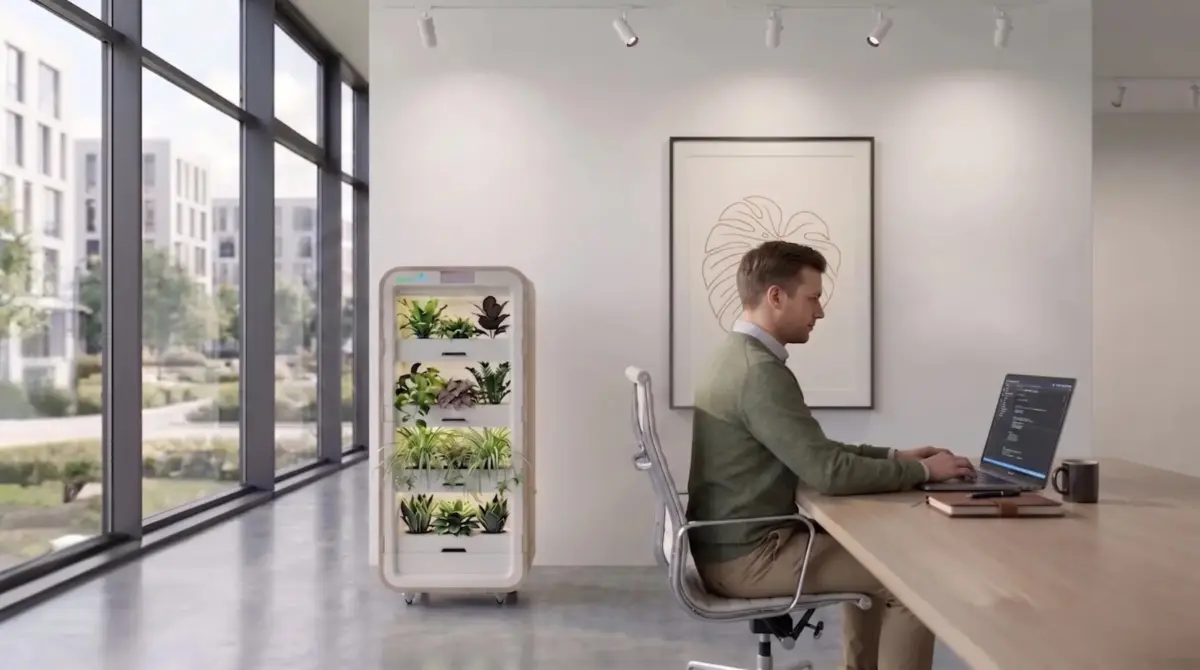
The pervasive issue of indoor air pollution, often an invisible threat in modern workspaces, is gaining significant attention from innovative startups. Tanvi Thombre and Lakshya Saraf, former engineering students at their university, encountered this challenge firsthand within their makerspace. Their personal experience, marked by an alarming incident where a close friend fainted due to exposure to toxic fumes from laser cutters, 3D printers, and soldering irons, served as the catalyst for their groundbreaking venture, Greenairy. This startup is poised to present its novel bio-integrated plant tower solution at the prestigious TechCrunch Disrupt Startup Battlefield 200 event, aiming to tackle the detrimental effects of volatile organic compounds (VOCs) and other harmful gases in commercial environments.
The Invisible Threat: Understanding Indoor Air Pollution
Indoor air pollution is a multifaceted problem that extends far beyond the visible particles like dust and pollen. While conventional air purifiers are adept at capturing these larger contaminants, they often fall short in addressing the more insidious threat posed by toxic gases. These gases, including carbon dioxide, formaldehyde, and benzene, are frequently classified as volatile organic compounds (VOCs). VOCs are chemicals that readily evaporate into the air at room temperature, and their presence in enclosed spaces is a growing concern for public health.
The makerspace at Thombre and Saraf’s university, despite being equipped with air purifiers, was a prime example of this hidden danger. Thombre highlighted that even with purification systems in place, they were "unknowingly exposed to toxic fumes." This exposure underscores a critical gap in current air purification technologies – their limited efficacy against gaseous pollutants. The problem is exacerbated in modern buildings where air conditioning systems often preclude the opening of windows, creating a closed-loop environment where pollutants can accumulate. This is particularly relevant for spaces like schools, offices, hotels, salons, and other commercial buildings that rely heavily on climate-controlled environments.
The Link to Health and Productivity
The health implications of prolonged exposure to indoor air pollutants, particularly VOCs, are significant and well-documented. Thombre referenced the concept of "sick building syndrome," a condition characterized by a range of adverse health effects and discomfort experienced by occupants after spending time in a particular building. Symptoms can include headaches, fatigue, dizziness, and respiratory irritation, often without a clear identifiable cause or illness.
Beyond immediate discomfort, research indicates a more profound link between indoor air quality and cognitive function. A study from Harvard University, which Thombre cited, demonstrated that improvements in indoor air quality led to enhanced cognitive performance and increased productivity among occupants. This finding is particularly impactful for workplaces, where employee well-being and efficiency are directly tied to the indoor environment. The potential for a healthier, more productive workforce underscores the economic and social imperative to address indoor air pollution effectively.
Greenairy’s Bio-Integrated Solution: A Natural Approach
Recognizing the limitations of existing technologies and the pressing need for a more comprehensive solution, Thombre and Saraf developed Greenairy. Their startup’s core innovation lies in bio-integrated plant towers designed to actively break down toxic gases, offering a natural and sustainable alternative to conventional air purification methods.
"A plant in a pot cleans air slowly," explained Saraf. "But, when we change the conditions around the plant, it cleans air much faster and better than these conventional methods." This statement points to the fundamental principle behind Greenairy’s technology: leveraging the natural phytoremediation capabilities of plants and augmenting them through intelligent design and environmental control.
Unlike traditional air purifier filters that may require frequent replacement and can only remove a "narrow range of VOCs," Greenairy’s plant towers offer a continuous and natural purification process. Saraf emphasized that their solution produces "no harmful by-products" and requires "no filter replacement," presenting a significant advantage in terms of sustainability and long-term cost-effectiveness. The technology harnesses the power of plants and their associated microbial communities to metabolize and neutralize harmful airborne compounds, effectively transforming a passive element of the office environment into an active air purification system.
Pilot Programs and Performance Data
Greenairy has already conducted promising short-term pilot programs in various locations across Singapore. These trials have provided tangible data demonstrating the effectiveness of their plant towers. To rigorously assess their technology, the startup utilized RESET-certified air monitors, a recognized standard for measuring and verifying indoor environmental quality.
In a comparative study, Greenairy evaluated three distinct office environments: one equipped with their plant towers, another with a medical-grade ionizer, and a third with a high-efficiency particulate air (HEPA) purifier. The results, as presented by Saraf, were compelling: "Our tower had the lowest VOC levels and removed VOCs the fastest." This indicates a superior performance in targeting and eliminating gaseous pollutants compared to both ionization and HEPA filtration technologies.
Beyond the quantitative data, the qualitative feedback from office staff in the pilot programs was overwhelmingly positive. Saraf noted that the "office staff also grew fond of the natural ‘fresh’ aroma of the tower and the natural vibe it brought." This suggests that Greenairy’s solution not only improves air quality but also contributes to a more pleasant and aesthetically appealing work environment, fostering a sense of well-being and connection with nature.

Thombre further elaborated on the immediate impact observed during regular office hours, reporting a "50% reduction in both the daily VOC average and peak levels." She added that these results showed even greater improvement "as the plants and microbes mature and the gases are prevented from accumulating." This highlights the self-sustaining and cumulative nature of the purification process, indicating that the longer the system is in place, the more effective it becomes.
Validation and Future Outlook
The efficacy of Greenairy’s technology has also undergone external validation. The German testing and certification firm TÜV SÜD has reviewed and confirmed the startup’s findings. The detailed results are slated for publication soon, with interim access available upon request. This independent verification lends significant credibility to Greenairy’s claims and positions them for wider adoption.
Following the certification of their results, the pair plans to commence large-scale manufacturing of their plant towers. This strategic move is aimed at meeting the anticipated demand from businesses seeking to enhance their indoor air quality.
The operational structure of Greenairy is currently a testament to modern global collaboration. Saraf is based in Berkeley, California, while Thombre is in Singapore. This geographical distribution, according to Saraf, "works well at this stage," allowing one founder to focus on product testing and development in Singapore while the other concentrates on fundraising and business development in the vibrant Silicon Valley ecosystem.
Looking ahead, the founders have a clear vision for the company’s future. "If things go to plan, both of us will be in Singapore by the first half of 2027," Thombre stated. This timeline is significant as it aligns with their anticipated launch of the first mass-produced towers and their initial customer installations in Singapore. This move signifies a strong commitment to establishing a robust operational base and serving the market directly.
TechCrunch Disrupt: A Platform for Innovation
Greenairy’s participation in the Startup Battlefield 200 at TechCrunch Disrupt represents a significant milestone. This highly anticipated event brings together a curated selection of promising startups, providing them with a platform to showcase their innovations to investors, industry leaders, and the global tech community. TechCrunch Disrupt is renowned for its role in identifying and launching emerging technologies, and Greenairy’s inclusion underscores the potential of their bio-integrated approach to air purification.
The event, scheduled to take place from October 13-15 in San Francisco, will offer Greenairy an invaluable opportunity to gain exposure, secure potential partnerships, and attract investment. The competitive nature of the Startup Battlefield, where companies pitch to venture capitalists, is designed to foster rapid growth and innovation. Greenairy’s focus on a critical environmental and health issue, coupled with a novel, sustainable solution, positions them as a compelling contender.
Broader Implications and the Future of Workplaces
The implications of Greenairy’s technology extend beyond mere air purification. By addressing the invisible threat of indoor air pollution, the startup is contributing to a larger movement towards creating healthier, more sustainable, and more productive work environments. As businesses increasingly recognize the link between employee well-being and organizational success, solutions like Greenairy’s plant towers are likely to become an integral part of office design and management.
The shift towards a more holistic approach to workplace health is driven by several factors. Growing awareness of environmental issues, coupled with a greater understanding of the impact of indoor environments on human health, is prompting a re-evaluation of traditional building design and maintenance practices. Furthermore, the increasing prevalence of remote work has also highlighted the importance of the physical office as a space that must offer tangible benefits and a superior experience to attract employees back.
Greenairy’s bio-integrated approach offers a compelling narrative of innovation that is both technologically advanced and environmentally conscious. By harnessing the power of nature, they are not only offering a functional solution to a pressing problem but also contributing to a more biophilic design philosophy in commercial spaces. This integration of natural elements can foster a greater sense of calm, reduce stress, and enhance overall employee satisfaction.
The long-term impact of such innovations could be far-reaching. As Greenairy scales its operations and its technology becomes more widely adopted, it could set a new standard for indoor air quality in commercial buildings. This could lead to a cascade effect, encouraging other companies to invest in similar bio-integrated solutions or to prioritize more natural and sustainable methods of environmental control. The success of Greenairy at TechCrunch Disrupt could therefore be a harbinger of a significant shift in how we design, manage, and experience our indoor spaces, ultimately contributing to healthier lives and more sustainable communities. The journey from a university makerspace to a global stage at TechCrunch Disrupt is a testament to the power of identifying a critical need and developing an innovative, nature-inspired solution.








