Sisilia Frederika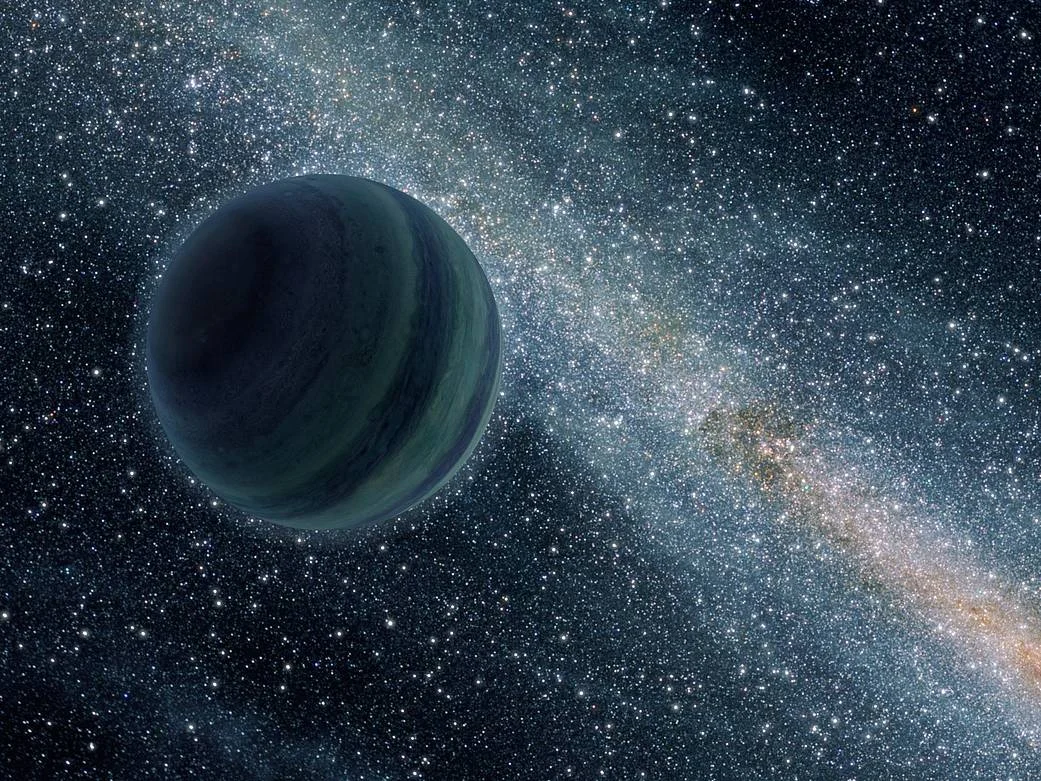
The Milky Way galaxy is estimated to host billions, perhaps trillions, of "rogue" planets—celestial bodies that wander through the interstellar void without a parent star to orbit. While astronomers have long understood the mechanisms that cast these worlds into the darkness, such as gravitational instabilities within nascent solar systems or the disruptive flyby of a neighboring star, the fate of the moons orbiting these planets has remained a subject of intense debate. New research led by Yannick Badoux and Simon Portegies Zwart at the Leiden Observatory provides a definitive look into this cosmic eviction process, suggesting that these homeless worlds are rarely as lonely as previously assumed. Through extensive computational modeling, the team has demonstrated that a significant percentage of exomoons remain tethered to their host planets even after being violently expelled from their original solar systems.
The Mechanics of Gravitational Eviction
The journey of a rogue planet typically begins in the chaotic early stages of a planetary system’s formation. In a standard solar system, planets exist in a delicate gravitational balance with their host star. However, this equilibrium can be shattered by two primary catalysts: internal dynamical instability or external stellar interference. In the former, the gravitational interaction between two massive sibling planets can result in one being flung outward into space. In the latter, a "flyby" star passing too close to a planetary system provides a gravitational tug sufficient to strip a planet from its stellar anchor.
Until recently, the prevailing scientific assumption was that the violence of these encounters would likely strip a planet of its natural satellites. Moons, being smaller and less massive, were thought to be the first casualties of such gravitational upheavals. However, the Leiden Observatory study challenges this notion by identifying a specific physical boundary known as the Hill radius, which serves as the primary determinant of a moon’s survival.
The Hill radius defines a spherical region around a planet where its own gravity dominates over the gravitational pull of the host star. For a moon to remain in a stable orbit, it must reside within this "bubble" of influence. The research conducted by Badoux and Portegies Zwart reveals that the survival of a moon during an ejection event depends almost entirely on its proximity to the planet relative to this Hill radius.
Simulations and Statistical Probabilities
To reach these conclusions, the research team performed a massive suite of simulations, totaling nearly 34,000 distinct stellar encounters. These simulations were designed to account for every conceivable variable, including the angle of the approaching star, the velocity of the encounter, the distance of the flyby, and the mass of the celestial bodies involved. By tracking the trajectories of both the planet and its moon through the duration of the encounter, the team was able to map out the statistical likelihood of "co-ejection."
The data revealed a clear threshold for moon retention. If a moon orbits within approximately 40% of the planet’s Hill radius (0.4 $R_H$), it has a remarkably high chance of remaining bound to the planet as it is kicked into interstellar space. As the moon’s distance increases beyond this 40% mark, the probability of retention drops precipitously. By the time a moon reaches 50% of the Hill radius, the gravitational "grip" of the planet is insufficient to maintain the bond during the chaos of ejection. In these cases, the planet and moon part ways, becoming separate rogue entities drifting through the galaxy.
Implications for the Solar System’s Giants
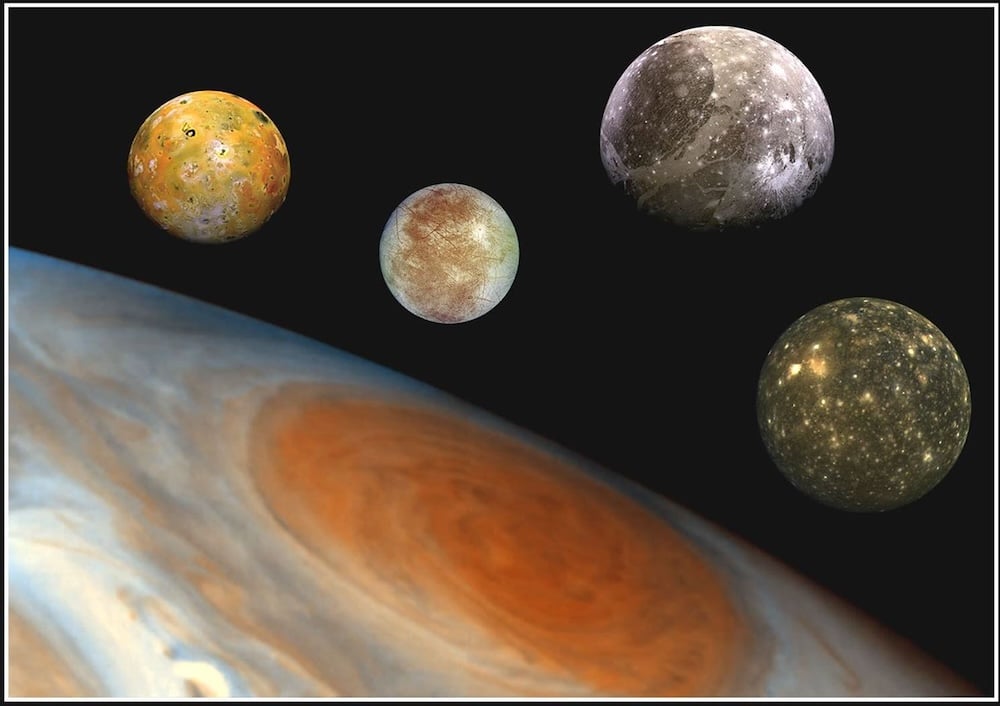
This finding has profound implications for our understanding of our own solar system’s potential history and future. To put the 40% threshold into perspective, one can look at the Jovian system. Jupiter’s innermost Galilean moon, Io, orbits at a distance that is less than 1% (0.01) of Jupiter’s Hill radius. The other major moons—Europa, Ganymede, and Callisto—are also situated well within the 40% safety zone.
According to the Leiden simulations, if a massive star were to pass through our solar system and exert enough force to tear Jupiter away from the Sun, the planet would not depart alone. Its entire suite of major moons would likely follow it into the interstellar medium. This suggests that the "standard" image of a rogue planet as a solitary giant in the dark is often inaccurate; many are likely the centers of "rogue systems," carrying an entourage of moons across the galaxy.
Orbital Fingerprints and the History of Ejection
Beyond the simple question of survival, the research highlights how the physical characteristics of a rogue moon’s orbit can serve as a forensic record of its eviction. The study found that moons located deep within the Hill radius (close to the planet) emerge from the ejection process with their orbits largely unchanged—remaining tidy and nearly circular.
Conversely, moons that sit near the 40% threshold are "rattled" by the encounter. Their resulting orbits are often highly eccentric (stretched) or significantly tilted relative to the planet’s equator. Furthermore, the study differentiated between the types of ejections. A shove from a rival sibling planet tends to leave much "rougher" orbital marks than a stellar flyby.
Because nearly 90% of successful ejections do not significantly alter the average distance between the planet and the moon, astronomers can effectively work backward. By observing the orbital spacing and eccentricity of a detected rogue moon, researchers can reconstruct the historical events that led to its departure from its home system, identifying whether a passing star or a planetary "bully" was the culprit.
The Candidate: MOA-2011-BLG-262L
The theoretical framework provided by Badoux and Portegies Zwart has already been applied to real-world astronomical observations. One of the most intriguing candidates for a rogue planet-moon system is a microlensing event cataloged as MOA-2011-BLG-262L.
Gravitational microlensing occurs when a massive object passes in front of a distant background star, its gravity acting like a magnifying glass that temporarily brightens the star’s light. In 2011, observations suggested a primary body of approximately 3 to 4 Jupiter masses accompanied by a secondary body weighing less than the Earth. While the data is subject to multiple interpretations—including the possibility that the objects are actually a low-mass star and a planet—the rogue planet-moon hypothesis remains a strong contender.
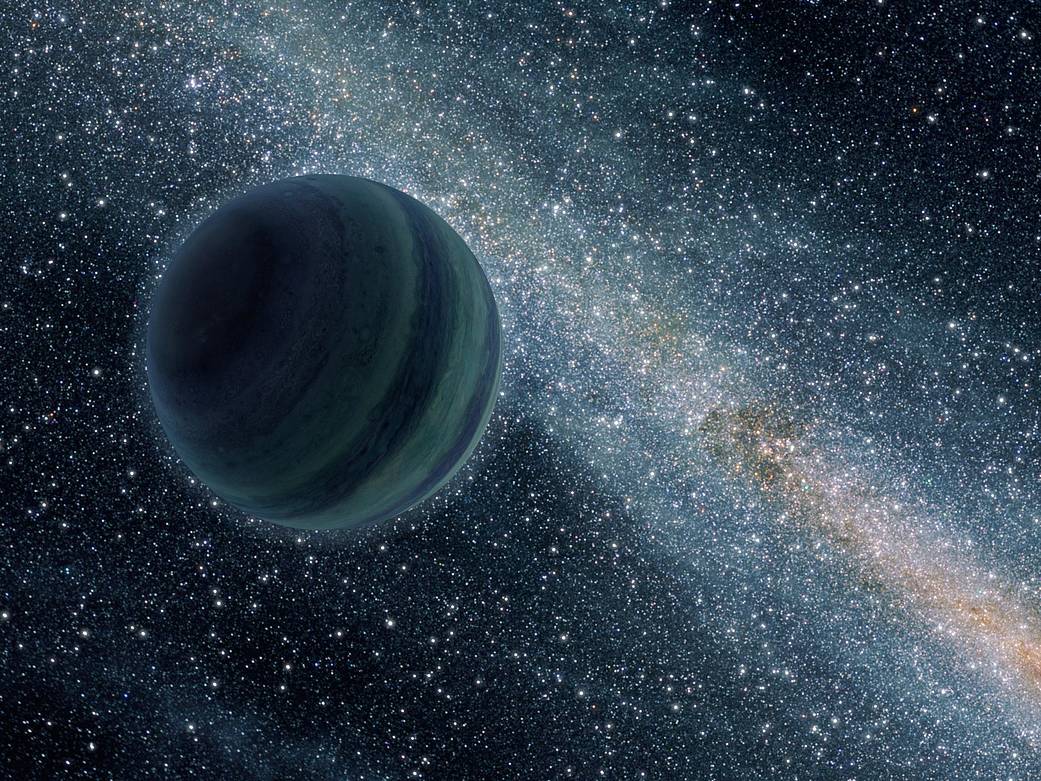
Using their simulation data, the Leiden team analyzed MOA-2011-BLG-262L. They determined that if it is indeed a rogue system, it most likely originated in a stable orbit approximately 5.2 astronomical units (AU) from its original star. This distance is remarkably significant, as 5.2 AU is the exact distance at which Jupiter orbits our Sun. This alignment adds a layer of empirical weight to the theory that "Jupiter-like" ejections are a common occurrence in the Milky Way.
Astrobiological Potential in the Interstellar Dark
Perhaps the most provocative implication of this research concerns the search for extraterrestrial life. Traditionally, the "habitable zone" of a solar system is defined by its proximity to a star, where temperatures allow for liquid surface water. Rogue planets, drifting far from any stellar heat source, were long considered sterile, frozen graveyards.
However, the survival of moons changes this calculus entirely. Many moons, such as Jupiter’s Europa or Saturn’s Enceladus, are "ocean worlds" not because of sunlight, but because of tidal heating. As these moons orbit their massive parent planets, the planet’s gravity exerts a constant "push and pull" on the moon’s interior. This friction generates immense internal heat, which can maintain vast liquid water oceans beneath miles of protective ice.
The Leiden study confirms that this tidal mechanism would continue to function even if the planet and its moons were ejected into the freezing void of interstellar space. As long as the moon remains in orbit, the tidal flexing persists. Consequently, a rogue Jupiter could carry a warm, wet Europa-like moon through the galaxy for billions of years. In the absolute darkness between stars, protected from the harmful radiation of a sun by a thick ice shell and powered by gravitational friction, life could theoretically persist—or even evolve—entirely independent of a star.
Future Observational Frontiers
As the scientific community digests these findings, attention is turning toward the next generation of space telescopes. The detection of rogue planets has historically been difficult due to their lack of light, but the upcoming Nancy Grace Roman Space Telescope and the European Space Agency’s Euclid mission are expected to revolutionize the field. These missions will utilize high-sensitivity infrared sensors and wide-field microlensing surveys to identify thousands of rogue planets.
With the statistical groundwork laid by Badoux and Portegies Zwart, astronomers will be better equipped to interpret the signals from these missions. The discovery of exomoons orbiting rogue planets would not only validate the Leiden simulations but also expand our understanding of the galaxy’s "invisible" population.
The realization that planetary systems can remain partially intact despite the violence of ejection shifts the narrative of galactic evolution. It suggests that the interstellar medium is not merely a graveyard for failed worlds, but a vast, dark neighborhood populated by complex, multi-body systems, some of which may harbor the necessary conditions for life. The work of the Leiden Observatory ensures that when we look into the dark spaces between the stars, we no longer see solitary wanderers, but potentially vibrant, moon-bearing worlds carrying the legacies of their lost solar systems.