George Chandra Eka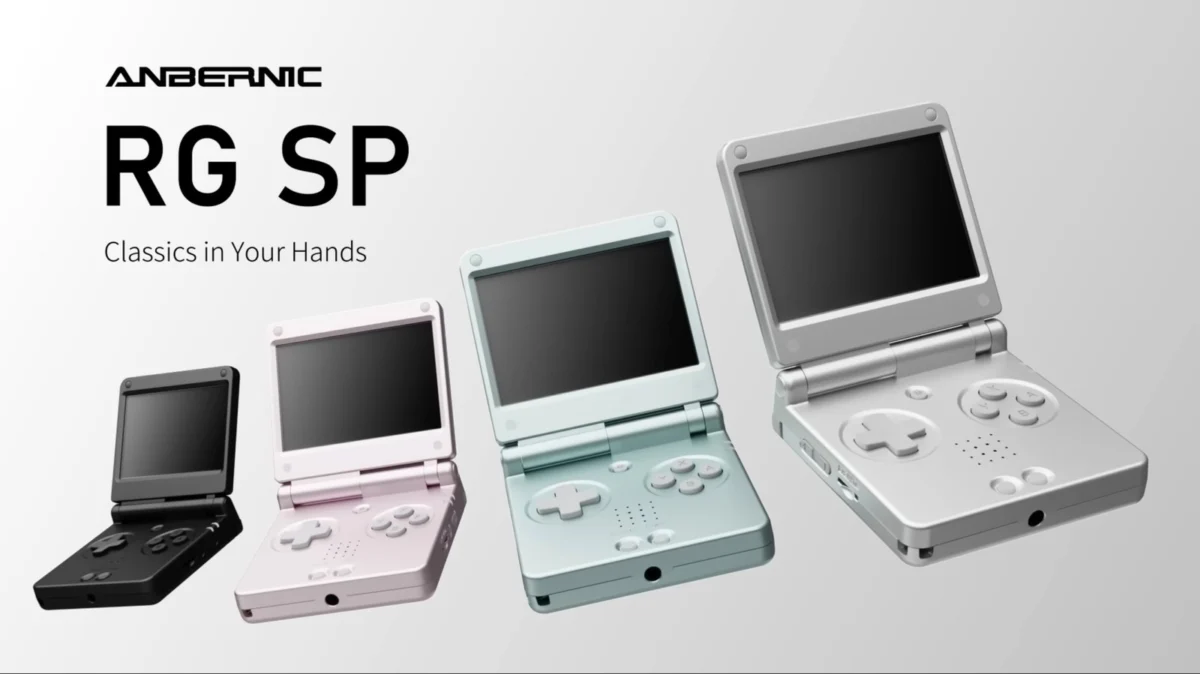
This modern-day Game Boy Advance SP remake is poised to enter the burgeoning retro handheld market with a starting retail price of $65, a strategic move by Anbernic to offer an accessible and nostalgic gaming experience. The company, a prominent player in the portable emulation device sector, has announced early bird pricing incentives for its new clamshell device, the RG SP, making it an even more compelling option for enthusiasts and casual gamers alike. Orders are set to open on August 5 at 6 AM ET/3 AM PT, marking a significant moment for a device that aims to capture the essence of one of Nintendo’s most beloved handhelds while integrating contemporary hardware capabilities.
The Genesis of a Modern Classic: Anbernic’s Iterative Design Philosophy
Anbernic’s journey to the RG SP is a testament to its iterative design philosophy, demonstrating a continuous effort to refine and perfect its offerings based on community feedback and technological advancements. The RG SP represents the third significant attempt by Anbernic to recreate the iconic clamshell form factor of the Game Boy Advance SP. This lineage began with the RG 35XXSP and the RG 34XXSP, each serving as foundational steps in understanding the optimal balance between nostalgic aesthetics and modern performance requirements.
The RG 35XXSP, while embracing the clamshell design, introduced Anbernic’s vision for a compact, highly portable emulation device. It laid the groundwork for the form factor but likely informed subsequent decisions regarding screen size, button layout, and internal components. Following this, the RG 34XXSP emerged, notable for its inclusion of analog sticks—a feature often requested in modern handhelds for broader game compatibility, particularly for titles from platforms like the Nintendo 64 or PlayStation Portable. However, Anbernic’s development team, in a deliberate design choice for the RG SP, decided to forgo these analog sticks. This decision was likely driven by a desire to more authentically mirror the original GBA SP’s interface, which relied solely on a D-pad and face buttons, and to optimize the device for the vast library of games that do not require analog input. This move underscores Anbernic’s commitment to delivering a device that prioritizes the core Game Boy Advance experience, where precision D-pad input is paramount.
The development timeline for the RG SP has been characterized by strategic reveals and measured disclosures. Anbernic initially teased the device a few weeks prior to the official pricing and release date announcement, generating considerable anticipation within the retro gaming community. These early glimpses showcased the device’s familiar clamshell design and hinted at its internal advancements, but crucial details regarding cost and availability remained under wraps, fueling speculation and discussion among prospective buyers. The subsequent announcement of August 5 as the pre-order date, coupled with transparent pricing tiers, has now solidified the RG SP’s position as a tangible and highly anticipated product.
Unpacking the Specifications: Performance Meets Portability
The Anbernic RG SP is engineered to deliver a robust emulation experience within a compact and familiar form factor. At its core, the device features a 3.4-inch display, a crucial element in its design strategy. This screen size was specifically chosen to better match the aspect ratio of the original Game Boy Advance SP, ensuring that classic GBA titles are displayed authentically without significant stretching or cropping, thus preserving the visual integrity of these beloved games. While specific resolution details were not provided in the initial announcement, Anbernic’s prior devices often feature resolutions optimized for clarity on smaller screens, typically around 640×480 or higher, which provides a crisp image for retro titles.
Powering the RG SP is the H700 chip, a System-on-a-Chip (SoC) that Anbernic has utilized in several of its recent devices. The H700 is a quad-core ARM Cortex-A53 processor, often paired with a Mali-G31 MP2 GPU. This combination provides a significant boost in processing power compared to the hardware of the early 2000s, enabling the RG SP to handle a wide array of retro console emulation. While the chip is not designed for demanding modern titles, it is more than capable of emulating systems up to and including the PlayStation Portable (PSP). This means users can expect smooth gameplay for titles from generations such as the Nintendo Entertainment System (NES), Super Nintendo Entertainment System (SNES), Sega Genesis, Game Boy, Game Boy Color, Game Boy Advance, PlayStation 1, Nintendo 64, and even some lighter Dreamcast and PSP games. The ability to emulate PSP titles is particularly noteworthy, as it requires a respectable amount of processing power and often indicates a device’s broader capability to handle 3D graphics from the early 2000s. Performance may vary for the most demanding PSP titles, but the H700 generally provides a satisfactory experience for the majority of the PSP library.
Battery life is a critical consideration for any portable gaming device, and the RG SP addresses this with a substantial 3,300mAh battery. Anbernic estimates this capacity will provide approximately six hours of gameplay on a single charge. To put this in context, the original Game Boy Advance SP (AGS-001) offered around 10 hours of gameplay with the frontlight on and 18 hours with the light off, while the improved AGS-101 model provided about 7 hours with the backlight on. Modern emulation, particularly for more demanding systems like PSP, generally consumes more power. Therefore, six hours is a respectable figure, offering a solid duration for extended gaming sessions during commutes, travel, or leisure time, aligning well with contemporary expectations for retro handhelds.
The RG SP is offered in several configurations to cater to different user needs and budgets. The base model, priced at $65, likely comes without an included microSD card or with a very small starter card. For users requiring more storage for their game libraries, Anbernic offers an upgrade path: a model with an extra 64GB of memory priced at $80, and a 128GB option for $95. These storage options are crucial as emulation devices rely on external storage for game ROMs and system files. The company is also incentivizing early adoption with a $7 discount for anyone purchasing the RG SP within the first three days of its availability, bringing the effective starting price down to $58 for those who act quickly. This aggressive pricing strategy is designed to capture a significant share of the budget-conscious segment of the retro handheld market.
The Enduring Legacy of the Game Boy Advance SP
To fully appreciate the significance of the Anbernic RG SP, it is essential to understand the device it seeks to emulate and honor: the Nintendo Game Boy Advance SP. Launched in 2003, the Game Boy Advance SP (SP standing for "Special") was not merely an incremental update but a revolutionary redesign of the original Game Boy Advance. Nintendo’s objective was clear: to address key limitations of its predecessor and to re-energize the handheld market.
The original Game Boy Advance, released in 2001, was a powerful 32-bit handheld, but it suffered from a non-backlit screen, making it difficult to play in poorly lit environments. The GBA SP rectified this critical flaw by introducing a built-in screen light, initially a frontlight (AGS-001 model) and later a significantly improved backlight (AGS-101 model). This innovation transformed the portable gaming experience, allowing players to enjoy their games comfortably anywhere, anytime.
Beyond the illuminated screen, the GBA SP’s clamshell design was a stroke of genius. This foldable form factor offered superior portability, protecting the screen from scratches and dust when not in use. It also introduced a rechargeable lithium-ion battery, replacing the AA batteries of previous Game Boy models, a major convenience for users. The GBA SP was an instant commercial success, selling millions of units worldwide and contributing significantly to the Game Boy family’s total sales, which exceeded 200 million units across all iterations. Its robust game library, featuring classics like The Legend of Zelda: The Minish Cap, Pokémon Ruby and Sapphire, and Metroid Fusion, cemented its status as one of the most beloved handheld consoles of all time. The GBA SP’s impact on portable gaming design, particularly its clamshell form factor, continues to influence device aesthetics even today.
The Booming Retro Handheld Market and Anbernic’s Strategic Positioning
The retro handheld market has experienced an exponential boom in recent years, fueled by a potent blend of nostalgia, advancements in chip technology, and the accessibility of open-source emulation software. Devices like the Anbernic RG SP tap directly into this market, catering to a diverse audience ranging from veteran gamers seeking to relive their childhood memories to younger generations discovering classic titles for the first time. The affordability and versatility of these devices make them highly attractive alternatives to collecting original hardware and cartridges, which can be prohibitively expensive and difficult to maintain.
Anbernic has established itself as a frontrunner in this competitive landscape, known for producing a wide range of emulation handhelds that often strike a balance between price, performance, and build quality. The company operates alongside other notable brands such as Retroid Pocket, Miyoo, and even higher-end competitors like AYANEO or Steam Deck (though the latter caters to a different performance tier). Anbernic’s strategy with the RG SP is clearly defined: to offer a highly specific, nostalgia-driven product at an exceptionally competitive price point. While Retroid Pocket devices, for instance, often offer slightly more powerful chips and Android operating systems for broader app compatibility, Anbernic’s RG SP focuses on a streamlined, Linux-based emulation experience within a beloved form factor. Miyoo devices, like the Miyoo Mini, compete at a similar budget level but typically feature a candy bar design rather than a clamshell.
The $65 starting price (or $58 with the early bird discount) positions the RG SP as one of the most affordable clamshell emulation devices on the market capable of handling PSP titles. This aggressive pricing is a deliberate move to lower the barrier to entry for retro gaming enthusiasts, potentially attracting a new segment of consumers who might be hesitant to invest in more expensive options. By offering a direct callback to the GBA SP, Anbernic is not just selling an emulation device; it is selling a piece of gaming history re-imagined for the modern era.
Broader Impact and Implications
The release of the Anbernic RG SP carries several implications for the retro handheld market and for consumers. Firstly, it intensifies competition, particularly in the budget and mid-range segments. As more manufacturers vie for consumer attention, innovation in design, performance, and pricing becomes paramount. This competition ultimately benefits consumers, who gain access to a wider array of choices tailored to specific preferences and budgets.
Secondly, the RG SP reinforces the trend of form factor nostalgia. While many retro handhelds opt for a generic candy bar shape, devices that mimic iconic designs like the GBA SP or Game Boy DMG resonate deeply with a significant portion of the target audience. This design choice is not merely aesthetic; the clamshell form factor offers practical benefits such as screen protection and a more compact profile when closed, making it ideal for portability.
Thirdly, the device’s ability to emulate up to PSP titles at its price point expands the scope of affordable retro gaming. Players no longer need to spend hundreds of dollars to enjoy a vast library of games from multiple generations. This accessibility fosters a more inclusive retro gaming community, allowing more individuals to explore the rich history of video games.
From Anbernic’s perspective, the RG SP is a strategic play to solidify its market position as a brand that understands and responds to the desires of the retro gaming community. While the company has not issued a formal statement regarding the RG SP, its product development and marketing consistently suggest a commitment to delivering nostalgic experiences with modern performance at an accessible price point. The inferred message from Anbernic’s actions is clear: "We aim to honor classic designs while pushing the boundaries of affordable emulation, making the joy of retro gaming accessible to everyone."
Industry analysts observe that the retro handheld market continues to thrive, driven by a blend of nostalgia and technological advancements that allow powerful emulation chips to be produced at increasingly lower costs. Devices like the RG SP demonstrate a clear strategy to capture a significant segment of this growing market by offering compelling value. The initial market reaction, as evidenced by discussions on online forums and social media, indicates considerable anticipation. Many prospective buyers are drawn to the device’s design and its promise of a high-quality GBA SP-like experience. Strong initial sales are anticipated, particularly with the early bird discount creating a sense of urgency.
In conclusion, the Anbernic RG SP stands as a compelling testament to the enduring appeal of classic gaming hardware blended with contemporary technological prowess. By meticulously crafting a device that pays homage to the beloved Game Boy Advance SP while offering modern emulation capabilities and an attractive price point, Anbernic is set to make a significant impact on the retro handheld market. Its release on August 5 will not only provide gamers with a new avenue to explore vast libraries of classic titles but also further invigorate the competitive landscape of portable emulation, ensuring that the spirit of retro gaming continues to thrive for years to come.