Garick Elordi
In a strategic move aimed at stabilizing and revitalizing its flagship franchise, Ubisoft has announced the return of veteran developer Eric Baptizat as the new Game Director for the Assassin’s Creed brand. Baptizat, a 16-year veteran of the French publishing giant, rejoined the company this month after a three-year tenure at Electronic Arts’ Motive Studio. His return marks a pivotal moment for the Assassin’s Creed series, which currently finds itself at a crossroads of corporate restructuring and ambitious new project developments.
The announcement was formalized via a statement from Jean Guesdon, Ubisoft’s Head of Content for the Assassin’s Creed franchise. Writing on LinkedIn, Guesdon emphasized Baptizat’s deep-rooted history with the series, noting that his "passion for gameplay craft" and "deep connection to this franchise" made him the ideal candidate to lead future endeavors. Guesdon expressed high confidence in the appointment, citing Baptizat’s previous leadership on some of the series’ most commercially and critically successful installments, including Assassin’s Creed IV: Black Flag, Assassin’s Creed Origins, and Assassin’s Creed Valhalla.
A Legacy of Franchise Evolution
Eric Baptizat’s history with Ubisoft is inextricably linked with the evolution of the Assassin’s Creed IP. Joining the company in the mid-2000s, Baptizat rose through the ranks during the franchise’s formative years. His most notable early contribution was as a lead designer on Assassin’s Creed IV: Black Flag (2013). The title was a departure for the series, introducing seamless naval exploration and combat, features that are still regarded as high-water marks for the open-world genre. Black Flag was a massive commercial success, shipping over 15 million units within its first year and proving that the franchise could survive and thrive by deviating from its traditional urban stealth roots.
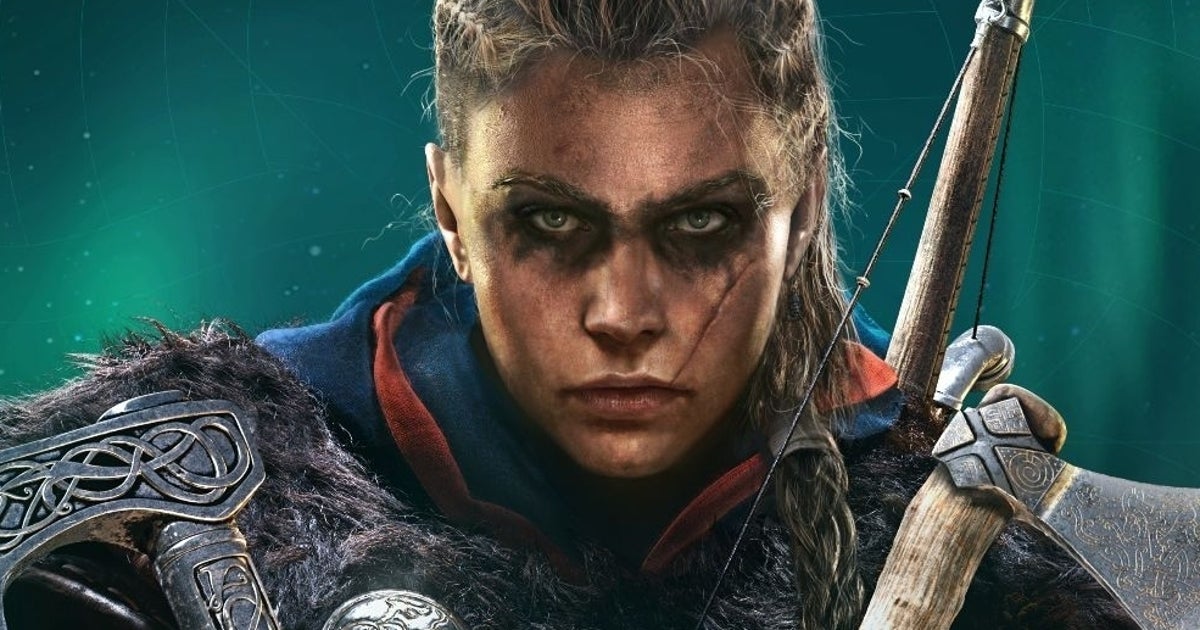
Following the success of Black Flag, Baptizat played a critical role in the franchise’s "soft reboot" with Assassin’s Creed Origins (2017). This title transitioned the series into the Action-RPG (ARPG) space, introducing hit-box-based combat, a loot system, and a massive, interconnected world map of Ancient Egypt. This shift was essential in preventing franchise fatigue following the lukewarm reception of Assassin’s Creed Unity and Syndicate.
Baptizat’s first stint at Ubisoft culminated with his role as Game Director for Assassin’s Creed Valhalla (2020). Valhalla represented the commercial apex of the series, becoming the first title in the franchise to surpass $1 billion in revenue. Under Baptizat’s direction, the game integrated a settlement-building mechanic and a "saga-based" narrative structure that allowed players to explore Viking-age England through distinct, localized story arcs.
The EA Motive Interlude and Technical Growth
In 2021, Baptizat departed Ubisoft to join EA Motive in Montreal. His departure was viewed at the time as a significant loss for Ubisoft, occurring during a period of internal upheaval and high-level turnover at the company. At Motive, Baptizat took the helm as the Director for the Dead Space remake, a project tasked with modernizing a beloved survival-horror classic.
The Dead Space remake, released in early 2023, was a critical triumph. It maintained a Metacritic score in the high 80s and was praised for its "Intensity Director" system—a dynamic AI that adjusted environmental atmosphere and enemy spawns to maintain player tension. Industry analysts suggest that Baptizat’s experience at Motive, particularly in managing high-fidelity remakes and working within the Frostbite engine, has likely expanded his technical repertoire, making him an even more versatile leader upon his return to Ubisoft. Following Dead Space, Baptizat briefly served as a game director on the upcoming Battlefield project (referred to internally as Battlefield 6) before the opportunity to return to his "home" franchise arose.

Navigating a Transformed Ubisoft
The Ubisoft that Baptizat returns to in 2024 is significantly different from the one he left in 2021. The company has undergone a complex corporate metamorphosis, largely driven by a strategic partnership with the Chinese conglomerate Tencent. This partnership led to the creation of Vantage Studios, a subsidiary designed to lead development for Ubisoft’s "big three" franchises: Assassin’s Creed, Far Cry, and Tom Clancy’s Rainbow Six.
This restructuring followed a period of financial volatility for Ubisoft. Despite the success of titles like Valhalla, the company’s stock price has faced downward pressure due to several project cancellations and delays of high-profile titles such as Skull and Bones. The formation of Vantage Studios, backed by Tencent’s capital, is intended to provide a more stable environment for long-term triple-A development. Baptizat’s role as Game Director will likely involve navigating this new dual-studio structure, ensuring that the creative vision of the brand remains consistent across multiple global development teams.
Future Projects and the Assassin’s Creed Roadmap
Baptizat returns at a time when the Assassin’s Creed pipeline is more crowded than ever. While Assassin’s Creed Mirage (2023) focused on a return to the series’ "stealth-first" roots, the future of the brand is tied to two major pillars: Assassin’s Creed Codename Red (set in feudal Japan) and Assassin’s Creed Codename Hexe.
Baptizat is expected to have a significant hand in the development of Hexe. Little is known about the project other than its setting—the Holy Roman Empire during the witch trials of the 16th century—and reports that it will be a "different" kind of Assassin’s Creed experience, potentially leaning more into horror or supernatural elements. Leaks from industry insiders suggest that Hexe is at least a year away from release, providing Baptizat with a window to refine its core gameplay loops and narrative direction.

Furthermore, Ubisoft is moving toward the "Assassin’s Creed Infinity" platform, a live-service hub intended to connect all future entries in the series. Managing this transition will be one of the most significant challenges of Baptizat’s new tenure. The goal of Infinity is to create a persistent world for players, allowing Ubisoft to deliver smaller, experimental experiences alongside traditional large-scale RPGs.
Market Reaction and Industry Implications
The news of Baptizat’s return has been met with cautious optimism by market analysts. Ubisoft’s stock has shown signs of stabilization following the successful launch of Assassin’s Creed: Black Flag Resynced. This remake reportedly exceeded its annual sales targets in just 14 days, highlighting a massive appetite for the classic Assassin’s Creed experience.
"Bringing back the director responsible for the franchise’s most profitable era is a clear signal to investors that Ubisoft is prioritizing proven leadership," said Marcus Thorne, a senior gaming industry analyst. "Baptizat understands the DNA of Assassin’s Creed, but his recent success at EA shows he isn’t afraid to innovate within established frameworks. This is exactly what the brand needs as it moves into the ‘Infinity’ era."
Chronology of Key Events
- 2005-2012: Eric Baptizat joins Ubisoft and works on various titles, establishing himself within the Montreal studio.
- 2013: Assassin’s Creed IV: Black Flag launches to critical acclaim, with Baptizat as a lead designer.
- 2017: Assassin’s Creed Origins revitalizes the franchise as an RPG; Baptizat serves as a key gameplay director.
- 2020: Assassin’s Creed Valhalla is released under Baptizat’s direction, eventually grossing over $1 billion.
- 2021: Baptizat departs Ubisoft for EA Motive.
- January 2023: The Dead Space remake launches, proving Baptizat’s ability to handle high-stakes remakes.
- Late 2023: Ubisoft and Tencent announce the formation of Vantage Studios.
- 2024: Assassin’s Creed: Black Flag Resynced breaks sales records.
- Present: Eric Baptizat officially rejoins Ubisoft as Game Director for the Assassin’s Creed brand.
Conclusion
The return of Eric Baptizat is more than a simple re-hiring; it is a homecoming for a director who helped define the modern era of open-world gaming. As Ubisoft navigates the complexities of its new partnership with Tencent and the high expectations of a global fanbase, Baptizat’s expertise offers a sense of continuity. Whether he is tasked with overseeing the "Infinity" platform or guiding the mysterious Hexe to completion, his track record suggests that the future of the Hidden Ones is in experienced hands. The industry now looks toward the next Ubisoft Forward event, where Baptizat’s influence on the upcoming slate of games is expected to be formally showcased.