admin
admin
Alphabet Inc. has announced a significant restructuring of its artificial intelligence leadership, marking one of the most substantial organizational shifts since the merger of its Google Brain and DeepMind divisions last year. In a series of high-level transitions, Demis Hassabis, the co-founder and long-standing CEO of DeepMind, will transition from his current executive role to become the Chair of DeepMind and the Chief Scientist of Alphabet. Simultaneously, Jeff Dean, a 27-year Google veteran and the primary architect of the company’s foundational AI strategy, has announced his departure from the firm to launch a new independent venture focused on Artificial General Intelligence (AGI).
This leadership upheaval arrives at a critical juncture for the technology giant. Despite its historical role in pioneering the Transformer architecture that underpins modern large language models (LLMs), Google has faced persistent criticism regarding its pace of innovation and the execution of its Gemini AI suite. The restructuring appears to be a direct response to internal challenges, including reported delays in the development of Gemini 3.5 Pro and a mixed reception to the recently released Gemini 3.6 Flash.
The Departure of Jeff Dean and the Birth of Discovery Loop
Jeff Dean’s exit represents the end of an era for Google’s engineering and research culture. Having joined the company in 1999, Dean was instrumental in building the systems that allowed Google to scale its search engine and advertising platforms to global dominance. He co-designed many of Google’s core technologies, including MapReduce, Bigtable, and the TensorFlow machine learning framework.
Dean is departing alongside Sanjay Ghemawat, another legendary Google engineer with whom he has collaborated for decades. The duo plans to establish Discovery Loop, a Public Benefit Corporation (PBC) dedicated to the advancement of AGI. Unlike traditional corporate structures, a PBC allows founders to prioritize social benefits and long-term research goals alongside fiduciary duties to shareholders—a structure similar to those adopted by competitors such as Anthropic.
In an effort to maintain a relationship with its former stars, Alphabet CEO Sundar Pichai confirmed that Google will serve as a founding member and a strategic cloud partner for Discovery Loop. This arrangement mirrors a growing industry trend where legacy tech firms provide infrastructure and capital to specialized startups led by their former top talent, ensuring they retain a stake in the next wave of innovation even as internal bureaucracy hampers rapid development.
Leadership Transition at DeepMind
The shift for Demis Hassabis represents a strategic pivot for Alphabet’s primary AI research arm. Since Google acquired DeepMind in 2014, Hassabis has been the face of the division’s quest for AGI, overseeing historic milestones such as AlphaGo’s victory over world-class Go players and the protein-folding breakthroughs of AlphaFold.
As the new Chief Scientist of Alphabet and Chair of DeepMind, Hassabis is expected to move away from the day-to-day operational management of the division. This transition is viewed by industry analysts as an attempt to elevate Hassabis to a role where he can oversee the integration of AI across Alphabet’s entire product ecosystem—including Search, Cloud, and YouTube—while leaving the logistical complexities of model deployment to a new generation of executives.
The leadership change comes amid reports of internal friction within the DeepMind division, which was merged with Google Brain in April 2023 to form Google DeepMind. The merger was intended to streamline research and accelerate the development of the Gemini models, but reports suggest that cultural differences between the research-heavy DeepMind and the product-focused Brain teams have occasionally slowed progress.
The Gemini Development Cycle and Market Competition
The catalyst for these changes appears to be the inconsistent performance and delivery schedule of the Gemini model family. While Gemini 1.5 Pro was initially praised for its massive context window, subsequent iterations have struggled to maintain a clear lead over competitors like OpenAI’s GPT-4o and Anthropic’s Claude 3.5 Sonnet.
Internal reports indicate that Gemini 3.5 Pro has faced multiple delays after failing to meet specific performance benchmarks during internal testing. Furthermore, the launch of Gemini 3.6 Flash was met with tepid reviews from developers, who noted that while the model offered improvements in latency, it lacked the reasoning capabilities required for complex enterprise workflows.

To address these shortcomings, Google is reportedly in advanced negotiations with Mechanize, a San Francisco-based AI startup specializing in automated coding and software engineering. The deal, estimated to be worth approximately $1.5 billion, is expected to involve a "reverse acqui-hire" similar to Microsoft’s deal with Inflection AI. Google aims to integrate Mechanize’s technology and key personnel into the Gemini team to bolster the coding proficiency of its models—an area where Google has lagged behind GitHub Copilot and OpenAI’s specialized coding tools.
Financial and Strategic Paradoxes
The potential $1.5 billion investment in Mechanize has raised questions among financial analysts regarding Google’s broader AI expenditure strategy. Currently, Apple is reportedly paying Google approximately $1 billion annually to license Gemini models for integration into Apple Intelligence and the Apple Foundation Models (AFM) ecosystem.
Critics point out a perceived circularity in this financing: Google receives licensing revenue from Apple, only to turn around and spend larger sums to acquire external talent and technology to fix the very models it is licensing. This dynamic highlights the immense pressure Google is under to maintain its status as a "frontier" AI provider. The reliance on external startups like Mechanize suggests that despite its massive R&D budget, Google is struggling to foster the specialized breakthroughs necessary to compete in the rapidly evolving LLM market.
Timeline of Key Events in Google’s AI Evolution
The current upheaval is the culmination of a multi-year struggle to regain the initiative in generative AI:
- June 2017: Google researchers publish "Attention Is All You Need," introducing the Transformer architecture.
- November 2022: OpenAI releases ChatGPT, catching Google off-guard and leading to a "Code Red" internal response.
- April 2023: Google Brain and DeepMind are merged into Google DeepMind to consolidate resources.
- December 2023: Gemini 1.0 is announced, marking Google’s official entry into the frontier model race.
- May 2024: Google introduces Gemini 1.5 Pro with a 2-million-token context window.
- August 2024: Gemini 3.5 Pro is delayed; Gemini 3.6 Flash receives mixed reviews.
- Current: Jeff Dean departs, Demis Hassabis shifts roles, and negotiations with Mechanize begin.
Infrastructure and the TPU vs. GPU Debate
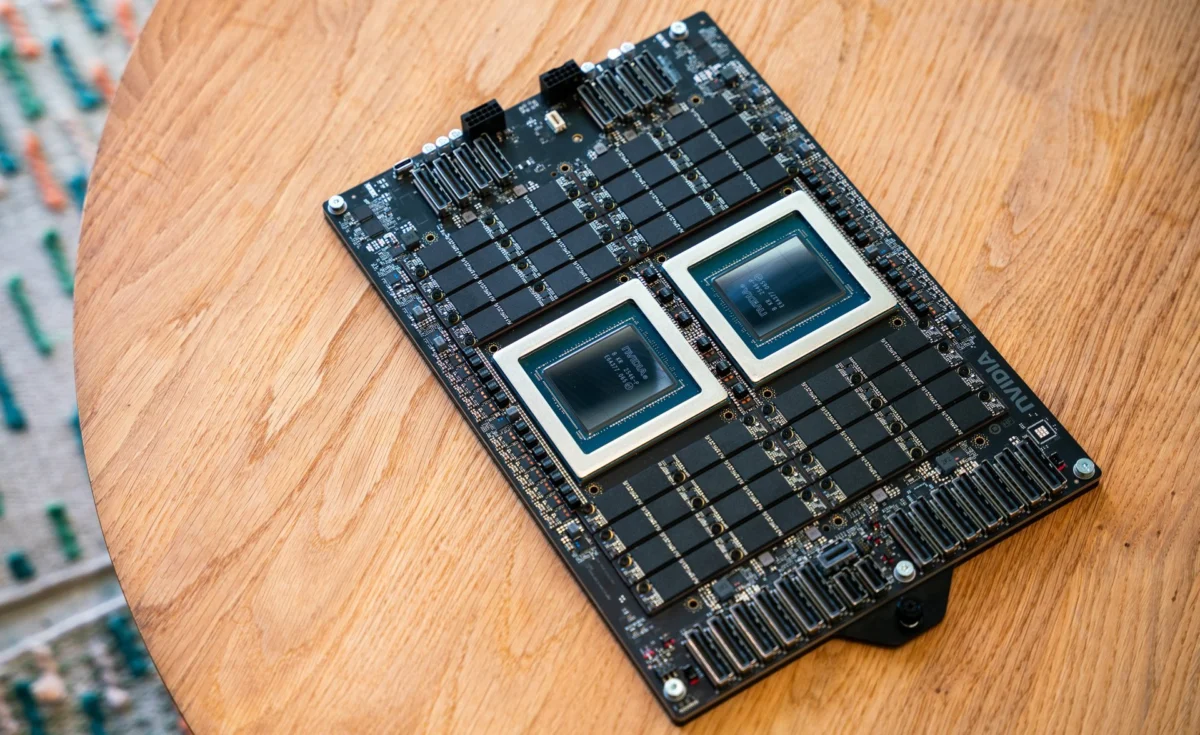
The departure of Jeff Dean and Sanjay Ghemawat also brings to light a growing debate regarding AI infrastructure. For years, Google has heavily promoted its Tensor Processing Units (TPUs) as a superior alternative to NVIDIA’s GPUs for training large-scale models. However, reports suggest that some researchers within the company have found the proprietary TPU ecosystem to be more restrictive compared to the industry-standard CUDA platform used by NVIDIA.
Comments from industry insiders, including tech analyst Tae Kim, suggest that the desire to work outside the constraints of Google’s internal infrastructure may have been a contributing factor to the departure of top engineering talent. Building Discovery Loop as an independent entity allows Dean and Ghemawat to design an infrastructure stack from the ground up, potentially utilizing a more diverse array of hardware solutions tailored specifically for the requirements of AGI research rather than consumer-facing applications.
Broader Impact and Industry Implications
The reorganization at Google reflects a broader trend in the technology sector where the "founding fathers" of the current AI wave are seeking more agile environments. As AI models become increasingly integrated into core business products, the tension between pure research and commercial viability has intensified.
For Alphabet, the challenge remains one of execution. The company possesses more data and computing power than almost any other entity on earth, yet it has struggled with the "innovator’s dilemma"—protecting its lucrative Search monopoly while transitioning to a new paradigm of AI-driven information retrieval.
The appointment of Hassabis as Alphabet’s Chief Scientist suggests that the company is moving toward a more unified AI vision, but the loss of Jeff Dean creates a significant void in technical leadership. Investors will be watching closely to see if the $1.5 billion infusion of Mechanize talent can provide the "spark" needed to make Gemini 4.0 a definitive market leader.
As the industry moves toward 2025, the competitive landscape is shifting. With Meta’s Llama models leading the open-source charge and OpenAI continuing to push the boundaries of reasoning with its "Strawberry" and GPT-5 projects, Google’s leadership overhaul is not merely a personnel change—it is a high-stakes gamble to ensure the company remains relevant in an age where AI proficiency is the ultimate currency.