Vera Intan Clara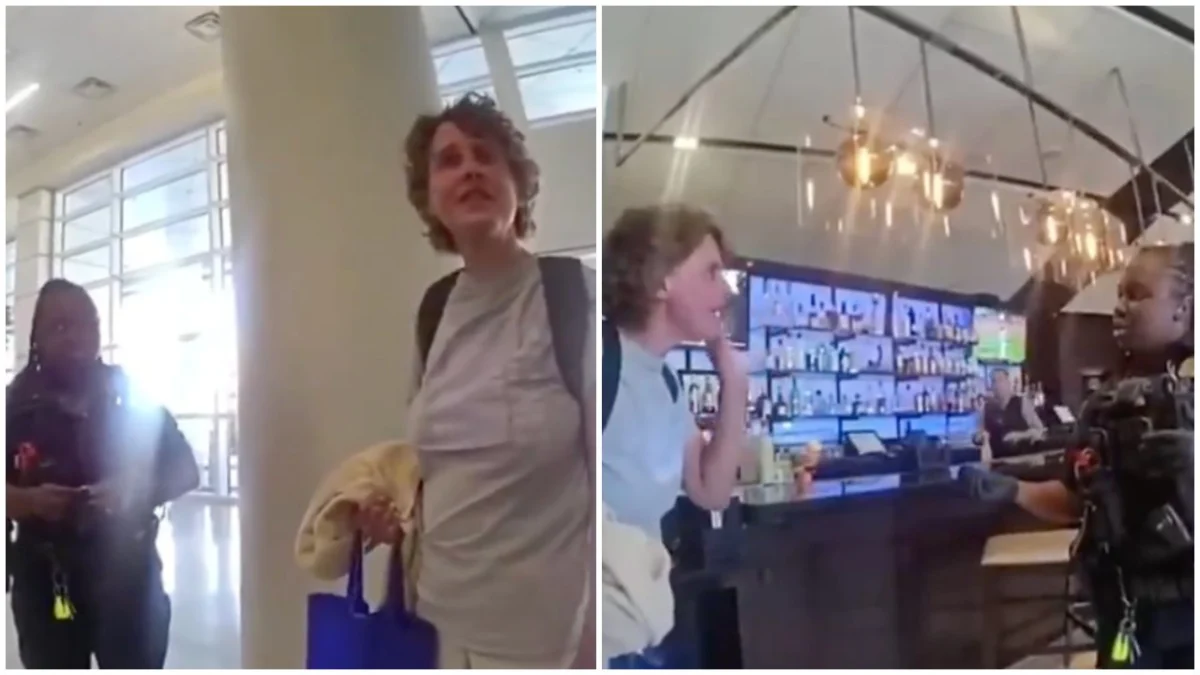
A recent incident at the Grand Hyatt within Dallas Fort Worth International Airport has captured significant online attention, culminating in the arrest of a woman accused of attempting to defraud the hotel by charging a $66 meal to a non-existent guest room. The event, which rapidly gained viral status across social media platforms, particularly X (formerly Twitter), sheds light on the challenges faced by hospitality establishments in high-traffic environments and the steadfast enforcement of laws against theft of service, regardless of the monetary value involved.
The Genesis of Suspicion: A Pattern of Presence
The sequence of events leading to the woman’s arrest began subtly, with observations made by the hotel manager at the Grand Hyatt. According to information disseminated through the viral clip, initially shared by X user @Serenitee_Sam, the manager had reportedly noticed the woman frequenting the hotel premises on several prior occasions. While her previous visits did not involve any alleged misconduct, her repeated presence seemingly piqued the manager’s interest. This established background context is crucial, as it suggests that the hotel staff were already attuned to her presence, a factor that likely contributed to the swift investigation once an alleged infraction occurred. The Grand Hyatt, strategically located within the sprawling DFW International Airport, is a hub for international travelers, business professionals, and transient guests, making it a place where a wide array of individuals pass through daily. This high volume of foot traffic often necessitates vigilant oversight from hotel management to ensure the security and integrity of their operations.
On the day of the incident, the woman reportedly altered her routine, choosing to sit down at one of the hotel’s dining establishments and order a meal. The total cost of her repast amounted to approximately $66, a sum that, while not exorbitant for an upscale airport hotel restaurant, became the focal point of the subsequent legal action. When presented with the bill, instead of providing a valid form of payment, she allegedly wrote "Room 314" on the check, instructing staff to charge the meal to that particular guest room. This action initiated the official investigation by hotel staff, who, armed with the manager’s prior observations, were poised to scrutinize the unusual request.
The Discovery of Deception and Police Involvement
The protocol for charging services to a guest room in most reputable hotels typically involves a series of verification steps. These often include presenting a room key, confirming the guest’s name, or even requiring a signature that matches the one on file for the registered guest. It is uncommon for a charge to be accepted based solely on a room number, especially from an individual not actively identified as a guest. The hotel manager, acting on their existing suspicions, promptly investigated the validity of the charge. Their inquiry quickly revealed that Room 314, the room number provided by the woman, was in fact unoccupied. This critical discovery transformed the situation from a potentially minor administrative query into a suspected case of theft of service.
Upon confirming the fraudulent nature of the charge, the hotel manager wasted no time in contacting local law enforcement. For hotels, theft of service, even for relatively small amounts, is a serious matter. It represents not only a direct financial loss but also a breach of trust and a potential security risk. Unaddressed, such incidents could encourage further illicit activities and compromise the integrity of the establishment. The police were informed of the woman’s description and the circumstances of the alleged dine-and-dash, initiating their involvement in the unfolding drama.
The Pursuit and Confrontation: A Shifting Narrative
Following the manager’s report, officers from the DFW Airport Police Department commenced a search for the woman within the airport complex. Given the contained environment of the airport, law enforcement typically has an advantage in locating individuals who remain within its perimeter. It wasn’t long before officers identified an individual matching the description provided by the hotel staff. The subsequent confrontation, much of which was captured on video and contributed to the incident’s virality, became a central piece of evidence, showcasing the woman’s evolving explanations and the officers’ persistent questioning.
When initially questioned about the unpaid bill, the woman maintained her original assertion, insisting that her father was staying at the Grand Hyatt and would cover the cost of her meal. She further elaborated, claiming that her father also possessed her passport, implying a reliance on him for identification and financial means. However, the officers, armed with the confirmed information from the hotel, reiterated that Room 314 was vacant and that no one was registered under the name she provided. They then directly asked if she could settle the bill herself. At this juncture, her story began to unravel. She stated she had no form of payment on her person, a common claim in dine-and-dash scenarios.
As the officers continued to press for a coherent explanation, her narrative took a sharp turn. Abandoning the "father" claim, she then asserted that a bartender named "David" would pay the bill if her father did not. This new claim necessitated further investigation by the officers. They proceeded to the hotel bar to verify this unexpected arrangement with the named bartender. According to the viral clip, the bartender, David, unequivocally denied any agreement to cover the woman’s meal, thereby dismantling her latest attempt at deflection.
The Legal Ramifications and Arrest
With all her explanations debunked, the woman and the officers engaged in further back-and-forth exchanges. The police, having exhausted all avenues of verification and finding no legitimate basis for her claims, issued a clear warning: failure to pay the bill would result in an arrest for theft of service. Her reaction, as depicted in the video, was one of apparent surprise and incredulity. "How could someone be arrested over a hamburger?" she questioned, seemingly unaware of the legal implications of her actions. The officers calmly explained that failing to pay for services rendered, regardless of the value, constitutes a criminal offense.
The legal framework in Texas, like many other states, classifies "theft of service" under its penal code. Specifically, the Texas Penal Code, Chapter 31, Section 31.04 defines theft of service as intentionally or knowingly securing performance of a service by deception, threat, or false token. The value of the service determines the severity of the charge. For amounts under $100, such as the $66 meal in this incident, it typically falls under a Class C misdemeanor, punishable by a fine of up to $500. While the monetary value may seem small, the principle of law enforcement remains critical. Businesses, particularly those in the hospitality sector, rely on customers paying for goods and services rendered. Allowing such incidents to go unpunished could set a dangerous precedent and contribute to broader losses.
Despite the officers’ clear explanation, the woman continued to express disbelief as they proceeded to place her in handcuffs. Her questions persisted as she was escorted through the hotel hallway: "In what country do you do that?" she reportedly asked, appearing genuinely perplexed by the legal process. This reaction underscores a potential lack of understanding regarding the laws governing commercial transactions and the consequences of attempting to evade payment.
Unusual Post-Arrest Behavior and Public Reactions
The incident took an even more peculiar turn as the officers and the woman approached the elevators. Her comments became increasingly disjointed and unusual. She reportedly expressed a desire to be placed "somewhere safer" rather than standing in the hallway, near the elevators. When an officer inquired about her meaning, her response was startling and enigmatic: "I am a god." This statement, captured on video, immediately sparked a flurry of public discussion online, with many commenters speculating about her mental state.
The public’s reaction to the viral clip was diverse, reflecting a range of perspectives. Some viewers found amusement in the situation, with one commenter jokingly suggesting, "The restaurant owner should also be arrested, $34 for a hamburger is criminal," highlighting the perceived high cost of airport dining. However, a significant portion of the online discourse focused on the woman’s behavior, particularly her later comments. Many expressed concern, with one user writing, "So….we don’t realize that this woman is not all the way there. ?" This sentiment suggests a broader societal awareness that some individuals involved in such incidents may be experiencing mental health challenges, prompting calls for empathy and appropriate intervention rather than mere punitive action.
Broader Implications and Industry Context
This incident, while seemingly minor in its financial scope, carries broader implications for the hospitality industry, law enforcement, and public perception. For hotels like the Grand Hyatt DFW, located within one of the world’s busiest airports, such events highlight the constant vigilance required to protect their assets and ensure the safety and integrity of their operations. Hotel security protocols, staff training in identifying suspicious behavior, and robust verification systems for guest charges are all critical components in mitigating such risks. The manager’s prior observations and quick action in verifying the room number prevented a direct financial loss and upheld the hotel’s operational standards.
For law enforcement, the incident demonstrates their commitment to upholding the rule of law, even for offenses that might appear trivial to some. The officers’ patient yet firm approach, attempting to de-escalate the situation and explain the legal consequences before resorting to arrest, is also notable. It underscores the challenges officers face when dealing with individuals who may be confused, uncooperative, or potentially experiencing mental distress. The DFW Airport Police Department, like other airport law enforcement agencies, operates in a unique environment, balancing national security concerns with day-to-day law enforcement duties, including addressing petty crimes that can disrupt the airport ecosystem.
The viral nature of the incident also speaks to the power of social media in disseminating information and shaping public discourse. In an age where nearly everyone carries a camera-equipped smartphone, incidents in public spaces can quickly become global phenomena. This rapid sharing often leads to varied interpretations, from humorous takes to serious discussions about underlying societal issues such as mental health, economic disparities, or the cost of living. While The Daily Dot was unable to independently verify all circumstances shown in the video or the claims made by those involved, relying on the viral clip and public reactions, the incident serves as a stark reminder of the immediate and far-reaching consequences of actions captured and shared online.
In conclusion, the alleged dine-and-dash at the Grand Hyatt DFW is more than just a story about an unpaid meal. It’s a snapshot of the complex interplay between hotel security, legal enforcement, individual behavior, and the pervasive influence of digital media. It reinforces the principle that businesses have a right to be compensated for their services and that attempts to defraud, regardless of the amount, can lead to serious legal repercussions, even if the perpetrator expresses surprise at the outcome.