Chandra Wibowo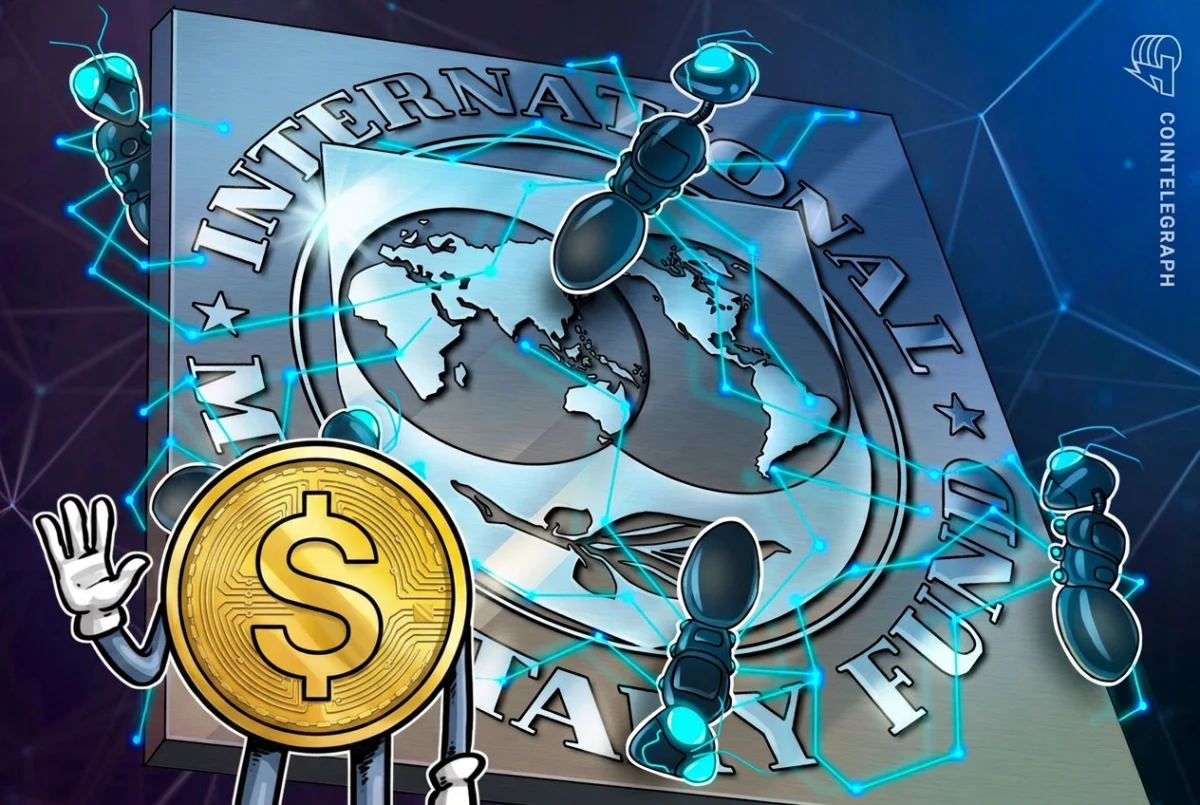
A senior official from the International Monetary Fund (IMF) has issued a stark warning: the very stablecoins designed to reduce emerging markets’ reliance on dollar-backed digital assets might, paradoxically, pave a smoother path for users to shift their holdings into U.S. dollars. This potential outcome, articulated by IMF First Deputy Managing Director Dan Katz, raises significant concerns for financial regulators aiming to maintain monetary autonomy and control over capital flows in their respective economies. The implications for emerging market currencies and the global financial architecture could be profound, potentially exacerbating existing vulnerabilities.
The Paradoxical Rise of Digital Dollars
During a speech delivered at the University of Cape Town on Friday, August 7, 2026, Dan Katz outlined a mechanism through which domestic-currency stablecoins could inadvertently bolster dollarization. He explained that once local-currency stablecoins and their dollar-backed counterparts are operational on the same blockchain infrastructure, the ease of conversion between them becomes a critical factor. "Users can convert between them through decentralized exchanges, liquidity pools or peer-to-peer swaps," Katz stated. This seamless interconversion, facilitated by the underlying technology of distributed ledgers, bypasses traditional financial intermediaries.
Historically, the movement of capital, particularly foreign exchange, has been channeled through established banking systems and currency dealerships. These channels, while sometimes subject to fees and regulatory oversight, provide authorities with vital tools for monitoring and managing capital flows. Katz’s assertion suggests that the rise of on-chain conversion mechanisms could effectively "move foreign exchange activity away from banks and currency dealers, reducing the friction that gives authorities tools to monitor and manage capital flows." This disintermediation presents a significant challenge for policymakers.
The IMF official elaborated on this point, stating, "In this way, local-currency stablecoins might even accelerate the adoption of FX stablecoins." This highlights a counterintuitive outcome where an innovation intended to foster local currency strength could, in practice, lead to greater adoption of foreign currency-denominated digital assets. The underlying concern is that the perceived stability and global acceptance of the U.S. dollar, even in digital form, will remain a primary draw for users in emerging markets, especially during periods of economic uncertainty or currency volatility.
South Africa: A Case Study in Emerging Demand
Katz specifically pointed to South Africa as a relevant example, noting the current landscape of stablecoin adoption in the country. "While it was too early to draw firm conclusions," he remarked, "many users may favor dollar tokens because of their liquidity, network effects and acceptance across platforms and borders." In South Africa, dollar-backed stablecoins have seen limited traction, and even less demand has been directed towards rand-linked tokens. This observation suggests that the fundamental appeal of the dollar, even in nascent digital forms, outweighs the current adoption challenges of local currency alternatives.
The limited traction of rand-linked tokens, compared to the already modest demand for dollar-backed ones, underscores a persistent preference for hard currencies in digital asset markets. This preference is often driven by factors such as the dollar’s status as a global reserve currency, its deep liquidity, and its widespread acceptance in international trade and finance. These attributes translate into digital assets as well, making dollar stablecoins more attractive to a broader range of users and use cases.
Varied Risks Across Jurisdictions
The IMF official emphasized that the risks associated with this phenomenon are not uniform and vary significantly by country. In highly dollarized economies, where the U.S. dollar already plays a substantial role in domestic transactions and savings, local-currency stablecoins might largely replace existing dollar holdings. This scenario could lead to a gradual but significant shift away from the U.S. dollar within these economies, potentially strengthening the local currency’s role.
However, in countries where access to dollars is restricted and economic frameworks are weak, the introduction of easily convertible local-currency stablecoins could have the opposite effect. Instead of facilitating a shift away from dollars, these stablecoins could increase foreign-currency demand. This might occur if users perceive local-currency stablecoins as a more accessible on-ramp to acquiring dollar-denominated assets, particularly if traditional avenues for dollar acquisition are cumbersome or subject to capital controls. This could lead to increased pressure on the local currency and a potential for capital flight.
The Call for Regulatory Action
In light of these potential risks, Katz issued a clear call to action for financial authorities. He urged them to bring "onramps, offramps and onchain exchange points within regulatory frameworks." This directive highlights the need for proactive and comprehensive regulatory approaches to the burgeoning digital asset landscape.
- Onramps and Offramps: These refer to the mechanisms through which users can convert fiat currency into digital assets and vice versa. Regulators need to ensure that these conversion points are compliant with anti-money laundering (AML) and know-your-customer (KYC) regulations, as well as other financial integrity standards.
- Onchain Exchange Points: This encompasses decentralized exchanges (DEXs), liquidity pools, and peer-to-peer swap platforms where digital assets are traded. Bringing these under regulatory purview is a significant challenge, given their decentralized nature. However, the IMF’s stance suggests a need to explore innovative regulatory models that can address these emerging technologies.
The IMF’s concern is rooted in the potential for these digital currencies to circumvent traditional financial oversight, making it harder to detect illicit financial activities and manage systemic risks. The ability to quickly and easily convert between a local currency stablecoin and a dollar stablecoin on a global blockchain network means that capital can move across borders with unprecedented speed and opacity, posing a challenge to national economic management.
Broader Context and Timeline of Stablecoin Development
The emergence of stablecoins as a significant force in the financial landscape has been a rapid development over the past decade. Initially conceived as a way to bring the stability of fiat currencies to the volatile world of cryptocurrencies, stablecoins have evolved into a diverse ecosystem. The most prominent examples, such as Tether (USDT) and USD Coin (USDC), are backed by U.S. dollars and have become crucial for trading on cryptocurrency exchanges and facilitating cross-border payments.
However, the desire to reduce dependence on the U.S. dollar, particularly in countries that have historically faced currency instability or the imposition of economic sanctions, has spurred the development of local-currency stablecoins. These initiatives aim to leverage blockchain technology to create digital representations of national currencies, thereby fostering digital innovation and potentially enhancing financial inclusion.
The timeline of these developments can be traced back to the early 2010s with the conceptualization of stablecoins. By the late 2010s and early 2020s, dollar-backed stablecoins had gained significant market capitalization and utility. The push for local-currency stablecoins, however, is a more recent phenomenon, gaining momentum as central banks and private entities explore Central Bank Digital Currencies (CBDCs) and other tokenized fiat initiatives. The IMF’s warning, delivered in mid-2026, comes at a critical juncture where these local-currency stablecoin projects are gaining traction, making the regulatory considerations particularly timely.
Reactions and Analysis from Related Parties
While direct quotes from specific central banks or financial institutions reacting to Katz’s speech are not available in the original text, the implications of his remarks would likely resonate deeply within these circles. Central bankers globally have been grappling with the dual challenges of embracing technological innovation and safeguarding monetary sovereignty.
- Central Banks: Many central banks have expressed concerns about the potential for cryptocurrencies and stablecoins to undermine monetary policy transmission and facilitate capital flight. The IMF’s warning provides further justification for their cautious approach and their efforts to develop robust regulatory frameworks for digital assets. They are likely to view Katz’s statement as a validation of their concerns and a call to action to accelerate regulatory efforts.
- Financial Regulators: Regulatory bodies responsible for financial stability and consumer protection are likely to take note of the IMF’s assessment. They will be under pressure to develop policies that address the risks of dollarization and ensure that the growth of stablecoins does not create new avenues for financial instability.
- Technology Providers and Stablecoin Issuers: Those involved in developing and issuing stablecoins, particularly local-currency variants, will need to consider the regulatory landscape outlined by the IMF. They may face increased scrutiny and pressure to demonstrate how their products can be integrated into existing regulatory frameworks without undermining financial stability.
- Emerging Market Governments: Governments in emerging markets, especially those seeking to promote financial innovation while maintaining economic stability, will need to carefully weigh the potential benefits and risks of domestic-currency stablecoins. The IMF’s warning suggests that a proactive and well-designed regulatory approach will be crucial to harness the positive aspects of this technology while mitigating the risks of dollarization.
Fact-Based Analysis of Implications
The implications of the IMF’s warning are multifaceted:
- Increased Dollarization Risk: The most immediate implication is the heightened risk of dollarization in emerging markets. If local-currency stablecoins become efficient gateways to dollar-denominated digital assets, this could lead to a faster and more widespread adoption of the U.S. dollar in economies that are already susceptible to currency depreciation. This could undermine the effectiveness of monetary policy, increase external debt burdens, and create systemic financial risks.
- Erosion of Monetary Sovereignty: The ability of individuals and businesses to easily convert local currency into digital dollars outside the purview of traditional financial institutions directly challenges a nation’s monetary sovereignty. Central banks lose a degree of control over their domestic money supply and the exchange rate, making it harder to manage inflation, stimulate economic growth, or respond to economic shocks.
- Challenges for Capital Controls: Many emerging markets utilize capital controls to manage foreign exchange reserves and prevent excessive capital flight. The seamless on-chain conversion mechanisms described by Katz could significantly weaken the effectiveness of these controls, as funds can be moved across borders with greater ease and less traceability.
- Impact on Financial Inclusion: While stablecoins are often touted as tools for financial inclusion, this warning suggests that their current architecture could inadvertently exacerbate existing inequalities by favoring access to global reserve currencies over local ones. This could create a digital divide where those with access to dollar stablecoins gain a competitive advantage over those who remain reliant on local currencies.
- Regulatory Arbitrage: The decentralized nature of many blockchain-based financial activities creates opportunities for regulatory arbitrage, where firms and individuals can operate in jurisdictions with less stringent regulations. The IMF’s call to bring "onchain exchange points within regulatory frameworks" highlights the urgent need for international cooperation and the development of harmonized regulatory approaches to address this challenge.
- Potential for Financial Instability: A rapid shift towards dollar-denominated digital assets, especially in response to domestic economic turmoil, could trigger currency runs and exacerbate financial instability in emerging markets. This could have ripple effects on global financial markets.
Conclusion
The IMF’s warning from Dan Katz serves as a critical reminder that technological innovation, while offering immense potential, also carries inherent risks. The development of domestic-currency stablecoins, intended to foster financial autonomy, could inadvertently lead to greater dollarization and a weakening of national monetary control. This underscores the imperative for proactive, comprehensive, and internationally coordinated regulatory strategies to ensure that the digital asset revolution serves the broader goals of financial stability, economic development, and monetary sovereignty for all nations. The coming years will likely see a significant regulatory push to address these complex challenges, as policymakers strive to balance innovation with the fundamental need for sound financial governance. The IMF’s stance highlights the ongoing debate and the critical need for robust oversight in the rapidly evolving digital finance landscape.