Garick Elordi
The independent development studio Aggro Crab has officially confirmed that its viral co-op climbing title, Peak, will receive its final major content expansion on August 11. Known for its physics-based mechanics and high-stakes verticality, the game has become a significant fixture in the indie gaming landscape over the last year. The announcement, delivered via a concise but evocative teaser trailer, signals the conclusion of the game’s primary development roadmap, marking a transition point for a studio that has seen unprecedented success with its recent portfolio.
The upcoming update, titled "The Final Ascent," is designed to provide a definitive conclusion to the climbing experience that has captivated millions of players. According to the developer’s brief statement, the team has spent several months "hard at work crafting Peak’s final Major Update," which aims to refine the core gameplay loop while introducing substantial new environments for players to navigate. The update is scheduled to deploy across all major platforms, with the Steam community expected to be the primary driver of the initial player surge.
New Biomes and Environmental Hazards
The centerpiece of the August 11 update is the introduction of two new variant biomes: Gloom and the Citadel. These environments are set to replace the existing Caldera and The Kiln in the game’s procedural or rotating map cycle. The addition of Gloom suggests a shift toward lower visibility and atmospheric tension, potentially introducing new light-based mechanics or fog hazards that will require players to rely more heavily on communication and spatial awareness.
The Citadel, conversely, appears to focus on more structured, architectural challenges. While previous biomes leaned into naturalistic hazards like crumbling rock and thermal vents, the Citadel is expected to offer more rigid, unforgiving geometry. This shift in environmental design reflects Aggro Crab’s commitment to keeping the climbing experience varied, forcing veteran players to adapt their established strategies to new physical constraints.
Furthermore, the developers have teased a "new secret" hidden within the peak. Given the community’s history of deep-diving into the game’s lore and hidden mechanics, this addition is expected to spark a renewed interest in exploration. Aggro Crab has traditionally rewarded curiosity with surreal narrative beats or unique cosmetic unlocks, and "The Final Ascent" appears to be no exception.
The Rise of Peak and the Aggro Crab Success Story
The success of Peak cannot be viewed in isolation from the broader trajectory of Aggro Crab and its publishing partner, Landfall. The game followed a string of high-performing releases for Landfall, including the viral sensation Content Warning and the long-standing hit Totally Accurate Battlegrounds. This lineage of "physics-first" titles has carved out a lucrative niche on Steam, where emergent gameplay and comedic failure states drive significant engagement on social media and streaming platforms.
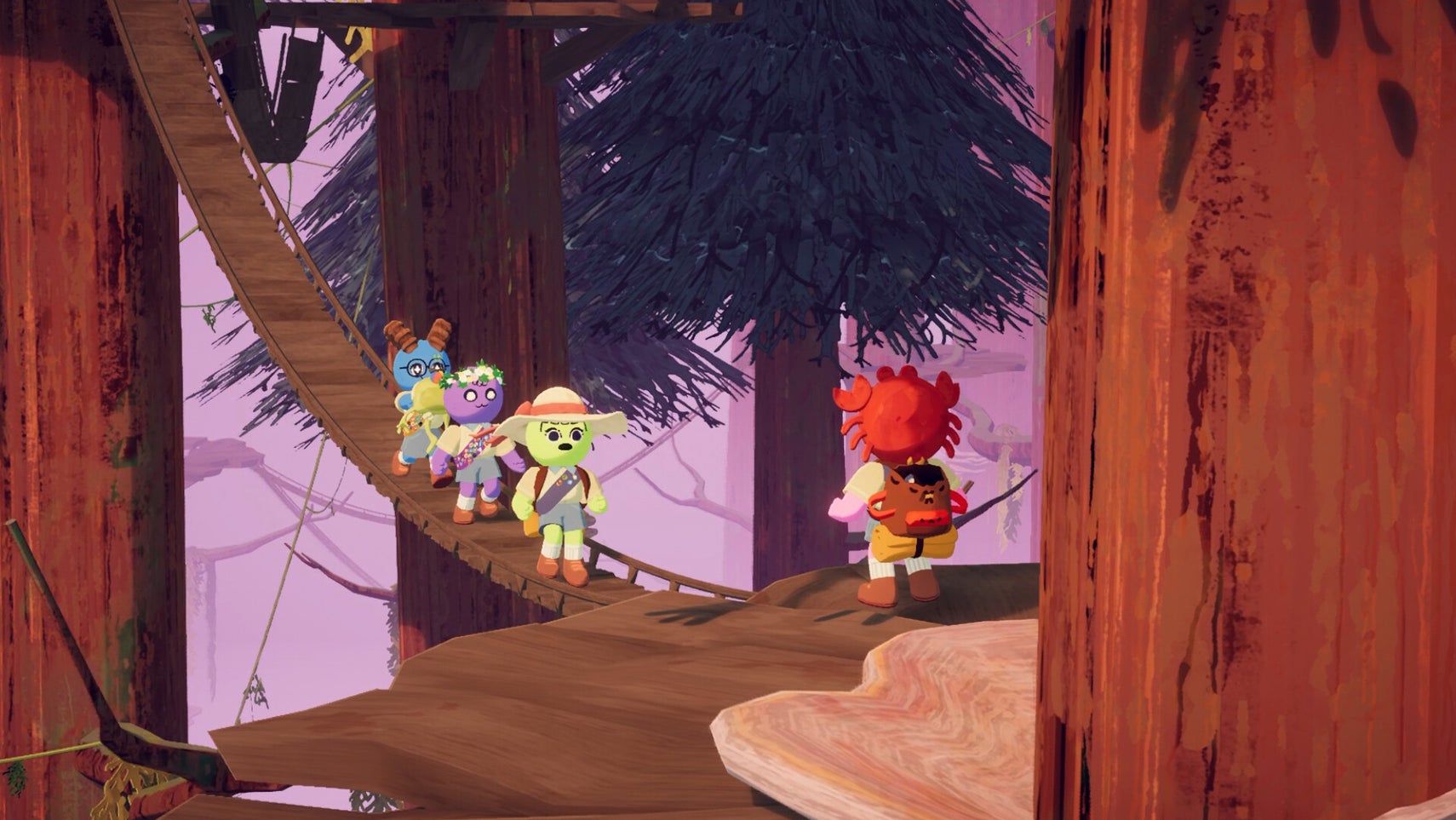
Peak was initially met with critical acclaim for its "pure" approach to game design. Eurogamer contributing editor Christian Donlan famously described the title as a "gaming obsession," praising its focus on mechanical precision and the simple, visceral joy of movement. The game’s ability to balance extreme frustration with the euphoria of progress has made it a staple of the "masocore" genre, alongside titles like Getting Over It with Bennett Foddy and Only Up.
Financially, the game has been a massive boon for the indie sector. Having sold millions of copies, Peak has demonstrated that high-fidelity graphics are often secondary to unique, well-polished mechanical hooks. This success has allowed Aggro Crab to expand its team and invest more heavily in its current projects, including the widely praised soulslike Another Crab’s Treasure.
Navigating the "Friendslop" and Clone Controversy
The journey of Peak has not been without its industry-wide debates. As the game surged in popularity, it inevitably attracted a wave of low-quality clones, particularly on platforms like Roblox and mobile app stores. These "ripoffs" often utilize microtransaction-heavy models to capitalize on the core mechanics popularized by Aggro Crab.
In a move that garnered significant attention within the industry, the developers at Aggro Crab took a radical stance against these clones. The studio publicly stated that they would rather fans "pirate its own game" than play a "microtransaction-riddled" imitation. This sentiment highlights a growing frustration among indie developers regarding the lack of intellectual property protection on major user-generated content platforms.
Additionally, Aggro Crab has been at the center of the "friendslop" discourse. The term, often used pejoratively by critics to describe low-effort co-op games designed specifically for streamers, was reclaimed by the studio. Aggro Crab leaders have argued that there is a valid and important place for games that prioritize "connection and specific experiences" over traditional "Game of the Year" aspirations. They contend that these titles are not only culturally relevant for a generation of social gamers but are also "very cost-effective for indie production," allowing smaller studios to remain sustainable in an increasingly volatile market.
Chronology of Development
To understand the significance of the August 11 update, one must look at the timeline of Peak’s evolution:
- Initial Launch: Peak debuted to immediate viral success, driven by high-profile streamers and its punishing difficulty curve.
- The First Million: Within weeks of release, the game crossed the one-million-copy milestone, prompting the developers to expand their post-launch support plans.
- The Biome Updates: Throughout the past year, the studio has introduced various environmental updates, including The Kiln and Caldera, which added vertical hazards and increased the complexity of the ascent.
- The Clone War: Mid-cycle, the studio faced its largest external challenge as hundreds of clones appeared on mobile platforms, leading to the studio’s vocal stance on piracy and platform ethics.
- The Final Ascent Announcement: In late July, the teaser for the final major update was released, setting the stage for the game’s official "completion" as a live-service project.
Technical and Design Analysis
From a technical perspective, Peak’s final update represents the pinnacle of the studio’s work with physics-based networking. Maintaining synchronized physics in a co-op environment is a notorious challenge for developers; however, Aggro Crab has managed to refine the latency and collision detection to a point where the game feels responsive even in high-ping scenarios.

The decision to cycle out Caldera and The Kiln in favor of Gloom and the Citadel suggests a desire to manage the game’s "file weight" and matchmaking pools. By rotating biomes rather than simply stacking them, the developers ensure that the player base remains concentrated on specific challenges, fostering a more cohesive community experience during the final months of peak activity.
The "Gloom" biome, in particular, is an interesting design choice. In most climbing games, visibility is a tool used to guide the player. By introducing a biome that intentionally obscures the path forward, Aggro Crab is leaning into a more tactile, experimental form of navigation. This will likely necessitate the use of in-game flares or increased verbal coordination between co-op partners, further emphasizing the "connection" that the developers have championed.
Broader Impact on the Indie Industry
The conclusion of Peak’s major development cycle marks the end of an era for what many consider the "golden age" of physics-based social climbers. The game’s success has already influenced a new wave of indie projects that prioritize emergent social interactions over scripted narrative.
Industry analysts suggest that the "Aggro Crab Model"—launching a mechanically tight, social-focused game followed by aggressive, community-driven updates—is becoming the blueprint for modern indie success. By maintaining a transparent and often humorous relationship with their audience, Aggro Crab has built a level of brand loyalty that few other studios of their size enjoy.
As the team prepares to move on to unannounced future projects, the legacy of Peak remains secure. It stands as a testament to the idea that a game does not need to be a massive AAA production to dominate the cultural conversation. Instead, it needs a clear vision, a willingness to engage with industry controversies head-on, and a mechanical core that is as frustrating as it is rewarding.
For the millions of players who have spent hours tumbling down the mountainside, the August 11 update represents one last chance to conquer the summit. Whether the "Final Ascent" will truly be the end of the Peak journey remains to be seen, but for now, the community is bracing for one last climb into the Gloom.