Sisilia Frederika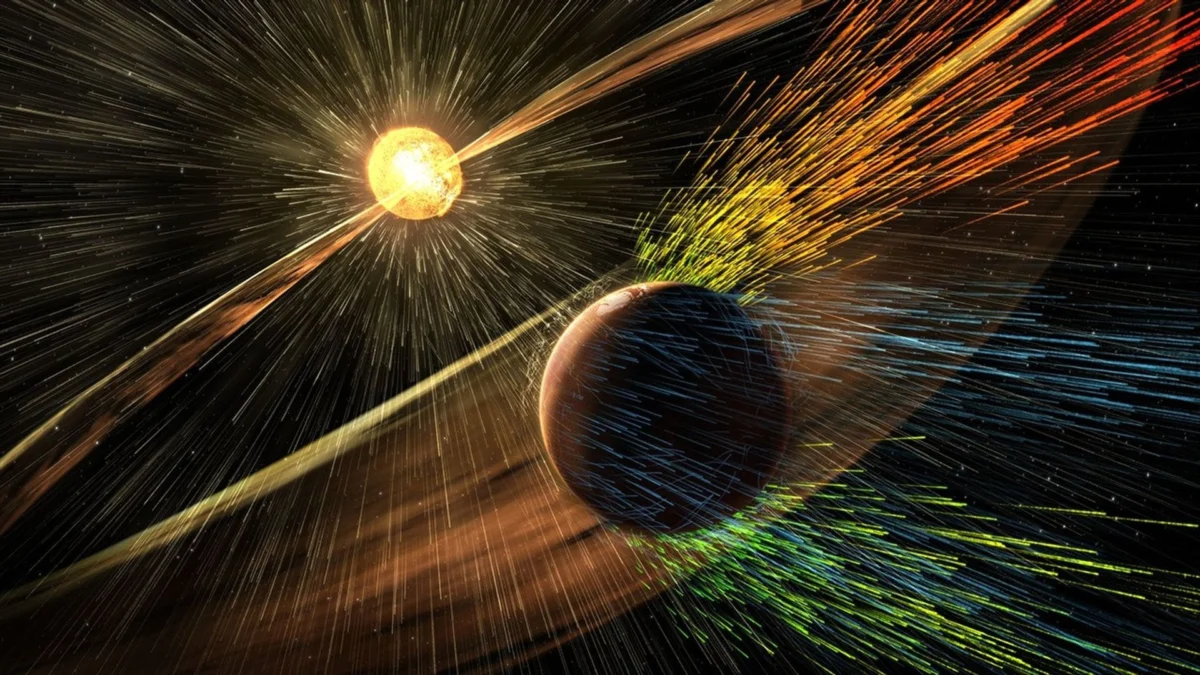
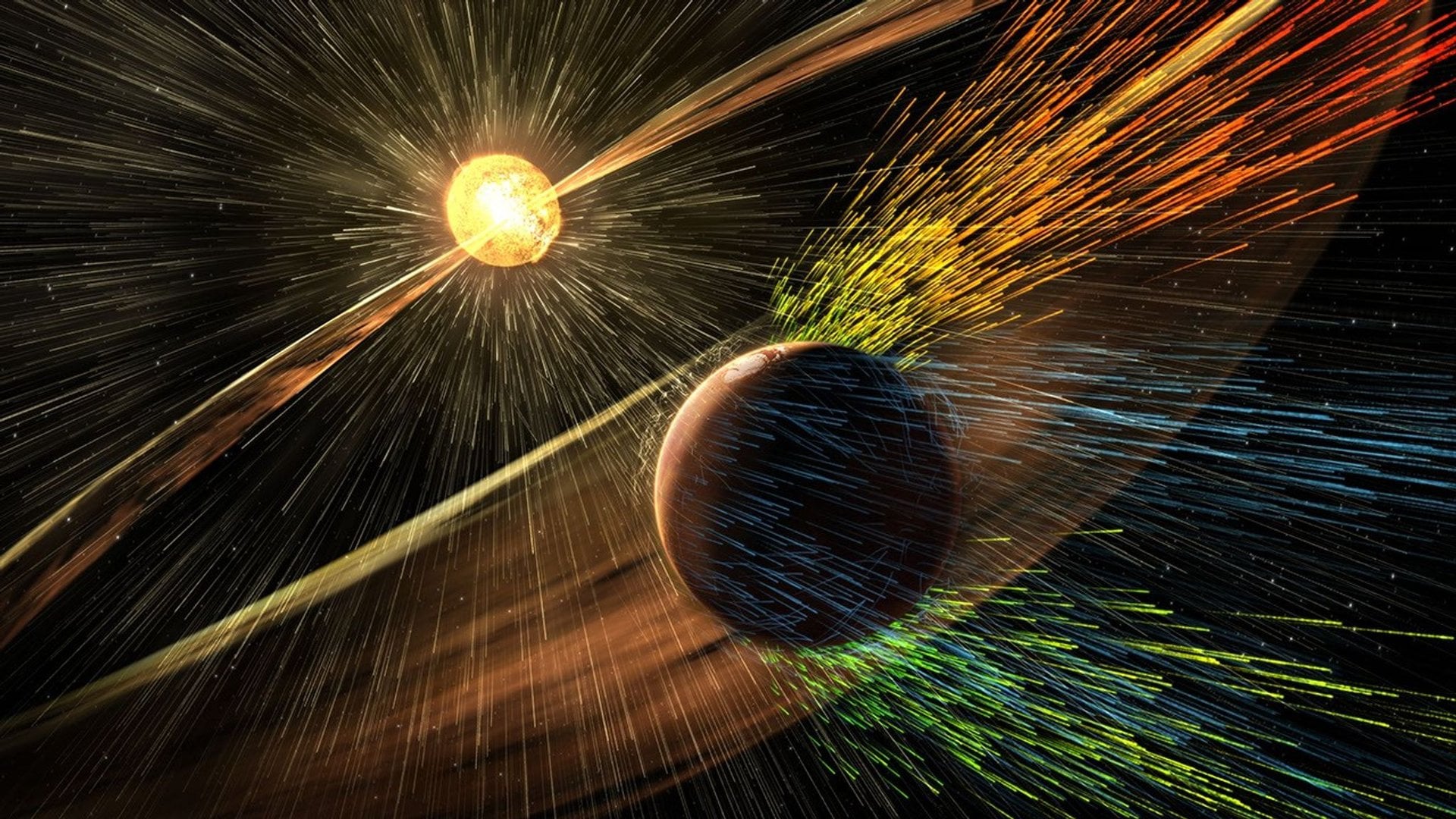
The Mars Atmosphere and Volatile Evolution (MAVEN) mission has provided a transformative understanding of the Red Planet’s atmospheric dynamics, even as the spacecraft’s operational tenure comes to a close. Despite losing contact with the orbiter in December 2025 and the official conclusion of the mission on June 3, 2026, the decade of data harvested by MAVEN continues to yield groundbreaking discoveries. A recent study led by researchers at the University of California, Berkeley, has identified that Martian auroras are driven by a "miniature" version of the Dungey Cycle—the same fundamental electromagnetic process that powers the spectacular Northern and Southern Lights on Earth. This discovery, published in the journal Nature Communications, marks a significant milestone in planetary science, bridging the gap between Earth’s global magnetic protection and the localized, fragmented magnetic remnants of Mars.
The Discovery of the Miniature Dungey Cycle
The study, titled "Miniature Dungey-like cycle at Mars," identifies a complex circulation of charged particles that was previously thought to be exclusive to planets with global magnetic fields. On Earth, the Dungey Cycle—named after British physicist James Dungey, who proposed the theory in 1961—describes how the solar wind interacts with the terrestrial magnetosphere. In this cycle, solar magnetic field lines peel back Earth’s magnetic shield, reconnecting in the "magnetotail" to snap back and accelerate charged particles into the upper atmosphere. These particles collide with atmospheric gases, creating the luminous glow known as the aurora borealis and aurora australis.
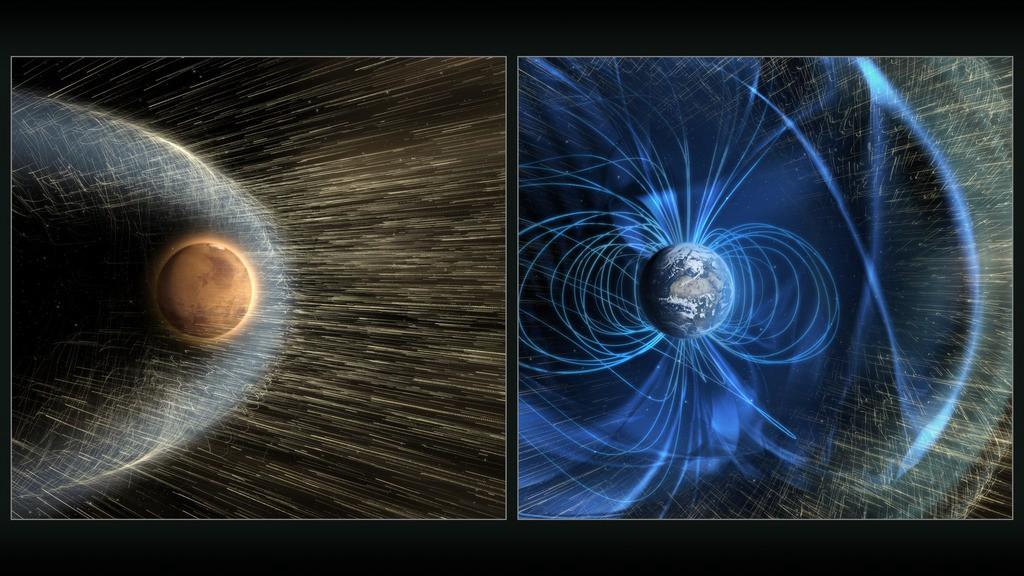
At Mars, the process is significantly more intricate due to the planet’s lack of a global magnetic field. Instead of a single, planet-wide shield, Mars possesses "crustal magnetic fields"—highly localized regions of magnetism trapped in the planet’s surface rocks. The research team, led by Shaosui Xu, an associate research physicist at the Space Sciences Laboratory at UC Berkeley, demonstrated that these small-scale magnetic pockets undergo a reconnection process similar to Earth’s, albeit on a much smaller and more localized scale. This "miniature" cycle explains how electrons are energized and channeled into the Martian atmosphere to produce localized auroral displays.
The MAVEN Mission: A Decade of Atmospheric Investigation
To understand the weight of this discovery, one must look at the chronology of the MAVEN mission. Launched in November 2013 and arriving at Mars in September 2014, MAVEN was designed specifically to answer why the Red Planet transitioned from a warm, wet world with a thick atmosphere to the cold, arid desert it is today. Over its 11-year lifespan, MAVEN performed thousands of orbits, dipping into the Martian upper atmosphere to sample its composition and observe its interaction with the Sun.
The mission’s timeline was marked by several key milestones:
- 2014–2015: Initial observations confirmed that the solar wind is responsible for stripping away Mars’ atmosphere at a rate of about 100 grams per second.
- 2016–2020: MAVEN mapped the "magnetic tail" of Mars and discovered that the planet’s crustal fields create a complex, "patchy" magnetosphere.
- 2025: In December, the spacecraft ceased communication with Earth, signaling the end of its active data collection phase.
- 2026: Following unsuccessful attempts to re-establish contact, NASA officially declared the mission over on June 3.
The data used for the recent study represents some of the final, most sophisticated observations made by the craft. By utilizing a suite of instruments, the research team was able to piece together the final "puzzle" of Martian auroral physics.
Scientific Methodology and Instrument Data
The breakthrough was made possible by synthesizing data from three primary MAVEN instruments: the Magnetometer (MAG), the Solar Wind Electron Analyzer (SWEA), and the Suprathermal and Thermal Ion Composition (STATIC) instrument. Each played a vital role in mapping the electromagnetic environment of Mars.
The Magnetometer was used to detect the orientation and strength of the magnetic field lines near the Martian surface. The SWEA instrument measured the flow and energy levels of electrons, identifying when and where they were being accelerated. However, it was the STATIC instrument that proved to be the decisive factor. STATIC measures the flow of ions—charged atoms—within the ionosphere. By analyzing the movement of these ions, researchers could track the circulation of plasma, confirming that the Dungey Cycle was indeed occurring within the small-scale magnetic loops of the Martian crust.
Shaosui Xu noted that the team "pushed the limit" of the STATIC instrument to capture these subtle movements. The data revealed a nested, double-loop structure of electrical currents that envelops Mars, moving from the day side to the night side. This visualization confirmed that even without a global dynamo, Mars maintains a sophisticated system of energy transfer that mirrors Earth’s own magnetospheric mechanics.
A Tale of Two Planets: The Evolution of Magnetic Fields
The comparison between Earth and Mars highlights a divergent evolutionary path. Earth’s magnetic field is generated by a "geodynamo"—the motion of molten iron in its outer core. This field extends far into space, providing a robust shield against solar radiation. Mars once possessed a similar dynamo, but geological activity in its core largely ceased approximately 4 billion years ago. As the core cooled and solidified, the global magnetic field collapsed.
The "crustal fields" observed by MAVEN today are the "fossils" of that ancient field. When Martian lava cooled billions of years ago in the presence of a strong magnetic field, it retained that magnetism. Today, these magnetic regions are scattered primarily in the Southern Hemisphere. The discovery of a Dungey-like cycle occurring within these remnants suggests that magnetic reconnection is a universal process that can adapt to the scale of its environment.
While Earth’s Dungey Cycle operates on a scale of tens of thousands of kilometers, the Martian version operates on a scale of hundreds. This disparity explains why Martian auroras are not broad curtains of light visible across the poles, but rather "discrete" or "localized" flashes that occur over specific regions of the crust.
Reactions from the Scientific Community
The implications of this study have resonated throughout the planetary science community. Shannon Curry, MAVEN’s principal investigator and a research scientist at the Laboratory for Atmospheric and Space Physics (LASP) at the University of Colorado Boulder, emphasized the importance of the findings for understanding planetary divergence.
"This is a remarkable result that changes how we think of Martian auroras," Curry stated. She noted that the discovery is a crucial step in understanding why two planets governed by the same underlying physics—Earth and Mars—evolved so differently. The research provides a clearer picture of the "invisible" forces that have shaped the Martian environment over eons.
NASA officials and mission partners have also expressed that the success of this study justifies the decade-long investment in MAVEN. Even after the hardware has gone silent, the "data legacy" continues to provide a return on investment, offering insights that will inform the next generation of Mars explorers.
Broader Implications for Future Exploration and Exoplanet Research
The discovery of the miniature Dungey Cycle has practical implications for future human and robotic exploration. Understanding the Martian electrical environment is vital for predicting space weather. Just as solar storms can disrupt satellites and power grids on Earth, they can impact the electronics of rovers and the safety of future astronauts on Mars. By understanding how the Martian crustal fields accelerate electrons, mission planners can better predict "hot spots" of radiation and atmospheric ionization.
Furthermore, this research has significant implications for the study of exoplanets. Many planets discovered outside our solar system may lack global magnetic fields but possess localized ones. The realization that a Dungey-like cycle can exist on a miniature scale suggests that atmospheric loss and auroral activity on these distant worlds might be more complex than previously modeled. It provides a new framework for evaluating the habitability of planets that have "lost" their global shields.
Conclusion: The Enduring Legacy of MAVEN
As NASA moves forward with the Artemis program and plans for eventual human missions to Mars, the lessons learned from MAVEN will serve as a foundation. The mission has proven that Mars is not a "dead" world in terms of physics; it is a dynamic laboratory where ancient magnetic remnants interact with the modern solar wind in ways that continue to surprise scientists.
The study led by UC Berkeley confirms that the laws of electromagnetism are consistent across the solar system, but their expression is dictated by a planet’s unique history. Mars may have lost its global shield 4 billion years ago, but through the miniature Dungey Cycle, it still exhibits a ghostly, localized version of the same phenomena that protect and illuminate the Earth. The MAVEN mission may have officially ended in June 2026, but its contribution to our understanding of the cosmos is far from over. The "final piece of the puzzle" regarding Martian auroras has been found, yet the vast archive of MAVEN data likely holds many more secrets waiting to be decoded by future generations of scientists.