Sisilia Frederika
The quest to reconstruct the earliest chapters of Earth’s history has long been stymied by the very processes that make our planet habitable. Active plate tectonics, volcanic resurfacing, and the relentless cycle of atmospheric weathering have effectively scrubbed the geological record of Earth’s first billion years, leaving scientists with a fragmented and often contradictory picture of the environment in which life first took root. However, a groundbreaking research initiative led by Jared Landry, an astrobiology doctoral researcher at the Earth Life Science Institute (ELSI) in Tokyo, suggests that the key to unlocking Earth’s ancient secrets may not lie on our own planet, but on the surface of the Moon.
Presented at the recent Origins 2026 conference in Paris, Landry’s research utilizes chemical signatures preserved in lunar soil samples brought back by the Apollo missions to act as a "paleo-mirror" of the Archean Earth. By analyzing the isotopic and elemental composition of these samples, Landry has developed a model that provides a clearer window into the atmospheric chemistry of the Archean Eon, a period spanning from 4.0 to 2.5 billion years ago. The findings suggest an atmosphere significantly richer in sulfur and carbon dioxide than previously confirmed, offering a potential resolution to long-standing paradoxes in planetary science.
The Lunar Archive: A Mechanism for Atmospheric Capture
The premise of Landry’s work rests on a unique celestial exchange that has occurred for billions of years. Earth’s upper atmosphere is not a static envelope; rather, chemical species in the exosphere are frequently ionized by solar radiation. Once these particles become electrically charged, they can be caught by the Earth’s magnetosphere and accelerated outward. For a few days during each lunar orbit, the Moon passes through the Earth’s magnetotail—a region of the magnetosphere stretched out by the solar wind like a long streamer.
During these windows, ionized terrestrial gases, including nitrogen, oxygen, and various noble gases, are "rained" onto the lunar surface. Because the Moon lacks a substantial atmosphere and plate tectonics, the lunar regolith (the layer of loose, fragmented material covering solid rock) acts as a high-fidelity storage device. These ions become implanted into the grains of lunar soil, where they remain shielded from the vacuum of space by subsequent layers of impact-driven dust.
Landry’s analysis specifically targets the Archean Eon, roughly 3.5 billion years ago. During this epoch, the Earth was a radically different world, characterized by high volcanic activity and the emergence of the first microbial life forms. By isolating terrestrial signatures within the Apollo nearside samples, Landry’s model separates the "Earth flux" from other sources, such as the solar wind and meteoritic debris, to calculate the precise composition of the gases escaping Earth during that time.
Solving the Faint Young Sun Paradox
One of the most significant contributions of this research is its empirical support for a solution to the "Faint Young Sun Paradox." Astrophysical models of stellar evolution indicate that 3.5 billion years ago, the Sun was approximately 25% to 30% less luminous than it is today. Under such conditions, a planet with Earth’s modern atmospheric composition would have been a frozen wasteland, with surface temperatures well below the freezing point of water.
However, geological evidence from the Archean—such as pillow lavas and sedimentary rocks—proves that liquid oceans existed. To maintain these oceans, the early Earth required a robust greenhouse effect to trap heat. Previous theoretical models suggested that carbon dioxide (CO2) levels would need to be significantly higher than modern levels to compensate for the weaker sun.
Landry’s model provides the data to back this theory. His findings indicate that the Archean atmosphere contained roughly 100 times the amount of carbon dioxide found in the modern atmosphere. Furthermore, the samples suggest a high abundance of methane (CH4), a greenhouse gas even more potent than CO2. Together, these concentrations would have provided a sufficient thermal blanket to sustain a liquid ocean and a climate conducive to the chemical reactions necessary for life.
The Sulfur-Rich Environment of Early Earth
Beyond greenhouse gases, Landry’s research highlights a surprising abundance of sulfur in the Archean atmosphere. According to the data presented in Paris, the sulfur levels were vastly higher than those observed in the contemporary environment. This finding has profound implications for the study of prebiotic chemistry—the suite of chemical reactions that preceded the emergence of biological life.
Sulfur is a critical element for life, playing a central role in the structure of proteins and the metabolic processes of many ancient microorganisms. Landry posits that a sulfur-rich atmosphere would have led to a significant supply of sulfur to the Archean oceans. This environment would have been highly favorable for the synthesis of complex organic molecules.
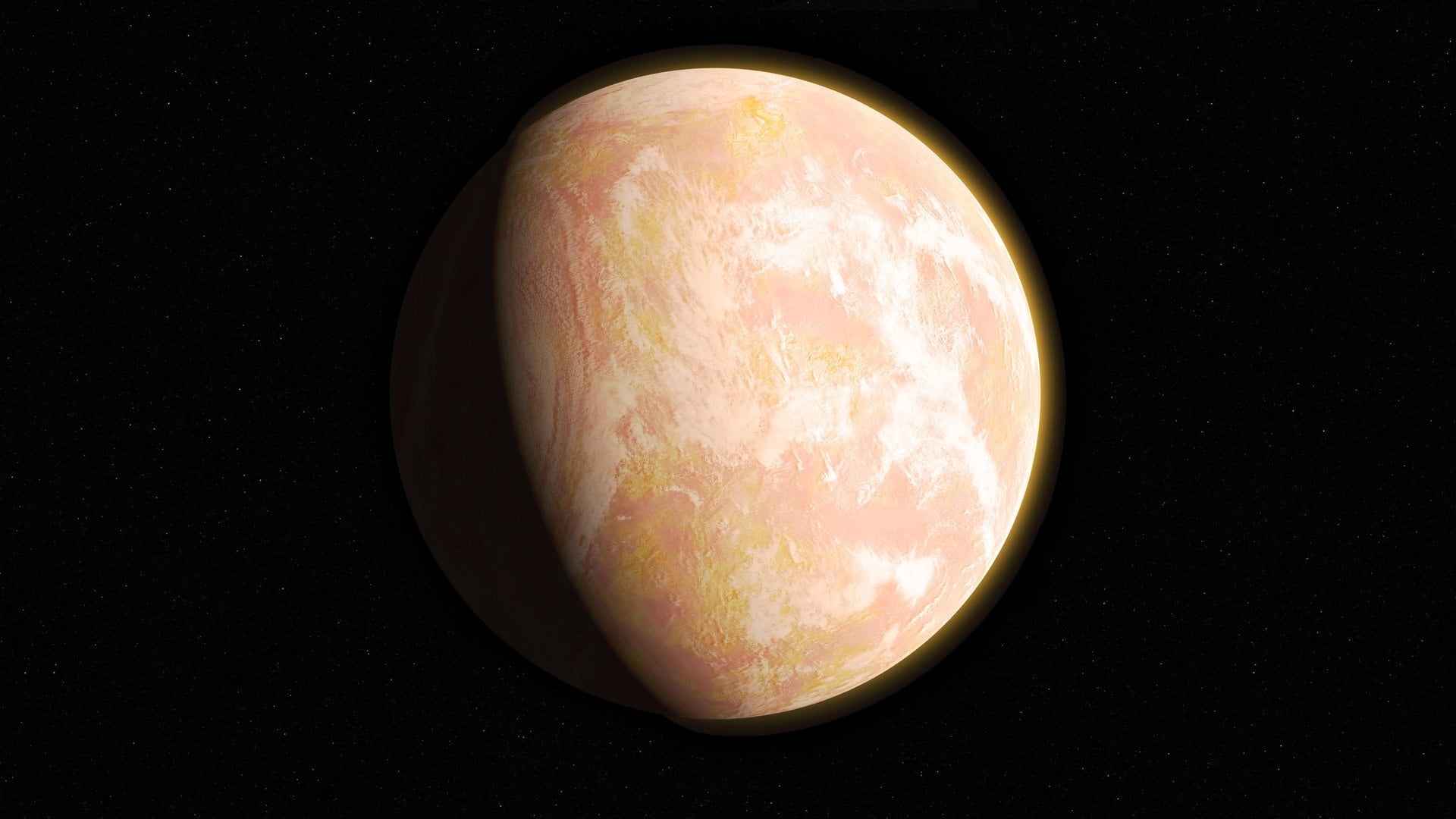
"The main takeaway from my research is that lunar samples support the hypothesis that the Archean atmosphere was more sulfur-rich than today," Landry stated during the conference. He noted that this chemical makeup allowed for various biotic pathways to emerge in aqueous environments. The persistence of high sulfur levels suggests a different geological or hydrological cycle than the one we see today. In the modern world, sulfur is rapidly scrubbed from the atmosphere and sequestered in the oceans or crust. For the Archean levels to remain high, Landry suggests that the planet may have experienced lower hydrological activity or a cooler overall environment that prevented the rapid dissolution of sulfur.
Methodology and the Apollo Legacy
The data for this study was derived from samples collected during the Apollo 11 through Apollo 17 missions. Specifically, Landry focused on samples from the lunar nearside, which is the only side of the Moon that consistently faces the Earth and thus the only side capable of receiving the terrestrial ion flux.
A critical aspect of the research involved accounting for the variables of the ancient solar system. The solar wind 3.5 billion years ago was much more intense than it is today, which would have affected the rate of ion transport. Additionally, Landry’s model had to factor in the "gardening" of the lunar surface—the process by which micrometeorite impacts stir and bury surface materials. By cross-referencing the known ages of specific Apollo samples with the modeled flux of terrestrial ions, Landry was able to isolate the atmospheric "signal" of the Archean Earth.
The use of Apollo 17 samples, collected by scientist-astronaut Harrison H. Schmitt, was particularly noted. As the only trained geologist to walk on the Moon, Schmitt’s selective sampling of the Taurus-Littrow valley provided high-quality materials that have remained central to lunar and terrestrial research for over five decades.
Implications for Future Exploration and Astrobiology
The success of using the Moon as a proxy for Earth’s history opens new avenues for planetary exploration. Landry suggests that this methodology is not limited to the Earth-Moon system. Similar analyses could be applied to other terrestrial bodies. For instance, the Martian moons Phobos and Deimos may hold similar records of the ancient Martian atmosphere, which has largely been lost to space. Analyzing these moons could reveal whether Mars once possessed a thick, life-sustaining atmosphere similar to the Archean Earth.
Furthermore, the research provides a roadmap for future missions to the icy moons of the outer solar system, such as Europa or Enceladus. By understanding how gases escape and are recorded on nearby surfaces, scientists can better interpret the chemical signatures found during flyby or landing missions.
Within the scientific community, Landry’s work has been met with significant interest. Geochemists and astrobiologists are now looking closer at the "Iron-Sulfur World" hypothesis, which suggests that life may have started near hydrothermal vents where sulfur chemistry is dominant. Landry’s evidence of a sulfur-saturated atmosphere and ocean provides a plausible environmental context for these theories.
Looking Ahead: The Next Frontier of the Archean
As Landry continues his research at ELSI, the next steps involve refining the climate models to determine exactly how warm the Archean oceans were and what their specific pH levels might have been. "The bottom line is to determine which chemical species would be present and to what sort of prebiotic chemistry this would lead," Landry noted.
While the research suggests that Earth’s prebiotic chemistry 3.5 billion years ago might not have been "further along" in terms of complexity than previously thought, it was fundamentally "different." The underappreciated role of sulfur is now becoming a focal point for researchers worldwide.
This study underscores the enduring value of the Apollo samples. Decades after they were brought to Earth, they continue to yield revolutionary insights, proving that the Moon is not just a dead satellite, but a preserved archive of our own planet’s volatile and mysterious youth. As humanity prepares to return to the Moon through the Artemis program, the focus is increasingly shifting toward using the lunar surface as a laboratory for understanding the origins of life in the universe.