Evan Lee Salim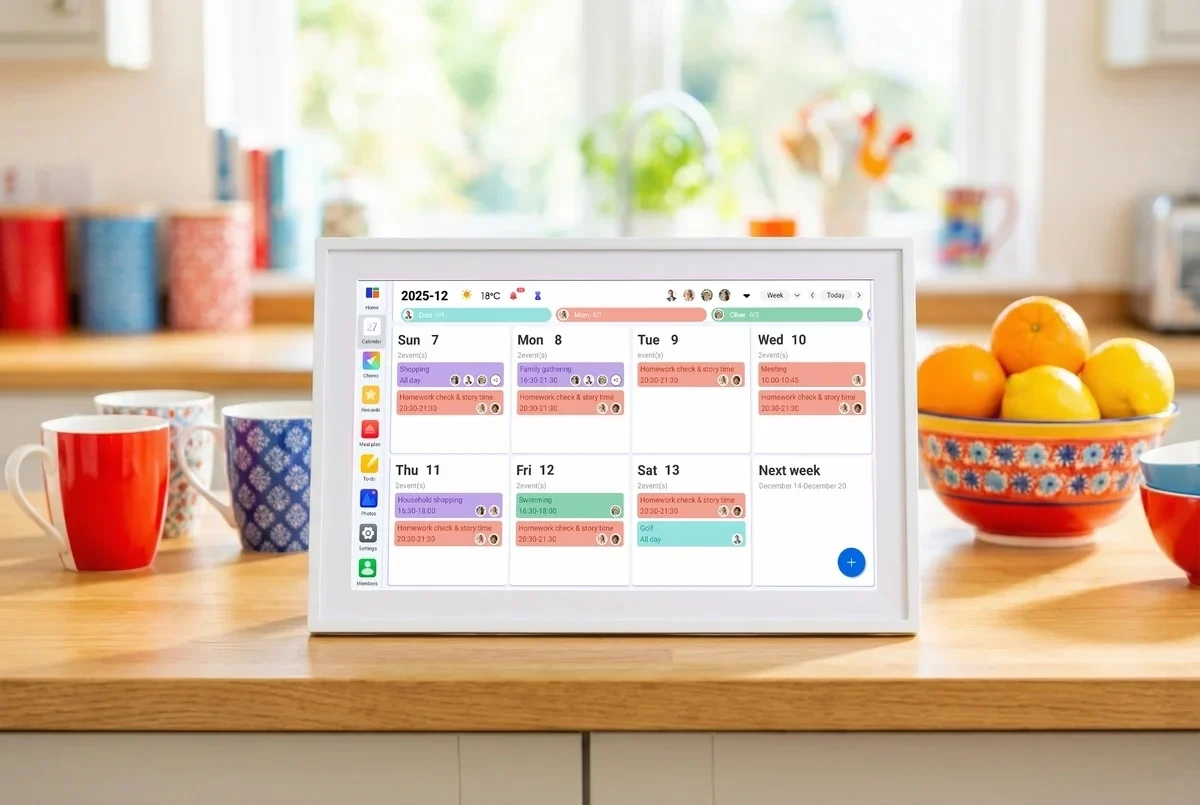
As the back-to-school season gears up, or is already in full swing for many, the intricate dance of managing family schedules has become an increasingly complex challenge for modern households. Between demanding work commitments, academic calendars, a myriad of appointments, competitive sports schedules, household chores, and the general ebb and flow of daily life, the traditional paper calendar has largely proven insufficient to orchestrate such multifaceted dynamics. Stepping into this organizational void is Linkdaze, a burgeoning innovator in smart home technology, with its smart digital calendar – a dedicated touchscreen tablet meticulously engineered not for individual task management, but to serve as the central command hub for an entire household. Launched last December, Linkdaze has quickly distinguished itself in a crowded market by offering robust family-centric features, impressive cross-platform compatibility, and notably, a commitment to a subscription-free core experience, positioning itself as a compelling alternative to existing smart display solutions.
The Modern Family’s Scheduling Conundrum and the Rise of Smart Displays
The evolution of family life in the 21st century has seen a dramatic increase in scheduled activities and responsibilities. Data from various demographic studies consistently highlight that dual-income households are more prevalent than ever, with parents often juggling demanding careers alongside their roles as primary caregivers. Children, too, face packed schedules, participating in multiple extracurricular activities, academic enrichment programs, and social engagements. This intricate web of commitments often leads to significant parental stress, with numerous surveys indicating that managing household logistics and schedules is a leading source of anxiety for families. A 2022 study by the American Psychological Association, for instance, revealed that nearly 80% of adults reported feeling stressed about managing their time effectively, with family responsibilities being a significant contributing factor.
In response to this growing need for organizational tools, the market has seen a proliferation of digital solutions. From basic smartphone calendar apps to sophisticated project management software, the digital landscape offers a wide array of options. However, many of these are designed with individual productivity in mind or require significant manual input and coordination across multiple devices. The advent of smart home technology, particularly smart displays like Amazon’s Echo Show and Google’s Nest Hub, offered a glimpse into a centralized household display, capable of showing calendars, weather, and even playing media. While these devices provided a basic level of shared information, their primary focus remained broader smart home control and entertainment, often lacking the depth and specialized features required for comprehensive family organization. They typically aggregate individual calendars but don’t inherently foster the collaborative scheduling and task management that modern families desperately need, often requiring a unified platform or app that not all family members might prefer.
Linkdaze’s Comprehensive Approach to Household Harmony
Linkdaze’s smart digital calendar enters this landscape with a targeted solution designed to bridge the gap between individual digital schedules and a cohesive family overview. Its most significant technological strength lies in its unparalleled calendar compatibility. The device is engineered to seamlessly synchronize schedules from a diverse array of popular services, including Google Calendar, Apple’s iCloud, Microsoft Outlook, Yahoo Calendar, and Cozi – a widely recognized application specifically tailored for family organization. This broad compatibility addresses a critical pain point for many families where individual members might prefer or be tied to different digital ecosystems. Instead of imposing a uniform platform on everyone, Linkdaze intelligently aggregates these disparate schedules into a single, intuitive display. To further enhance clarity and reduce confusion, the system employs an intelligent color-coding scheme, making it effortlessly easy to identify individual family members’ commitments at a glance. This feature alone significantly reduces the friction often associated with consolidating information from various sources, making it a truly inclusive solution for multi-platform households.
Beyond mere calendar aggregation, Linkdaze extends its utility to encompass a broader spectrum of household management tasks. The device transforms into a dynamic hub for assigning and tracking chores, complete with an integrated rewards system designed to motivate younger family members. This gamified approach to household responsibilities can foster a sense of accountability and teamwork. Furthermore, it simplifies the often-daunting task of meal planning and grocery shopping. Users can leverage the device to plan weekly menus, which then automatically generate comprehensive shopping lists. This integration streamlines a common source of household stress, ensuring that ingredients are accounted for and meal preparation is less chaotic. Adding a touch of personalization and warmth, the Linkdaze calendar can also function as a digital photo frame, rotating through cherished family memories, seamlessly blending utility with emotional connection within the home environment.
The AI Edge: Snap-to-Sync for Effortless Meal Planning
While its robust calendar integration and comprehensive organizational tools are impressive, Linkdaze truly distinguishes itself with an innovative feature: its AI-powered meal planner incorporating "Snap-to-Sync" technology. This intelligent functionality revolutionizes the way families approach meal preparation. Traditionally, inputting recipes or school lunch menus into a digital planner involves tedious manual data entry, a significant barrier to consistent usage. Linkdaze’s Snap-to-Sync feature allows users to simply take a photograph of a physical recipe card, a cookbook page, or even a school’s printed lunch menu. The device’s integrated artificial intelligence then processes this image, extracting relevant information to automatically create a digital meal plan and, crucially, generate a corresponding shopping list.
This capability represents a significant leap forward in practical smart home applications. While the concept of AI-driven data extraction from images is not entirely novel in the broader tech landscape, its specific application to household meal planning within a dedicated smart display offers immense practical value. It dramatically reduces the time and effort required for meal preparation, moving beyond the capabilities of a basic digital calendar by offering a proactive, intelligent assistant for one of the most repetitive and time-consuming household tasks. This innovation not only saves time but also minimizes cognitive load, making healthy and organized meal planning more accessible for busy individuals and families.
A Disruptive Business Model: No Subscriptions, Lower Upfront Cost
Perhaps one of the most disruptive aspects of Linkdaze’s market strategy is its bold decision to forgo a monthly subscription for its primary features. In an era where recurring revenue models have become the default for consumer electronics and software services – often dubbed "subscription fatigue" by consumers – Linkdaze’s approach stands in stark contrast. Many competing smart calendar brands, such as Skylight, offer their core functionality with additional, enhanced features locked behind a monthly or annual subscription fee. Skylight, for instance, charges approximately $79 per month for its premium features.
Linkdaze’s non-subscription model carries significant implications for both consumers and the broader smart display market. For consumers, it translates to a lower total cost of ownership and a clear, upfront investment without hidden long-term fees. This transparency can be a powerful selling point, particularly for budget-conscious families. For Linkdaze as a hardware company, this decision is a strategic gamble. It foregoes a potentially stable stream of recurring revenue in favor of a higher perceived value and a lower barrier to entry for customers. This strategy aims to differentiate the product profoundly in a crowded market, attracting users who are wary of continuous subscriptions. While it might appear as a "lost revenue stream" from a traditional business perspective, it could also be a calculated move to quickly gain market share and build a loyal customer base, relying on hardware sales and potential future premium hardware upgrades or carefully selected, optional premium services for growth.

Adding to its competitive edge, Linkdaze has also positioned itself with a more accessible upfront price point. The 10.1-inch model is priced at $119.99, making it notably more affordable than competitors like Skylight’s 10-inch model, which retails for $159.99. This combination of lower initial cost and the absence of mandatory subscriptions makes Linkdaze a highly attractive proposition in the smart home organization segment, challenging established players and offering consumers a more economical path to streamlined household management.
Market Dynamics and Broader Implications
The smart display market has witnessed consistent growth, driven by increasing adoption of smart home technologies and the desire for centralized control and information hubs. According to market research firms like Statista, the global smart display market is projected to reach several billion dollars by the mid-2020s, with a compound annual growth rate (CAGR) indicating robust expansion. However, much of this growth has been dominated by large tech conglomerates whose devices often serve as gateways to their broader ecosystems rather than specialized organizational tools. Linkdaze’s entry represents a specialized niche player, focusing intensely on a specific problem: family organization.
The implications of Linkdaze’s strategy are multifaceted. For consumers, it signals a potential shift towards more feature-rich, dedicated devices that don’t rely on ongoing financial commitments. This could empower more households to adopt smart organizational tools without the burden of recurring fees. For the smart home industry, Linkdaze’s approach might inspire other manufacturers to reconsider their subscription models, potentially leading to a more competitive landscape where product value and utility take precedence over locked-in recurring revenue. Industry analysts might view Linkdaze’s no-subscription model as a bold, albeit risky, move. While it offers a strong value proposition, the long-term sustainability for a hardware company without a recurring revenue stream often depends on continuous innovation and new product cycles. However, the initial market response and differentiation could provide a strong foundation.
Diverse Applications for Streamlined Living
The utility of the Linkdaze smart digital calendar extends far beyond the traditional nuclear family. Its design and feature set make it a practical and valuable asset for a variety of living arrangements and demographics.
For busy parents, the device serves as an indispensable central nervous system for the household. It brings together school deadlines, extracurricular activities, doctor appointments, meal schedules, and chore rotations onto a single, always-visible display, minimizing missed events and reducing the mental load of constant coordination. The visual nature and color-coding make it accessible even for younger children to understand their responsibilities and upcoming events.
In college apartments or shared living spaces, Linkdaze offers a seamless solution for roommates to coordinate communal responsibilities. It can manage shared grocery lists, track who is responsible for which chores (e.g., cleaning rotation, taking out trash), schedule study sessions, and even coordinate social outings. This can significantly reduce potential conflicts arising from miscommunication or unequal distribution of household tasks.
Individuals juggling multiple professional and personal commitments, such as freelancers, entrepreneurs, or those managing complex projects, can also find immense value in Linkdaze. It provides a dedicated, always-on display for interviews, deadlines, meetings, and project assignments, keeping critical information front and center without the distraction of a computer or phone. Its visibility in a prominent location ensures important tasks and schedules are consistently in view.
Furthermore, while not explicitly stated, Linkdaze could prove beneficial in elderly care settings or for individuals requiring assistance with daily routines. Displaying medication schedules, appointment reminders, or even rotating family photos can offer both practical support and emotional comfort, making complex routines easier to follow and maintaining a connection to loved ones. The simple touchscreen interface would be accessible for many.
Conclusion
Linkdaze’s introduction of its smart digital calendar marks a significant evolution in household organization technology. By directly addressing the complexities of modern family scheduling with a comprehensive, cross-platform compatible, and AI-enhanced solution, it stands out in a market traditionally dominated by more generalized smart displays. Its commitment to a subscription-free model and competitive pricing further solidify its position as a highly attractive and accessible option for a broad spectrum of users. From harried parents seeking to restore order to their chaotic schedules, to college roommates striving for harmonious cohabitation, and even professionals managing demanding workloads, Linkdaze offers a compelling proposition: a centralized, intuitive, and intelligent hub designed to bring clarity and efficiency to the heart of every home. As the digital transformation continues to reshape daily life, Linkdaze positions itself as a crucial tool for navigating the demands of the modern world with greater ease and less stress.