Sisilia Frederika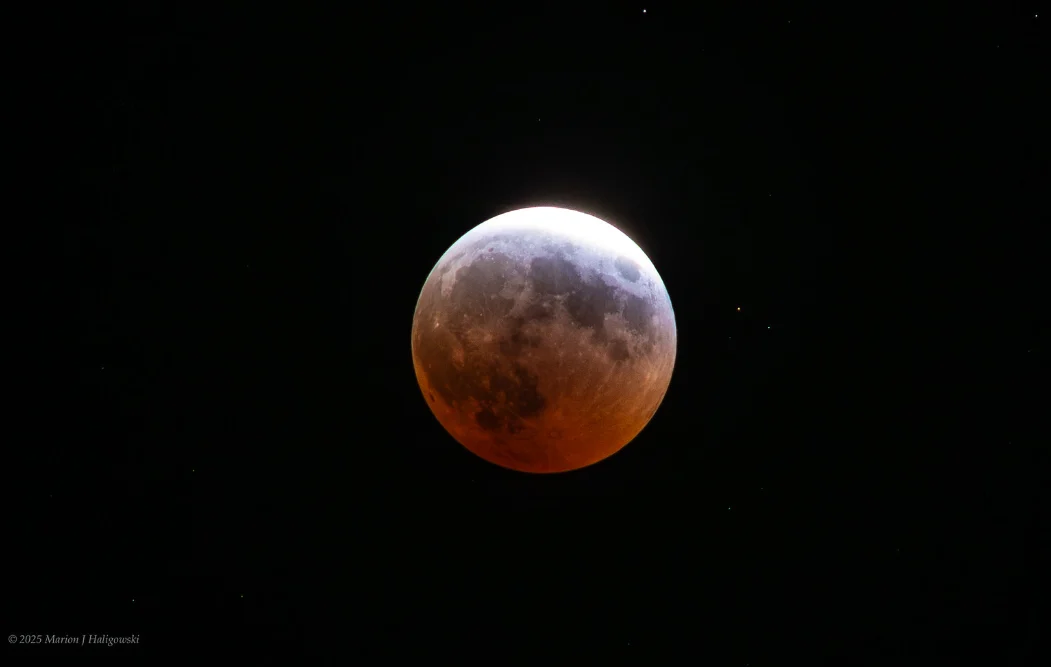
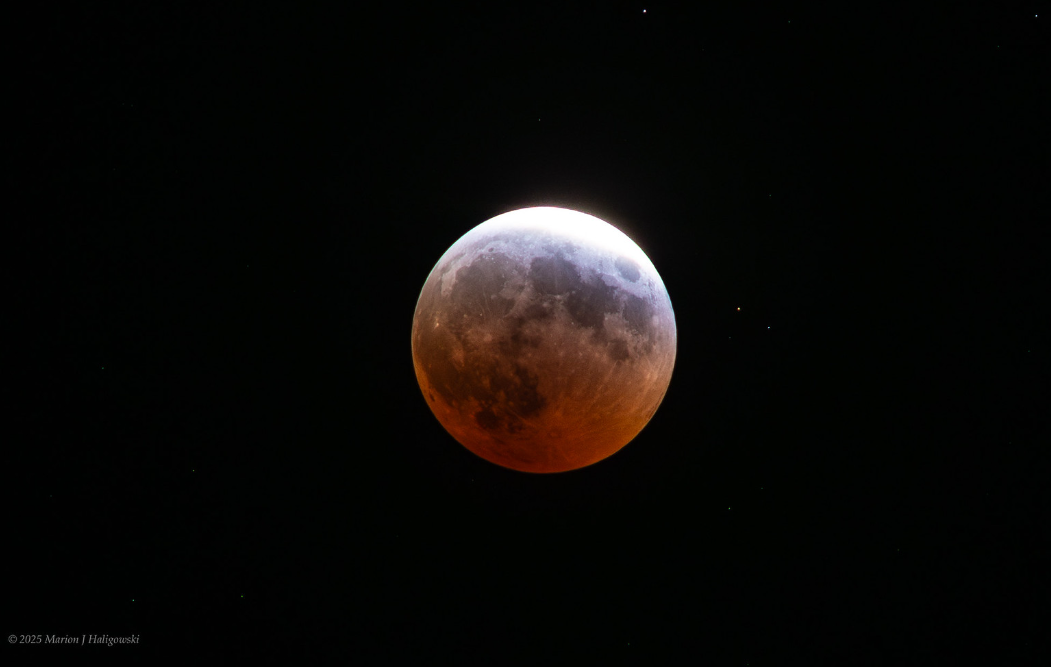
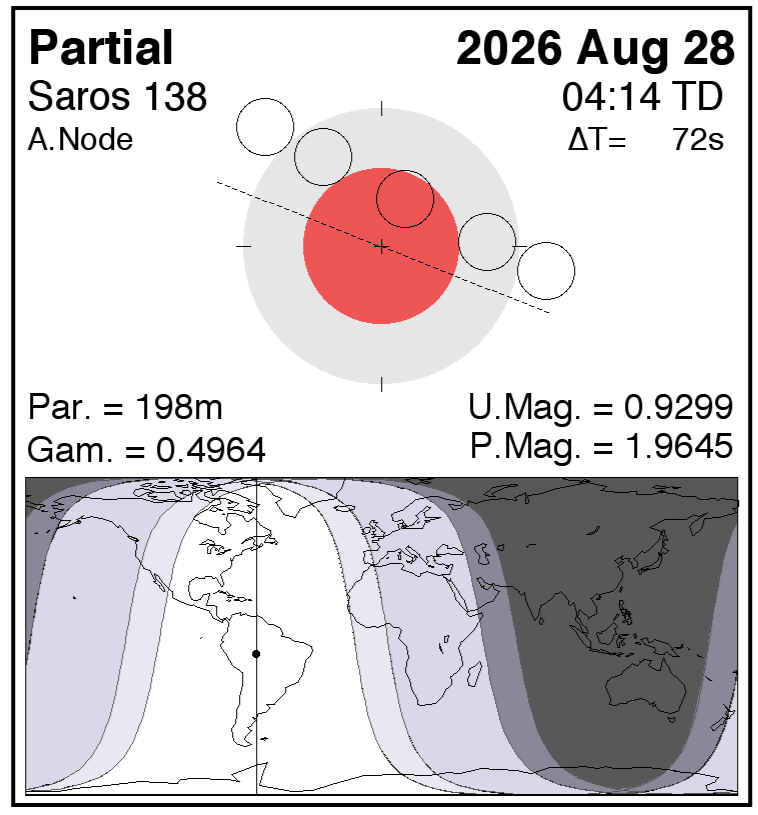
The celestial calendar of 2026 is set to conclude with a remarkable display of orbital mechanics as a deep partial lunar eclipse takes center stage on the night of August 27 and the early morning of August 28. This event, which will see approximately 93% of the Moon’s surface immersed in the Earth’s dark umbral shadow, serves as the final act of a four-part eclipse series for the year. Following the total solar eclipse that captivated observers on August 12, this lunar event offers a final opportunity for skywatchers, particularly across the Western Hemisphere, to experience the grandeur of the current eclipse season before a nearly two-year hiatus in major lunar activity.
The Mechanics of a Near-Total Lunar Alignment
A lunar eclipse occurs during the Full Moon phase when the Sun, Earth, and Moon align in a configuration known as syzygy. During this alignment, the Earth positioned between the Sun and the Moon casts a shadow into space. While the Moon orbits the Earth approximately every 27.3 days, eclipses do not occur every month because the Moon’s orbital plane is tilted at an angle of approximately five degrees relative to the ecliptic—the path the Earth takes around the Sun.
Eclipses only occur when the Full Moon or New Moon happens near one of the two "nodes," the points where the Moon’s tilted orbit intersects the Earth’s orbital plane. For the upcoming event on August 28, the Moon will pass its ascending node just ten hours prior to reaching its full phase. This precise timing ensures that the Moon passes through the northern portion of the Earth’s umbra. While the alignment is not perfect enough to produce a total lunar eclipse—where the Moon is 100% covered—the 93% coverage is sufficient to create a visual experience nearly indistinguishable from totality for the casual observer.
Furthermore, the timing of this eclipse coincides with the Moon being near its second-most distant apogee of the year. Apogee is the point in the Moon’s elliptical orbit where it is furthest from Earth. Because the Moon is further away, it appears slightly smaller in the sky. Paradoxically, this makes the Earth’s shadow appear relatively larger, meaning the Moon will take longer to transit through the umbra, extending the duration of the partial phases for observers on the ground.
Global Visibility and Regional Timing
The geographic "sweet spot" for this eclipse is firmly centered on the Americas. From the Canadian Arctic to the tip of Tierra del Fuego, the entire event will be visible from start to finish, provided weather conditions remain clear. Unlike solar eclipses, which require specialized eye protection and are visible only along a narrow path, a lunar eclipse is safe to view with the naked eye and is visible from any location on Earth where the Moon is above the horizon during the event.
For observers in Europe and Western Africa, the eclipse will be visible during the early morning hours of August 28, with the Moon setting while still immersed in the Earth’s shadow. Conversely, residents of the central Pacific and parts of Oceania will witness the eclipse already in progress as the Moon rises on the evening of August 27.
The chronological breakdown of the eclipse, as provided by astronomical data from NASA’s Goddard Space Flight Center, is as follows (all times adjusted for Universal Time and Eastern Daylight Time):
- Penumbral Phase Begins: 1:23 UT (Aug 28) / 9:23 PM EDT (Aug 27). During this stage, the Moon enters the Earth’s outer, lighter shadow. The visual change is subtle, often appearing as a slight darkening or "smudginess" on one side of the lunar disk.
- Partial Umbral Phase Begins: 2:34 UT (Aug 28) / 10:34 PM EDT (Aug 27). This is the moment of first contact with the Earth’s inner shadow. A dark "bite" will appear to be taken out of the Moon.
- Maximum Eclipse: 4:14 UT (Aug 28) / 12:14 AM EDT (Aug 28). This is the peak of the event. With 93% of the Moon covered, the southern limb will likely take on a deep copper or blood-red hue.
- Partial Umbral Phase Ends: 5:52 UT (Aug 28) / 1:52 AM EDT (Aug 28). The Moon exits the dark inner shadow.
- Penumbral Phase Ends: 7:01 UT (Aug 28) / 3:01 AM EDT (Aug 28). The eclipse concludes as the Moon leaves the outer shadow entirely.
The total duration of the event, including the penumbral phases, is 5 hours and 38 minutes, while the more dramatic partial umbral phase will last 3 hours and 18 minutes.
Visual Phenomena: The "Blood Moon" and Ozone Fringe
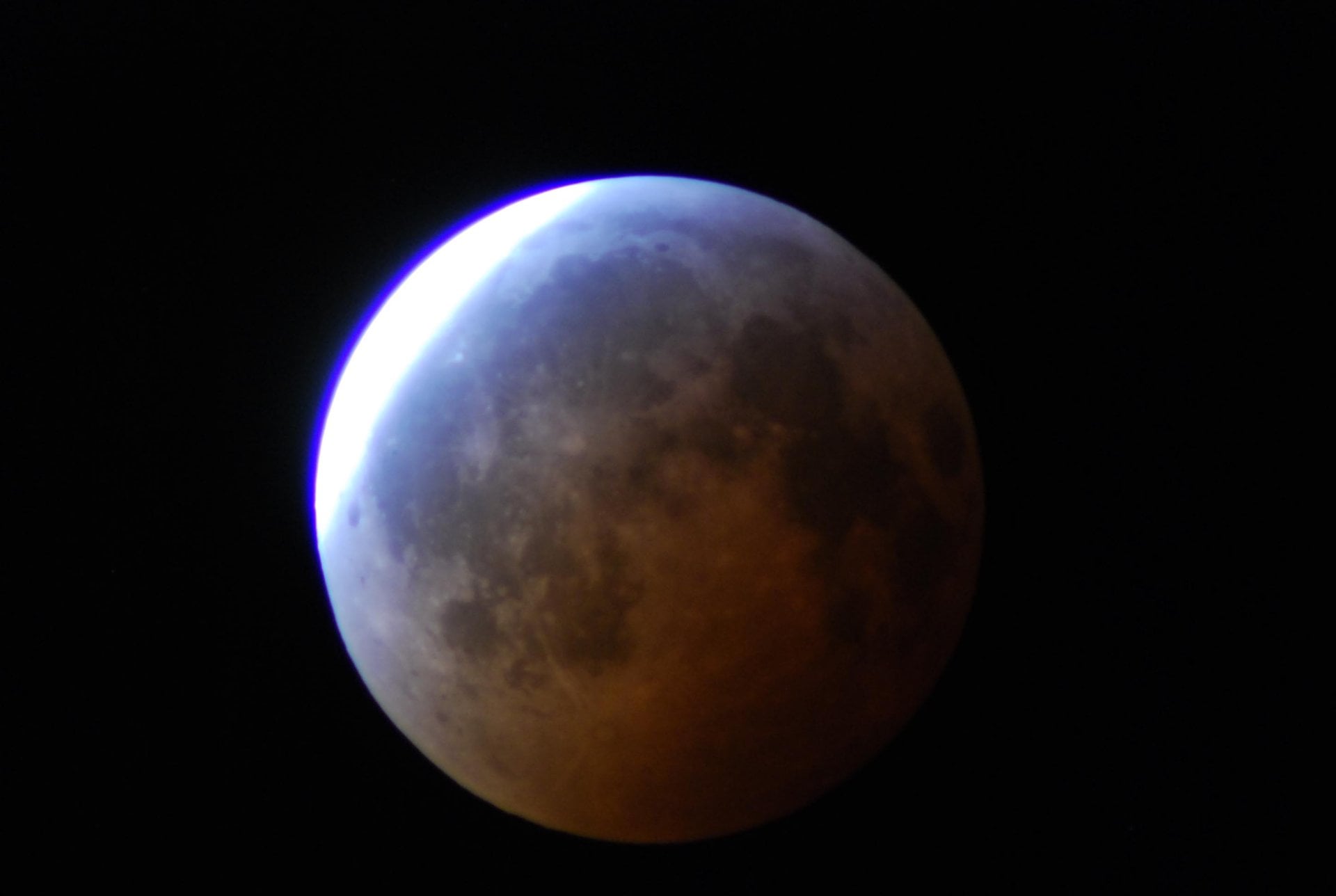
While the eclipse is technically "partial," the high percentage of coverage means observers will still witness the famous "Blood Moon" effect. This phenomenon is caused by Rayleigh scattering—the same process that makes the sky blue and sunsets red. As sunlight passes through the Earth’s atmosphere, the shorter blue wavelengths are scattered away, while the longer red wavelengths are refracted (bent) inward toward the Moon.
Astronomers often describe a lunar eclipse as a projection of every sunrise and sunset occurring on Earth at that moment onto the lunar surface. The intensity of the red color can vary depending on the amount of dust, volcanic ash, and cloud cover in the Earth’s atmosphere. A cleaner atmosphere tends to produce a brighter, orange-red eclipse, while recent volcanic eruptions can lead to a much darker, almost invisible Moon during peak immersion.
Careful observers using binoculars or a small telescope may also notice a thin, bluish band near the edge of the Earth’s shadow. This is known as the "ozone fringe." It is caused by sunlight passing through the upper reaches of the stratosphere, where the ozone layer absorbs red light and allows blue light to pass through, creating a distinct color contrast against the coppery tones of the umbra.
Historical Context: Saros Series 138
The August 2026 eclipse holds significant interest for historians of astronomy as it marks a transition point for Lunar Saros Series 138. The Saros cycle is a period of approximately 18 years, 11 days, and 8 hours that can be used to predict eclipses of the Sun and Moon. One Saros series after another, the geometry of the alignment shifts slightly.
Saros 138 began its long journey in the year 1521. For centuries, it produced only penumbral eclipses, eventually graduating to partial eclipses. The August 28 event is notable for being the final "deep" partial eclipse of this specific series before it transitions into a series of total lunar eclipses. The first total eclipse for Saros 138 will not occur until September 7, 2044. This shift highlights the slow, majestic progression of celestial cycles that span over a millennium; Saros 138 is expected to continue until the year 2982.
The "Almost Tetrad" of 2025-2026
The upcoming eclipse also concludes a rare sequence of lunar events. Astronomers have noted that 2025 and 2026 featured an "almost tetrad." A true lunar tetrad consists of four consecutive total lunar eclipses with no partial eclipses in between. The world saw a famous tetrad in 2014 and 2015.
The current sequence included total lunar eclipses on March 14, 2025, and September 8, 2025, followed by another total eclipse on March 3, 2026. Because the August 28, 2026, event reaches only 93% totality, it narrowly misses the criteria for a full tetrad. Nevertheless, having four deep lunar eclipses in a span of less than two years is a statistical rarity that has provided researchers with ample opportunity to study the Earth’s thermosphere and the cooling rates of the lunar regolith during sudden shadow transitions.
Perspectives from Beyond Earth
Modern technology has allowed humanity to view eclipses from perspectives other than the terrestrial surface. During recent lunar events, robotic explorers have captured data that provides a reverse view of the phenomenon. For an observer—or a camera—on the Moon during the August 28 eclipse, the Earth would appear to move in front of the Sun, resulting in a total solar eclipse as seen from the lunar surface.
In 2025, Firefly Aerospace’s Blue Ghost lander was able to document the drop in temperature and light during a similar event, providing valuable data on how lunar hardware reacts to rapid thermal shifts. Similarly, South Korea’s Danuri orbiter (the Korea Pathfinder Lunar Orbiter) has previously captured images of the Earth being shadowed by the Moon during solar eclipses. These missions emphasize that eclipses are not just visual spectacles but critical testing windows for space agency engineering.
For the August 2026 event, the Virtual Telescope Project has announced plans to provide a live international broadcast. This service is particularly valuable for those living in regions with poor weather or outside the primary visibility zone, allowing a global audience to participate in the observation.
Observing and Imaging the Eclipse
Unlike solar eclipses, which require the "frenzied" management of filters and timing, lunar eclipses are often described by astronomers as "leisurely affairs." Because the shadow moves slowly, observers have hours to enjoy the transition.
For those interested in photography, a deep partial eclipse is an ideal subject. A standard DSLR or mirrorless camera with a 200mm to 600mm lens can capture the detail of the lunar craters as they are swallowed by the shadow. Because the Moon remains relatively bright until it is deep within the umbra, a tripod is helpful but not strictly necessary until the "red" phase begins, at which point longer exposure times are required. Smartphone users can also participate by holding their device to the eyepiece of a telescope or binoculars, a technique known as afocal photography.
Scientific Significance and Future Outlook
While the public enjoys the aesthetic beauty of the eclipse, the scientific community utilizes these events to measure the Earth’s upper atmosphere. The "enlargement" of the Earth’s shadow (the fact that the shadow is always about 2% larger than geometry alone predicts) is a direct result of the Earth’s atmosphere blocking sunlight. By measuring the exact timing of the Moon’s entry into the shadow, scientists can infer the density and height of the atmosphere at that time.
As the August 28 eclipse concludes, it marks the beginning of a relatively quiet period for lunar observers. There will not be another total lunar eclipse until December 31, 2028. This upcoming "Blue Moon" total eclipse on New Year’s Eve will be the next major highlight for the astronomical community.
As 2026 draws to a close, the deep partial eclipse of August 27-28 stands as a reminder of the precision of our solar system. For those in the Americas, it is a final chance to look upward and witness the silent, colorful dance of three worlds, a fitting coda to a year that has been exceptionally rich in celestial drama.