Sisilia Frederika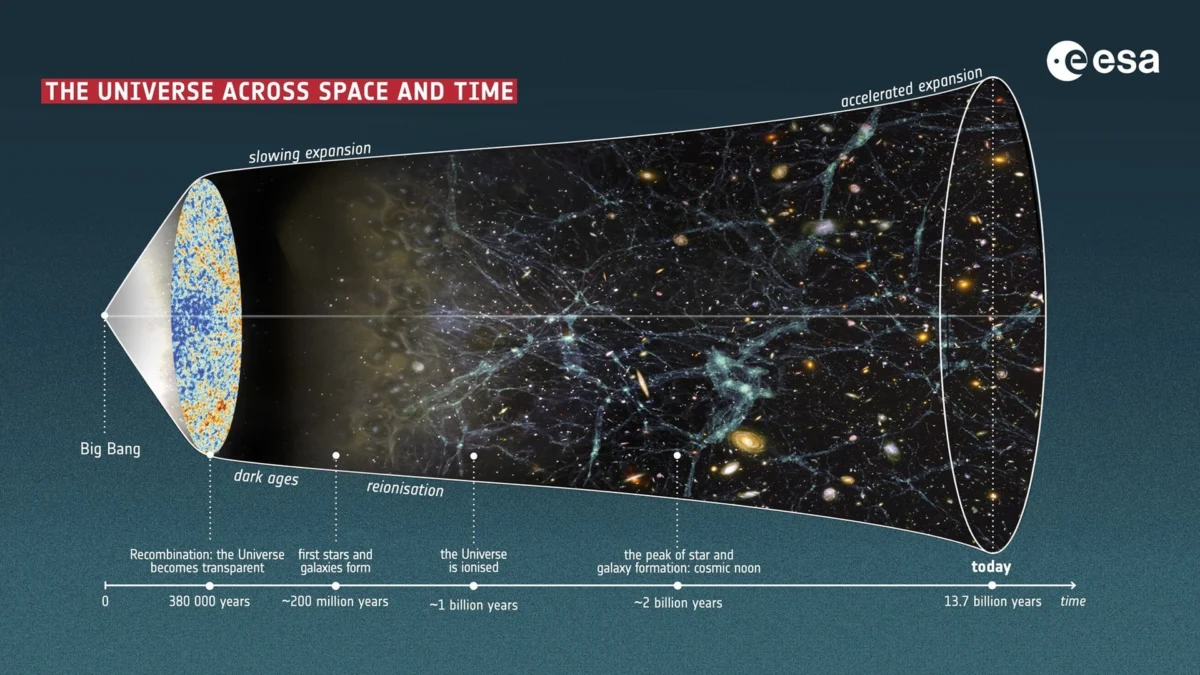
As the international community enters a new era of lunar exploration, the focus of space agencies is shifting from mere visitation to the establishment of a sustained human presence. While the Artemis program and China’s International Lunar Research Station (ILRS) focus heavily on resource extraction and habitat construction, a specialized scientific frontier is emerging on the lunar far side. This region, shielded from the cacophony of terrestrial radio interference, has become the focal point for a groundbreaking mission led by the University of Cambridge. The CosmoCube satellite, a compact yet sophisticated observatory, is being developed to capture the "faint whispers" of the early universe, specifically the 21-centimeter line emitted by neutral hydrogen atoms during the elusive period known as the Cosmic Dark Ages.
The Enigma of the Cosmic Dark Ages and Cosmic Dawn
To understand the significance of the CosmoCube mission, one must look back nearly 13.8 billion years. Following the Big Bang, the universe was a hot, dense plasma. Approximately 380,000 years later, the universe cooled sufficiently for protons and electrons to combine into neutral hydrogen atoms, a milestone known as recombination. This event released the Cosmic Microwave Background (CMB), which has been mapped with exquisite detail by missions such as NASA’s Wilkinson Microwave Anisotropy Probe (WMAP) and the European Space Agency’s (ESA) Planck satellite.
However, following the release of the CMB, the universe entered a period of total darkness. For the next several hundred million years, no stars or galaxies existed to illuminate the cosmos. This "Cosmic Dark Ages" lasted until the first stars began to ignite, an era termed the "Cosmic Dawn." These first stars emitted ultraviolet radiation that began to reionize the surrounding neutral hydrogen, eventually making the universe transparent to optical light.
While modern telescopes like the James Webb Space Telescope (JWST) and the Hubble Space Telescope can see back to the very end of this period—capturing the first faint glimmers of early galaxies—the vast stretch of time between the CMB and the first stars remains a "final frontier" in cosmology. The only way to "see" into this darkness is through radio astronomy, specifically by detecting the 21-centimeter spectral line of neutral hydrogen. As the universe expanded, these signals were stretched, or redshifted, into extremely low frequencies that are nearly impossible to detect from Earth.
The Lunar Far Side: An Unmatched Radio-Quiet Sanctuary
The primary obstacle to studying the Cosmic Dark Ages from Earth is the planet itself. The Earth’s upper atmosphere, specifically the ionosphere, acts as a barrier, reflecting and distorting low-frequency radio waves from space. Furthermore, the modern world is saturated with Radio-Frequency Interference (RFI) from television broadcasts, FM radio, satellite constellations, and global telecommunications. For a signal that has traveled 13.5 billion years, these terrestrial noises are deafening.
The far side of the Moon offers a unique solution. Because the Moon is tidally locked to Earth, the far side always faces away from our planet. The 3,474 kilometers of lunar rock act as a massive natural shield, blocking all terrestrial RFI. This creates what scientists call a "radio-quiet" zone, the only place in the inner solar system where ultra-sensitive radio telescopes can operate without interference.
CosmoCube will leverage this environment by entering a lunar orbit. During each two-hour circuit around the Moon, the satellite will spend approximately 40 minutes in the "radio shadow" of the far side. It is during these windows of absolute silence that the mission will perform its most critical observations, operating at frequencies between 10 and 50 MHz—ranges that are inaccessible to ground-based arrays.
Technical Innovation: The CosmoCube Architecture
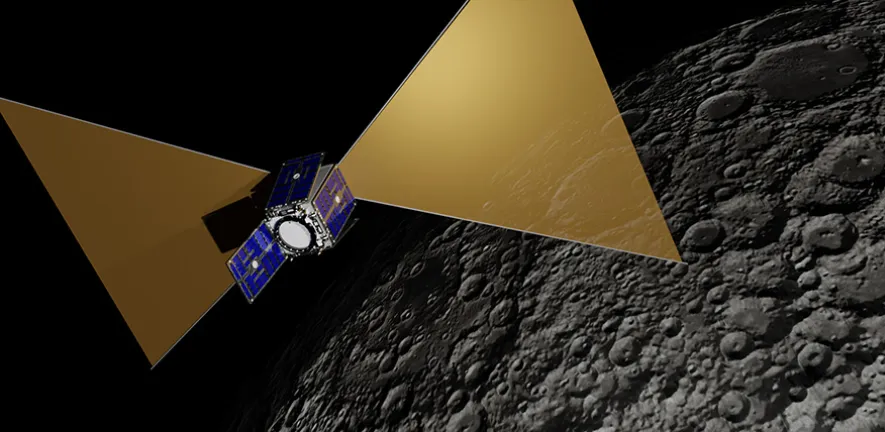
The CosmoCube mission is distinguished not only by its scientific goals but by its compact and cost-effective design. Developed in collaboration with Surrey Space Technology Limited (SSTL), the mission utilizes the SSTL-21 spacecraft platform. This small-satellite approach allows for a faster development cycle and lower launch costs compared to traditional "flagship" class missions.
At the heart of the CosmoCube is a state-of-the-art miniature radiometer. This instrument utilizes Radio-Frequency Systems-on-Chip (RFSoCs), which integrate analog-to-digital converters and digital signal processing onto a single microchip. This technology allows the satellite to process vast amounts of data in real-time with minimal power consumption, a necessity for a platform of its size.
The satellite will deploy a long, lightweight radio antenna designed to capture the extremely long wavelengths of the redshifted 21-centimeter signal. Over its planned two-year primary mission, CosmoCube aims to accumulate over 1,000 hours of high-quality data.
To ensure the integrity of this data, the team, led by Professor Eloy de Lera Acedo of Cambridge’s Cavendish Laboratory, will employ advanced Bayesian statistical analysis. This mathematical framework allows researchers to distinguish the incredibly faint cosmological signal from "foreground" noise, such as the natural radio emissions from our own Milky Way galaxy. By combining in-flight measurements with complex computer simulations of how the antenna responds to different regions of the sky, the team can filter out distortions and isolate the "whispers" of the early universe.
Probing the Mystery of Dark Matter
Beyond mapping the distribution of hydrogen, CosmoCube has a secondary, equally profound objective: investigating the nature of dark matter. Dark matter makes up about 27% of the universe’s mass-energy content, yet it does not emit, absorb, or reflect light, making it invisible to traditional telescopes. Its existence is inferred through its gravitational effects on visible matter.
During the Cosmic Dark Ages, dark matter played a pivotal role as the "scaffolding" of the universe. Its gravitational pull drew neutral hydrogen into dense clouds, which eventually collapsed to form the very first stars. By studying the fluctuations in the 21-centimeter signal, CosmoCube will provide data on how dark matter interacted with baryonic (normal) matter during these formative stages.
"This emission from hydrogen after the Big Bang, but before the first stars, will hopefully allow us to understand the role of dark matter in the early universe," Professor de Lera Acedo explained. If the hydrogen gas cooled faster or clumped differently than standard cosmological models predict, it could signal the presence of non-standard dark matter interactions, potentially revolutionizing our understanding of fundamental physics.
Chronology and Development Timeline
The roadmap for CosmoCube is integrated into the broader surge of lunar exploration scheduled for the late 2020s and early 2030s.

- 2023–2024: Initial conceptualization and successful participation in the ESA "mini-Fast" mission Call for Ideas. Laboratory prototypes of the RFSoC-based radiometer are developed and tested.
- 2025–2026: Environmental and thermal testing at STFC RAL Space. These tests ensure the satellite can survive the extreme temperature fluctuations of lunar orbit, where surfaces can swing from boiling heat in sunlight to freezing cold in the Moon’s shadow.
- 2027–2028: Final integration of the SSTL-21 platform with the scientific payload and completion of the Bayesian data-processing software.
- 2029–2030: Targeted launch window. The satellite will likely hitch a ride as a secondary payload on a larger lunar mission or a commercial lunar delivery service.
- Mission Phase: A two-year primary observation period in lunar orbit, with data being relayed to Earth during the portions of the orbit when the satellite has a direct line of sight to terrestrial ground stations.
Strategic Partnerships and Official Responses
The mission represents a significant collaboration between academia, government, and the private sector. Funded in part by the UK Space Agency, the project involves the University of Cambridge, Portsmouth University, and STFC RAL Space.
Dr. Will Grainger of STFC RAL Space emphasized the engineering ingenuity required for the mission: "CosmoCube is aiming to do some ambitious science from a very small satellite in a challenging environment. We’ve worked to ensure the thermal performance allows the payload to operate and perform the required sensitive measurements under the different temperature conditions it will experience."
The mission is also being framed as a showcase for British aerospace expertise. Professor de Lera Acedo noted that the hardware, software, and implementation are all being developed within the UK, positioning the nation as a leader in the niche but critical field of lunar-based radio astronomy.
Implications: The Future of the Radio-Quiet Moon
While CosmoCube represents a giant leap for cosmology, it also arrives at a time of increasing concern regarding the "sanctity" of the lunar far side. As NASA, China, and private entities like SpaceX and Blue Origin plan lunar bases and communication constellations (such as NASA’s LunaNet), the very radio silence that CosmoCube relies on is under threat.
Future lunar orbiters and surface rovers will emit their own radio signals, potentially creating a "local" RFI environment on the far side. Scientists are currently advocating for international agreements to designate specific frequency bands or regions of the Moon as protected "radio-quiet" zones.
CosmoCube’s mission is, in many ways, a race against time. By launching within the next five years, it hopes to secure pristine data before the "human noise" of the 21st-century lunar rush reaches the far side. If successful, CosmoCube will not only provide the first clear window into the Cosmic Dark Ages but will also prove that small, cost-effective satellites can solve some of the most profound mysteries of the universe.
The data gathered will bridge the gap between the Big Bang’s afterglow and the birth of the first galaxies, finally completing the timeline of our cosmic history and revealing the invisible hand of dark matter that shaped the world we see today.