admin
admin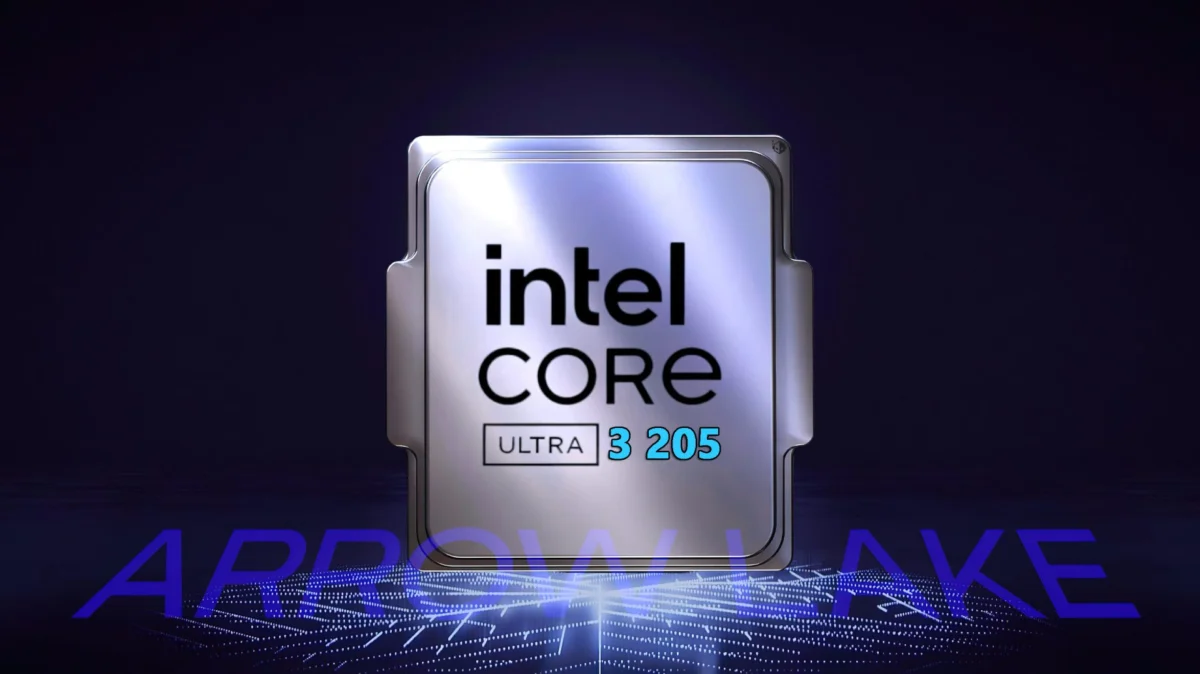
The landscape of entry-level desktop computing is undergoing a significant shift as Intel transitions its product stack toward the "Core Ultra" branding, moving away from the decades-old "i-series" nomenclature. The latest development in this architectural pivot comes from recent benchmark leaks on PassMark, where the Intel Core Ultra 3 205—the entry-level representative of the Arrow Lake-S family—has made its debut. The data reveals a processor that challenges the traditional hierarchy of performance, outstripping its higher-tier siblings and competitors in single-threaded tasks while highlighting the inherent limitations of its truncated core count in multi-threaded environments.
The Architecture of Arrow Lake-S and the Entry-Level Tier
The Intel Core Ultra 3 205 is built upon the Arrow Lake-S architecture, which represents a fundamental change in how Intel designs its desktop processors. Utilizing the LGA 1851 socket, the Arrow Lake series moves toward a disaggregated tile-based design, leveraging advanced manufacturing processes from TSMC for several of its components. At the heart of the Ultra 3 205 are the new "Lion Cove" Performance-cores (P-cores) and "Skymont" Efficient-cores (E-cores).
One of the most notable shifts in this generation is Intel’s decision to remove Hyper-Threading (Simultaneous Multithreading) from the entire lineup. Consequently, the Core Ultra 3 205 features an 8-core, 8-thread configuration, consisting of four P-cores and four E-cores. While the removal of Hyper-Threading was initially met with skepticism by the enthusiast community, Intel has maintained that the IPC (Instructions Per Cycle) gains provided by the Lion Cove architecture more than compensate for the loss of virtual threads in most gaming and productivity scenarios.
The Core Ultra 3 205 operates with a base Thermal Design Power (TDP) of 65W, positioning it as a standard desktop part suitable for a wide range of cooling solutions, from basic stock coolers to more robust aftermarket options. This distinguishes it from the previously spotted "T" variant, the Core Ultra 3 205T, which is a low-power 35W chip designed for small form factor (SFF) systems and fanless industrial applications.
Analyzing the PassMark Benchmark Results
The recent entry on PassMark, as identified by hardware observers, provides the first clear look at the non-T variant’s performance profile. The results are particularly striking in the single-core metric. The Core Ultra 3 205 achieved a single-thread score that marginally surpasses the Intel Core Ultra 5 225, a chip positioned higher in the product stack. Furthermore, it managed to edge out the AMD Ryzen 5 9600X, a popular mid-range processor from AMD’s latest Zen 5 lineup, in the same single-threaded category.
This high single-core performance is largely attributed to the Lion Cove architecture. By focusing on raw instructions per cycle and eliminating the overhead associated with Hyper-Threading, Intel has managed to extract impressive burst performance from its entry-level silicon. For gaming, where frame rates are often dictated by the speed of the primary execution thread, this makes the Ultra 3 205 an unexpectedly potent contender for budget-conscious gamers.
However, the multi-threaded results paint a more balanced picture. In the overall CPU Mark score, which aggregates various computational tasks, the Core Ultra 3 205 delivered approximately 26,000 points. While this is a respectable figure for an 8-core entry-level part, it falls behind the Core Ultra 5 225 and the Ryzen 5 9600X. The Ultra 5 225, which features a 10-core configuration (6 P-cores and 4 E-cores), utilizes its higher core count to pull ahead in tasks such as video rendering, file compression, and multi-tasking.
When compared directly to its low-power sibling, the Core Ultra 3 205 shows an approximate 12% performance advantage in multi-threaded operations over the 35W 205T. This gap is expected, as the 65W envelope allows the 205 to maintain higher all-core boost frequencies for longer durations.
A Chronology of the Arrow Lake Entry-Tier Leaks
The path to the Core Ultra 3 205’s benchmark reveal has been marked by several key milestones over the past several months.
In late 2024, the first rumors of an "Ultra 3" tier emerged, suggesting that Intel would not abandon the budget market despite the high manufacturing costs associated with the new tile-based architecture. Early leaks from French retailers listed the processor for approximately $149, hinting at a price point that would directly challenge AMD’s Ryzen 5 8000 and 7000 series budget offerings.
By early 2025, the Core Ultra 3 205T (the 35W variant) appeared on various certification lists and eventually surfaced on PassMark. This initial data gave the industry its first hint that the Arrow Lake architecture was highly efficient in single-threaded tasks, even when severely power-constrained.
The most recent appearance of the 65W Core Ultra 3 205 confirms that Intel has finalized the specifications for its OEM partners. However, despite these listings and benchmarks, the processor remains largely an "OEM-exclusive" product. This means that while it will be found in pre-built systems from manufacturers like Dell, HP, and Lenovo, it is currently not available as a boxed, retail product for individual PC builders.

Market Implications and the OEM Strategy
Intel’s decision to limit the Core Ultra 3 205 to the OEM market is a strategic move that has drawn mixed reactions from the industry. Historically, the Core i3-12100 and i3-13100 were darlings of the budget DIY community, offering "just enough" performance for gaming at a sub-$120 price point. By withholding the Ultra 3 205 from the retail market, Intel appears to be steering DIY enthusiasts toward the Core Ultra 5 series, which commands a higher price premium.
From a business perspective, the OEM-first strategy allows Intel to manage its inventory of Arrow Lake tiles more effectively. Since the Arrow Lake chips use a complex packaging method (Foveros), production costs are higher than the monolithic designs of the previous Raptor Lake generation. Prioritizing high-volume OEM contracts ensures a steady stream of revenue while the company scales its production capabilities.
Industry analysts suggest that the high single-core performance of the Ultra 3 205 makes it an ideal "office powerhouse." Most modern office applications and web browsers rely heavily on single-thread responsiveness. By providing a chip that beats more expensive rivals in this specific metric, Intel can offer a compelling value proposition to corporate buyers who need snappy performance for standard productivity tasks without the need for the multi-core muscle required for content creation.
Comparative Context: Intel vs. AMD in the Budget Sector
The budget processor market is currently a battleground of architectures. AMD has traditionally dominated this space with its "G-series" APUs (Accelerated Processing Units), such as the Ryzen 5 8500G, which combine decent CPU performance with robust integrated graphics.
The Core Ultra 3 205, however, focuses on a different priority. While its integrated graphics (based on the Xe-LPG architecture) are a significant step up from the older UHD 730/770 graphics, its primary strength is its raw computational speed. The fact that an entry-level Intel chip can outpace a Zen 5-based Ryzen 5 9600X in single-core tasks—a chip that is ostensibly a tier above it—indicates that Intel’s architectural improvements in Lion Cove are substantial.
However, AMD retains an advantage in the DIY market. Because AMD continues to release "F-series" and "G-series" chips to retail channels, budget builders often default to Team Red. If Intel eventually decides to release the Core Ultra 3 205 as a standalone retail product, it could disrupt this dynamic, especially if it maintains the rumored sub-$150 price point.
Technical Analysis of Multi-Threaded Limitations
The "noticeably slower" multi-threaded performance mentioned in the benchmark reports is a logical consequence of the 4+4 core design. In the previous generation, the Core i3-14100 utilized 4 P-cores with Hyper-Threading, resulting in 8 threads. The Core Ultra 3 205 also offers 8 threads, but through a combination of 4 physical P-cores and 4 physical E-cores.
While physical E-cores are generally more efficient and powerful than the virtual threads provided by Hyper-Threading, they still do not match the throughput of additional P-cores. In workloads like Cinebench or PassMark’s multi-thread test, the lack of a higher P-core count prevents the Ultra 3 205 from competing with the Core Ultra 5 225, which boasts 6 P-cores.
Furthermore, the Arrow Lake architecture lacks a large L3 cache compared to AMD’s X3D parts or even its own high-end Core Ultra 9 siblings. This cache limitation, combined with the 8-thread ceiling, defines the Ultra 3 205 as a "specialist" chip—excellent for gaming and general use, but poorly suited for heavy multi-threaded production work.
Broader Impact on the PC Ecosystem
The introduction of the Core Ultra 3 205 marks the final stages of the transition to the LGA 1851 platform. For consumers, this transition requires a new motherboard (800-series chipsets) and a complete move to DDR5 memory, as Arrow Lake does not support the older DDR4 standard.
This "platform tax" is perhaps the biggest hurdle for the entry-level segment. Even if the Core Ultra 3 205 is priced affordably at $149, the total cost of a system upgrade—including a new motherboard and DDR5 RAM—may push budget-conscious users toward older, but still capable, LGA 1700 or AM4 platforms.
Nevertheless, the benchmark results for the Core Ultra 3 205 are an encouraging sign for the future of Intel’s architecture. They prove that the IPC gains of the Lion Cove cores are tangible and that Intel can deliver "top-tier" single-core speed even in its most affordable silicon. As the production of Arrow Lake matures, it remains to be seen whether Intel will yield to consumer demand and bring these impressive entry-level chips to the retail shelves, providing a much-needed boost to the budget gaming community.