Garick Elordi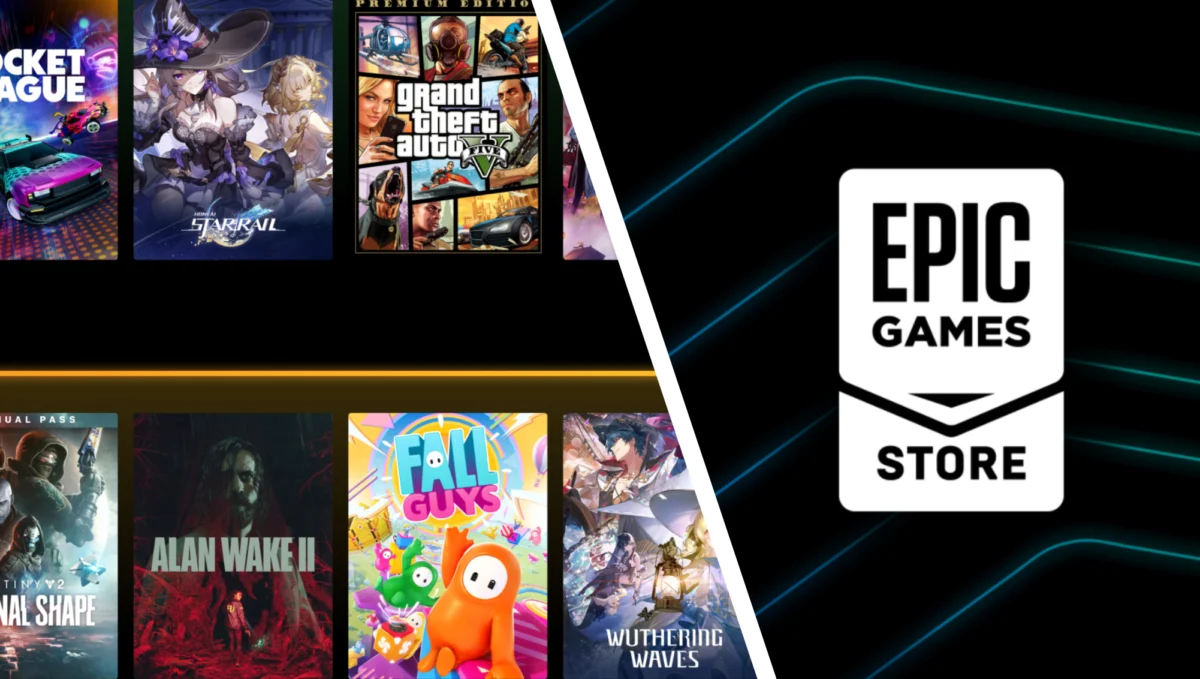
The Epic Games Store, launched in late 2018 with the ambitious goal of disrupting the digital distribution monopoly held by Valve’s Steam, currently finds itself at a critical crossroads. Despite years of aggressive investment, high-profile legal battles, and a rotating door of weekly free game offerings, industry experts are beginning to question whether the platform can ever truly bridge the gap with its primary competitor. While Epic Games leadership has spent much of the current fiscal year promising a comprehensive launcher overhaul—including a faster, redesigned storefront featuring tailored recommendations and improved navigation—market intelligence suggests that technical improvements may be insufficient to unseat the deeply entrenched consumer habits of the PC gaming community.
In a recent assessment provided to industry analysts, Emmanuel Rosier, the director of market intelligence at Newzoo, offered a sobering perspective on the storefront’s trajectory. Rosier admitted that he struggles to see a path to recovery for the platform in its current form, citing the overwhelming "inevitability" of Steam. According to Rosier, Epic’s strategy of using free game giveaways to lure users has created a "collector" culture rather than a dedicated player base. This phenomenon sees users logging in momentarily to claim a title without ever installing or playing it, failing to foster the long-term engagement necessary to sustain a digital ecosystem.
The Steam Hegemony and the Challenge of Platform Inertia
The primary obstacle facing the Epic Games Store is not merely a lack of features, but the sheer gravity of Steam’s market position. Over the past two decades, Steam has evolved from a simple DRM tool for Valve’s own games into a comprehensive social network, workshop for modders, and a centralized library for tens of millions of users. For many gamers, the psychological cost of "fragmenting" their collection across multiple launchers outweighs the benefits of the occasional discount or exclusive title on the Epic Games Store.
Rosier’s analysis highlights a specific, counter-intuitive trend: the "Steam spillover" effect. In several documented instances, a game being offered for free on the Epic Games Store has actually resulted in a subsequent surge in sales for that same title on Steam. This occurs because the visibility generated by Epic’s marketing campaign reminds players of a game’s existence, but their preference for Steam’s community features, cloud saves, and achievement systems leads them to purchase it on their preferred platform rather than claiming it for free on Epic.
This inertia is compounded by the "multi-front war" that Epic Games has been fighting since 2020. Under the leadership of CEO Tim Sweeney, the company has simultaneously challenged Steam on PC, Apple on iOS, and Google on Android. While these legal battles were intended to lower platform fees for all developers, they have placed an immense strain on Epic’s resources. Rosier noted that by attempting to win everywhere at once, the company may have overextended itself, leading to a situation where they "ran out of steam" and cannot effectively compete on all fronts simultaneously.
A Chronology of Ambition: The Epic Games Store Timeline
To understand the current skepticism surrounding the platform, it is necessary to examine the timeline of its development and the shifting strategies employed by Epic Games over the last seven years:
- December 2018: The Epic Games Store launches, offering a 12% revenue cut for developers compared to Steam’s industry-standard 30%. The store debuts with a strategy of aggressive third-party exclusives.
- 2019–2020: Epic spends hundreds of millions of dollars on "minimum guarantees" to secure titles like Control, Metro Exodus, and Borderlands 3. The "Free Games Collection" program begins, giving away a new title every week.
- August 2020: Epic initiates "Project Liberty," a legal and public relations campaign against Apple and Google. This leads to Fortnite being removed from mobile app stores and years of litigation.
- 2021–2022: Internal documents revealed during the Apple vs. Epic trial show that the Epic Games Store is not yet profitable, with the company projecting it would not reach profitability until 2024 or 2025.
- September 2023: Epic Games announces layoffs of approximately 16% of its workforce (around 830 employees), citing a need to stabilize finances as the company transitions toward its "metaverse" goals.
- 2024: Epic refocuses on the "Epic Games Store for Mobile" following the implementation of the Digital Markets Act (DMA) in the European Union.
- February 2025: Analyst reports suggest the store’s growth has plateaued, despite promises of a major technical overhaul and expansion to Xbox consoles.
The Fortnite Paradox: Development Success vs. Storefront Struggles
While the storefront struggles to find its footing, Epic Games continues to see unparalleled success as a developer. Fortnite remains a cultural juggernaut, successfully transitioning from a Battle Royale game into a multi-purpose platform featuring LEGO experiences, music festivals, and racing modules. Rosier pointed to this as a rare bright spot for the company, noting that Epic has put significant thought into the current state of Fortnite.
The game’s recent seasons have doubled down on crossover cosmetics, bringing together disparate intellectual properties in a way no other medium has achieved. Characters from Sonic the Hedgehog, Pac-Man, Kingdom Hearts, and Persona 5 coexist within the same digital space, creating a "metaverse" that actually generates revenue. Rosier observed that Fortnite is in a significantly stronger position today than it was a year ago, suggesting that Epic’s strengths may lie more in ecosystem creation than in traditional digital retail.
However, this success creates a paradox. The massive profits generated by Fortnite have essentially subsidized the losses of the Epic Games Store for years. As the "metaverse" becomes the primary focus, the storefront runs the risk of becoming a secondary utility—a means to launch Fortnite rather than a destination for purchasing a diverse array of third-party games.
Strategic Shifts: Mobile Markets and the Xbox Frontier
Recognizing the difficulty of competing with Steam on the desktop, Epic has pivoted toward new hardware frontiers. Steve Allison, General Manager of the Epic Games Store, recently confirmed that the storefront is planned to launch on Xbox consoles "on day one" of the next hardware cycle, or as soon as Microsoft’s ecosystem allows. This move is part of a broader strategy to position the Epic Games Store as the first "platform-agnostic" digital shop, available on PC, Mac, Android, iOS, and consoles.
The launch of the Epic Games Store on mobile devices in the European Union represents another pillar of this survival strategy. By leveraging the Digital Markets Act, Epic hopes to capture a share of the massive mobile gaming market, where competition is currently less entrenched than on PC. However, the friction of "sideloading" apps on Android and the complex installation process on iOS continue to hinder adoption rates.
Implications for the Digital Distribution Landscape
The ongoing struggle of the Epic Games Store has broader implications for the gaming industry at large. When Epic launched, many developers lauded the 88/12 revenue split as a necessary disruption that would force Valve to lower its 30% commission. While Valve did eventually introduce a tiered system (reducing its cut to 25% or 20% for games that earn over $10 million or $50 million respectively), the radical industry-wide shift Epic hoped for has not materialized.
If the Epic Games Store fails to reach profitability or significant market share, it could signal to other potential competitors that Steam’s dominance is effectively unbreakable. This would cement the status quo of high platform fees, which Epic has long argued are detrimental to the sustainability of independent and mid-sized studios.
Furthermore, the failure of the "exclusivity" model—where Epic paid for games to stay off Steam for a year—has changed how publishers approach the platform. Most major publishers have returned to Steam (including Ubisoft and EA), acknowledging that the loss in visibility and sales volume on Valve’s platform is rarely compensated for by Epic’s upfront payments.
Conclusion: A Pivot Toward Utility
As 2025 progresses, the Epic Games Store appears to be shifting its identity. Rather than trying to "out-Steam" Steam with community features and a massive library, it is becoming a specialized gateway for Epic’s own ecosystem and a testbed for regulatory change in the mobile and console spaces.
While technical overhauls and better recommendations are welcome additions for existing users, analysts like Emmanuel Rosier believe the window for the Epic Games Store to become a true market leader on PC may have closed. The platform’s survival may now depend on its ability to integrate into the "metaverse" and find success on mobile and console hardware, where the rules of engagement are still being written. For now, the Epic Games Store remains a fascinating, if expensive, experiment in market disruption—a reminder that in the digital age, convenience and community often carry more weight than lower prices and free gifts.