
 George Chandra Eka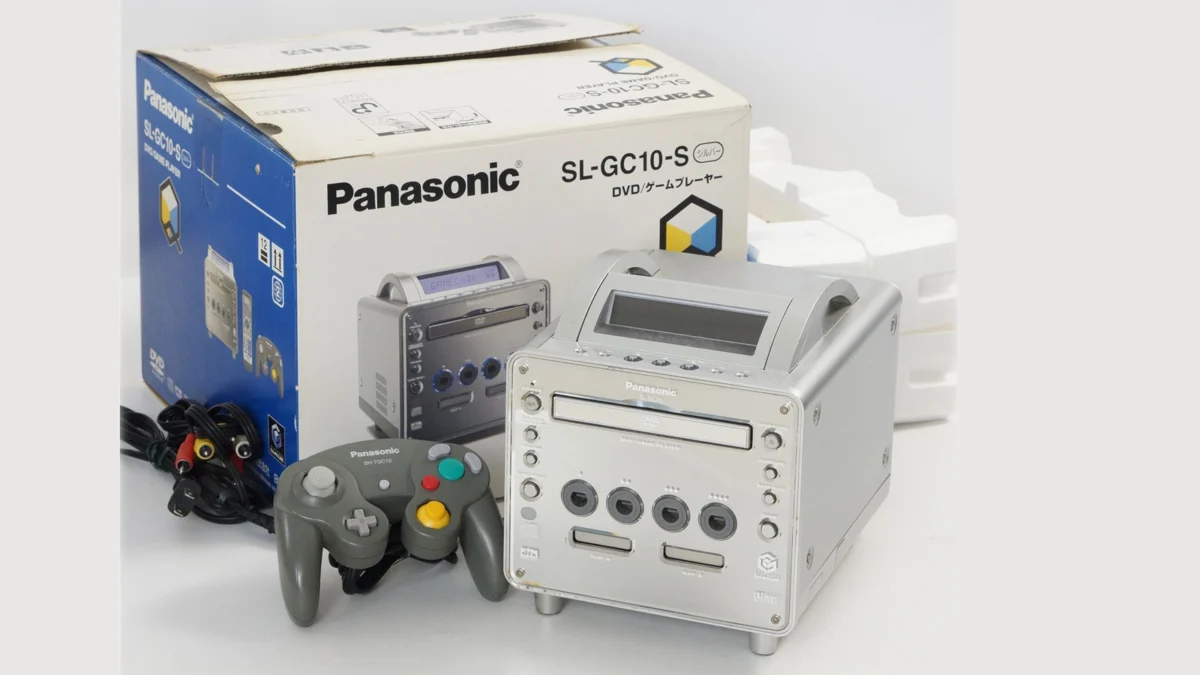
The Panasonic Q, an enigmatic and exceedingly rare hybrid console, stands as a curious testament to a pivotal era in consumer electronics history. This distinctive device, which combined Nintendo’s GameCube with a full-featured DVD and CD player, was a direct response to intense market pressures during the sixth generation of video game consoles. Despite its ambitious design and unique functionality, the Panasonic Q saw limited commercial success upon its Japan-only release in December 2001. Today, however, its scarcity and historical significance have transformed it into a highly sought-after collector’s item, often commanding prices upwards of $1,000, with complete, boxed units frequently exceeding $2,000 on secondary markets.
The Sixth Generation Console Wars and the DVD Imperative
The turn of the millennium ushered in an unprecedented era of competition in the video game industry. Sony’s PlayStation 2 (PS2), launched in Japan in March 2000 and North America in October 2000, quickly established dominance not merely as a gaming machine but as a multifaceted home entertainment system. A critical factor in its meteoric rise was its integrated DVD player, a feature that resonated powerfully with consumers at a time when standalone DVD players were still relatively expensive. For many households, the PS2 offered a compelling two-in-one value proposition: a cutting-edge gaming console and a state-of-the-art DVD player for a single, competitive price. This strategic inclusion propelled the PS2 to become the best-selling video game console of all time, ultimately selling over 155 million units worldwide.
Nintendo, traditionally focused on delivering pure gaming experiences, found itself in an unfamiliar predicament with the launch of its GameCube in September 2001 in Japan and November 2001 in North America. While lauded for its powerful hardware, innovative controller, and exceptional first-party game library, the GameCube notably lacked DVD playback capabilities. Instead, it utilized a proprietary 8cm optical disc format, which, while compact and efficient for games, made it incompatible with standard 12cm DVDs. This omission proved to be a significant disadvantage in the fiercely competitive market, where the PS2’s multimedia functionality had become an expected standard. The GameCube, despite its strengths, struggled to gain significant market share against Sony’s juggernaut, selling approximately 21.74 million units globally over its lifespan, a stark contrast to the PS2’s overwhelming success. Microsoft’s Xbox, which launched shortly after the GameCube in November 2001, also offered DVD playback (albeit requiring a separate adapter), further highlighting Nintendo’s strategic gap.
Genesis of a Hybrid: Nintendo and Panasonic’s Collaboration
The decision to create the Panasonic Q was a direct consequence of this market pressure and Nintendo’s recognition of the GameCube’s multimedia deficiency. Rather than redesigning the GameCube itself—a costly and time-consuming endeavor—Nintendo opted for a collaborative solution with a long-standing partner: Matsushita Electric Industrial Co., Ltd., the parent company of Panasonic. This partnership was not new; Matsushita had previously assisted Nintendo in developing the GameCube’s proprietary optical miniDVD format, demonstrating a deep technical relationship between the two giants.
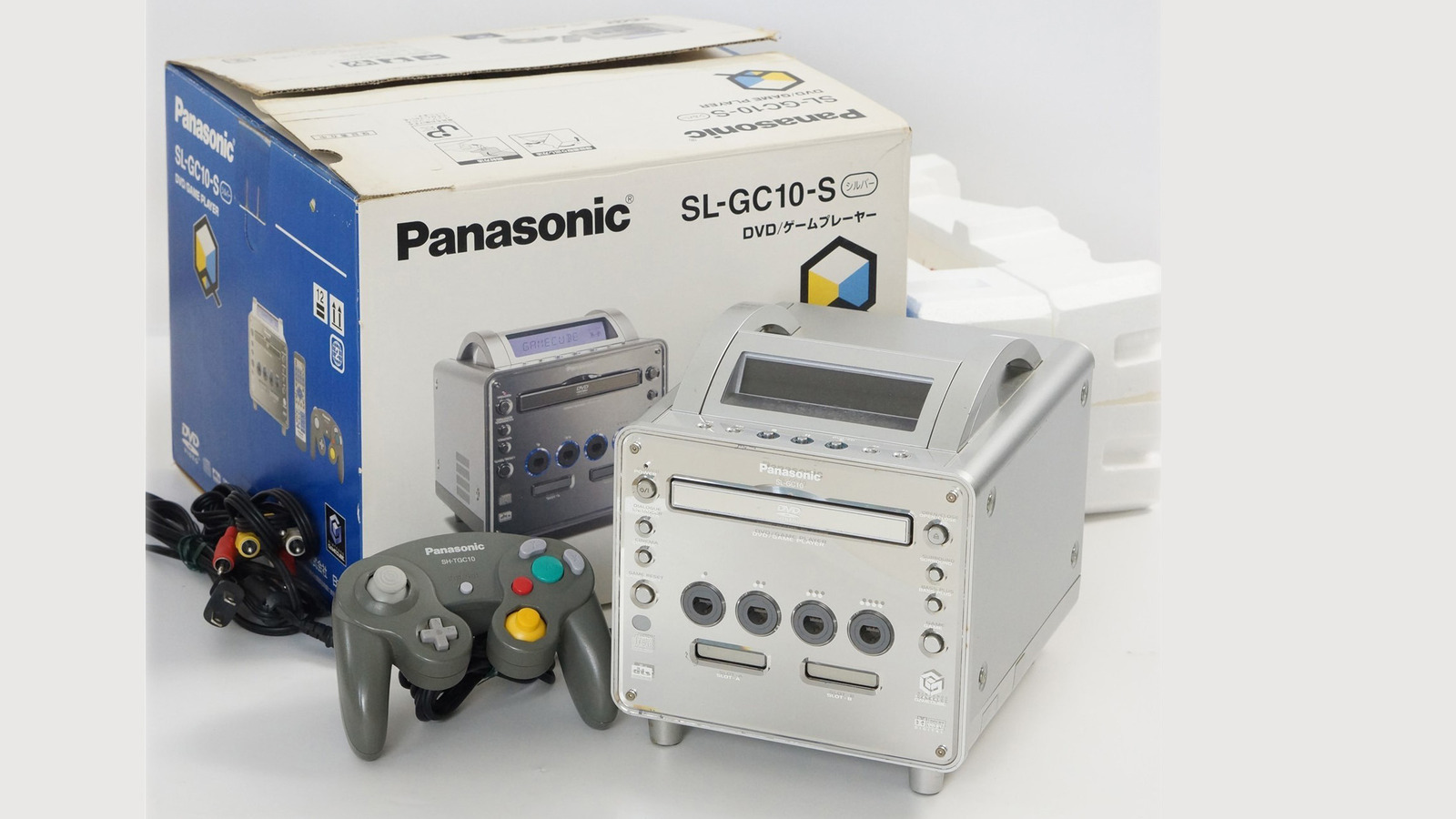
The rationale was clear: leverage Panasonic’s expertise in consumer electronics, particularly in optical media and home theater systems, to integrate DVD functionality into the GameCube architecture. This approach allowed Nintendo to quickly address a critical market demand without diverting its own internal resources from game development or console manufacturing. For Panasonic, it presented an opportunity to enter the burgeoning console market, albeit in a niche capacity, and showcase its advanced DVD playback technology within a gaming context. The resulting device, officially named the Panasonic SL-GC10 but universally known as the Panasonic Q, was born out of this strategic alliance, aiming to bridge the gap between dedicated gaming and comprehensive home entertainment.
Design and Features: A Deep Dive into the Panasonic Q
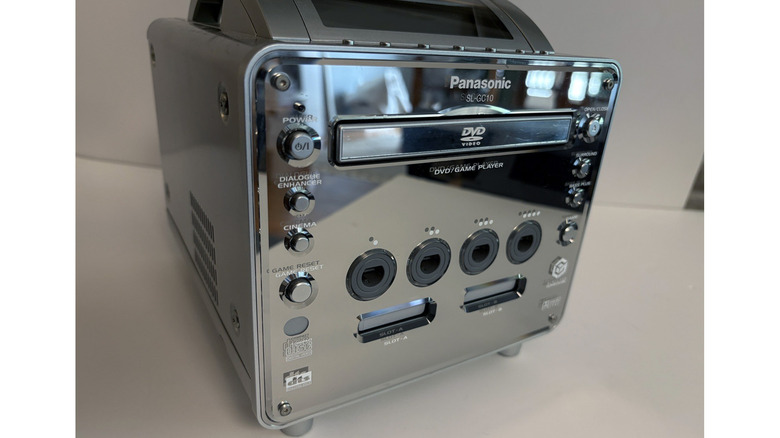
Released exclusively in Japan in December 2001, just three months after the GameCube’s Japanese debut, the Panasonic Q immediately stood out with its striking aesthetic. Breaking from Nintendo’s characteristically vibrant and often playful console designs, the Q adopted a sleek, sophisticated, and distinctly "home theater appliance" look. Its most prominent features included a reflective chrome-like front panel, a backlit LCD display that provided operational information, and blue-glowing ports, all of which contributed to a futuristic, high-end consumer electronics vibe quintessential of the early 2000s. This industrial design contrasted sharply with the GameCube’s purple, indigo, or black cube-like form factor, positioning the Q as a more mature, aesthetically integrated component within a living room setup.
Functionally, the Panasonic Q was indeed a bizarre mashup. It featured a motorized disc tray capable of accepting not only GameCube’s 8cm miniDVDs but also standard 12cm DVDs and audio CDs. Panasonic took the home theater aspect seriously, endowing the Q with a suite of advanced audio and video processing features. These included a "Cinema mode" for enhanced picture processing during movie playback, along with robust audio capabilities such as Dolby Digital and DTS (Digital Theater Systems) for surround sound output, a Dialogue Enhancer, and Bass Plus for richer audio. These features were designed to elevate the DVD and CD playback experience to that of a dedicated, high-fidelity media player.
However, the "hybrid" nature of the Q was more akin to two distinct systems housed within a single chassis rather than a seamless integration. Crucially, the advanced home theater features were entirely separate from the game console functionality. When playing GameCube games, audio was limited to the console’s standard analog connections, bypassing the Q’s sophisticated digital audio processing. To switch between gaming and DVD/CD playback, users had to manually press a hardware button, which effectively powered down one mode and restarted the other. This meant a complete reboot of the system’s core functions, highlighting the architectural segregation rather than a unified multimedia platform. This operational friction was a significant drawback compared to the PS2, which allowed instant switching between gaming and DVD playback without a full system restart.
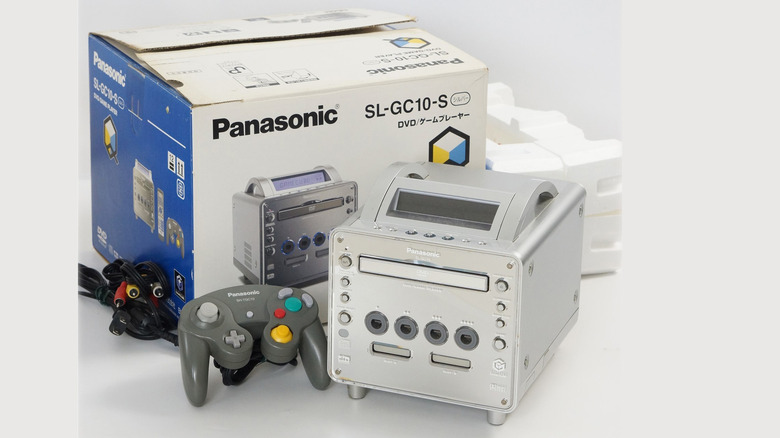
The Q also came with Panasonic-branded accessories that mirrored its dual nature. A gray GameCube controller, emblazoned with the Panasonic logo, was included for gaming, alongside a matching gray remote control dedicated to the DVD player functions. While the gaming half of the Q was internally identical to a standard GameCube—featuring the same controller ports, memory card slots, and full compatibility with the GameCube’s impressive game library (albeit region-locked to Japan for unmodified units)—its unique industrial design did lead to one notable hardware incompatibility. The standard Game Boy Player, an optional accessory that allowed users to play Game Boy, Game Boy Color, and Game Boy Advance games on their TV by attaching beneath the GameCube, did not fit the Q’s modified base. This necessitated Panasonic to release a specially designed, modified version of the Game Boy Player specifically for the Q, further underscoring its distinct identity.
Market Reception and Commercial Struggles
Despite the significant engineering effort and the strategic intent behind its creation, the Panasonic Q struggled immensely to find an audience. Its commercial performance was underwhelming, leading to its eventual discontinuation. Several factors contributed to its limited success:
- Exorbitant Price: The Panasonic Q launched in Japan with a retail price of ¥39,800, which translated to approximately $313 USD at the time (in December 2001). This was a substantial amount for a niche product. While this price point matched the PS2’s Japanese launch price nearly two years earlier, Sony’s console had already built an enormous installed base and cemented the DVD player as a central, seamlessly integrated selling point. By 2001, standalone DVD players had also become more affordable, diminishing the Q’s value proposition as a cost-effective hybrid.
- Late Entry: The Q arrived well after the PS2 had already captured the market with its integrated DVD player. Consumers who wanted a gaming console with DVD functionality had largely already invested in a PS2. The market window for such a device, particularly as a "fix" for Nintendo’s console, was rapidly closing.
- Operational Friction: The clunky manual switching between gaming and DVD modes, requiring a virtual reboot, was a significant user experience flaw. It negated the convenience that a truly integrated hybrid device should offer and highlighted the Q’s architectural compromises.
- Japan-Only Release: The decision to launch the Q exclusively in Japan severely limited its potential market. While some modded imported units made their way overseas, the lack of a broader international release, particularly in the critical North American and European markets, ensured its status as a niche product. Nintendo’s primary focus remained on its core GameCube console globally.
- Brand Confusion: The Panasonic branding on a Nintendo console, despite the partnership, may have caused some confusion among consumers accustomed to distinct brand identities in the gaming space.
Analysts at the time likely viewed the Q as a desperate, albeit interesting, attempt by Nintendo and Panasonic to address a clear market deficiency. Its commercial failure was largely predictable given the competitive landscape, pricing, and operational design choices. The Q never achieved mainstream appeal, and its production numbers were relatively low, paving the way for its future rarity.
A Niche Legacy: The Panasonic Q as a Collector’s Holy Grail
The Panasonic Q’s commercial struggles in the early 2000s are in stark contrast to its revered status in the retro gaming and console collecting communities today. Precisely because of its limited production run, Japan-exclusive release, and unique position in console history, the Q has become one of the most coveted and valuable pieces of gaming hardware.
When units do appear on online marketplaces like eBay or specialist retro gaming sites, they rarely stay available for long and command premium prices. Loose consoles, without original packaging or accessories, typically sell in the range of $1,200 to $1,500 USD. Complete-in-box (CIB) units, which include the console, Panasonic-branded controller, remote control, all cables, and original documentation in pristine condition, can easily surpass $2,000, and sometimes even higher depending on condition and provenance. This dramatic appreciation in value makes the Panasonic Q a fascinating case study in how commercial failure can translate into significant long-term investment for collectors.
For enthusiasts, owning a Panasonic Q is more than just acquiring a functional GameCube; it’s about possessing a tangible piece of gaming history. It represents a unique moment when two major electronics companies collaborated to navigate a rapidly evolving market, resulting in a product that was ahead of its time in concept but flawed in execution. Its distinct aesthetic and dual functionality make it a standout piece in any console collection, symbolizing a bygone era of hardware experimentation and cross-industry partnerships.
Broader Implications and Enduring Significance
The story of the Panasonic Q offers several enduring implications for the video game industry and consumer electronics at large. Firstly, it highlights the critical importance of multimedia functionality in modern console design. While Nintendo initially resisted this trend with the GameCube, the market’s clear preference for converged devices ultimately influenced its future strategies. Later consoles like the Wii U and even the Nintendo Switch, while not primarily DVD players, embraced broader entertainment capabilities and connectivity, demonstrating an evolution in Nintendo’s understanding of a console’s role within the home.
Secondly, the Q serves as a reminder of the inherent risks and challenges associated with hybrid devices. While the concept of a single machine performing multiple functions is appealing, achieving seamless integration and avoiding operational compromises is crucial for commercial success. The Q’s clunky mode-switching mechanism foreshadowed similar struggles in other early hybrid gadgets, emphasizing that convenience and intuitive user experience are paramount.
Finally, the Panasonic Q stands as a fascinating historical anomaly, a bold experiment that failed commercially but found redemption as a cherished artifact. It underscores the dynamic nature of technology markets, where innovation often outpaces consumer readiness or perfect execution. Its journey from a market underdog to a collector’s prized possession is a testament to the diverse factors that shape a product’s legacy, proving that even commercial struggles can contribute to a compelling narrative and enduring cultural significance in the annals of gaming history.







