admin
admin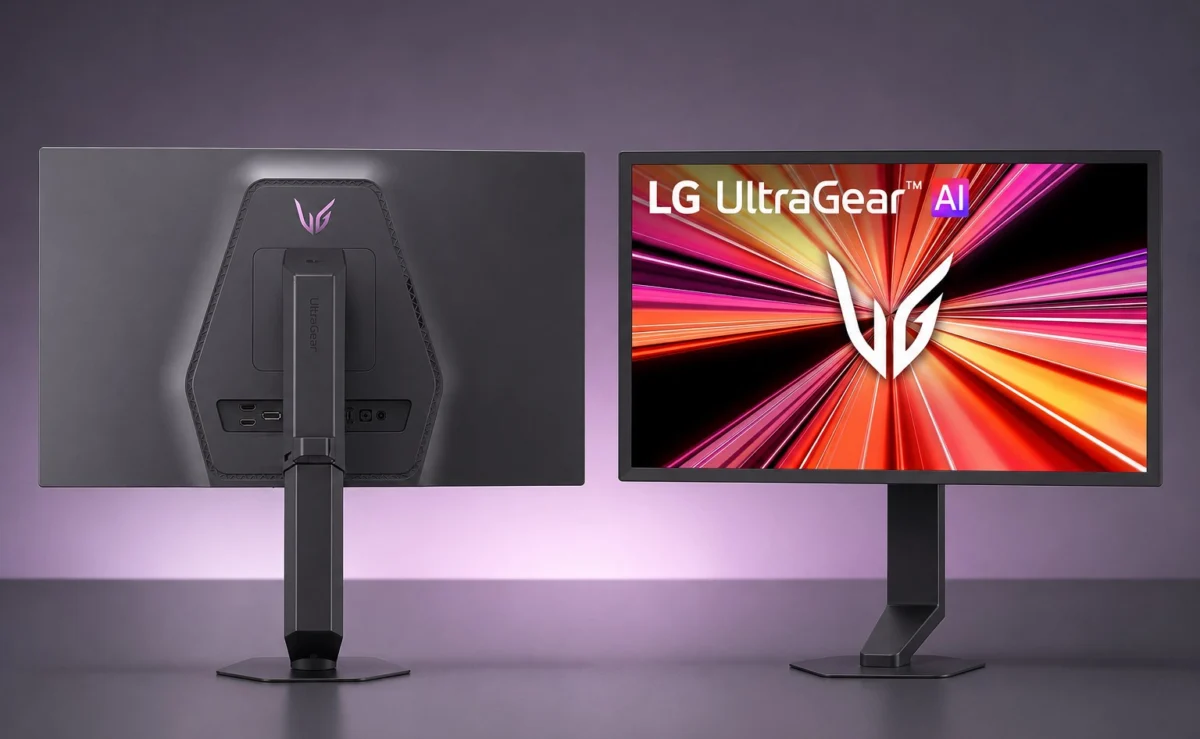
LG Electronics has officially opened pre-orders for its latest flagship gaming display, the UltraGear 25G590B-B, marking a significant milestone in the evolution of display technology. Priced at $999.99, the monitor establishes a unique parity between its retail cost and its headline feature: a 1,000 Hz refresh rate. This hardware release represents the first time a major manufacturer has brought a native 1080p (Full HD) display with a four-digit refresh rate to the consumer market, signaling a new frontier for professional esports athletes and extreme hardware enthusiasts.
The UltraGear 25G590B-B features a 25-inch In-Plane Switching (IPS) panel, a choice that balances color accuracy and viewing angles with the extreme speed required for such high-frequency operation. While previous industry demonstrations of 1,000 Hz technology often relied on lowering resolutions to 720p or utilizing specialized "Dynamic Frequency Resolution" modes to reach peak speeds, LG’s implementation maintains a consistent 1920 x 1080 resolution. This capability places the UltraGear 25G590B-B at the top of the performance hierarchy, surpassing current market leaders that typically cap out at 540 Hz.
Technical Specifications and Connectivity
The hardware architecture of the UltraGear 25G590B-B is designed to handle the massive data throughput required for a 1,000 Hz signal. To facilitate this, LG has equipped the monitor with DisplayPort 2.1 supporting UHBR20 (Ultra-High Bit Rate). UHBR20 is the highest tier of the DisplayPort 2.1 standard, offering a raw bandwidth of up to 80 Gbps. This level of bandwidth is essential for transmitting uncompressed 1080p video at 1,000 Hz, as older standards like DisplayPort 1.4 or even early iterations of HDMI 2.1 would struggle to maintain such a high frame delivery without significant compression or chroma subsampling.
In addition to the primary DisplayPort interface, the monitor includes dual HDMI ports, providing versatility for secondary devices, though these ports are expected to operate at lower refresh rates due to the limitations of the HDMI 2.1 specification relative to the 1,000 Hz target. For synchronization, the monitor is certified for both AMD FreeSync Premium and NVIDIA G-Sync Compatibility. These technologies are critical in an ultra-high refresh rate environment to prevent screen tearing and ensure that the monitor’s scan rate remains in perfect harmony with the GPU’s output, even when frame rates fluctuate.

The physical design of the monitor follows the established UltraGear aesthetic, featuring a three-side virtually borderless display and a versatile stand. The included stand supports tilt, height, and swivel adjustments, allowing professional gamers to position the screen according to strict ergonomic requirements.
The Evolution of Refresh Rates: A Chronology of the 1,000 Hz Milestone
The journey to a 1,000 Hz consumer monitor has been a multi-year endeavor involving several key players in the display industry. The timeline of this technological race highlights the rapid acceleration of panel development:
- Early 2022: Display researchers and enthusiast communities began discussing the theoretical "1,000 Hz Holy Grail," noting that such a refresh rate would effectively eliminate motion blur caused by the "sample-and-hold" nature of modern LCDs.
- Late 2023: Several manufacturers, including AntGamer and AOC, showcased prototypes capable of reaching 1,000 Hz. However, these units were often limited to 720p resolution or featured TN (Twisted Nematic) panels with poor color reproduction.
- Early 2024: LG Display, the panel-manufacturing arm of LG, confirmed it was developing a high-performance IPS panel capable of native 1080p at 1,000 Hz. This announcement shifted the industry’s focus toward the second half of 2026 for a commercial release.
- August 2026: LG officially lists the UltraGear 25G590B-B on its global website, moving the product from the conceptual phase to a retail reality.
This chronology demonstrates that while LG was not the only company pursuing the 1,000 Hz barrier, it is the first to deliver a retail-ready product that does not compromise on resolution or panel technology type.
Motion Clarity and the Sample-and-Hold Effect
To understand the significance of a 1,000 Hz refresh rate, it is necessary to examine the "sample-and-hold" effect prevalent in LCD and OLED technology. On a standard 60 Hz monitor, each frame is displayed for approximately 16.7 milliseconds. During this time, as the viewer’s eyes track moving objects on the screen, the static nature of the frame creates perceived motion blur.
At 1,000 Hz, the frame persistence is reduced to just 1 millisecond. This drastic reduction in the time a single image remains on the screen results in motion clarity that mimics the real world. For professional gamers, particularly in fast-paced first-person shooters (FPS) like Counter-Strike 2 or Valorant, this means that enemies remain sharp and distinct even during rapid "flick" movements or high-speed camera pans.

Industry analysts suggest that 1,000 Hz represents the point of diminishing returns for the human eye, as the persistence is low enough that further increases provide negligible benefits to motion clarity. By hitting this target, LG is positioning the UltraGear 25G590B-B as a "final form" display for the current era of competitive gaming.
Market Context: IPS vs. OLED in the High-End Segment
The $999.99 price point places the LG UltraGear 25G590B-B in direct competition with high-end OLED gaming monitors. This creates a complex choice for consumers. Currently, 240 Hz and 480 Hz OLED monitors are available for similar or even lower prices. OLED technology is widely regarded as superior for general visual quality due to its infinite contrast ratios and near-instantaneous pixel response times.
However, the UltraGear 25G590B-B is not designed for the average consumer or the "cinematic" gamer. Its value proposition lies entirely in its refresh rate. While an OLED panel might offer better colors and deeper blacks, a 1,000 Hz IPS panel offers a higher temporal resolution—the ability to see more updates per second. For an esports professional where every millisecond of input lag and every frame of visual information can determine the outcome of a match, the 1,000 Hz IPS panel may be viewed as the superior tool, despite the inherent limitations of IPS contrast.
Hardware Requirements and System Implications
The release of a 1,000 Hz monitor raises significant questions regarding the supporting hardware. To fully utilize a 1,000 Hz display, a computer must be capable of generating 1,000 frames per second (FPS).
Currently, only a handful of titles can reach such astronomical frame rates, and even then, only on the most powerful hardware configurations. Games like Overwatch 2, Rainbow Six Siege, and CS2 can approach these levels on systems equipped with flagship CPUs like the AMD Ryzen 7 9800X3D and high-end GPUs like the NVIDIA GeForce RTX 4090 or its successors.

Furthermore, the operating system and game engine must be optimized to handle such high polling and refresh rates. Windows 11 has introduced various optimizations for high-refresh-rate displays, but 1,000 Hz pushes the limits of current software architectures. Users may find that peripheral devices, such as gaming mice, also need to be upgraded to 8,000 Hz polling rates to ensure that input data is captured frequently enough to match the monitor’s output.
Official Responses and Industry Impact
While LG has not issued a formal press release detailing the specific "AI" features hinted at in some marketing materials, the listing on the official website emphasizes "total immersion" and "unprecedented speed." Industry insiders suggest that the "UltraGear AI" branding seen in promotional images may refer to internal image processing algorithms designed to manage ghosting and overshoot at such extreme frequencies—common issues when pushing IPS panels to their physical limits.
Competitors like Acer and ASUS are expected to respond with their own 1,000 Hz offerings in the coming months. Acer has already teased a Predator-branded 1,000 Hz monitor, though it remains to be seen if it will match LG’s native 1080p resolution or utilize scaling technologies.
The broader implication for the industry is a renewed focus on the DisplayPort 2.1 standard. As more monitors push past the 500 Hz mark, the adoption of UHBR20 becomes mandatory. This will likely pressure GPU manufacturers to ensure that all future graphics cards include full DisplayPort 2.1 support, a feature that was notably absent from NVIDIA’s 40-series lineup.
Conclusion: A Niche Product for a Specialized Audience
The LG UltraGear 25G590B-B is a statement piece. At $1,000 for a 25-inch 1080p monitor, it is objectively expensive when measured by traditional metrics like screen real estate or pixel density. However, in the context of competitive esports, where the pursuit of performance knows no budget, it represents the current pinnacle of display engineering.

By delivering 1,000 Hz at a native 1080p resolution, LG has bypassed the compromises seen in early prototypes and established a new benchmark for the industry. Whether the average human eye can truly distinguish between 500 Hz and 1,000 Hz remains a subject of debate among experts, but for those who demand the absolute maximum specifications available, the UltraGear 25G590B-B stands alone. Pre-orders are currently live on the LG official website, with shipping expected to commence as the company enters the final production phase for the 2026 launch window.