Garick Elordi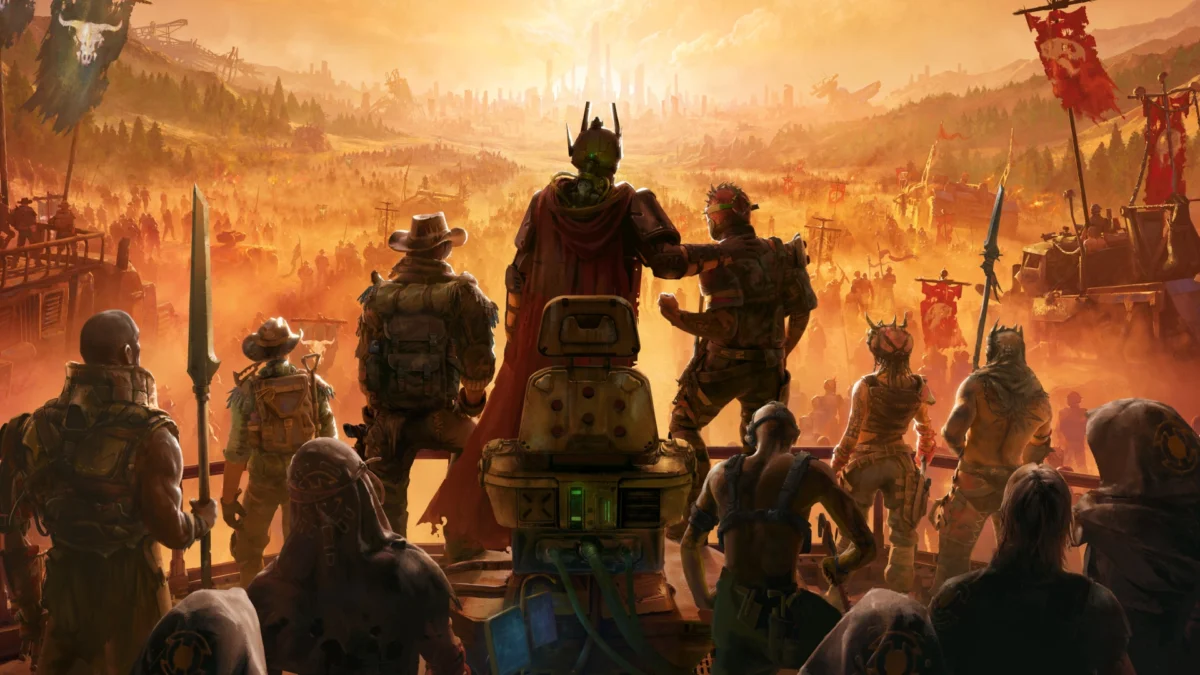
The announcement of Afterworld marks a significant pivot for Paradox Interactive, a studio long synonymous with meticulously detailed historical simulations and expansive space operas. Following a prolific period dominated by sequels to its core franchises—most notably Crusader Kings 3, Victoria 4, and Europa Universalis 5—the Swedish publisher is finally venturing into uncharted territory. Afterworld represents the company’s first foray into an original, non-historical, and non-licensed setting since the 2016 launch of Stellaris. Moving away from the courts of medieval Europe and the industrial corridors of the 19th century, Afterworld transports the grand strategy genre into a bleak, post-apocalyptic reimagining of North America, where the remnants of humanity struggle to rebuild among the ruins of a collapsed civilization.
A Continental Canvas of Ruin and Discovery
The core of Afterworld is its setting: a procedurally generated North American continent. This departure from the fixed geographical maps of Europa Universalis or Hearts of Iron suggests a focus on exploration and the unknown. Players are tasked with leading a small, disparate group of survivors through a landscape defined by "hazardous terrain" and "dangerous old-world ruins." The procedural nature of the map ensures that no two campaigns are identical, forcing players to adapt their strategies based on the specific distribution of resources, topographical barriers, and the placement of rival factions.
According to initial developer briefings, the game begins at a granular level of survival. Unlike typical grand strategy titles that start with established nations or provinces, Afterworld requires players to manage the fundamental necessities of human life: food, water, and shelter. This survival-layer serves as the foundation for the eventual transition into empire-building. As the colony stabilizes, the focus shifts toward rediscovering the "basic methods of civilization," a process that involves expanding territory, securing supply lines, and establishing a presence across the fractured continent.
Narrative Origins and the Mechanics of Belief
Paradox has emphasized that Afterworld is a "story-rich" experience, integrating narrative-driven roleplaying elements that have become a hallmark of their recent titles. At the start of a campaign, players must select an origin story that dictates the initial motivations and cultural makeup of their group. Examples provided by the developers include survivors fleeing a failed subterranean nuclear bunker—individuals likely possessing technical knowledge but lacking experience in the harsh surface world—and "wayward zealots" searching for a deity within the "dustlands."
These origin stories are more than mere flavor text; they influence the dynamic technology system. In Afterworld, progress is not dictated by a static, predetermined tech tree. Instead, technologies and skills are unlocked based on what the group discovers during their explorations. A group that settles near the ruins of a pre-Fall manufacturing hub may rediscover industrial metallurgy, while those in the rural wastes might specialize in advanced hydroponics or salvaged chemical weaponry. This organic progression ensures that the faction’s identity evolves in response to the environment and the player’s specific choices.
Generational Consequences and Moral Crises
One of the most ambitious features of Afterworld is its focus on long-term consequences and "moral crises." The game promises a decision-making framework where choices "echo through generations." This implies a temporal scale similar to Crusader Kings, where the actions of a current leader set the stage for their descendants. Players will be forced to navigate complex social and ethical dilemmas, such as the rationing of scarce resources during environmental catastrophes or the management of emerging religious movements that may threaten the secular stability of the state.
The introduction of "the mutated and the augmented" suggests a world that has moved beyond traditional human biology. Managing the social integration or marginalization of these groups will likely be a key political mechanic. Furthermore, the narrative is complicated by the presence of "immortal leaders" from the pre-Fall era. These figures, survivors of the catastrophe that ended the old world, possess visions for the future that may clash violently with the player’s objectives. Paradox has warned that these figures "will not step aside quietly," indicating that they may serve as powerful antagonists or complex political rivals in the mid-to-late game.
Strategic Logistics and the Multiplayer Landscape
Despite its narrative focus, Afterworld remains a grand strategy game at its core. The management of "convoys and supply lines" is highlighted as a critical mechanic for maintaining a continent-spanning empire. In a world where infrastructure has largely vanished, the ability to move resources between distant outposts will be the difference between prosperity and a "second collapse."
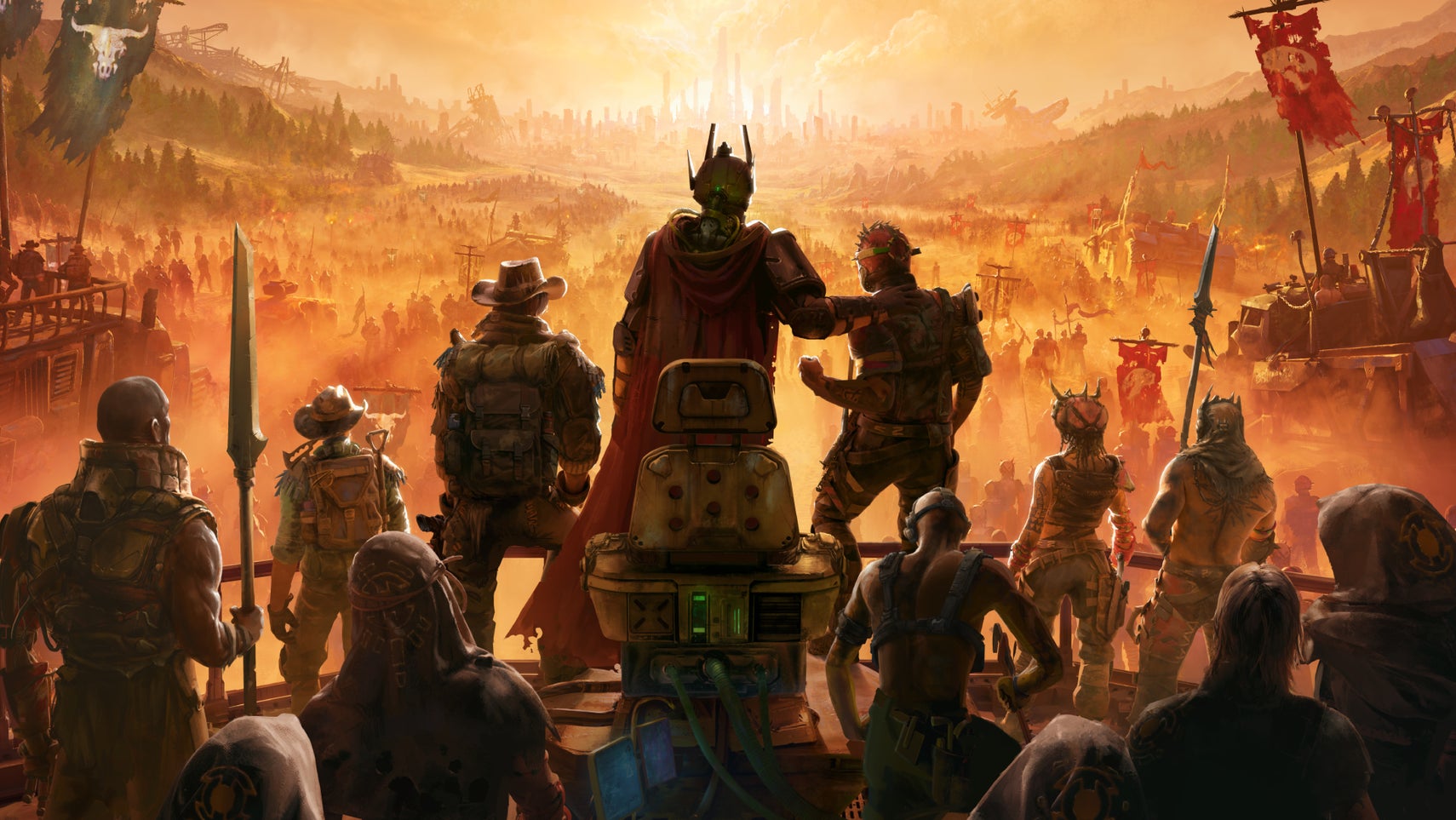
The game will also feature a robust multiplayer component, supporting both cooperative and competitive play modes on Steam. In a cooperative setting, players may work together to restore the continental power grid or fend off a common threat, while competitive play will likely mirror the cutthroat diplomacy and warfare seen in other Paradox titles. The inclusion of trade negotiations and formal declarations of war confirms that despite the survivalist start, the end-game will involve high-stakes geopolitics and large-scale military conflict.
Historical Context and Development Timeline
The development of Afterworld comes at a time when Paradox Interactive is diversifying its portfolio to mitigate the risks of "sequel fatigue." The company’s recent history has been defined by the successful refinement of its existing IPs:
- 2020: Release of Crusader Kings 3, which modernized the series’ interface and roleplaying elements.
- 2022: Release of Victoria 3 (followed by the fictionalized Victoria 4 in the prompt’s context), focusing on economic simulation and societal management.
- 2023-2024: Continued expansion of Europa Universalis (culminating in EU5 as per the prompt), maintaining the company’s dominance in the historical grand strategy market.
By introducing Afterworld, Paradox is attempting to capture the growing market for "post-apocalyptic reconstruction" games, a sub-genre popularized by titles like Frostpunk and the Wasteland series, but applying the "Grand Strategy" lens that only Paradox provides. The move to an original setting allows for greater creative freedom, unburdened by the need for historical accuracy or the constraints of existing lore.
Market Analysis and Industry Implications
Industry analysts suggest that Afterworld is a strategic move to broaden the appeal of grand strategy games. The post-apocalyptic setting is a perennial favorite in gaming, and by combining it with the deep, "map-painting" mechanics Paradox is known for, the studio could attract players who find historical settings less engaging.
The emphasis on procedural generation is also a notable shift. Traditionally, Paradox games rely on carefully balanced, static maps to ensure historical authenticity. By moving to a procedural model, Afterworld leans into the "4X" (eXplore, eXpand, eXploit, eXterminate) genre more heavily than its predecessors. This could solve the "end-game stagnation" problem that plagues many grand strategy titles, as the unpredictability of a procedural map keeps the exploration phase relevant for longer periods.
Furthermore, the mention of a "second collapse" being "one bad decision away" suggests a high-stakes gameplay loop where failure is a constant possibility. This aligns with a broader trend in the strategy genre toward "survival-strategy," where the player is not just competing against other factions, but against the environment itself.
Conclusion and Future Outlook
As Afterworld prepares for its debut on Steam, the strategy gaming community remains focused on how Paradox will balance its signature complexity with these new narrative and procedural elements. The promise of a continent-spanning empire born from the dust of North America is a compelling vision, but the execution of "immortal leaders" and "generational echoes" will be the true test of the game’s depth.
While a specific release date has yet to be announced, the appearance of the game’s Steam page suggests that development is well underway. For a company that has spent the better part of two decades looking into the past, Afterworld represents a bold and perhaps necessary leap into a dark, uncertain future. Strategy enthusiasts now wait to see if Paradox can do for the apocalypse what they have done for the Middle Ages and the Napoleonic Wars: turn it into a grand, systemic, and infinitely replayable simulation of human ambition and survival.