
 George Chandra Eka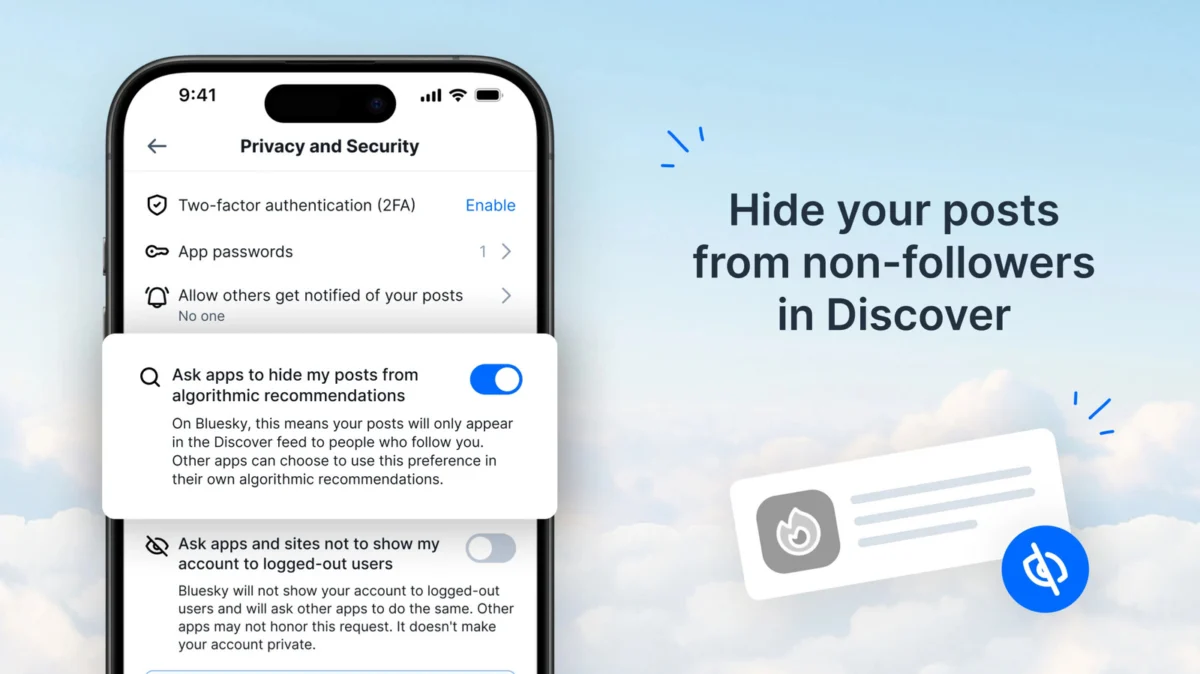
San Francisco, CA – Bluesky, the burgeoning decentralized social networking platform, has rolled out a pivotal new privacy feature aimed at empowering its user base with more granular control over their digital footprint and the visibility of their posts within the platform’s discovery algorithms. This update, announced recently, enables individuals to proactively prevent their content from being algorithmically recommended to non-followers within the prominent "discover" feed. The move directly addresses a growing sentiment among social media users regarding unwanted public exposure and the often-unforeseen consequences of "accidental virality," a phenomenon increasingly scrutinized in the digital age.
The core of this new functionality resides in an account-level setting, meaning that once activated, it applies universally to all posts made by the user. Unlike a per-post filter, this blanket control offers a consistent layer of privacy, ensuring that content intended for a more defined audience of followers does not inadvertently spill over into the broader public eye through algorithmic promotion. Bluesky’s official statement highlighted the intent behind the feature, noting it as "one of a few updates we’re working on to give you more control over your experience and help you find your people," signaling a broader commitment to user agency and a tailored social experience.
The Dynamics of Algorithmic Discovery and Unintended Virality
In the contemporary landscape of social media, algorithmic feeds have become the primary conduits through which users discover new content and accounts. Platforms like Bluesky, X (formerly Twitter), Instagram, and TikTok heavily rely on sophisticated algorithms to curate personalized streams, aiming to maximize engagement and keep users within their ecosystems. While designed to enhance discoverability and foster connections, these algorithms can also inadvertently catapult posts into widespread visibility, often with unforeseen and sometimes negative ramifications for the original poster.
The concept of "accidental virality" or becoming a "main character" refers to instances where an individual’s post, often a casual thought, a personal opinion, or a niche observation, unexpectedly gains massive traction beyond their intended audience. This surge in attention can attract diverse reactions, ranging from supportive engagement to intense scrutiny, criticism, or even harassment from strangers who lack context or familiarity with the user. For many, this unsolicited spotlight can be overwhelming, invasive, and detrimental to their digital well-being, leading to what some researchers term "digital exhaustion" or "algofatigue."
Bluesky’s "discover" feed functions similarly to other platforms’ recommendation engines, surfacing posts from accounts a user does not yet follow but might find interesting based on various algorithmic signals. By introducing a setting to opt out of this specific feed, Bluesky is directly responding to the segment of its user base that values a more controlled and less exposed online presence. This decision reflects an industry-wide recognition of the psychological toll that hyper-visibility can exact, especially in an era where online misinterpretations can rapidly escalate into real-world consequences. Data from various digital wellness surveys consistently indicate that a significant percentage of social media users express concerns about privacy, online harassment, and the loss of control over their personal narratives once content enters the public domain.
Bluesky’s Decentralized Ethos and the Quest for User Control
Bluesky emerged from a project incubated within Twitter (now X) before its spin-off, designed to build a decentralized social networking protocol. Its foundation on the AT Protocol (Authenticated Transfer Protocol) is central to its vision, aiming to create an open, interoperable, and user-centric social internet. Unlike traditional centralized platforms, which exert absolute control over data, algorithms, and content moderation, the AT Protocol seeks to distribute power, allowing for diverse applications and services to be built on a shared underlying infrastructure. This architectural choice inherently champions principles of user autonomy, data portability, and resistance to single-point-of-failure censorship.
From its inception, Bluesky has positioned itself as an alternative to the increasingly consolidated and often controversial centralized social media giants. Its rapid growth, particularly following periods of instability and policy shifts on X, underscores a palpable demand for platforms that prioritize user experience, transparency, and moderation choices. As of late 2023 and early 2024, Bluesky has consistently reported a rapidly expanding user base, attracting millions who are drawn to its cleaner interface and its promise of a more open internet. This new privacy setting aligns perfectly with this foundational ethos of user empowerment, granting individuals more agency over how their content is disseminated and perceived within the broader network. It represents a tangible step towards fulfilling the promise of a social internet where users, rather than algorithms or corporate entities, dictate the terms of their engagement.
However, the decentralized nature of the AT Protocol also introduces unique complexities regarding privacy. While Bluesky itself may offer certain controls, the open nature of the protocol means that other applications and services built upon it could potentially access and display public posts in different algorithmic contexts. Bluesky explicitly states that even with this new setting enabled, there remains "a chance that your posts could appear in other algorithmically curated feeds or services that use its AT Protocol." This nuanced reality highlights the ongoing challenge for decentralized platforms: balancing the ideals of openness and interoperability with the practical demands for robust privacy and user-friendly controls.
Implementation and Limitations of the New Feature
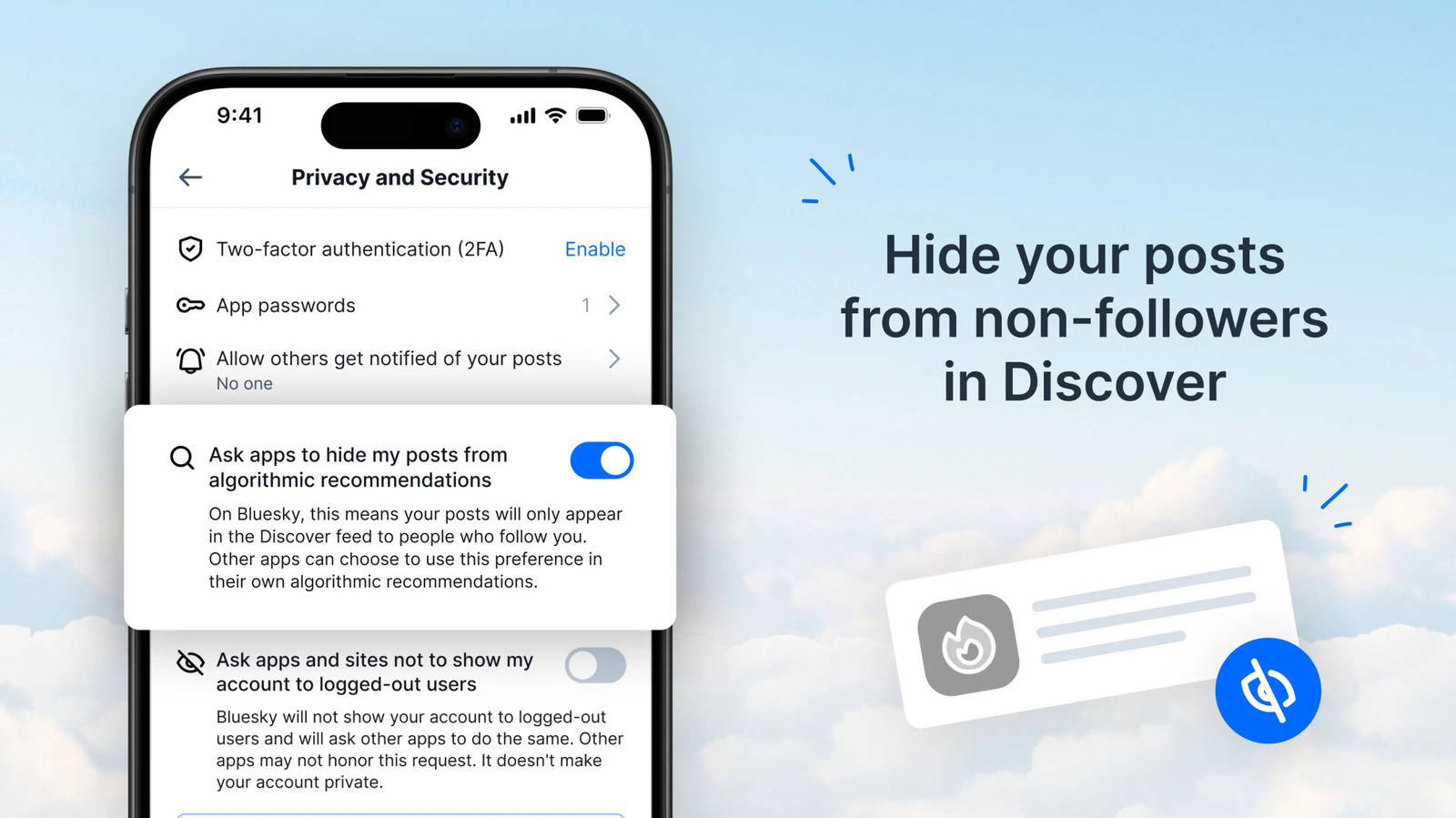
The newly introduced privacy setting, accessible within Bluesky’s privacy and security settings, is straightforward in its implementation. Users can toggle a single option labeled "ask apps to hide my posts from algorithmic recommendations." The language "ask apps" is crucial, underscoring the protocol-level communication rather than a guaranteed, enforced block across all possible future applications built on AT Protocol.
Crucially, this setting does not transform an account into a "private" one in the traditional sense, as seen on platforms like Instagram or X. Bluesky, by design, does not currently support fully private accounts where only approved followers can view content. All posts on Bluesky remain publicly accessible to anyone who navigates directly to a user’s profile, regardless of whether they follow that user or if the content appears in a discovery feed. This distinction is vital for users to understand: the feature primarily targets algorithmic amplification to non-followers, not overall public visibility.
The limitations extend beyond the AT Protocol’s open nature. While the Bluesky "discover" feed is a significant channel for broad exposure, it is not the only one. Other algorithmically curated feeds, custom feeds developed by the community, or third-party applications could still surface content. This means that while the risk of "accidentally going viral" through Bluesky’s primary discovery mechanism is substantially reduced, it is not entirely eliminated. Users seeking absolute privacy or complete control over who sees their posts may find these inherent architectural constraints of a public, decentralized protocol challenging.
Despite these limitations, the setting offers a significant improvement for users who primarily wish to avoid the mass, unsolicited amplification that algorithmic feeds can generate. It provides a valuable tool for individuals who want to maintain a public presence but prefer their content to spread organically through their network of followers and direct shares, rather than being pushed to an undifferentiated mass audience by an algorithm.
Broader Implications for User Experience and Platform Strategy
The introduction of this privacy setting carries several significant implications for both the Bluesky user experience and its broader platform strategy.
Enhanced User Trust and Well-being: By addressing a common source of anxiety and discomfort, Bluesky is likely to foster greater trust among its users. Knowing that one can control the extent of algorithmic amplification may encourage more open and authentic expression, as users feel less apprehension about their posts being misinterpreted or weaponized by a wider, unknown audience. This could lead to a healthier, more nuanced discourse on the platform, as individuals feel safer sharing their thoughts within a self-defined community.
Community Building vs. Mass Reach: The setting subtly encourages a shift in content strategy for some users. Instead of aiming for mass virality, individuals might focus on cultivating deeper connections within their follower base. This aligns with Bluesky’s vision of fostering "your people" – niche communities and interest groups that thrive on shared understanding rather than broad appeal. While some creators thrive on wide reach, many users prioritize meaningful interactions over sheer numbers. This feature supports the latter, potentially making Bluesky a more attractive home for those seeking quality over quantity in their online engagement.
Content Moderation and Context: Accidental virality often strips content of its original context, making it vulnerable to misinterpretation and fueling online pile-ons. By limiting algorithmic spread, Bluesky may inadvertently reduce the frequency of such incidents, easing the burden on content moderation teams who often grapple with de-escalating viral conflicts. When content remains within a more familiar audience, the chances of shared context and nuanced understanding are higher.
Paving the Way for Future Privacy Features: Bluesky’s statement that this is "one of a few updates" suggests a clear roadmap towards more comprehensive privacy and control features. This could include more granular controls over who can reply to posts, enhanced blocking mechanisms, or even, eventually, a form of limited private posting, albeit within the constraints of the AT Protocol. Such a progression would be crucial for a platform aiming to differentiate itself by prioritizing user agency in an increasingly complex digital landscape. The platform’s commitment to continuous iteration on privacy features positions it as a leader in responding to evolving user demands for digital autonomy.
The Evolving Landscape of Social Media Privacy
Bluesky’s new feature is not an isolated development but rather part of a broader trend within the social media industry. Over the past decade, there has been a significant shift in public awareness and concern regarding digital privacy. High-profile data breaches, controversies surrounding algorithmic bias, and the pervasive nature of online surveillance have collectively driven users to demand more transparency and control from the platforms they use daily.
Major platforms have responded with varying degrees of success. Many have introduced features like audience selection for posts, enhanced blocking and muting options, and more detailed privacy dashboards. However, the fundamental tension between maximizing user engagement through algorithmic discovery and respecting individual privacy preferences remains a core challenge. Bluesky, as a newer entrant with a decentralized architecture, has a unique opportunity to build these privacy-by-design principles into its core functionality from the ground up, rather than retrofitting them onto an existing, engagement-optimized system.
The ongoing discussions around digital identity, online reputation, and the right to be forgotten underscore the critical importance of features like Bluesky’s new privacy setting. As digital lives become increasingly intertwined with personal and professional realities, the ability to manage one’s online visibility is no longer a niche concern but a fundamental expectation. Bluesky’s proactive step demonstrates an understanding of this evolving user demand, positioning it as a platform responsive to the needs of a digitally mature and privacy-conscious audience.
Conclusion
Bluesky’s introduction of a privacy setting to curb unintended algorithmic virality marks a significant step forward in its commitment to user control and well-being. By empowering users to opt out of broad algorithmic recommendations, the platform is directly addressing a key source of anxiety in modern social media use. While the feature does not confer complete anonymity or fully private accounts, its impact on reducing unwanted exposure within the prominent "discover" feed is substantial. This move reinforces Bluesky’s founding principles as a decentralized, user-centric alternative and sets a precedent for how social platforms can balance the imperative of content discovery with the growing demand for personal privacy and autonomy in the digital age. As Bluesky continues to evolve, further enhancements in privacy and control will undoubtedly be central to its mission of creating a healthier, more user-empowered social internet.







