admin
admin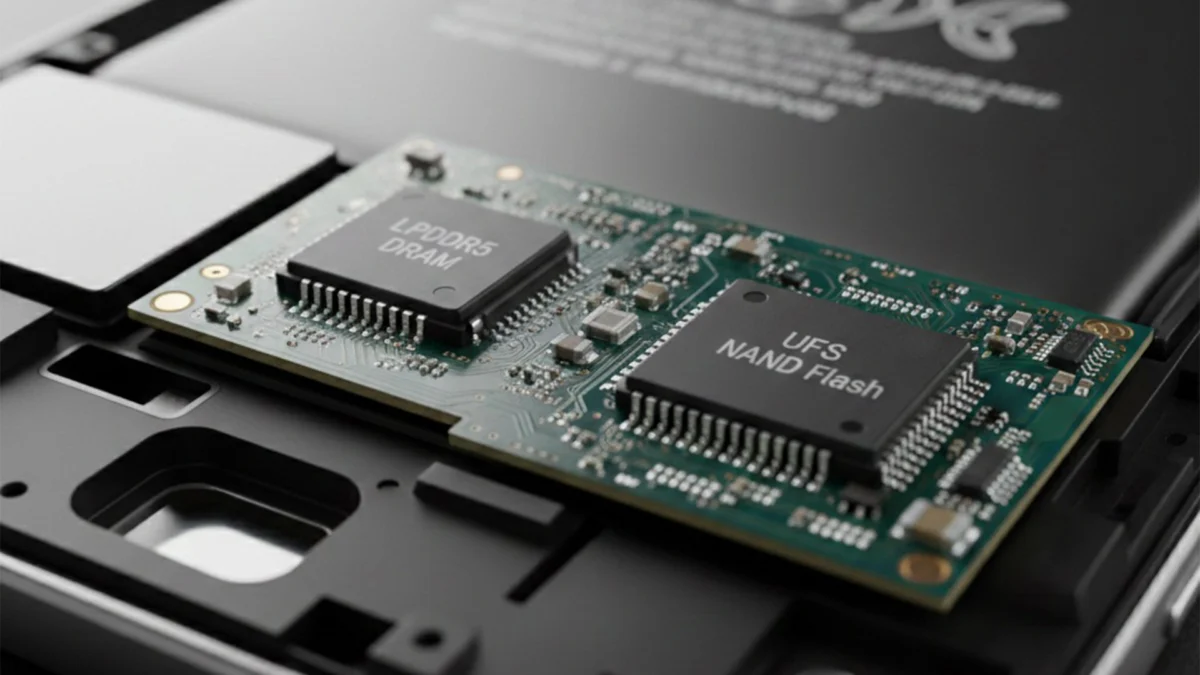
The global smartphone industry is facing a seismic shift in its economic landscape as the cost of memory and storage components has surged to unprecedented levels, fundamentally altering the traditional bill of materials for mobile devices. For years, the System-on-Chip (SoC) reigned as the single most expensive component in a premium handset, reflecting the massive investments required for advanced lithography and semiconductor design. However, new data suggests that the surge in demand for artificial intelligence capabilities and a tightening supply chain have pushed the price of a standard DRAM and NAND flash pairing above that of even the most sophisticated processors. According to recent estimations from industry insiders, specifically the prominent Weibo-based leaker Digital Chat Station, the cost of a 12GB RAM and 256GB NAND flash combination is projected to hit approximately $310 by the third quarter of 2026. This represents a staggering 340 percent increase from price points seen as recently as early 2023, when the same configuration cost manufacturers roughly $70.
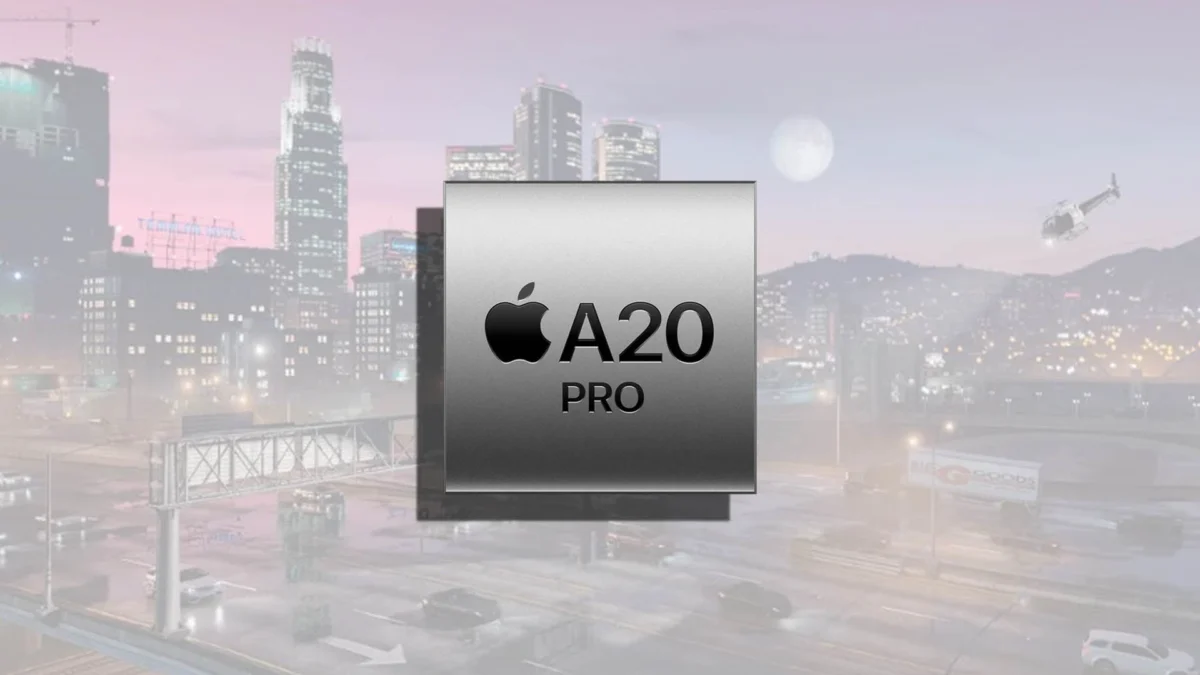
This inversion of the cost hierarchy presents a significant challenge for smartphone manufacturers, particularly those operating in the Android ecosystem who must balance high-performance hardware with competitive retail pricing. While the industry is preparing for the transition to 2nm process nodes—with Apple’s upcoming A20 Pro expected to lead the charge using TSMC’s "N2" and "N2P" manufacturing—the rising cost of these advanced chips is being eclipsed by the volatile pricing of memory modules. With a flagship SoC currently estimated to cost around $280 (approximately 2,000 RMB), the memory and storage duo has officially claimed the title of the most expensive hardware segment in the smartphone manufacturing process.
The Economic Drivers Behind the Memory Crisis
The primary catalyst for this dramatic price inflation is the global obsession with generative artificial intelligence. On-device AI requires significant amounts of high-bandwidth memory (HBM) and high-capacity DRAM to run large language models (LLMs) locally without relying solely on cloud processing. As smartphone brands like Google, Samsung, and Apple integrate AI features directly into their operating systems, the baseline requirement for RAM has shifted. What was once considered "premium" capacity—12GB or 16GB of RAM—is now becoming the minimum threshold for smooth AI performance.
Simultaneously, the supply side of the semiconductor industry has undergone a period of aggressive correction. Following a surplus of memory chips in 2022 and early 2023, major manufacturers such as Samsung Electronics, SK Hynix, and Micron Technology implemented significant production cuts to stabilize the market. These cuts, combined with a sudden pivot toward producing High Bandwidth Memory (HBM) for AI data centers (which offer much higher profit margins than mobile DRAM), have left the smartphone market facing a supply crunch. The result is a classic supply-and-demand imbalance that has allowed memory prices to soar.
A Comparative Timeline of Component Costs
To understand the severity of the current situation, it is necessary to look at the pricing trajectory over the last several years. In 2022, the smartphone industry benefited from a "glut" in the memory market, where overproduction led to record-low prices for LPDDR5 RAM and UFS 3.1 or 4.0 storage. During this period, a manufacturer could equip a mid-range or flagship device with 12GB of RAM and 256GB of storage for less than $75, allowing for healthy profit margins even on aggressively priced "flagship killers."

By mid-2024, the landscape began to shift as the production cuts mentioned above took effect. Prices began to climb steadily, reaching a point where memory costs matched the cost of the SoC. The projections for 2026 indicate that this trend will not only continue but accelerate. If the $310 estimate for a 12GB/256GB combo holds true, it will mark the first time in the history of the modern smartphone that memory and storage account for nearly one-third of the total manufacturing cost of a $1,000 device.
Looking further ahead, industry analysts expect memory and storage costs to remain on an upward trajectory through 2028. It is only in 2029 that experts predict a potential "expiration date" for this pricing saga, as new manufacturing facilities come online and the initial frenzy for AI-dedicated hardware begins to reach a saturation point.
Impact on the Bill of Materials and Retail Pricing
The Bill of Materials (BOM) is the total cost of all parts required to manufacture a finished product. When the BOM increases significantly, manufacturers are faced with two difficult choices: absorb the costs and accept lower profit margins, or pass the costs on to the consumer. Recent market behavior suggests that most companies are choosing the latter, or in some cases, compromising on hardware specifications to maintain a specific price tier.
Google’s recent hardware strategy serves as a prime example of this phenomenon. Reports surrounding the upcoming Pixel 11 Pro suggest that despite the industry’s push for 16GB of RAM to support advanced AI features, some models may ship with 12GB instead. Despite this "downgrade" or stagnation in specs compared to the ideal AI roadmap, the devices are expected to be more expensive than their predecessors. This indicates that the $240 gap—the difference between the $70 memory cost of 2023 and the $310 projected cost—is being reflected in the final retail price.
Furthermore, the pressure is even higher for devices utilizing 16GB or 1TB configurations. If a 12GB/256GB combo costs $310, a 16GB/512GB or 16GB/1TB configuration could easily approach $450 to $500. For a manufacturer, this makes the prospect of offering high-capacity storage tiers nearly impossible without pushing retail prices toward the $1,200 to $1,500 range.
The Competitive Edge: Apple vs. the Android Ecosystem
The memory crisis highlights a fundamental difference in the business models of Apple and its Android competitors. Apple occupies a unique position because it designs its own "A-series" and "M-series" silicon. While Apple still pays TSMC for the manufacturing of these chips, it does not have to pay the profit margins that companies like Qualcomm or MediaTek tack onto their wholesale prices. This vertical integration provides Apple with a "buffer" in its BOM that Android OEMs (Original Equipment Manufacturers) simply do not have.

For brands like Xiaomi, Oppo, and Vivo, the situation is particularly dire. These companies often operate on razor-thin margins to capture market share. They are forced to pay a premium to Qualcomm for the Snapdragon 8 series chips—estimated at $280 per unit for the latest generations—and now they must also contend with $310 for the memory and storage. When adding the costs of Samsung-sourced LTPO displays, sophisticated camera sensors from Sony, and titanium frames, the manufacturing cost alone can exceed $700 before accounting for assembly, marketing, or research and development.
Apple, while not immune to the DRAM shortage, can leverage its massive cash reserves and long-term supply contracts to mitigate some of the volatility. However, even the Cupertino giant is feeling the squeeze, as evidenced by the slow rollout of higher RAM capacities in its base iPhone models until the recent necessity of "Apple Intelligence" forced a shift to 8GB as the new minimum.
Technical Implications: LPDDR5X, LPDDR6, and UFS 4.0
The rising costs are also tied to the technological evolution of the components themselves. We are no longer dealing with simple memory modules; modern smartphones require LPDDR5X (Low Power Double Data Rate 5X) RAM, which offers the speeds necessary for real-time AI processing. The industry is already looking toward LPDDR6, which will offer even higher bandwidth but at a significantly higher manufacturing cost due to the complexity of the circuits.
Similarly, on the storage side, the transition from UFS 3.1 to UFS 4.0 has doubled the read and write speeds. These speeds are essential for loading massive AI models into the RAM quickly. However, the NAND flash layers required to achieve 256GB or 512GB of UFS 4.0 storage are becoming more difficult and expensive to produce at scale, especially as the same NAND technology is being diverted to the enterprise SSD market for AI training servers.
Analysis of Broader Market Implications
The shift in component pricing is likely to lead to several long-term changes in the smartphone market:
- Slower Upgrade Cycles: As retail prices for flagship phones climb toward $1,200 and beyond, consumers are likely to hold onto their devices for longer periods. This could lead to a stagnation in unit sales, forcing manufacturers to focus more on software services and subscriptions to generate revenue.
- The Rise of "Cloud-Hybrid" AI: To circumvent the need for expensive 16GB+ RAM configurations, some manufacturers may pivot back to cloud-based AI. By offloading the most intensive tasks to remote servers, they can reduce the hardware requirements of the phone, though this comes at the cost of privacy and latency.
- Market Consolidation: Smaller manufacturers who cannot negotiate favorable pricing with memory suppliers may be squeezed out of the flagship market entirely, leaving the high-end segment to a few dominant players like Samsung, Apple, and Huawei.
- A Shift in Marketing Focus: Manufacturers may stop highlighting "RAM and Storage" as much as they used to, instead focusing on software optimization and "virtual RAM" (using a portion of the storage as temporary memory), even though these solutions are significantly slower than physical hardware.
Conclusion
The revelation that memory and storage now cost more than the central processor of a smartphone marks a turning point in the history of mobile technology. The 340 percent price surge is a stark reminder of the semiconductor industry’s volatility and the heavy toll that the AI revolution is taking on hardware economics. As we move toward 2026, the $310 price tag for a mid-tier memory configuration will serve as a significant hurdle for innovation, likely resulting in more expensive devices and a more cautious approach to hardware specifications from the world’s leading technology brands. While the situation may stabilize by 2029, the next few years will be defined by a struggle for margins in an era where silicon is no longer the most expensive part of the machine.