admin
admin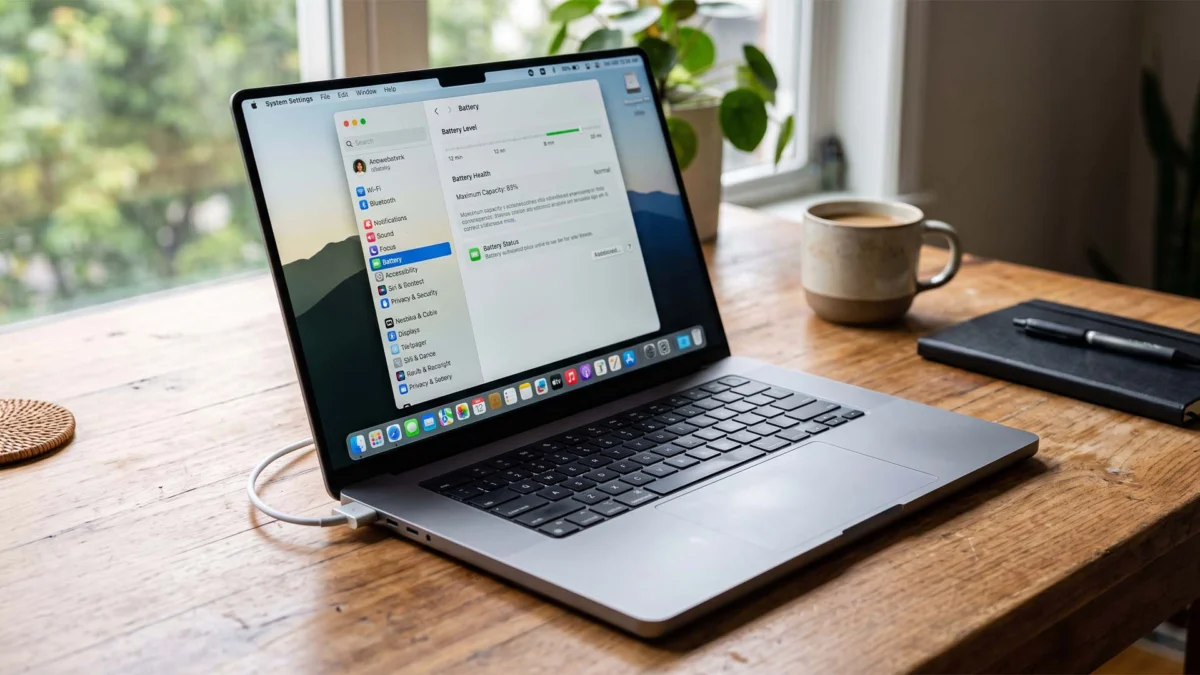
The durability of Apple’s custom silicon architecture has been a focal point of industry discussion since the transition from Intel processors began in 2020. While performance benchmarks and power efficiency are frequently cited as the primary benefits of the M-series chips, the long-term resilience of the accompanying hardware—specifically the battery systems—is now coming under the microscope. A recent case involving a high-end 16-inch M1 Max MacBook Pro has highlighted a curious paradox in modern hardware maintenance: a device so resilient that its owner has found it nearly impossible to qualify for a subsidized battery replacement under AppleCare+ terms, despite significant usage.
The incident, which gained traction on social media via the Reddit user "Salty_Ad_6909," involves a professional-grade MacBook Pro that has undergone an intensive regimen of charge cycles. According to the user’s documentation, the device initially reported a battery health of 83 percent after 470 charge cycles. Under Apple’s global service policy, the company’s technicians generally only authorize a "free" battery replacement under AppleCare+ coverage if the battery’s maximum capacity drops below 80 percent of its original state. Finding himself just three percentage points away from the threshold, the owner attempted to intentionally degrade the battery to reach 79 percent before his coverage period or specific service window expired. However, after an additional 345 charge cycles—bringing the total to 815—the battery health indicator remained stubbornly fixed at 83 percent.
The 80 Percent Threshold and Apple’s Service Policy
To understand the owner’s frustration, one must look at the specific contractual obligations of Apple’s extended warranty program. AppleCare+ for Mac provides coverage for battery service, which means a user is entitled to a replacement at no additional cost if the battery retains less than 80 percent of its original capacity. For a 16-inch M1 Max MacBook Pro, an out-of-warranty battery replacement typically costs approximately $249 USD, depending on the region.
Apple’s official documentation states that a "normal battery is designed to retain up to 80% of its original capacity at 1,000 complete charge cycles when operating under normal conditions." In the case of the M1 Max owner, the battery appears to be performing significantly better than the baseline design goal. At 815 cycles, the device is nearing the 1,000-cycle milestone, yet it remains 3 percent above the "consumed" threshold. This discrepancy highlights the effectiveness of Apple’s Battery Management System (BMS) but creates a difficult scenario for users who wish to refresh their hardware before their protection plan expires in early 2027.
Technical Analysis of Battery Health Reporting
The reason the battery health percentage remained unchanged despite over 300 additional cycles lies in the complex nature of lithium-ion chemistry and macOS’s reporting algorithms. Battery health in macOS is not a linear calculation based solely on cycle counts; rather, it is an estimate derived from a variety of data points, including voltage stability, internal resistance, and chemical age.
Apple’s Battery Management System is designed to "smooth" the reporting of health data. This prevents the user interface from showing frequent, minor fluctuations in capacity that occur naturally due to temperature changes or temporary software glitches. However, this smoothing can lead to "plateaus" where the reported health stays stagnant for months, only to drop several percentage points at once when the BMS recalibrates and confirms a significant change in the chemical state of the cells.

Furthermore, the M1 Max MacBook Pro features advanced charge controllers. These controllers are programmed to mitigate the two primary killers of lithium-ion batteries: heat and high-voltage stress. By managing the rate of charge and preventing the cells from staying at 100 percent for extended periods—a feature known as Optimized Battery Charging—the system significantly slows down the natural degradation process.
The Chronology of a Failed "Torture Test"
The owner’s attempt to reach the 79 percent mark provides a rare look into the physical limits of Apple Silicon hardware. The timeline of the attempt suggests a period of "torture testing" where the user likely ran high-intensity workloads to facilitate rapid discharge and recharge cycles.
- Initial Status: The device reached 470 cycles with 83 percent health. At this stage, the owner was denied a replacement by Apple Support because the hardware passed the diagnostic test.
- The Degradation Phase: Over several weeks, the owner added 345 cycles. In a typical laptop, this volume of cycling would represent roughly a year of heavy professional use.
- The Result: At 815 cycles, third-party diagnostic tools (such as CoconutBattery) and the native macOS System Settings continued to report 83 percent health.
This failure to move the needle suggests that the battery’s chemical health is exceptionally stable. It also implies that the owner’s workloads, while frequent, may not have reached the thermal thresholds required to cause rapid ion depletion.
The Risks of Forced Battery Degradation
While the owner’s goal was to secure a new battery, the methods used to achieve that goal carry significant risks. Tech experts warn that attempting to "kill" a battery through excessive heat and constant cycling can lead to unintended consequences.
The most prominent risk is the phenomenon of "swollen cells," often colloquially referred to in tech circles as "spicy pillows." When a lithium-ion battery is subjected to extreme thermal stress or repeated deep discharges, the internal chemistry can break down, leading to the release of gases. These gases cause the battery casing to expand. In a MacBook Pro’s unibody design, a swollen battery can exert enough pressure to warp the aluminum chassis, crack the trackpad, or damage the logic board.
If a battery is found to be swollen, Apple will replace it regardless of the percentage, as it constitutes a safety hazard. However, if the stress testing damages other internal components like the M1 Max SoC (System on Chip) or the liquid retina XDR display, the user could face "Tier 4" repair costs, which far exceed the price of a simple battery replacement.
Broader Implications for Apple Silicon Longevity
This case serves as a testament to the engineering of the M1 Max platform. When Apple debuted the M1 series, much was made of its performance-per-watt. Real-world data now suggests that this efficiency translates directly into hardware longevity. Because the M1 Max chip generates less waste heat during standard professional tasks compared to its Intel predecessors, the battery is exposed to fewer "heat soak" events.

For the secondary market, this is a positive indicator. High cycle counts on used Apple Silicon Macs may not be the red flag they once were on older machines. If a battery can sustain 83 percent health after more than 800 cycles, the 1,000-cycle rating from Apple may actually be a conservative estimate.
Industry Comparison and Regulatory Context
Apple’s stance on the 80 percent threshold is standard across the consumer electronics industry, but it has faced scrutiny from right-to-repair advocates. Critics argue that "software locks" and specific percentage requirements prevent users from maintaining their devices in peak condition. However, from a sustainability perspective, Apple’s BMS logic prevents the premature disposal of batteries that are still functionally sound.
In the European Union, new regulations are being introduced to ensure that batteries in portable devices are more easily replaceable and that health data is transparently provided to the consumer. While Apple has made strides by launching its Self Service Repair program, the requirement to hit a specific software-reported number (79%) to trigger a warranty claim remains a point of contention for those who feel their actual battery life does not match the reported health.
Conclusion and Future Outlook
For the Redditor "Salty_Ad_6909," the quest for a new battery remains unfulfilled. With his AppleCare+ subscription active until January 2027, he remains in a holding pattern. The incident highlights a shifting reality in the world of high-end computing: hardware is becoming so efficient that traditional wear-and-tear metrics are being redefined.
As Apple continues to iterate on its silicon with the M3 and M4 series, the integration between hardware and the Battery Management System is expected to become even tighter. For consumers, the takeaway is clear: while the 80 percent warranty threshold remains a rigid barrier, the actual lifespan of an Apple Silicon battery may far exceed previous expectations, potentially lasting the entire functional life of the laptop for all but the most extreme power users. The "problem" of a battery being too healthy to replace is, in many ways, a confirmation of the platform’s architectural success.